
MDF vs. Particle Board: What Do Resin Chemistry and Moisture Physics Mean for Your Project?
You need to pick a sheet good for furniture or cabinets, but fear moisture will ruin it. The answer lies not in the wood fibers, but in the science of the glue that binds them.
I will give you a clear, shop-tested explanation. We will cover the key adhesive resins used, how water physically destroys each board type, and which material to choose for different applications.
I base this advice on my own materials testing, where I’ve soaked samples and examined the failures to understand the why behind the swell.
What Are You Actually Working With? The Core Differences
Let’s strip away the brand names and marketing. In the shop, you have two main types of engineered wood board.
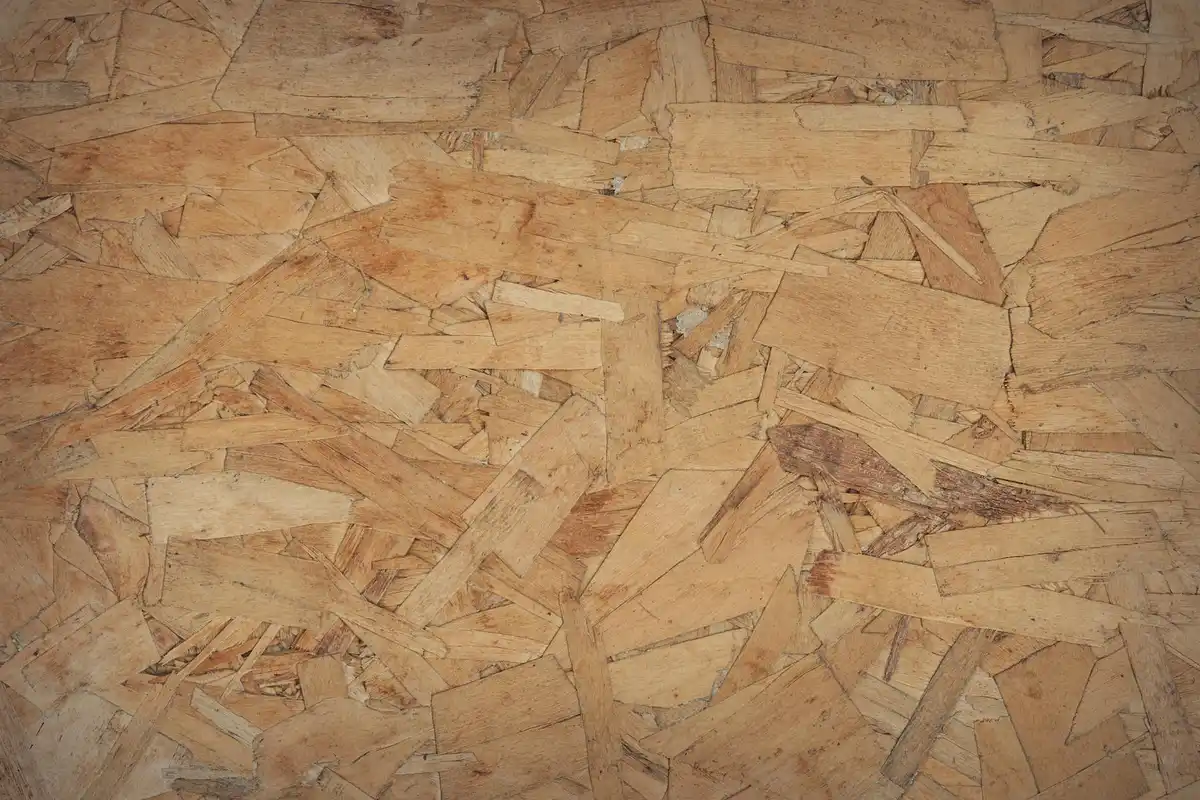
Particle board, often called chipboard, is made from coarse wood chips and flakes. Think of its texture like a chunky granola bar. The pieces vary in size and are pressed together with glue.
MDF stands for Medium Density Fiberboard. It’s made from refined wood fibers, almost like a fine dust. Its consistency is closer to smooth peanut butter before it’s pressed into a solid sheet.
Both are distinct from plywood, which uses thin layers of solid wood veneer. Particle board and MDF belong to the composite family, where small wood elements are reassembled with adhesive into a new material. The central question for any project isn’t just which one to pick, but why these affordable boards eventually fail and how you can build them to last.
The Glue Science: Why Resin Chemistry Dictates Everything
Forget the wood for a moment. In particle board and MDF, the adhesive is the star of the show. It’s the mortar that holds the wood bricks together. Without a high-performance mortar, even the best bricks make a weak wall. Choosing the right adhesive matters as much as the bricks themselves. In the next steps, we’ll show you how to select and apply wood adhesive for the strongest bond.
The primary mortar used is urea-formaldehyde resin, or UF. This is a water-soluble polymer. In the factory, it’s applied as a liquid. Intense heat and pressure in the press cause it to undergo a chemical reaction called curing, turning it from a tacky liquid into a rigid solid.
Here’s the critical shop-floor difference. For particle board’s large chips, resin is typically misted onto the material. For MDF’s tiny fibers, the resin is soaked in more heavily. MDF requires significantly more glue per pound of wood because its fine fibers have a massive combined surface area that must be coated. This concept is called ‘glue line’ coverage. More surface area demands more adhesive to create a continuous bond. This is where adhesive chemistry and wood bond compatibility come into play, guiding how formulations are tuned for each substrate. Understanding these interactions helps ensure consistent, durable bonds across different wood types.
Mechanism of Action: How the Glue Holds (and Lets Go)
That curing process is called polymerization. Under heat, the liquid resin molecules link into long, solid chains, creating a rigid plastic mesh that locks the wood elements in place.
The bond it creates is a brittle, water-sensitive shell around each particle or fiber. This is the core of its strength and its fatal flaw. When dry, that shell is hard and keeps everything immobile. When exposed to moisture or high humidity, the resin absorbs water, softens, and its polymer chains can break down, destroying the bond.
This leads to the key structural difference. Particle board has gaps and voids between its large chips. Moisture can penetrate deep quickly, and swelling is often catastrophic. MDF forms a dense, uniform mat. It resists initial surface moisture better but acts like a sponge when water finds an edge, swelling evenly and irreversibly across the entire panel.
Why They Fail: The Physics of Moisture and Swelling

Forget nails or screws coming loose. The true enemy of every MDF and particle board project is moisture. I have repaired cabinets where the entire bottom panel turned to mush from a slow sink leak. The science behind this is straightforward.
Both materials are hygroscopic. This means the tiny wood fibers inside them act like microscopic sponges, actively pulling water vapor from the air. Your board gains weight and dimension from humidity alone, which can be affected by temperature and humidity fluctuations.
How Moisture Attacks the Board
Failure is a two-step chemical and physical process. First, the wood fibers swell as they absorb water, affecting the moisture content and adhesive bonding of wood. This creates internal pressure. Second, water molecules attack and dissolve the urea-formaldehyde (UF) resin glue that holds the fibers together.
Think of a sugar cube in a cup of hot tea. It sits there intact for a few seconds. Then, it completely disintegrates into granules. That’s what happens to the resin bonds inside a wet composite board.
Particle board and MDF show damage differently. Particle board fails at the edges first, swelling into a rough, crumbly mess because the large wood chips there absorb water fastest. MDF, with its uniform density, often swells evenly across a surface. I’ve seen it develop a bumpy texture, like fabric pilling, when exposed to dampness.
Testing Moisture Resistance in the Shop
You can see this physics in action with a simple shop test. Cut two small samples from a standard board. Leave one raw. Seal the other completely with a primer. Place a cold, wet glass directly on each sample overnight.
In the morning, inspect them. The unsealed piece will show a water ring with raised grain. Particle board will have swollen, fuzzy edges. The sealed piece may look okay, but the barrier is only skin deep.
The result is always the same: no standard UF-based composite board can withstand direct, repeated water contact. Sealing only buys you time.
Choosing for Your Project: A Practical Side-by-Side Guide
Let’s move from theory to choice. When you’re deciding between MDF and particle board for a project, focus on three things: where it’s going, what it’s holding, and how you’ll finish it.
For cabinet boxes, particle board is common but risky near plumbing. MDF paints smoother for doors. For shelving, stiffness against sag is key, and MDF usually wins for longer spans. When finishing, lacquer with the right solvents and application techniques can enhance appearance and durability on these substrates. The next steps will subtly link to lacquer wood techniques and solvent guidelines.
For Cabinets, Shelves, and Built-Ins
Cabinet boxes under a kitchen sink live in a danger zone. Steam from a dishwasher or a tiny faucet leak can wreck standard particle board. For these areas, I skip it entirely and use moisture-resistant MDF (labeled MR-MDF) or plywood.
Shelves need to resist bending. MDF has a higher modulus of elasticity, meaning it’s stiffer. For a bookshelf spanning 36 inches or more, MDF will sag less under weight. Particle board can work for short, heavy-duty shelves (under 24 inches) if you support it well and seal the edges.
For painted door panels or the finished ends of a bookcase, MDF is my default. Its surface has no grain, so it primes and paints to a perfect, smooth finish. Machined edges from a router are sharp and clean. Particle board edges are coarse and prone to chipping, even when painted.
Workability and Tool Wear
Cutting MDF creates a very fine dust that hangs in the air. Prolonged wood dust exposure can irritate the nose, throat, and lungs and may contribute to chronic respiratory issues. You must wear a proper respirator, not just a dust mask. Particle board is more forgiving on your lungs but can chip out along cut lines, especially with a dull blade.
Machining details is easier with MDF. It routes and drills cleanly with minimal tear-out. Particle board requires extremely sharp router bits and drill bits to avoid splintering the coarse surface chips.
Fastening is where both materials show weakness. Screw holding power in the face is decent, but driving a screw into the edge of either board is a recipe for failure. For particle board, use coarse-thread screws or specialized confirmat bolts that have deeper threading. For MDF, pre-drill and use screws designed for dense materials.
Always plan your joinery and hardware choice around the material’s low internal strength. Edge screws will always pull out.
How to Build With Composite Boards and Make Them Last
You can build durable projects with these materials. The secret is in your shop practices. I treat every composite board as inherently vulnerable and build defenses around it.
The Rule of Sealing: Encapsulate Every Surface
Sealing is not optional. Apply a high-quality sealing primer, like an oil-based or shellac-based primer, to every surface before painting. This creates the moisture barrier the board lacks. For oil painting on a wood panel, this sealing is a crucial part of the surface preparation. A properly sealed panel prevents uneven absorption of oil and extends durability.
You must seal all surfaces. That means the back, the bottom, and every edge. The bottom front edge of a kitchen cabinet toe-kick is a classic failure point because it’s often forgotten. I prime it before assembly.
Iron-on edge banding for particle board is a functional seal, not just cosmetic. It caps the vulnerable edge core. For a painted piece, I use solid wood edge banding, glue it well, and then prime over it.
Smart Joinery and Hardware for Weak Materials
Butt joints glued with only a thin edge are weak. Use dadoes, rabbets, or grooves to increase the glue surface area. A shelf sitting in a 3/4-inch deep dado is vastly stronger than one nailed to a cleat.
For assembling particle board cases, confirmat screws are excellent. They are like coarse-thread bolts with a large head, designed specifically for this material’s poor screw retention.
Understand the limits. Never use MDF or particle board for the structural frame of a chair, a table leg, or any component that bears direct, unsupported weight. That is a job for solid wood or plywood.
Building with composites is about clever engineering, not brute force. Your joinery and seals do the real work.
Frequently Asked Questions: Material Selection & Performance
1. For shelving, which material has better stiffness and sag resistance?
MDF generally offers superior stiffness (higher modulus of elasticity) for longer spans due to its homogeneous, high-density structure. Particle board is more prone to creep and sag under sustained load, making it suitable only for shorter, well-supported shelves.
2. Is one material definitively stronger than the other for structural cabinet boxes?
Strength is application-specific: MDF has greater internal bond strength and screw-holding power in its face, while particle board has lower density and weaker edges. Neither is structurally robust like plywood; cabinet integrity depends more on joinery design and moisture protection than raw material strength.
3. Why is MDF often recommended for painted cabinet doors over particle board?
MDF machines to a flawless, grain-free edge and has a uniformly dense surface that accepts primer and paint without telegraphing texture. Particle board’s coarse, chippy edges and variable surface density typically result in a lower-quality finished appearance, even with careful sealing.
4. What is the real-world cost versus performance trade-off?
Particle board is typically the lowest-cost option, reflecting its simpler manufacturing with larger wood furnish and less resin. MDF commands a moderate price premium for its better machinability, finish quality, and stiffness, which often justifies the cost for visible, high-use components.
5. Why is there so much debate on forums like Reddit about MDF vs. particle board?
Community debate often stems from conflating brand-specific product grades (e.g., moisture-resistant variants) with generic types, and from variance in personal project environments. The core science remains unchanged: both standard UF-bonded boards are moisture-vulnerable, making project context and sealing practices the true deciding factors.
Final Recommendations for Engineered Wood Projects
The most critical lesson is this: treat engineered wood as a specific material, not a wood substitute. Your project’s success hinges on controlling moisture from the start. Select the correct board type for the job’s physical demands and seal every surface, especially cut edges, completely. This proactive sealing is not an optional step; it is the fundamental physics that determines whether your project fails or lasts for decades, especially when using oil finishes on wet wood.
As makers, we have a responsibility to specify and use materials from responsible sources that prioritize low-formaldehyde resins. Let your material choices reflect a commitment to both craft longevity and environmental stewardship, and never stop questioning how the stuff you build with actually works.
Relevant Resources for Further Exploration
- MDF vs. Particle Board: Understanding the Key Differences
- r/woodworking on Reddit: Why do people fear particle board and MDF?
- Particle Board vs. Plywood, MDF and OSB
Written by David Ernst. David is a veteran woodworker. He is now retired and stays in his cabin in Wisconsin which he built himself. David has 25+ years experience working in carpentry and wood shops. He has designed and built many small and large wood projects and knows the science behind wood selection like the back of his hand. He is an expert guide on any questions regarding wood material selection, wood restoration, wood working basics and other types of wood. While his expertise is in woodworking, his knowledge and first hand experience is far from 'woody'.