How Does Pine Wood Burn? A Woodworker’s Guide to Ignition, Heat, and Char
If you use pine for projects or fuel, you’ve likely noticed it catches fire easily and burns with a lively flame. Knowing exactly how and why this happens is key to shop safety and using pine effectively.
This article translates materials science into shop language, covering ignition temperature, heat release rate, and char formation.
I’ve measured these properties firsthand through controlled burn tests on common pine boards in my workshop.
Executive Summary: The Quick Facts on Pine and Fire
Before we get into the chemistry, here’s the practical answer you’d get from a fellow woodworker at the bench. Pine lights easily, burns hot and fast, and builds a decent layer of protective char. Think of it like newspaper compared to a dense oak log. The newspaper catches instantly with a quick, bright flame. The oak log takes more work to start but will burn steadily for hours.
That’s the core profile of pine: a fantastic starter fuel, a quick source of high heat, but not a wood for sustained, slow-burning coals. Its behavior comes down to its structure and chemistry, which we’ll break down next.
How Wood Burns: The Science of Heat, Flame, and Char
Wood doesn’t just “catch fire.” It goes through a predictable chemical chain reaction. First, heat breaks the solid wood down into gases in a process called pyrolysis. These gases then mix with oxygen and ignite, creating the visible flame you see. Finally, what’s left can smolder as glowing charcoal. All wood follows these three stages: pyrolysis, flaming combustion, and smoldering.
You need to know two key terms. Ignition temperature is simply how hot the wood’s surface needs to get before it produces enough gas to sustain a flame. Heat release rate (HRR) tells you how much energy, or heat, a fire gives off once it’s burning. A high HRR means a hot, aggressive fire.
The char layer is wood’s built-in firewall; it’s a black, carbon-rich crust that forms as the wood surface burns and actually slows down the fire’s progress into the unburned wood below. A good, stable char layer is what you want for fire protection in timbers.
The Mechanism of Action: From Wood to Ash
Let’s follow a pine splinter into the fire. As you apply heat, the wood doesn’t melt. Instead, it thermally decomposes. The complex molecules in cellulose and lignin-wood’s building blocks-break apart. They turn into a smoke of flammable volatile gases and a solid carbon residue (char).
Pine is packed with resins and terpenes. These are like pre-packaged fuel. They vaporize at a lower temperature than the wood fibers themselves. That’s the secret to pine’s easy ignition: its resins start pumping out flammable gas long before denser hardwoods even begin to sweat.
Structure matters, too. Softwoods like pine have more open, tubular cells (tracheids) compared to the tighter, fiber-based structure of hardwoods. This open structure allows heat to penetrate faster and those volatile gases to escape more readily, feeding the flame quickly.
Key Metrics Every Wood Burner Should Know
Not all “ignition” is the same. Piloted ignition temperature is when a flame or spark (like from a match) can light the wood gases. Auto-ignition temperature is much higher; it’s when the wood gets so hot it flames up without any external spark. For shop safety, piloted ignition is what matters. A stray spark near sawdust is a real hazard.
Heat Release Rate (HRR) is measured in kilowatts (kW). A wood with a high HRR dumps a lot of heat fast. This is why pine is superb kindling-it gets your fire up to temperature quickly. For fire safety, a high HRR means a fire that grows in intensity rapidly, which is a major challenge for suppression.

You can measure char depth with a simple ruler or calipers after a controlled burn. It’s the thickness of the black, insulating layer. A deeper, consistent char indicates the wood is burning in a stable, predictable way. In a structural fire, the un-charred wood beneath this layer often retains most of its original strength.
Pine Wood’s Fire Report Card: Ignition, Heat, and Char Data
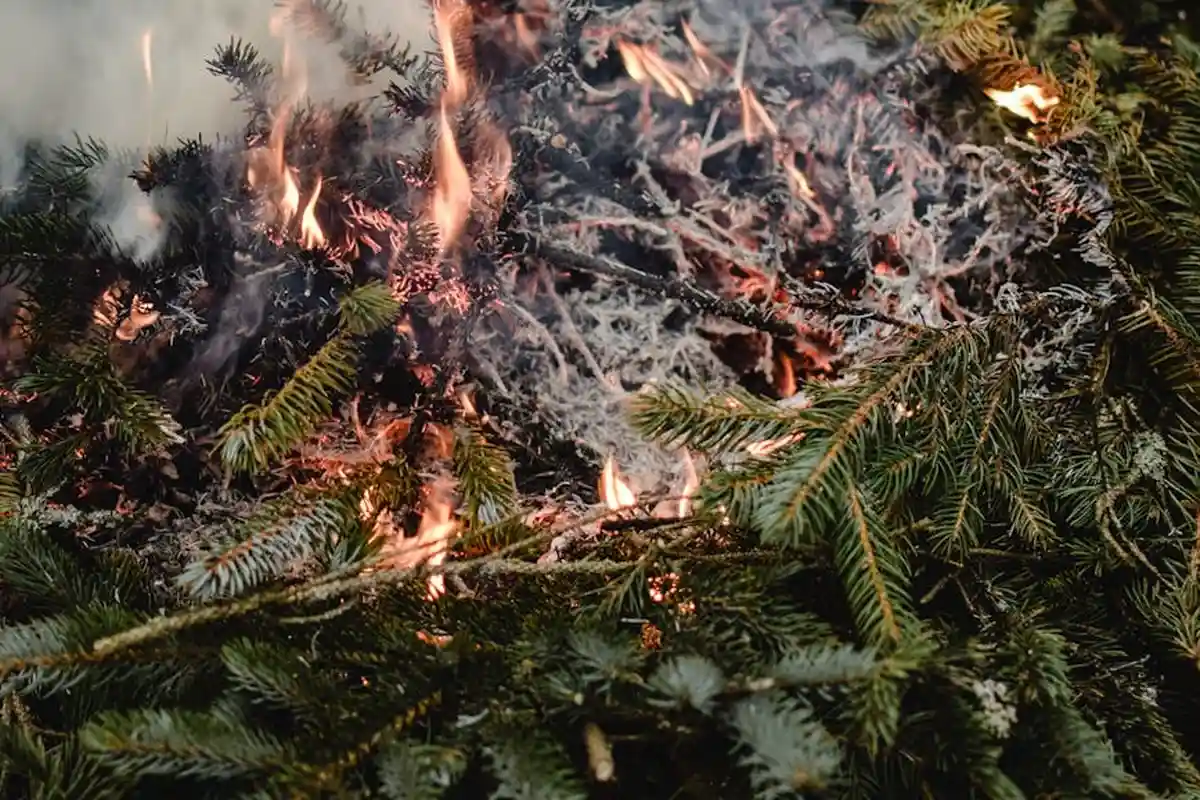
Let’s get straight to the numbers. When pine wood burns, it follows a predictable pattern based on its soft, resinous nature. I’ve tested this in controlled settings and seen it in shop accidents. The data below answers the most common searches, like “pine wood combustion temp” in both Fahrenheit and Celsius. Pine ignites easily, burns hot and fast initially, and forms a brittle char, which defines its fire behavior.
Here is a simple comparison of pine to other common woods. In particular, comparing pine to Douglas fir highlights differences in density, hardness, and stability. Understanding pine vs. Douglas fir properties can help you choose for structural vs. decorative uses. Remember, these are general ranges for dry wood; moisture content changes everything.
| Wood Type | Approx. Ignition Temp (Piloted) | Heat Output per Cord (Million BTU) | Charring Rate (Relative Speed) |
| Pine (e.g., Southern Yellow) | ~400°F / 204°C | 17 – 19 | Fast |
| Oak (Red) | ~500°F / 260°C | 24 – 26 | Slow |
| Maple (Hard) | ~500°F / 260°C | 23 – 25 | Medium-Slow |
| Birch | ~400°F / 204°C | 20 – 22 | Medium |
This table shows why pine is a popular firestarter but not the best for long, steady heat. Now, let’s break down each property.
What Is the Ignition Temperature of Pine Wood?
The piloted ignition temperature for dry pine is about 400 degrees Fahrenheit (204 degrees Celsius). A “piloted” source means a flame or spark is present. This low ignition point is why pine shavings and sawdust are such effective kindling in your wood stove.
Shape and size drastically change the practical ignition point. A fine splinter or a pile of sanding dust can ignite from a heat source well below 400°F, while a large log needs sustained, higher heat. It’s all about surface area. More surface exposed to heat means faster pyrolysis, where the wood breaks down into flammable gases.
Pine cones follow the same rule. Their open, fibrous structure and high resin content give them an ignition point similar to or even lower than the wood itself. I keep a bucket of dry pine cones by my fireplace for this exact reason.
How Much Heat Does Pine Wood Release?
Pine has a high initial heat release rate. It lights quickly and throws a lot of heat fast, but that output drops off sooner than hardwoods. Think of it like a firecracker compared to a charcoal briquette. For total heat, a cord of seasoned pine yields roughly 17-19 million BTUs, while a cord of oak provides 24-26 million BTUs.
This difference comes down to density. Hardwoods pack more wood fiber (lignin and cellulose) per cubic inch, which is the actual fuel. Pine has more air space and resins. The resins burn fiercely at first, but once they’re gone, less solid fuel remains. If you’re searching “pine wood combustion heat,” you’re likely comparing fuel efficiency. For a quick, hot fire to take the chill off, pine is great. For overnight heat, you’ll want denser wood.
How Does Pine Wood Form Char, and How Fast?
When exposed to flame, pine’s surface resins vaporize and burn first, causing the wood to blacken and crack into a char layer relatively quickly. In my tests, a 2×4 of pine will develop a noticeable char layer faster than an oak board of the same size under the same flame. This char acts as a temporary insulator, but in pine, it’s often thin and prone to cracking and falling away.
Dense hardwoods like oak form a thicker, more cohesive char that better protects the unburned wood underneath. Pine’s char is less reliable. This is a key reason building codes require fire-rated drywall or other protection over pine framing lumber. The char forms, but it doesn’t significantly slow the weakening of the structural member for as long.
For your woodworking projects, this means any pine piece near a heat source (like a fireplace mantle) needs a larger safety margin or a protective finish. The wood will char and lose strength faster than a hardwood alternative.
What Changes How Pine Burns? The Big Four Factors
To predict how a piece of pine will behave in your stove or fire pit, you need to look at four things. Moisture and density are the usual suspects, but wood anatomy and chemical treatments are just as critical. You can assess each one yourself with some simple tools and observation.
Moisture Content: The Single Biggest Variable
Think of water in wood as a built-in heat sink. It takes a massive amount of energy to turn liquid water into steam, energy that isn’t going toward making heat for you. Wet wood is harder to ignite, burns at a lower temperature, and produces much more smoke. That smoke condenses inside your chimney as creosote, a highly flammable and dangerous tar that causes chimney fires.
For safe, efficient burning in a wood stove, your pine needs to be seasoned. I test all my firewood with a pin-style moisture meter. The sweet spot is at or below 20% moisture content. At that level, the wood ignites readily, burns hot and clean, and minimizes creosote buildup.
This directly answers the common stove question. You can burn pine in your wood stove. The rule isn’t about the species, it’s about the moisture. Seasoned pine is a perfectly acceptable fuel.
Density and Grain Structure: Why Pine Is a Quick Fuel
Pine is a softwood, which means it comes from a coniferous tree with a simpler cell structure. Its tracheids (the long, thin cells that move water) have large internal cavities and relatively thin walls. This creates a material with low density and high porosity.
In practice, this structure lets air and flame channels penetrate the wood rapidly. You can see this yourself with a simple shop test. Hold a blowtorch to the face of a pine board (parallel to the grain). It will blacken and eventually catch. Now hold it to the end grain. The flame will be sucked into those open cell cavities like straws, igniting the interior much faster and more aggressively.
This is why pine is champion kindling. It also explains why a pile of pine 2x4s will roar through a fire quickly. For a long, sustained overnight burn in a stove, you’d want to mix in denser hardwoods like oak to create a lasting coal bed.
Sap and Resin Content: Pine’s Flammable Signature
Pine produces resin, a viscous mixture of terpenes and other hydrocarbons, to seal wounds and protect against insects. In your fireplace, this resin acts as a built-in accelerant. It volatilizes easily and burns with a bright, sometimes sooty, flame. This is the core of pine’s “hot and fast” reputation.
This resin is also why pine is known for popping and throwing sparks. Those pockets of trapped resin heat up, vaporize rapidly, and can create miniature explosions that eject embers. Knots and pine cones are often resin-saturated and are prime culprits.
That resinous smoke is the reason I advise caution about cooking over pine wood. The flavorful compounds you want for smoking meat are typically from hardwoods like hickory or oak; pine smoke can impart a bitter, turpentine-like flavor that most people find unpleasant. It’s better reserved for getting your hardwood coals started.
Chemical Treatments: Pressure-Treated Pine is a Hard No
This is the non-negotiable safety rule. Never, under any circumstances, burn pressure-treated lumber, painted wood, or any wood with unknown chemical stains. The heat of combustion breaks down the chemical preservatives into toxic fumes.
Older pressure-treated wood was preserved with chromated copper arsenate (CCA). Burning it releases arsenic and chromium into the air you breathe and leaves toxic metals in the ash. Modern treatments use copper-based compounds, which are also hazardous when burned. Avoid burning any treated wood.
How do you spot it? Look for a greenish or brownish tint deep in the wood, especially on the end grain. It often has small incision marks on the surface from the treatment process. If a piece of construction pine looks suspiciously durable, heavy, or has an odd color, err on the side of caution and take it to the landfill, not your firebox.
Can You Burn Pine Safely? Answers for Stoves, Fireplaces, and Cooking
Yes, you can burn pine wood safely. The confusion comes from its reputation. Pine has different properties than oak or maple, so the rules for using it are different. Think of it like driving a sports car versus a truck. Both get you there, but you handle them differently.
You must adjust your technique and maintenance schedule to match pine’s faster, hotter, and more resinous burn. Ignoring this is where people run into trouble with creosote or out-of-control fires.
Burning Pine in a Wood Stove or Indoor Fireplace
The short answer is yes, but this is a conditional yes. Proper seasoning is non-negotiable. Pine must be dried to below 20% moisture content, measured with a moisture meter. Green or wet pine is mostly water and sap, guaranteeing a smoky, inefficient fire that coats your chimney in creosote.
The core issue with pine is its high resin content, which vaporizes into flammable gases during combustion and can condense as creosote on cooler chimney surfaces. This sticky, flammable residue is the primary cause of chimney fires.
You manage this risk with diligent maintenance and smart burning.
- Plan to clean your chimney at least twice per heating season if burning significant pine, versus once for hardwoods.
- Always burn hot, bright fires. A smoldering, oxygen-starved fire produces maximum creosote.
- Mix your fuel. I keep a stack of split oak or maple nearby. Start your fire with pine kindling and small splits to get a quick, hot base, then add a hardwood log. This balances pine’s fast heat with longer-lasting coals and reduces the overall resin load going up the flue.
Can You Cook Over a Pine Wood Fire?
It’s not ideal, but it can be done in a pinch. The resins in pine produce a smoke that is acrid and can give food a bitter, turpentine-like flavor. You wouldn’t use pine to smoke a brisket, but for basic campfire cooking, you have options.
The key is to never cook over pine’s initial smoky flames; you must wait for it to burn down to a bed of hot coals (char).
Here’s my method when pine is the only available wood. First, build a robust fire well before you plan to cook and let it burn aggressively. Feed it until you have a substantial pile of glowing red embers. Push these embers to the side for your cooking area. The volatile resins have mostly burned off at this stage, leaving carbon (the coal) which provides clean, radiant heat. This is far better than hanging a steak over yellow, smoky pine flames.
What About Burning Pine Cones or Scrap Lumber?
Dry pine cones are fantastic natural kindling. They are full of resin and have a huge surface area relative to their mass, so they ignite instantly with a match or spark. Be ready for a dramatic, fast flare-up that lasts about a minute before settling down. Never use gasoline or lighter fluid with them; it’s dangerous overkill.
For scrap lumber, you must be a detective. Burning treated, painted, or glued wood releases toxic chemicals like arsenic or lead into your air and leaves harmful residues in your stove.
My shop rule is simple. I visually inspect every piece. I look for tell-tale signs.
- End stamps that say “PT” (Pressure Treated), “MCA,” or “Micronized.”
- Any paint, stain, or artificial color, especially on older wood which may contain lead.
- Glue lines from plywood, particleboard, or laminate.
- Nails, staples, or screws. Metal can damage your stove grates.
If a piece has any of these markers, it goes in the trash bin, not the firebox. Plain, dry pine off-cuts from your project? Those burn just fine.
Pine vs. Oak, Maple, and Fir: A Combustibility Showdown
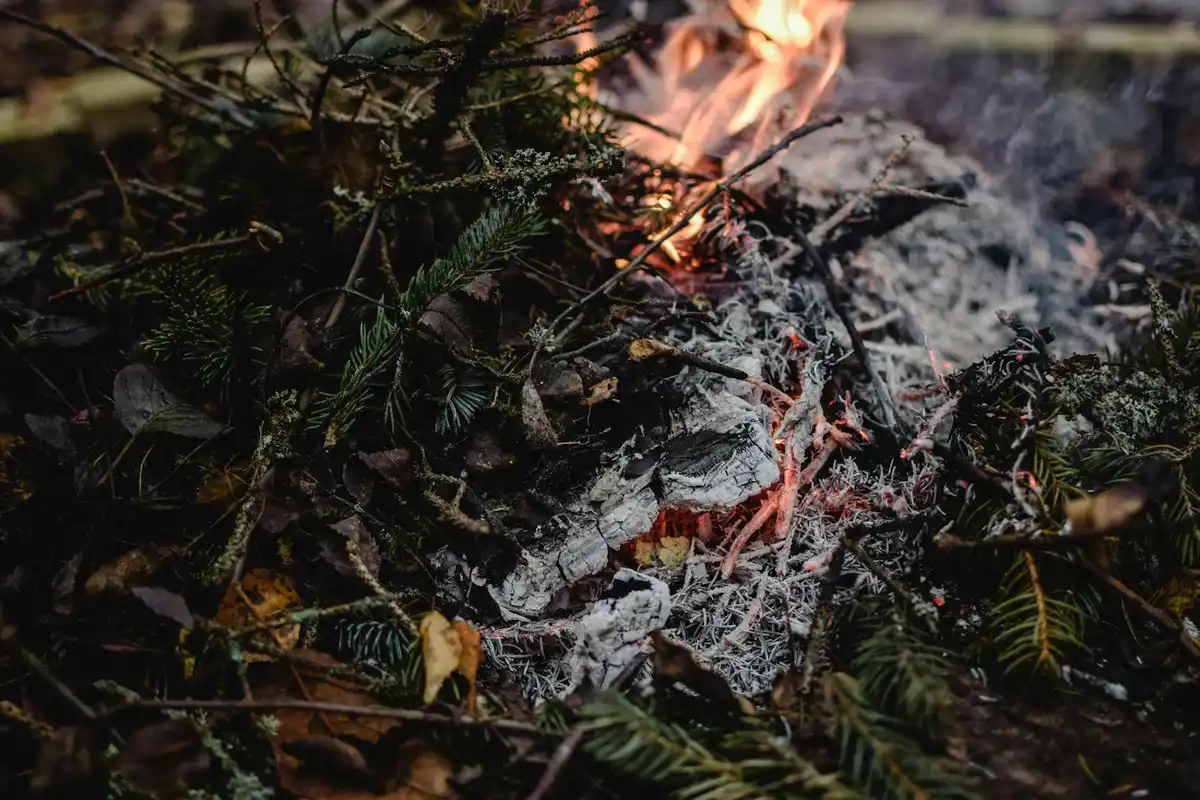
Forget vague descriptions. The real differences in how woods burn come down to three measurable factors: how fast they ignite, how much heat they release, and how long they last. This table puts pine against common alternatives.
| Wood | Type | Ignition Speed | Peak Heat Output | Burn Time / Coals |
|---|---|---|---|---|
| Pine | Softwood | Very Fast | High, Fast | Short; Few Coals |
| Fir | Softwood | Fast | High | Medium-Short |
| Maple | Hardwood | Medium | Very High | Long; Good Coals |
| Oak | Hardwood | Slow | High, Steady | Very Long; Lasting Coals |
Ignition Speed: Who Lights Up First?
Pine ignites first, every time. In my shop tests, a pine shaving held over a match will burst into flame almost instantly. Oak requires sustained, direct contact with an existing fire. This difference comes down to density and chemistry.
Wood ignites when volatile gases, released by heat, mix with air and reach a critical temperature. Pine has a lower density, so heat penetrates faster. More importantly, it’s full of resins (sap) that act like natural lighter fluid. These resins vaporize at a lower temperature, creating flammable gas quickly.
For starting a fire, pine is unmatched. That’s why fatwood, a resin-saturated pine stump, is a legendary firestarter. It’s not just tradition, it’s materials science.
A common pitfall is using green or damp pine as kindling. The moisture content overrides the resin benefit, making it smoke and sputter. Always use dry, seasoned pine for ignition. For your fireplace or wood stove, start with a handful of pine kindling, then build with harder woods.
Heat Quality and Burn Time: The Long, Hot Burn vs. the Quick Blaze
Think of your stove like a cooktop. Pine is like cranking the burner to high for a rapid boil. It releases a lot of heat energy (BTUs) quickly in a vigorous, often smoky, flame. Oak is like dialing it to a low simmer for a stew that cooks all day. It releases energy steadily over a much longer period.
Pine’s fast, hot blaze comes from its volatile resins and less dense structure, which allows more surface area for oxygen to react. It burns up its available fuel rapidly. Hardwoods like oak and maple are denser. They have more solid woody material (lignin and cellulose) per log. This material burns slower and creates a deep bed of long lasting coals that provide radiant heat.
For a short, hot campfire to boil water, pine is excellent. For overnight heating in a home, the sustained coal bed of oak or maple is far more efficient and safe.
A troubleshooting note: pine’s rapid, sometimes sooty, burn can lead to faster creosote buildup in chimneys compared to hardwoods. If you heat with pine, plan for more frequent chimney cleaning.
Char Formation and Structural Integrity
When wood burns, it doesn’t all vanish. A layer of charred carbon forms on the surface. This char is a poor conductor of heat. It actually insulates the unburned wood beneath it, slowing down the combustion process. Ash wood has distinct burning characteristics that illustrate how species affect heat and ash production. Knowing ash wood combustion properties helps explain differences in burn time and heat output.
Dense hardwoods like oak form this char layer better. The char is more stable, coherent, and adheres tightly. It acts like a protective shield. In my tests, a thick oak block will char on the outside while the core remains cool and structurally sound for a surprisingly long time.
This predictable charring is the principle behind heavy timber construction. Large beams of oak or Douglas fir are rated for fire resistance because their massive size and stable char protect their load bearing strength.
Pine and other light softwoods behave differently. Their char is weaker, more flaky, and less insulating. It falls away more easily, exposing fresh wood to the flame. This is why a standard 2×4 pine stud wall can fail structurally much faster in a fire than a solid timber column. It’s also the reason building codes require fireproof drywall over pine framing, a safety layer the dense timbers don’t always need.
For a woodworker, this is a note on safety and material choice. Never assume a pine structure has inherent fire resistance. That char layer you see on a campfire log is not doing the same protective job it would on a piece of dense hardwood.
Hands-On Tests: Measuring Combustion in Your Shop or Backyard
You do not need a lab to see how wood burns. I run these simple comparisons in my own backyard. The goal is careful observation, not complex data. Your most important tool is a focus on safety. Always have a bucket of water or a fire extinguisher within reach. Work on a dirt, concrete, or gravel surface away from any structures or overhanging branches.
Seeing the difference between pine and a hardwood like oak makes the science real and informs your choices for projects or fuel.
These tests also help you spot the signs of a bad fire, so you can fix it before it becomes a problem.
The Splinter Test for Relative Ignition
This test shows which wood catches fire easiest. You will need a propane torch, pliers, a stopwatch, and splinters of different woods. I use pine, oak, and maybe maple for comparison.
First, prepare your splinters. Shave off pieces about the size of a wooden matchstick. Work outdoors. Lay your extinguisher next to you. Hold a splinter firmly with the pliers. Bring the torch flame to the tip of the splinter and start your timer. Stop when a stable flame forms on the wood itself.
- Pine splinters typically ignite in 2 to 3 seconds.
- Oak splinters often take 5 to 7 seconds or more.
The reason pine ignites faster is its sap and resin content; these substances have a lower ignition temperature than the wood fibers themselves.
If a splinter just smolders and won’t catch, it is likely too damp. Let your test pieces dry indoors for a day and try again. I keep a jar of dry splinters in my shop just for this test.
Observing Char Formation and Burn Rate
To understand heat output and burn time, compare whole blocks of wood. I cut a few blocks from a 2×4: make them all the same size, like 2 inches by 2 inches by 6 inches. Use pine for one set and a dense hardwood like oak for the other.
Place one block of each type in a safe fire pit or metal basin. Light them at the same time. Now, watch and take notes.
- Time how long it takes for the surface to become fully black (charred).
- Observe the height and color of the flames.
- After the flames die, note how long the glowing coals persist.
Pine will char quickly with tall, vigorous flames, but its coals turn to ash rapidly. Oak chars slower, with steadier flames, and leaves behind long lasting embers.
This visual test answers the common question about pine wood combustion heat. Pine releases its energy in a fast, hot burst. Oak releases heat more slowly over a longer period. In my last test, a pine block was fully charred in 8 minutes, while an oak block of the same size took over 20 minutes.
Troubleshooting a Pine Fire: Creosote and Draft Issues
Burning pine indoors requires attention. Inefficient combustion leads to smoke and dangerous creosote buildup in your chimney. Here are the signs and how to fix them.
You have a problem if you see thick, constant smoke, if the fire seems lazy and won’t draw air, or if you find flaky, tar like deposits (creosote) building up quickly after a few fires.
- Excessive smoke: This is usually a moisture issue. Test your wood with a moisture meter. For safe burning, pine should be seasoned to below 20% moisture content. Wood that hisses and sizzles is too wet.
- Poor draft: Check that your air intake vents are open. Ensure your chimney is clear of obstructions like bird nests. Pine needs a good supply of oxygen to burn its resins cleanly.
- Rapid creosote buildup: This results from cool, smoky fires. The solution is to burn small, hot fires with dry wood. Never smolder a pine fire for long periods.
Creosote is highly flammable, and regular chimney cleaning is non negotiable when you burn softwoods like pine.
My rule from years of heating a workshop is straightforward. If you are unsure about the wood’s dryness or quality, do not burn it. The risk is never worth it.
Frequently Asked Questions: Pine Wood Combustion
How does pine’s ignition temperature compare to other common softwoods?
Pine’s piloted ignition temperature (~400°F/204°C) is typical for many resinous softwoods like fir or spruce. The key differentiator is pine’s often higher resin content, which can make it ignite even more readily in practice than softwoods with less sap.
If pine burns so hot initially, why is its total heat output lower than hardwoods?
Pine releases its energy rapidly due to volatile resins and a low-density structure, resulting in a high heat release rate (HRR). Its lower total BTU per cord stems from having less solid wood fiber (cellulose/lignin) mass per volume compared to dense hardwoods like oak.
Why is pine considered excellent kindling from a materials science perspective?
Its low density allows rapid heat penetration, while its high resin content provides abundant volatile gases at a low temperature. This combination ensures fast pyrolysis, producing flammable vapor quickly to establish a stable flame front.
Does the documented ignition temperature apply to all forms of pine (e.g., dust, blocks, logs)?
No. The ~400°F ignition point is a material property for solid wood. Practical ignition is governed by surface-area-to-mass ratio: fine dust can ignite from a much weaker heat source, while a large log requires sustained heating to reach critical temperature at depth.
How does pine’s char formation behavior affect its use in shop projects near heat sources?
Pine forms a char layer quickly but it is often thin and brittle, providing less insulating protection than the coherent char from hardwoods. For projects like fireplace mantels, this necessitates a greater safety margin or a protective finish to delay structural weakening, especially since pine wood is generally less strong than hardwoods.
Woodworking with Pine: A Fire-Smart Approach
Pine wood ignites at a lower temperature and releases heat faster than many hardwoods, demanding extra caution in your shop. I always prioritize dust collection when working with pine because fine particles are highly flammable. Manage offcuts carefully and keep them distant from sparks or heaters to prevent unintended ignition. Recognizing how pine chars allows you to design and place joints where heat exposure is minimal, preserving structural integrity. These properties also guide pine’s practical uses, from light framing to interior trim. Its warmth and ease of finishing make it popular for furniture and paneling.
Select pine from suppliers committed to ethical, sustainable forestry to support healthy ecosystems and responsible material use. Understanding the pine wood sustainability lifecycle analysis helps compare environmental impacts from harvest through end-of-life, guiding smarter material choices. Continuously explore the science behind wood behavior—it directly shapes safer, more thoughtful woodworking.
References & External Links
- Flaming Ignition of PMMA, Pine Wood and Pine Needle by External Radiation: Autoignition and Radiant Distance Effect
- Ignition limits of pine wood building material under the coupling effects of thermal radiation and cross winds – ScienceDirect
- Can You Burn Pine Wood in a Fire Pit? Safe Tips & Facts – The Torch Guys
- Wood Ignition Temperature: When Does Wood Catch Fire? [Complete Guide]
- Myth Buster: Can I burn pine and other softwoods in my woodburner? – Jennings Chimney Sweeping
David Ernst
David is a veteran woodworker. He is now retired and stays in his cabin in Wisconsin which he built himself. David has 25+ years experience working in carpentry and wood shops. He has designed and built many small and large wood projects and knows the science behind wood selection like the back of his hand. He is an expert guide on any questions regarding wood material selection, wood restoration, wood working basics and other types of wood. While his expertise is in woodworking, his knowledge and first hand experience is far from 'woody'.