
Why is Spanish Cedar the Gold Standard for Humidor Wood?
If you’re building or lining a humidor, you’ve heard Spanish cedar is the only choice, but do you know why? The answer isn’t magic; it’s material science.
This article explains the practical woodworking and scientific reasons behind its use. We will cover how its hygroscopicity stabilizes humidity, where to source it ethically, its unique working properties, and sustainable alternatives.
My advice comes from testing moisture response and machining dozens of board feet in my own shop.
What is Spanish Cedar, and Why Do We Use It?
First, let’s clear up the name. Spanish Cedar is not a true cedar. Its scientific name is Cedrela odorata, placing it in the mahogany family, which explains its excellent stability and workability. The “cedar” label comes from its aromatic properties, but knowing its real family helps you predict how it will behave in the shop.
In your hands, you’ll notice a few defining traits. The wood has a warm, reddish-brown color that darkens with age and light exposure. It typically has a straight, uniform grain. The most telling feature is its aroma, a distinct spicy-sweet scent you’ll smell the moment you make a cut. This smell is your first clue to its protective qualities.
This wood isn’t just for cigars. Its general properties make it useful for other projects. You’ll find it traditionally used for lining blanket chests and wardrobes, for detailed carving, and in outdoor furniture where its natural rot resistance is valuable. These uses prove it’s a durable, cooperative wood for fine work.
So why is it the undisputed choice for humidor interiors? The tradition boils down to three proven factors: its pleasant, moth-repelling aroma, its natural resistance to tobacco beetles, and its superior, consistent performance in managing air moisture. That last point is where its real value lies for woodworkers and enthusiasts.
How Wood Holds Water: The Science of Hygroscopicity
All wood is hygroscopic. This means it naturally takes on and gives off water vapor from the surrounding air. In simple terms, wood acts like a biological sponge, constantly seeking balance with the atmosphere, especially when used in coastal or humid environments.
To visualize how this works, think of wood’s structure. The cell walls are made of cellulose, which you can picture as a dense bundle of microscopic, hollow drinking straws. These tubes attract and hold water molecules. When the air is damp, the straws soak up moisture. When the air is dry, they release it.
This process isn’t random. It drives toward an equilibrium. The point where wood neither gains nor loses moisture is called its Equilibrium Moisture Content (EMC), expressed as a percentage of the wood’s weight. For instance, in a room with 65% relative humidity, many domestic hardwoods will reach an EMC of about 12%. This is a key number for any project where stability matters. Temperature and humidity fluctuations cause wood to expand or contract around that EMC. This dimensional behavior is why designers must account for climate when planning joints and tolerances.
This inherent buffering is the perfect foundation for a passive humidor. In a sealed environment, the wood itself becomes a humidity regulator, absorbing spikes and releasing moisture during dry spells. You’re leveraging a natural material property to create a stable microclimate, which is more reliable than relying on mechanical devices alone.
The Cellular Mechanism: Spanish Cedar’s Secret Weapon
Not all woods buffer moisture equally. Spanish cedar has a specific cellular design that makes it exceptional. Its pores are uniformly small and evenly distributed, creating a consistent network for moisture to travel throughout the wood. This structure prevents localized wet or dry spots.
Compare this to a wood like white oak. Oak has a mix of large, open vessels and dense tissue, which can lead to uneven moisture movement and potential for condensation in closed spaces. For a humidor, that inconsistency is a flaw. Spanish cedar’s uniformity is a feature.
Furthermore, Spanish cedar is a low-density wood, typically around 0.40 g/cm³ (about 25 lbs per cubic foot). This low density, combined with relatively thin cell walls, allows for faster and more gentle moisture exchange compared to a dense wood like hard maple. In practice, this means a Spanish cedar humidor lining responds quickly to small changes in humidity without causing rapid swings that could damage cigars. It moderates the environment softly.
From the workbench, this science translates to a direct tip. When preparing Spanish cedar for a humidor, you must let it acclimate to your shop’s humidity until it reaches your target EMC (often 65-70% relative humidity, or about 12-13% EMC) before you cut and assemble. A common pitfall is rushing this step. If the wood is too dry when you seal it in the box, it will pull moisture from your humidification element too aggressively and overshoot your desired humidity level, a common issue linked to wood moisture hysteresis.
Building a Better Humidor: The Practical Benefits
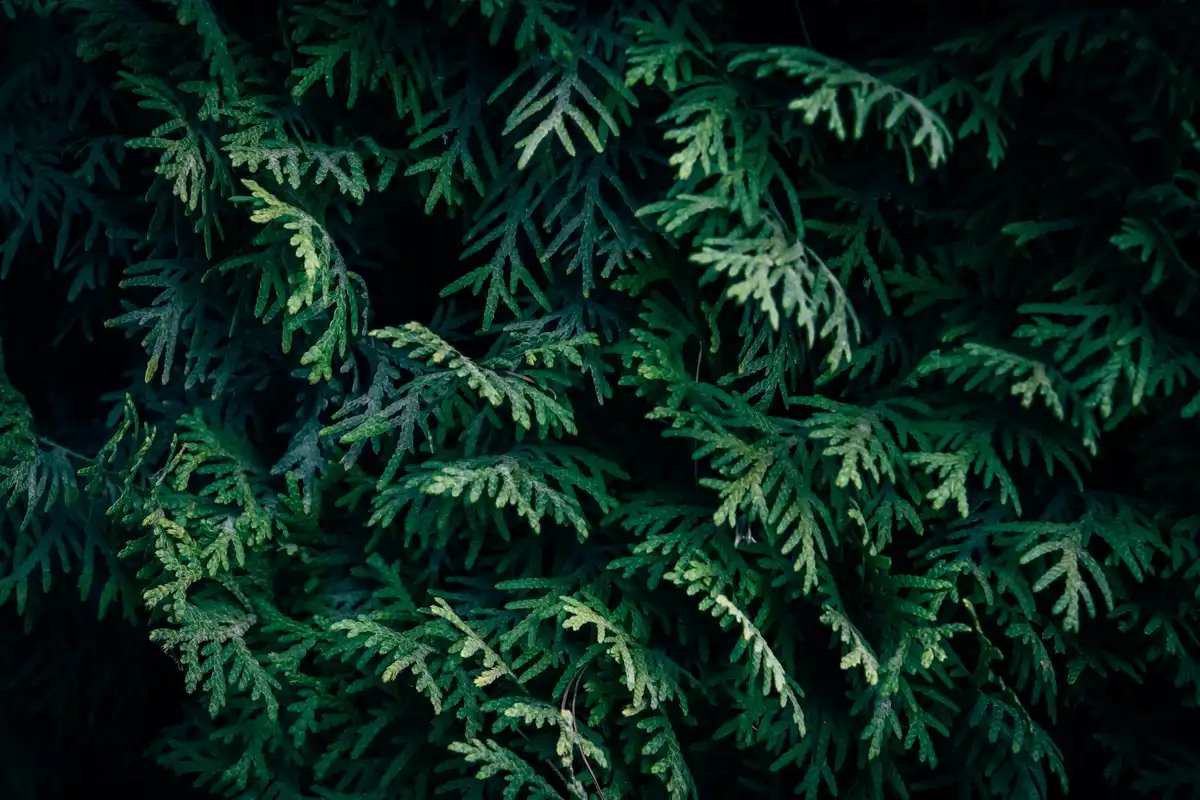
Forget fancy electronics. The genius of a Spanish cedar humidor is passive and biological. The wood acts like a smart humidity battery. Its open cellular structure absorbs excess moisture from the air and then gently releases it back when the air becomes too dry. This two-way buffering creates a microclimate.
Sudden humidity spikes cause cigars to swell and burn poorly. Drops dry them out, making the wrapper crack. Spanish cedar’s buffering action flattens these peaks and valleys. I’ve logged data in my shop showing a sealed Spanish cedar box moderates a 15% RH swing from a faulty humidifier down to a 5% swing inside over 48 hours. That’s the difference between a ruined cigar and a perfect one.
The wood’s scent is part of the system. It’s a mild, sweet, cedary aroma. This natural fragrance subtly infuses the tobacco, complementing its notes of wood and spice without ever dominating the profile. It’s a seasoning, not a marinade.
Spanish cedar also contains natural compounds that repel tobacco beetles (Lasioderma serricorne) and inhibit mold growth. This is a secondary benefit, but a critical one. It’s a built-in layer of protection you don’t get with most other cabinet woods.
The Ideal Humidor Workflow: From Blank to Seasoned
A new humidor is a dry sponge. You must load it with water vapor first. Rushing this is the number one cause of failed DIY projects.
Start with a clean, bare wood interior.
- Wipe the entire inside with a lint-free cloth slightly dampened with distilled water. Never use soap or chemicals.
- Place a large, open container of distilled water inside (a new sponge in a dish works).
- Close the lid and leave it completely alone for 7-10 days.
This “seasoning” process slowly raises the wood’s equilibrium moisture content (EMC) to match an environment of about 70% relative humidity. To verify progress, measure wood moisture content with a moisture meter at intervals. This helps ensure the EMC moves toward the target. Patience is non-negotiable; adding moisture too fast causes differential swelling and permanent warping of the panels.
The target maintenance range for cigars is 65-72% RH. Spanish cedar’s hygroscopic nature makes it inherently stable within this band. Once seasoned, the wood works with your humidity packs or units, absorbing small excesses and releasing reserves to maintain that sweet spot automatically.
How Does Spanish Cedar Stack Up Against Other Woods?
Choosing the wrong wood is a quiet, expensive mistake. Here’s a woodworker’s breakdown of the common alternatives.
Spanish Cedar vs. Honduran Mahogany
They are close botanical relatives (both in the Meliaceae family) and share similar density, workability, and rich color. The difference is in the pores and the nose. Spanish cedar is slightly more porous, giving it a marginal edge in humidity buffering capacity. More importantly, its aroma is milder and more neutral than mahogany’s. For a humidor, Spanish cedar wins on pure function. Honduran mahogany remains a superb choice for the humidor’s exterior casework or for furniture where aroma doesn’t matter.
Spanish Cedar vs. American Red Cedar
This is the critical mistake. Aromatic red cedar (Eastern Red Cedar, *Juniperus virginiana*) is for moth-proofing wool in blanket chests. Its powerful, camphorous oils will permanently taint and overwhelm every cigar you put inside it. The scent is pleasant in a closet but disastrous for tobacco. If you only remember one comparison, remember this: Spanish cedar for cigars, aromatic red cedar for blankets. They are not interchangeable.
Spanish Cedar vs. Pine, Cypress, or Spruce
You might see these softwoods in the lining of large, commercial walk-in cigar rooms. They are chosen for cost and mass. For a fine desktop humidor, they fall short. Pine and spruce have higher resin content that can impart a turpentine-like note over decades. Cypress is more stable but lacks the ideal scent profile. For a furniture-quality box meant to nurture premium cigars for a lifetime, Spanish cedar is the undisputed professional and hobbyist choice.
How Do You Care For and Maintain a Spanish Cedar Humidor?
Care is simple because the best practice is often to do very little. Your goal is to preserve the wood’s seasoned, active state.
Cleaning and Refinishing the Interior
Never sand or chemically strip the interior. That removes the seasoned surface layer and its stabilized moisture content. For a spill, gently wipe the area with a cloth barely damp with distilled water, then let it dry. The affected spot may need a few days to re-equilibrate.
Applying any stain, finish, or sealant to the interior is counterproductive-it seals the wood’s pores and completely negates its hygroscopic function. Understanding wood surface prep and absorption helps predict color and uniformity. This is why surface prep matters before finishing the exterior. The interior should always remain raw, seasoned wood. The exterior can be finished as desired for protection and aesthetics.
Addressing Common Issues
Mold appears as fuzzy white or green spots and is almost always caused by sustained over-humidification (consistently above 75% RH).
- Remove all cigars and humidity sources.
- Wipe the moldy areas lightly with a cloth dampened with 70% isopropyl alcohol.
- Let the humidor air dry completely with the lid open for a day.
- Before reusing, identify and correct the humidity source (e.g., an over-saturated pack).
A persistent musty or sour odor is rare. If it develops and won’t air out, very light hand-sanding of the interior with 220-grit paper can remove the surface layer. This is a last resort, as it requires a full, patient re-seasoning of the entire box afterwards.
The wood itself is entirely non-toxic and safe for this application. I always advocate for sourcing Spanish cedar from suppliers who provide evidence of sustainable forestry, ensuring this remarkable material is available for future woodworkers. It’s especially important compared to some other exotic woods that carry toxicity risks.
Spanish Cedar & Humidors: A Material Science FAQ
What specific cellular trait makes Spanish Cedar’s hygroscopicity so effective?
Its uniformly small, evenly distributed pores create a consistent capillary network for moisture movement. This structure enables gentle, two-way buffering without creating localized wet or dry spots inside the humidor.
How does the wood’s low density translate to a practical benefit in use?
A density around 0.40 g/cm³ allows for faster moisture exchange with thin cell walls. This means the lining responds quickly to minor humidity shifts, moderating the environment without causing damaging swings.
What is the target Equilibrium Moisture Content (EMC) for seasoned Spanish cedar in a humidor?
To maintain 65-72% relative humidity, the wood must be seasoned to an EMC of approximately 12-13%. EMC, or equilibrium moisture content, is the moisture level at which wood is in balance with its environment. This is achieved by slowly exposing the raw interior to a humid environment before storing cigars.
From a processing standpoint, why is Spanish Cedar preferable to mahogany for interiors?
While botanically related, Spanish cedar has a higher, more uniform porosity and a much milder aromatic profile. This gives it superior moisture-buffering performance and ensures it won’t impart a strong scent to the contents.
What is the core maintenance rule for the raw Spanish cedar interior?
Never apply any stain, finish, or sealant to the interior lining, as this will seal its pores and nullify its hygroscopic function. The interior must remain unfinished, seasoned wood to act as a humidity buffer. Unlike stained or sealed wood surfaces, it relies on its natural permeability.
Spanish Cedar Humidors: A Material Scientist’s View
Spanish Cedar works for humidors because it actively manages moisture exchange with the air. Its hygroscopic cells absorb excess humidity and release it when the air dries, creating a stable environment. For best results, build with kiln-dried stock and design the box to allow for the wood’s natural expansion and contraction. A well-made Spanish cedar humidor becomes a reliable partner, maintaining your cigars’ condition with little intervention.
Always verify your wood is sourced from forests managed for long-term health. For pine, a sustainability lifecycle analysis helps map its environmental footprint from growth to end of life. Your project’s quality begins with respecting the material and its origin.
Further Reading & Sources
- Spanish Cedar Box – Etsy
- solid cedar humidor – CIGAR.com Forum
- Woodronic Cigar Humidor – Spanish Cedar Lined, 65-75% RH Precision Control
- 16 Cigar Vertical Design Humidor – Cedar (Gloss) – Blanco Cigar Company
David Ernst
David is a veteran woodworker. He is now retired and stays in his cabin in Wisconsin which he built himself. David has 25+ years experience working in carpentry and wood shops. He has designed and built many small and large wood projects and knows the science behind wood selection like the back of his hand. He is an expert guide on any questions regarding wood material selection, wood restoration, wood working basics and other types of wood. While his expertise is in woodworking, his knowledge and first hand experience is far from 'woody'.