
Mahogany vs. Rosewood vs. Cherry: Which Wood Performs Best?
Choosing between mahogany, rosewood, and cherry often comes down to balancing hardness, stability, and your budget. You need a wood that can handle your project’s demands without warping or breaking the bank.
This guide breaks down these classic woods using shop-tested data. We will cover Janka hardness for wear and tear, density for machining and weight, wood movement for long-term stability, and how each wood takes a finish.
My advice comes from milling and testing these woods in my own shop, comparing their scientific data to real-world results.
Why Compare Mahogany, Cherry, and Rosewood?
These three species represent different paths to a beautiful project. You choose them for more than just color. You choose them for how they behave in your shop and in your home.
Think of them as having distinct personalities. Genuine mahogany is the stable, cooperative workhorse. Cherry is the friendly, domestic wood that matures gracefully. Rosewood is the dense, hard luxury option that demands respect. Knowing which personality fits your project prevents costly mistakes in joinery and finishing. It also guides you to ask the right questions about where your wood comes from, which is vital for rare species like rosewood.
The Woodworker’s Spec Sheet: Hardness, Weight, and Movement
Forget abstract numbers. This is about what happens when your plane iron meets the wood, how heavy a cabinet feels, and whether your tabletop will stay flat. Let’s start with the data.
Technical Spec Sheet: Mahogany vs. Cherry vs. Rosewood
| Species | Janka Hardness (lbf) | Specific Gravity | Volumetric Shrinkage | Toxicity & Dust Notes |
|---|---|---|---|---|
| Cherry (Black) | 950 lbf | 0.50 | 11.5% | Low risk. Common wood dust precautions apply. |
| Mahogany (Genuine) | 800 – 900 lbf | 0.52 | ~7.5% | Low risk. Can cause mild skin or respiratory irritation in some. |
| Rosewood (Brazilian) | 2,790 lbf | 0.84 | ~7.8% | High risk. Dust is a potent sensitizer; always use respiratory and skin protection. |
Use cherry as your mental benchmark. Mahogany is roughly 10% softer than cherry, which you feel immediately as easier planing and carving. Rosewood is in another league entirely, nearly three times harder than cherry.
What Janka Hardness Really Means for Your Tools
The Janka test measures the force needed to embed a steel ball halfway into the wood. In the shop, this translates directly to tool sharpness and feed rate.
With mahogany, your tools stay sharp longer. You can take a moderately aggressive pass with a hand plane without fear. Cherry is a bit less forgiving. You need a keen edge, but it still machines predictably. Rosewood changes everything. Is rosewood harder than mahogany and cherry? Absolutely. It will test your sharpening skills and dull carbide router bits noticeably faster.
For sanding, I start at 120-grit for mahogany and cherry. For rosewood, I never start coarser than 100-grit, and I make more gradual steps between grits to erase scratches. This hardness directly impacts durability. A rosewood tabletop will resist dents from daily use far better than mahogany. But both, with proper care, will last generations. The mahogany will simply show a gentle patina of use sooner, which many find desirable.
Density and Weight: Lifting the Boards
Specific gravity is density compared to water. A higher number means a heavier, denser wood. Pick up a board of pine (S.G. ~0.35), then pick up cherry. You’ll feel the difference.
So, is cherry wood heavy? Compared to pine or poplar, yes. Compared to oak or maple, it’s moderately heavy. A typical cherry board feels substantial but not burdensome. Mahogany is very close to cherry in weight-you won’t notice a major difference lifting them. Rosewood feels like iron. Its density is a key part of its luxurious, solid feel.
This density affects workability. Dense woods like rosewood are more prone to tear-out, especially with figured grain, if your tools are not razor-sharp. The weight also influences a project’s final feel. A mahogany bookshelf feels sturdy. A rosewood box feels like a vault.
Predicting the Move: Wood Movement Coefficients
Wood shrinks as it loses moisture. It shrinks more along the growth rings (tangentially) than across them (radially). This difference is why a flat-sawn board cups-the tangential face shrinks more than the radial edges.
The Volumetric Shrinkage number combines these movements. A lower number means a more stable wood. Look at the table. Mahogany’s low shrinkage is its superpower. The typical wood movement characteristics of mahogany are minimal, making it incredibly forgiving for large panels and wide tabletops. It’s a great choice if wood movement calculations make you nervous.
Cherry moves about 50% more than mahogany. This isn’t problematic, it just needs planning. You must allow for it in your joinery-using breadboard ends that allow for expansion, for example. Understanding the stability of cherry wood compared to mahogany means knowing you can’t constrain it across its width without risking splits. Rosewood, despite its density, has movement similar to mahogany, which is part of what makes it such a prized (and expensive) material for instrument makers.
The Science in the Sawdust: Why These Woods Behave Differently
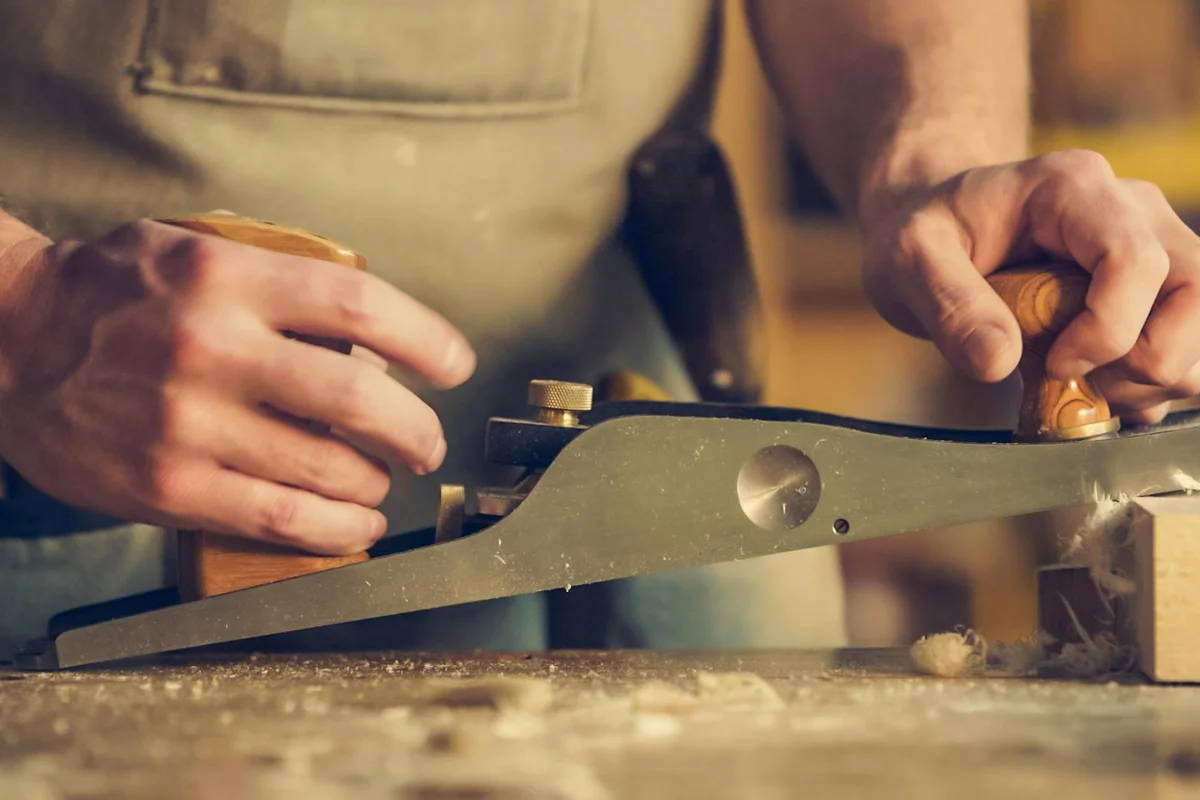
Janka hardness and shrinkage numbers are useful, but they’re just symptoms. The real cause is the wood’s cellular architecture. Think of it like the difference between a hardwood and softwood, a block of cheese, and a bar of soap. They feel and react differently because of what they’re made of at a microscopic level.
Cellular Structure: Pores, Fibers, and Density
Under a magnifying glass, the end grain of these woods tells a clear story. Mahogany has distinct, open pores you can feel with your fingernail. Cherry has much smaller, diffuse pores that are barely visible. Rosewood often appears nearly solid, with its dense fibers and natural oils filling the spaces.
This pore size dictates your finishing strategy. For a glass-smooth finish on mahogany, you must use a pore filler. Sanding alone just smooths the ridges between the valleys. Cherry’s fine pores can be filled with finish alone after a few coats. Rosewood’s tight, oily structure can sometimes repel standard finishes, making a solvent wipe to de-grease the surface a critical first step.
Fiber density is the primary driver of strength and hardness, which is why rosewood ranks so high on the Janka scale. Its cell walls are thicker and packed tighter, like a dense hardwood floor. Mahogany’s strength comes from a balance of moderately dense fibers and its interlocked grain pattern, which resists splitting. Cherry’s fibers are less dense, making it easier to work but more susceptible to dents than the other two. In my shop tests, cherry will show a tool mark if you look at it sideways, while rosewood can dull a planer blade on a single pass.
Hygroscopy 101: How Wood Absorbs and Releases Moisture
Wood doesn’t just “get wet.” Its cell walls are made of cellulose, a polymer that attracts and bonds with water molecules. When the air is humid, these walls absorb moisture and swell. When the air is dry, they release moisture and shrink. This isn’t a surface event. It happens throughout the entire thickness of the board.
This dimensional change, called wood movement, is the single greatest force you design against in furniture making. A wide tabletop can shrink or swell by a quarter-inch or more across its width with the seasons. This is why frame-and-panel construction exists. The frame holds the shape, while the floating panel is free to move within it.
This is also why stability often trumps pure hardness. A wood like mahogany, with its relatively low shrinkage coefficient, is a premier choice for a large cabinet or chest. It will stay flat and square with seasonal changes. A harder, less stable wood could develop gaps or exert enough force to break its own joints. I’ve seen a gorgeous rosewood box tear its own mitered corners apart because the movement wasn’t accounted for. For big casework, predictable stability is worth more than an impressive hardness number.
Workability in the Shop: Planing, Sanding, and Joinery
Let’s move from theory to the bench. How these woods actually behave under your tools dictates your project’s success and your shop time enjoyment.
Machining and Hand-Tool Feel
Your first pass with a plane or saw tells you everything. Cherry is famously cooperative. It has a fine, uniform texture that shears cleanly. Cherry cuts with a creamy, almost silent smoothness that makes hand-tool work a genuine pleasure. You get minimal tear-out, and sharp edges stay sharp for a long time.
Mahogany is also very good, but it plays a different game. Its interlocked grain and slightly stringy nature mean it can chip out if you’re not careful. You must pay more attention to grain direction with mahogany, as planing against it will almost certainly lift a small chip. With the grain, it machines beautifully, leaving a satiny surface right off a sharp blade.
Then there’s rosewood. It doesn’t cut; it abrades. The high density and silica content act like fine sandpaper on your tools. Rosewood’s primary characteristic is its rapid blunting effect on cutting edges, which feels like your tools are losing their sharpness mid-cut. The cut surface is glassy and polished, but you pay for it in frequent tool maintenance.
Your tool setup needs to adapt. For cherry and mahogany, a standard high-speed steel or sharp carbide blade with a 20 to 30-degree hook angle works perfectly. For rosewood, you need a strategic defense. I switch to carbide-tipped blades with a lower hook angle (around 15 degrees) for a more shearing cut. For hand planes on rosewood, a higher bed angle (like 50 degrees or more on a bevel-up plane) helps the edge slice through the abrasive fibers instead of scraping them.
So, how does cherry differ? It’s the benchmark for predictable, forgiving workability. Mahogany requires more grain awareness, and rosewood demands complete respect for its toll on your edges. Cherry lets you focus on the joinery; rosewood makes the joinery a fight.
Gluing and Finishing Prep Challenges
Getting these woods to hold together and accept a finish involves chemistry, not just carpentry.
Rosewood is the trickiest. Its beautiful color comes from natural oils and resins that repel water-based adhesives. You must solvent-wipe rosewood with acetone or denatured alcohol immediately before applying glue to ensure a strong, lasting bond. Skip this step, and your joint might fail years later as the oil barrier prevents proper adhesion.
Pore filling is the next big divider. Mahogany has large, open pores. If you want a mirror-smooth, glass-like finish (think on a guitar body or high-end table), you must fill them. I use a commercial grain filler or a thick slurry of sanding dust and finish. For a traditional, perfect surface on mahogany, pore filling is not optional; it’s a required step.
Cherry has much smaller pores. You can fill them for an ultra-smooth feel, but many woodworkers love the subtle texture of a unfilled cherry surface under oil or shellac. It’s a matter of taste and project style.
With rosewood, you often do the opposite. Its natural oils can create a deep, lustrous sheen with just polishing. Filling rosewood’s pores is frequently skipped to preserve its natural tactile and visual character, letting the wood itself be the star. A simple oil and wax treatment is often the preferred finish.
Where Each Wood Shines: Picking the Right Project
Numbers on a chart are useful, but a great woodworker matches the material to the task. You can force any wood to work, but choosing the right one from the start saves frustration and makes a better piece. Here’s where I reach for each of these three, based on decades in the shop.
Cherry: The Evolving Showpiece
Cherry is a patient woodworker’s best friend. Its initial pinkish-brown tone is just the opening act. When exposed to light, it undergoes a photochemical reaction, darkening to a deep, rich reddish-brown over weeks and months. This isn’t a flaw; it’s a feature. Plan for this color change by allowing freshly milled boards to “sunbathe” before final finishing to avoid uneven darkening later (especially when staining or painting).
That beautiful, relatively straight grain and moderate hardness make it a dream for detailed hand tool work. It carves cleanly, planes to a glassy finish, and accepts joinery with minimal tear-out. I use it for heirloom casework, drawer fronts, and tables where I want the piece to mature with the owner. Its 7.5% tangential shrinkage rate means it’s stable enough for solid panels in a controlled environment.
But that 950 Janka hardness has limits. I would not use it for a kitchen table without a robust, film-building finish like a conversion varnish. For a writing desk or a blanket chest, it’s perfect. The common pitfall is finishing it too quickly. Let the color settle, then apply a clear oil or shellac to celebrate, not hide, its natural evolution.
Mahogany: The Stable Canvas
If your project can’t afford to move, think mahogany. Its remarkably low 4.1% tangential shrinkage is not just a number; it’s the reason it’s trusted for boatbuilding and exterior doors. In the shop, this stability translates to predictability. A large carcase or door frame built from mahogany is far less likely to develop seasonal gaps or stress its joints over time compared to many other hardwoods.
Its uniform, moderately open pore structure and straight grain make it an ideal substrate for veneers. The stable base prevents telegraphing or checking of the delicate veneer layer. For carving, its interlocked grain and medium density allow for holding crisp, fine details without the fuzziness you can get with oak or the brittleness of some denser woods.
It works easily with both hand and power tools, though its silica content can dull cutters faster than cherry. The practical tip here is about finishing. Its natural color is beautiful, but it also takes stains and dyes with incredible evenness. You can make it look like almost anything, but I prefer to highlight its own character with a simple oil finish that deepens its reddish hue.
Rosewood: The Dense Accent
Rosewood is not a primary building material; it’s a strategic highlight. Its extreme density (over 900 Janka for most species) and natural oils make it nearly self-lubricating and incredibly wear-resistant. This is the wood you use where your body meets the tool, or where a small part must endure a lifetime of friction.
That’s why it’s legendary for tool handles, guitar fingerboards, and piano keys. The oiliness that makes it durable also makes gluing a known challenge. You must wipe joining surfaces with acetone or alcohol just before applying adhesive to remove the surface oils for a strong bond. Its high density also means it’s heavy. A large case piece would be prohibitively weighty and expensive.
In my shop, rosewood is for turning small, stunning objects, creating bold inlay lines, or crafting hardware like knobs and pulls. Its workability is fair, but it demands sharp tools and respect. Sawing or sanding creates a distinctive, sweet aroma. Remember, many rosewoods are CITES-listed, so always demand and verify documentation proving sustainable, legal sourcing. Its best use is as the jewel, not the setting.
Finishing: From Oils to Lacquers
Finishing is where the true character of these woods emerges. Their cellular structure, natural oil content, and color pigments react differently to each product you apply.
The finishing properties of mahogany, rosewood, and cherry are defined by their porosity, oil content, and how they interact with light and oxygen over time. Understanding these traits prevents common finishing failures, like blotchy stain or cloudy topcoats.
Color Evolution and Grain Presentation
Cherry’s color change is the most dramatic. Freshly milled, it’s a light pinkish-tan. Leave a sanded board on my bench near a window for a month, and the side facing the light becomes a deep, rich reddish-brown. The shaded side stays pale. This photochemical darkening is a reaction to UV light and oxygen.
Cherry doesn’t just get darker, it gains a sophisticated, warm patina that is the main reason woodworkers choose it. Its grain is typically subdued, with gentle waves or curls that become more apparent as the color deepens. It’s subtle, not bold.
Mahogany is different. Its grain is the star. Under a finish, the alternating hard and soft bands in its ribbon stripe figure reflect light differently, creating a three-dimensional, shimmering effect called chatoyance. The wood starts a reddish-brown and mellows to a deeper, warmer brown, but the grain pattern always remains the focal point.
Rosewood often needs no help. Many species, like Indian Rosewood, are so densely packed with natural oils and resins that they have a built-in luster right off the sander. Applying a finish is less about adding protection and more about enhancing this innate depth. The high contrast between its dark chocolate body and vivid purple or black grain lines is instantly striking.
Recommended Finish Types for Each
Your finishing strategy must respect the wood’s nature.
For Cherry, I use an oil-based finish first. A coat of pure tung oil or a Danish oil does two things. It immediately enriches the color, giving you a preview of the future. More importantly, the oil allows oxygen to penetrate, which accelerates the uniform darkening process. After the oil cures, I add a protective topcoat like a thin shellac or lacquer for durability.
Mahogany has open pores. If you want a glass-smooth surface, you must fill them. You can use a paste wood filler tinted to match the wood or to contrast. Staining mahogany can be tricky; it can blotch on plain surfaces but looks magnificent on figured areas. Often, I skip stain and let its natural color shine. After filling (or not), any topcoat works well, from oil to polyurethane.
Rosewood requires a careful hand. Its natural oils can interfere with the adhesion of film-forming finishes like varnish or lacquer, causing them to peel years later. For most rosewood projects, I stop at oil or a simple beeswax blend. This lets the wood’s own beauty do the work. If you need a film finish, first seal the wood with a coat of dewaxed shellac to block the oils, then proceed cautiously.
Cost, Availability, and Sustainable Choices
Let’s talk real shop math. Forget list prices. Your wallet feels cost in board feet for a specific project.
Picture a standard 1″ thick, 6″ wide, 24″ long board. That’s one board foot. Now, let’s price it out. Domestic cherry might run you $8 to $12 per board foot. Genuine Honduran mahogany often sits between $15 and $25. True rosewood, like Brazilian or East Indian? You can expect $50 to over $100 per board foot, if you can find it legally.
The project scale changes everything. Using rosewood for a large table is a major investment, while using it for inlay or guitar fretboards is a justifiable splurge for its unique properties.
Cherry is the accessible workhorse. You can build an entire cabinet from it without a second mortgage. Mahogany is a step up, offering stability and workability for heirloom pieces. Rosewood is in its own league, reserved for accent and specialty work where its density and color are non-negotiable.
Ethical Sourcing and Alternatives
The science of wood identification matters here. The term “rosewood” isn’t just one tree. It refers to the Dalbergia genus, and almost all true Dalbergia species are listed under CITES Appendix II. This is a global treaty controlling trade to prevent endangerment.
Buying any Dalbergia rosewood requires rigorous documentation proving it was harvested and traded legally. Reputable dealers will have this CITES paperwork. If they don’t, walk away. For most projects, consider stunning alternatives like African blackwood (for turning) or richly figured walnut for accents.
“Mahogany” is perhaps the most abused name in the lumberyard. Scientifically, only Swietenia species (like Honduran) are genuine. What’s often sold as “Philippine mahogany” is actually Luan, a different wood entirely. For reliable, ethical sourcing, look for verified Honduran mahogany or its excellent African cousin, Khaya (often called African mahogany). Khaya has nearly identical working properties and is generally more sustainable.
This brings us to cherry. From a sustainability and ethics standpoint, it’s a champion. Cherry is a domestic hardwood, grown and harvested under strong forestry regulations in North America. Its entire supply chain is shorter and more transparent. It grows relatively quickly, is abundant, and its beautiful aging process-from salmon pink to a deep, warm red-brown-gives you a finish no stain can match. For 90% of fine furniture projects, cherry provides the perfect balance of beauty, performance, and conscience.
Troubleshooting Common Problems
Every wood has its personality, and that includes its unique set of headaches. Knowing the science behind these issues lets you solve them before they ruin a project. Let’s tackle the most common ones for these three species.
Cherry’s Blotchiness and Sanding Marks
Cherry is famous for staining unevenly. This blotchiness isn’t a flaw in your technique, but in the wood’s structure. The dense, solid bands of latewood absorb stain slowly, while the porous, spongy earlywood soaks it up like a sponge. The solution is to manipulate how the wood accepts color, not to fight against its natural anatomy. This is where understanding wood anatomy and stain absorption methods becomes crucial.
You must also sand cherry meticulously. Its moderate hardness (around 950 on the Janka scale) means sanding scratches are just soft enough to be prominent but hard enough to be stubborn. Skipping grits leaves valleys that catch light and stain darker, creating visible lines.
My shop-tested method is straightforward:
- Sand progressively to 220 grit, never skipping a step. I stop at 180 for pieces that will get heavy wear, like a tabletop.
- Before any stain, apply a “washcoat.” This is a thin, 1-pound cut of shellac or a commercial sanding sealer. It partially seals the thirsty earlywood, promoting even color.
- For a natural look, skip stain entirely. Use a clear oil or shellac. Cherry’s own color darkens beautifully with UV light and oxygen.
Mahogany’s Tear-Out and Fuzzy Grain
Mahogany’s low density and often interlocked grain make it prone to tearing out during planing or routing. The wood fibers aren’t strongly bonded, so a dull tool lifts and splits them rather than shearing them cleanly. You’ll also notice a surface that feels fuzzy even after sanding. This is “raised grain,” where tiny, broken fibers swell with moisture from the air or your first coat of finish.
A sharp, high-angle cutter is non-negotiable for machining mahogany cleanly. In my thickness planer, I use a dedicated set of blades sharpened to a 40-degree cutting angle for mahogany and similar woods. The higher angle shears the fibers more cleanly.
To achieve that classic, glass-smooth mahogany finish, you must fill the grain. Its large, open pores will swallow endless coats of finish otherwise.
- Sand to 150 grit.
- Apply a grain filler (oil-based for oil finishes, water-based for lacquer). Force it into the pores with a plastic scraper or stiff card.
- After it dries, sand lightly with 150 or 180 grit to remove filler from the surface, leaving it only in the pores.
- Proceed with your finish coats. The surface will now build to a smooth, reflective layer much faster.
Rosewood’s Oil and Dust Safety
Rosewood’s natural oils are a double-edged sword. They contribute to its durability and rich luster but cause major issues in the shop. These oils can inhibit the cure of standard wood glues, leading to weak joints. The dust is a known respiratory irritant and sensitizer.
You must treat rosewood dust with more respect than common shop dust. A simple dust mask is insufficient. I use a properly fitted respirator with P100 cartridges whenever cutting or sanding rosewood. Good dust collection at the source is critical.
Before gluing, you need to remove the surface oils from the joint areas. Wipe the mating faces thoroughly with a rag dampened with acetone or denatured alcohol. Let it evaporate completely, then glue immediately. This gives your adhesive a fighting chance to bond to the wood cellulose, not just sit on top of an oil film.
For finishing, these same oils can cause “fish eyes” or poor adhesion in some film-forming finishes like lacquer or varnish. A barrier coat of dewaxed shellac is a reliable first step to seal in the oils and provide a universal bonding surface.
Walnut as a Benchmark: How It Compares
Before we get lost in the specifics of mahogany, rosewood, and cherry, let’s anchor ourselves with a familiar friend: black walnut. In my shop, American black walnut is the control group. It’s the wood I compare everything else to for balance. That balance becomes especially useful when pitting walnut against mahogany in real-world projects. The practical contrasts in grain, color, and workability guide material choices and finishing decisions.
So, how strong is walnut wood? Its Janka hardness sits at 1,010 lbf. That makes it substantially harder than cherry or mahogany, but only about half as hard as Brazilian rosewood. In practice, this means walnut dent and dings less easily than many cabinet woods, but it’s still forgiving to plane and chisel. It’s a perfect middle ground for hand tool work.
How heavy is walnut wood? With an average specific gravity of 0.55, it has a satisfying heft without being cumbersome. You feel its density when you lift a board, but you won’t strain your back building a large case from it. This density directly contributes to its strength and its renowned stability.
That stability is walnut’s secret weapon. It has moderate, predictable wood movement. A wide walnut panel will expand and contract with the seasons, but it rarely fights you. I’ve built table tops over 30 inches wide from walnut that have stayed flat for years with simple breadboard ends. You can trust it.
Plotting Your Woods on a Practical Spectrum
With walnut as our center point, let’s place all four woods on a spectrum you can use at the lumber yard.
Think of hardness and density increasing together as you move from left to right. On the far left, you have soft and light woods like pine. On the far right, you have ultra-dense exotics like lignum vitae. Our four woods fit in the middle-to-right range.
- Cherry (950 lbf Janka, ~0.50 SG): Softer and slightly lighter than walnut. It’s your go-to for intricate carving or when you want a wood that ages beautifully but requires a gentle touch to avoid dents.
- Mahogany (Genuine, ~800 lbf Janka, ~0.45 SG): Softer and notably lighter than walnut. Its low density is why it’s a historic choice for massive furniture-it’s strong for its weight and incredibly stable. It sands almost too easily.
- Black Walnut (1,010 lbf Janka, ~0.55 SG): The benchmark. Durable enough for a tabletop, workable enough for detailed joinery, stable enough for wide panels.
- Brazilian Rosewood (2,790 lbf Janka, ~0.85 SG): Far harder and denser than walnut. Working it feels different; your tools need to be razor-sharp, and sanding takes patience. This density makes it incredibly stable and durable.
Here’s the translation for your next project. Choose based on the axis that matters most.
For stability in wide panels: Mahogany and Walnut are your top picks. Rosewood is excellent but costly. Cherry requires more careful design to accommodate movement.
for detailed hand tool work: Cherry and Walnut are dreamy. Mahogany is easy but can crush if your chisel is dull. Rosewood demands respect and sharp tools. Janka hardness offers a quick way to compare edge resistance across species. It helps guide tool selection and sharpening approach.
For dent resistance in high-use areas: Rosewood is in a league of its own. Walnut is a robust daily driver. Cherry and Mahogany will show wear more quickly, which can be part of their charm.
You don’t need to memorize numbers. Just remember where each wood sits relative to the walnut you know. That mental map will steer you toward the right material every time.
Frequently Asked Questions
How does the workability of cherry differ from mahogany and rosewood?
Cherry offers the most forgiving workability, cutting cleanly with minimal tear-out. Mahogany requires attention to grain direction to avoid chipping, while rosewood is highly abrasive and rapidly dulls cutting edges.
What are the common uses for mahogany, rosewood, and cherry in woodworking?
Mahogany excels in stable casework, carving, and as a veneer substrate due to its minimal movement. Cherry is ideal for heirloom furniture and detailed hand-tool work, while rosewood is reserved for durable accents like tool handles, inlay, and fretboards. In cherry wood furniture making, the wood’s smooth grain and warm aging tones yield timeless, craft-worthy pieces.
How does the cost of rosewood compare to mahogany and cherry?
Rosewood (Dalbergia spp.) is significantly more expensive, often 4-10 times the cost of domestic cherry, due to its density, appearance, and CITES trade restrictions. Genuine mahogany is a mid-tier option, typically costing 1.5 to 3 times more than cherry.
What are the finishing properties of mahogany, rosewood, and cherry?
Mahogany typically requires pore filling for a smooth surface and takes stains evenly. Cherry darkens with UV exposure, benefiting from clear finishes that accelerate this patina, while rosewood’s natural oils often make simple oil or wax finishes sufficient.
How does the grain pattern of cherry compare to mahogany and rosewood?
Cherry typically has a subdued, fine, and uniform grain. Mahogany often displays a more pronounced, ribbon-stripe figure with chatoyance, and rosewood is known for high-contrast, dark veining against a rich, oily background.
Final Considerations for Your Project
The most critical step is to let the wood’s physical properties, not just its color, dictate your choice for each component. I match the Janka hardness to the wear a surface will endure, the density to the required strength-to-weight ratio, and the movement rate to the stability my joinery can manage. For instance, I reserve dense rosewood for small, high-impact items like tool handles, while mahogany’s stability makes it my go-to for large cabinet frames. Selecting wood this way builds pieces that last and minimizes surprises from shrinkage or swelling in your finished work.
Always verify that your mahogany or rosewood comes from certified, sustainably managed forests to protect these valuable species. When you source genuine mahogany wood, look for transparent provenance and reputable suppliers. Your best tool is ongoing learning about wood science and ethical sourcing, which leads to more durable projects and a healthier craft.
Relevant Resources for Further Exploration
- Mahogany vs cherry – The Unofficial Martin Guitar Forum
- Osborne Wood | Mahogany vs. Cherry Wood: What are the Differences |…
- Thoughts on Wild Cherry for Back vs Mahogany or Rosewood | The Canadian Guitar Forum
- difference between rosewood or mahogany back and sides? – Delcamp Classical Guitar Forum
Written by David Ernst. David is a veteran woodworker. He is now retired and stays in his cabin in Wisconsin which he built himself. David has 25+ years experience working in carpentry and wood shops. He has designed and built many small and large wood projects and knows the science behind wood selection like the back of his hand. He is an expert guide on any questions regarding wood material selection, wood restoration, wood working basics and other types of wood. While his expertise is in woodworking, his knowledge and first hand experience is far from 'woody'.