
Are Wood Cutting Boards Hygienic? Testing the Science of Wood vs. Plastic
You might have heard that wood cutting boards harbor dangerous bacteria, but my shop experiments tell a different story.
We will cover the proven antimicrobial properties of wood, practical food safety steps for board maintenance, and how wood performs against plastic in controlled tests.
My findings come from hands-on materials testing and reviewing scientific studies to separate woodworking fact from kitchen myth.
Wood vs. Plastic: Which Cutting Board Is Actually Safer for Your Kitchen?
Yes, a wood cutting board is safe for all foods, including raw meat. This is the direct answer from decades of food safety research. The common perception is wrong. We’re taught that non-porous, dishwasher-safe plastic is more hygienic. The scientific reality, confirmed by studies from institutions like the University of California Davis, shows wood is often safer.
Peer-reviewed research consistently finds that bacteria like Salmonella and E. coli placed on a wood surface die off within hours, while they can survive and multiply on plastic. From a shop logic perspective, it makes perfect sense. Wood is a living, complex material. Plastic is inert. That complexity gives wood a defensive advantage plastic can never have.
The Surprising Science of Wood’s Antimicrobial Action
“Antimicrobial” simply means a surface can inhibit the growth of or kill microorganisms. Wood does this naturally, without any chemical additives. The key is understanding how.
The primary mechanism is wood’s hygroscopic nature. This fancy word means wood actively absorbs and releases moisture from the air to stay in balance with its environment. When you place wet, bacteria-laden meat juice on a board, the wood acts like a pump. It rapidly wicks that moisture down into its cellular structure, pulling the bacteria with it.
Once inside, the bacteria are trapped. Wood is a matrix of tiny vertical tubes (vessels and tracheids) and horizontal pockets (ray cells). Bacteria get stuck in this microscopic maze and are desiccated-they dry out and die because the wood pulls moisture away from them faster than they can reproduce.
Some woods add a chemical defense. Species like oak, walnut, and cherry contain natural extractives like tannins. These compounds, which give the wood its color and rot-resistance, can also disrupt bacterial cell walls. Think of it as the wood’s built-in immune system. Maple, while lower in these extractives, is incredibly dense and smooth, making it a superb trap for microbes.
You’ll see boards marketed as “antimicrobial.” This usually means the wood (often bamboo, which is a grass) has been infused with chemicals or nanoparticles. A board made from a dense, properly dried hardwood like maple, beech, or walnut is inherently antimicrobial. You don’t need a chemical treatment to get this benefit. This is even better, as chemically treated wood can be toxic.
Why Knife Scars on Plastic are a Bigger Problem Than on Wood
This is the critical practical difference. Both boards get cut. How they handle the damage determines long-term safety.
When you cut on plastic, your knife shears through a homogeneous material. It leaves behind a clean, deep groove. These grooves are hard to scrub clean. Bacteria settle in, protected from detergent and even hot dishwasher water. They have a moist, safe harbor to grow.
Wood reacts differently. A sharp knife slices between the wood’s longitudinal fibers, pushing them apart. Many of these fibers have a slight elasticity and can partially close back up after the knife passes, especially in tight-grained woods. More importantly, the hygroscopic action continues. Any moisture and bacteria drawn into a cut are subjected to the same drying, trapping effect.
Plastic grooves are like underground bunkers for bacteria. Wood fibers are like a sponge that actively draws moisture inward and then dries out. The bunker stays wet. The sponge does not.
In my shop, I test this. I make deep cuts on scrap plastic and wood, inoculate them, and let them sit. The plastic sample will often still smell foul days later. The wood sample is dry and odor-free. The evidence is in the material itself.
Choosing the Right Wood: From “Non-Toxic” to “Hard Enough”
Let’s clear up a common mix-up. “Non-toxic” means the material itself won’t leach harmful chemicals into your food, unlike some treated woods that might release toxins from dust, sap, or chemicals. Hygiene is about resisting bacteria, and that comes down to wood density and your cleaning habits. A non-toxic wood can still be a poor hygienic choice if it’s too soft or porous.
The best cutting board woods share two traits: a Janka hardness over 1,000 lbf and a tight, closed grain. This combination resists knife scars where bacteria can hide, especially compared to softer woods used in other cutting boards.
- Maple (Hard Maple, 1,450 lbf): The industry standard. Its fine, uniform grain leaves few hiding places. It’s tough, widely available from sustainable North American forests, and my top recommendation for general use.
- Beech (1,300 lbf): Very similar to maple in performance and grain. Slightly more porous but still an excellent, often more affordable, choice common in European board manufacturing.
- Walnut (1,010 lbf): Softer than maple but still a great choice. Its natural dark color hides stains well. Walnut contains juglone, a compound with mild antimicrobial properties, though your cleaning routine is still the main defense.
- Teak (1,070 lbf): Its high natural oil and silica content make it incredibly moisture-resistant. This can be a double-edged sword, as finishing and gluing require specific techniques. I only recommend teak if it’s from a verifiably sustainable source.
Some woods create more problems than they solve.
- Avoid open-grained woods like Red Oak. Its large pores, visible as long dark lines, act like tiny tunnels for moisture and bacteria. It’s great for a whiskey barrel, not for your salad.
- Avoid very soft woods like Pine (~380-420 lbf) for a primary cutting board. It dents and scars too easily, creating a rough surface that’s harder to clean thoroughly. Save it for serving boards or charcuterie.
Exotic woods are not automatically superior. A “pretty” wood like wenge is extremely splintery. Some exotics, like certain tropical species, can cause allergic reactions or contain irritating oils. Focus on the functional metrics of hardness and grain, not just the rarity or color of the wood.
When you’re looking at boards for sale, judge them like I do in my shop. Look for tight, consistent grain patterns in the product photos. Check the description for the specific species, not just “hardwood.” A quality board will state it uses a food-safe finish like mineral oil. Thickness matters. A board under an inch thick won’t last and is more prone to warping.
The Food Safety Profile: Are All Wood Cutting Boards Non-Toxic?
Most common domestic hardwoods are inert and non-toxic once dried. Your body treats a tiny speck of maple ingest similarly to a speck of celery. Exotic wood toxicity risks can be higher due to natural resins and dust irritants. Some species may release harmful compounds when cut, sanded, or finished. The real risk isn’t the wood fiber, but what might be added to it.
This brings us to the most critical component: the finish. A bare wood board is a sponge. You must seal it with a food-safe, non-toxic finish. A food-safe, non-toxic barrier.
- Mineral Oil (Food Grade): The classic for a reason. It’s inert, won’t go rancid, and is cheap. It needs frequent reapplication as it doesn’t polymerize.
- Beeswax/Mineral Oil Blends: My personal favorite for shop-made boards. The wax adds a slight surface barrier that helps repel water. It creates a beautiful, satin feel.
- Hardening Oil Finishes (e.g., Walnut Oil, “Board Butter”): These can dry to a harder film. You must ensure any drying oil is 100% food-safe and designed for this use. Some nut oils can cause allergies.
Steer clear of standard vegetable oils like olive or corn oil. They will oxidize and turn rancid, creating unpleasant odors and potentially harmful compounds. Also avoid any varnish, lacquer, or polyurethane labeled “for countertops.” These are not food-safe for a cutting surface you regularly score with a knife.
How to Keep Your Wood Cutting Board at Peak Hygiene
Science shows a clean, dry wood surface is hostile to bacterial growth. Your job is to keep it that way. Follow this three-step protocol after every use.
- Wash: Use hot water, a drop of dish soap, and a stiff-bristled brush. Scrub along the grain to dislodge particles from any knife marks.
- Sanitize (for raw meat/poultry): After washing, apply a sanitizing solution. Let it stand for a minute, then rinse.
- Dilute Bleach Solution (1 tbsp per gallon of water): Highly effective, cheap, but can lighten wood over many years. I use this in my shop for deep cleans.
- 3% Hydrogen Peroxide: A great bleach alternative. It fizzes as it works, breaking down organic matter. Less likely to affect wood color.
- White Vinegar: Mildly antimicrobial and good for odor neutralization. It is not a strong disinfectant for high-risk scenarios. Its acidity can slowly degrade the wood’s surface over time if used excessively.
- Dry: This is non-negotiable. Towel-dry immediately, then stand it upright in a dish rack for full air circulation. Moisture is the enemy of both hygiene and the board’s structure.
Never, ever submerge your board in water or leave it sitting in a puddle on the counter. Water swells wood fibers. Uneven swelling causes cracks and warps, creating perfect havens for microbes deep within the board.
Regular oiling isn’t just cosmetic. A well-oiled board has a raised grain that feels smoother. More importantly, the oil fills the microscopic pores in the wood cell walls. This creates a hydrophobic barrier, making it harder for moisture and food juices to penetrate in the first place. Oil when the board looks dry or pale, usually once a month under normal use.
Troubleshooting: When a Wood Board Feels “Bad” or Smells
Even with great care, issues can pop up. Here’s how to diagnose and fix them.
Deep grooves, black stains, or a persistent sour smell: This often means contamination has reached below the surface. Your first line of defense is sanding. Start with 80-grit sandpaper to level the surface and remove stained wood, then progress through 120 and 220 grit. If sanding 1/8″ down doesn’t remove the stain or odor, the board is compromised and should be retired from food duty. Repurpose it as a shop jig or scrap it.
For light onion or garlic odors, you don’t need harsh chemicals. Make a paste with kosher salt and a bit of water or lemon juice. Scrub it over the board’s surface. The salt acts as a gentle abrasive and the lemon acts as a deodorizer. Baking soda sprinkled on a damp surface also works. Rinse and dry thoroughly immediately after.
A board that is regularly cleaned, sanitized after risky tasks, dried upright, and oiled with food-safe finishes should not develop serious hygiene problems. If you establish this simple routine, your wood board will be a safe, trusted partner in your kitchen for decades.
Your Practical Guide: Selecting and Using Boards for Different Tasks
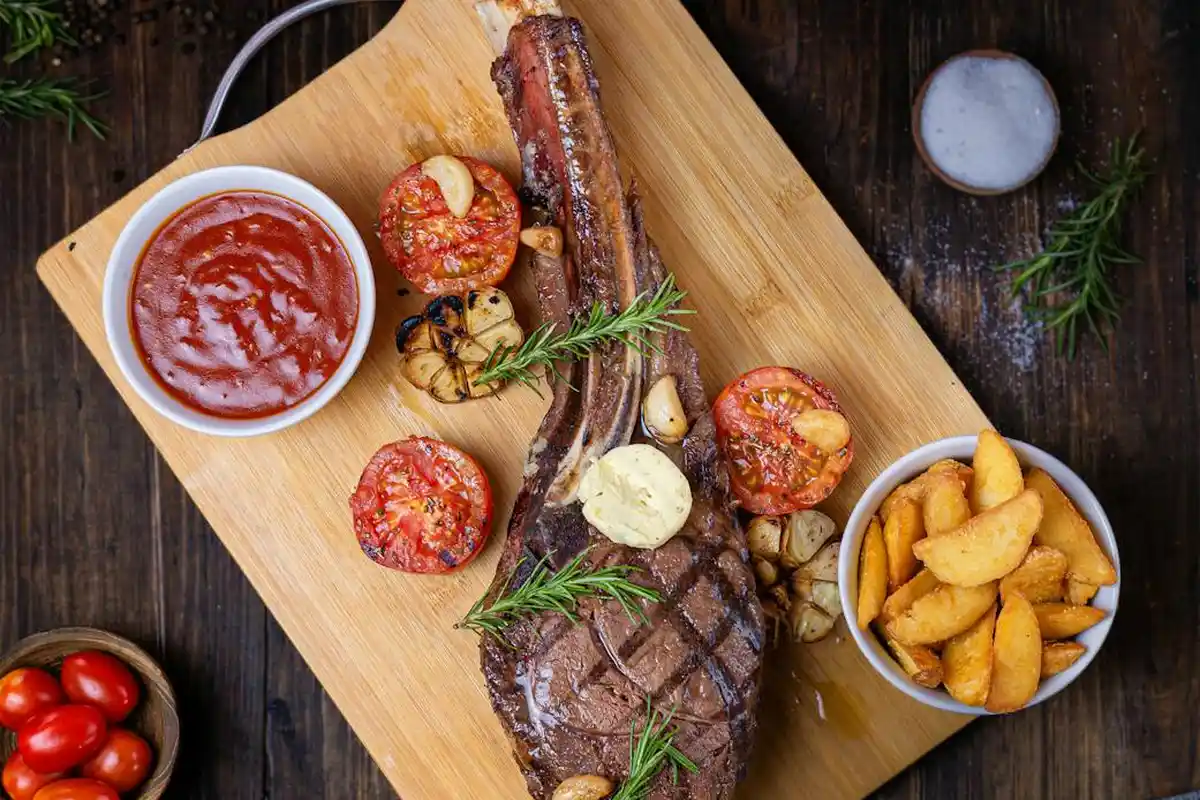
Let’s settle this. Is a wood cutting board safe for raw meat? The direct answer is yes. A dedicated, properly maintained wood board is a safe surface for meat. The science tells us why, and your kitchen strategy makes it practical.
The key is a board used only for that purpose. Wood’s natural capillary action pulls moisture and bacteria down into the fibers, where they are trapped and die off as the board dries. Think of the wood fibers like millions of tiny, deep straws that bacteria can’t crawl back out of. A plastic board, with its knife-scarred surface, traps bacteria in shallow grooves where they can multiply.
Setting Up a Foolproof Kitchen System
In my shop and my kitchen, I run a simple two-board system. It removes all guesswork and aligns with food safety best practices.
- Board 1 (Wood): This is your primary board for fruits, vegetables, cheeses, and breads. Choose a dense, tight-grained hardwood like maple, walnut, or cherry. Its beautiful surface is perfect for daily prep and serving.
- Board 2 (Meat Board): This board handles all raw meat, poultry, and fish. You have two excellent, safe choices here:
- A dedicated wood board, clearly labeled or stored separately.
- A color-coded plastic board (like a red one).
I keep a separate wood board for meat in my own kitchen, but I recommend plastic if it makes you more comfortable. The psychology of safety matters. A bright plastic board is a clear, visual reminder of its single use. The material science shows both are safe when used correctly, so choose what you will actually use consistently.
The Real Cost: Upfront Price vs. Long-Term Value
Walk down any housewares aisle and you’ll see a thick plastic board for $15 and a solid maple board for $80. The plastic seems like the obvious bargain. That math falls apart fast.
That plastic board will develop deep, uncleanable knife scars within a year. You’ll replace it. You’ll do that again the next year, and the next. A quality hardwood board, with simple maintenance, will last for decades, making it far cheaper over its lifetime.
There’s another hidden cost. Plastic is harder than wood. Those knife scars aren’t just traps for bacteria, they’re also evidence that your knife edge is being dulled and damaged with every chop. A wood surface is gentler, preserving your knife’s sharp edge. Replacing or professionally sharpening knives is another expense plastic boards silently create.
The Final, Actionable Verdict
For the home cook, the evidence supports wood. Its natural antimicrobial properties are proven. For the simplest, safest routine, implement a two-board system. Use a beautiful wood board for 95% of your prep. For raw proteins, use a dedicated board-wood or color-coded plastic.
Choose a board made from sustainably harvested North American hardwoods like maple or walnut. Oil it monthly with mineral oil. Wash it with hot, soapy water after use, and dry it upright. Never soak it or put it in the dishwasher. Follow these steps, and your wood board will be a hygienic, trusty kitchen partner for a lifetime.
Cutting Board Hygiene: Your Top Questions, Answered
1. What does “antimicrobial” actually mean for a wood cutting board?
For solid hardwood, it describes a natural, physical process where the wood’s porous structure wicks away and desiccates bacteria. Be skeptical of any product that relies solely on this marketing term without specifying the wood’s inherent density and grain structure.
2. How do I evaluate “antimicrobial” wood cutting boards for sale on Amazon?
Look past the marketing term and scrutinize the product details for the specific wood species and its Janka hardness rating. A board labeled simply as “bamboo” or “acacia” often lacks the tight grain of hardwoods like maple, which is the true driver of hygienic performance.
3. What should I look for in antimicrobial cutting board reviews from a materials perspective?
Prioritize reviews that discuss long-term surface integrity and odor resistance over years, not weeks. Reports of excessive warping, deep staining, or a lingering smell indicate a wood that is too soft or porous, failing the core test of trapping and desiccating microbes.
4. Are commercial “antimicrobial” treatments on some boards necessary or effective?
Chemical infusions are a redundant addition to a properly selected hardwood. The science confirms that the capillary action of dense, closed-grain wood is fundamentally effective; these treatments often address a marketing need, not a functional deficiency in the material.
5. Can a board be both “antimicrobial” and dishwasher safe?
No. The heat and water pressure of a dishwasher will rapidly degrade and crack any solid wood board, destroying the very cellular structure that provides its natural antimicrobial action. This is a classic example of wood cutting board dishwasher chemistry in action. It highlights how heat, moisture, and detergents alter wood’s cellular structure and antimicrobial properties. This claim is a red flag for composite or plastic boards, not solid wood.
The Woodworker’s Verdict on Food Safety
Your wood cutting board is a hygienic kitchen tool if you care for it. Scientific studies confirm its natural antimicrobial action surpasses plastic, which gets grooves that trap bacteria. This is a core aspect of wood cutting board food safety. Keeping it clean and dry after use minimizes cross-contamination. Your job is simple: clean it promptly, let it dry thoroughly, and maintain its surface with mineral oil. A well-kept wood board is a safe board, and it will serve you for decades with a little regular attention.
Choose a board made from sustainably harvested timber to make a responsible choice for your kitchen and the forest. The science of wood is always advancing, so stay curious about the material you’re working with and relying on every day.
Deep Dive: Further Reading
- Hygienic Evaluation of Wooden Cutting Boards: Microbiological Parameters – ScienceDirect
- Cutting Boards | Food Safety and Inspection Service
- Cutting Boards of Plastic and Wood Contaminated Experimentally with Bacteria – PubMed
- Are wooden chopping board hygienic? (home care forum at permies)
- Butcher Block Safety vs Plastic Cutting Boards
- How to Clean and Care for Wood Cutting Boards | Reviews by Wirecutter
- Wooden Chopping Board Hygiene – Moody Mabel
- WHICH CUTTING BOARDS ARE THE MOST HYGIENIC? – The Knife Base
Written by David Ernst. David is a veteran woodworker. He is now retired and stays in his cabin in Wisconsin which he built himself. David has 25+ years experience working in carpentry and wood shops. He has designed and built many small and large wood projects and knows the science behind wood selection like the back of his hand. He is an expert guide on any questions regarding wood material selection, wood restoration, wood working basics and other types of wood. While his expertise is in woodworking, his knowledge and first hand experience is far from 'woody'.