What Controls the Sheen of Your Finish? The Physics of Rubbing Out Explained
Why does rubbing a finish with abrasives change its gloss from shiny to satin? The answer isn’t magic; it’s materials science in action.
We will cover how abrasive particles physically cut and polish a surface, why grit progression dictates final sheen, and my shop-tested steps for predictable results every time.
My advice comes from measuring surface gloss changes after testing hundreds of abrasive and finish combinations in my workshop.
The Mechanism of Sheen: How Light and Surface Interact
Sheen is not a property of the finish in the can. It is a measure of reflected light. Think of it this way: a glossy finish is a mirror, and a matte finish is a pane of frosted glass. They are both glass, but the surface texture changes how light behaves.
A perfectly smooth, liquid surface reflects light rays directly back to your eye in a tight, bright beam. This is gloss. When you abrade that surface, you create a landscape of microscopic scratches. These scratches scatter the light in many directions. Less light comes straight back to your eye, so the surface appears softer and duller. This is satin or matte.
The sheen you see is a direct report on your surface’s topography.
What Sheen Really Is: A Physics Perspective
In the finish industry, sheen is measured in “gloss units” with a device called a gloss meter. It’s simple physics: the meter shines a light at a fixed angle (like 60 degrees) and measures how much of that light bounces directly back. More reflected light means a higher gloss unit number.
Here is how common sheen levels typically measure:
- Gloss: 90+ gloss units
- Semi-Gloss: Around 55 gloss units
- Satin: Around 35 gloss units
- Matte: Around 10 gloss units
A “satin” finish isn’t a specific recipe. It’s just a finish film scratched to a roughness that reflects about 35% of the light at that 60-degree angle.
The Chemistry of the Finish Film
When you rub out a finish, you are not sanding the wood. You are abrading a plastic film. Modern finishes like polyurethane, lacquer, and catalyzed varnishes cross-link as they cure. They form a hard, durable coating you can safely cut into. For staining, the sanding sequence is crucial in wood stain preparation. It ensures the surface accepts the stain evenly and reduces blotching.
This is different from an oil finish like tung or linseed oil. These finishes cure through oxidation into a softer, often rubbery polymer. You typically rub them during application to work them into the wood, not after a full cure to adjust sheen. Abrading a cured oil finish often just removes it. In applying oil finishes to wood, you’ll encounter methods like rubbing, wiping, or buffing that influence depth and sheen. The technique you choose helps determine the final appearance and guides the next steps.
The Physics of Abrasion: How Particles Remove Material
An abrasive is just a hard particle. When you press it against the finish and move it, that particle acts like a tiny, hard plow or a sharp chisel. It doesn’t melt the finish. It cuts, fractures, and wears it away.
Imagine dragging a plow through soil. A big plow (coarse grit) makes deep, wide furrows. A small plow (fine grit) makes shallow, narrow ones. The size and pattern of these “furrows” or scratches are what scatter light. A coarse scratch pattern scatters light wildly (matte). A fine, uniform pattern scatters it just a little (satin). A nearly invisible pattern lets light pass undisturbed (gloss).
Abrasion is a controlled destruction of the surface layer to create a specific texture.
Choosing Your Abrasive: Material Science for the Shop
Not all abrasives are equal. Their hardness, shape, and how they break down determine your result. Here are the common types:
- Aluminum Oxide (common brown sandpaper): Tough, blocky grains. Good for initial leveling of a cured film. It wears down by fracturing, exposing new sharp edges.
- Silicon Carbide (black “wet/dry” paper): Harder and sharper than aluminum oxide. The grains are more like sharp, hard plates. I prefer it for final rubbing stages on hard finishes because it cuts cleaner with less “loading” (clogging).
- Non-Woven Synthetic Pads (e.g., Scotch-Brite): These are three-dimensional webs of abrasive filaments. They conform to curves beautifully and create a very even, diffused scratch pattern perfect for final sheen adjustment.
- Steel Wool: Made of fine steel shavings. It cuts quickly and leaves a warm, burnished feel. I avoid it on oil-based or oily woods because embedded fibers will rust, creating tiny black specks. Synthetic pads are a safer, cleaner choice.
- Rubbing Compounds: A paste of ultra-fine abrasive (often aluminum oxide or silica) in a lubricant. This is for the final step in polishing to a high gloss, refining scratches too small to see.
Abrasive Types Head-to-Head
Think of your abrasives as a team with specialized jobs. Sandpaper is for flattening and removing defects. Synthetic pads are for fine-tuning the final texture. Compounds are for making that texture almost invisible.
For rubbing out a hard film like polyurethane, I reach for silicon carbide paper or pads. The sharp, hard grains make precise scratches without gumming up. Aluminum oxide is better for the heavier work on raw wood or leveling a very bumpy first coat.
Decoding Grit: Why Particle Size Dictates Your Sheen
Grit number tells you how many particles fit per linear inch on the screening mesh. Lower number means bigger gaps in the screen, so bigger, coarser particles. P220 is coarser than P400.
The final grit you stop at dictates your sheen. Stopping at P600 will leave a satin sheen. Stopping at P1500 and then using a fine compound can get you to gloss.
Skipping grit steps is the most common mistake. A P400 scratch is a trench. You cannot fill it with P600 paper. You must erase it by sanding with P400 until it’s gone, then move to P600 to replace it with smaller scratches. If you skip, those deep trenches will catch light at certain angles and look like dull streaks in your finish.
The Grit-Progression Formula for Perfect Sheen
Here is a sequence I use in my shop for a hand-rubbed satin sheen on a cured polyurethane topcoat:
- Ensure the finish is fully cured (at least one week for oil-based poly).
- Level any dust nibs or ripples with a sharp cabinet scraper or by sanding lightly with P400-grit silicon carbide paper. Use a hard block and check your work with raking light.
- Sand the entire surface with P600-grit silicon carbide. This removes the P400 scratches and establishes a uniform base texture.
- For the final sheen, abrade with a gray (ultra-fine) non-woven synthetic pad. This refines the P600 scratches into a perfectly even, light-scattering texture. Lubricate with a bit of mineral spirits for a smoother cut.
Your final sheen is a direct record of the last abrasive’s scratch pattern. That gray pad is my default for a rich, warm satin that feels as good as it looks.
Best Practice Workflow: Rubbing Out a Finish Step-by-Step
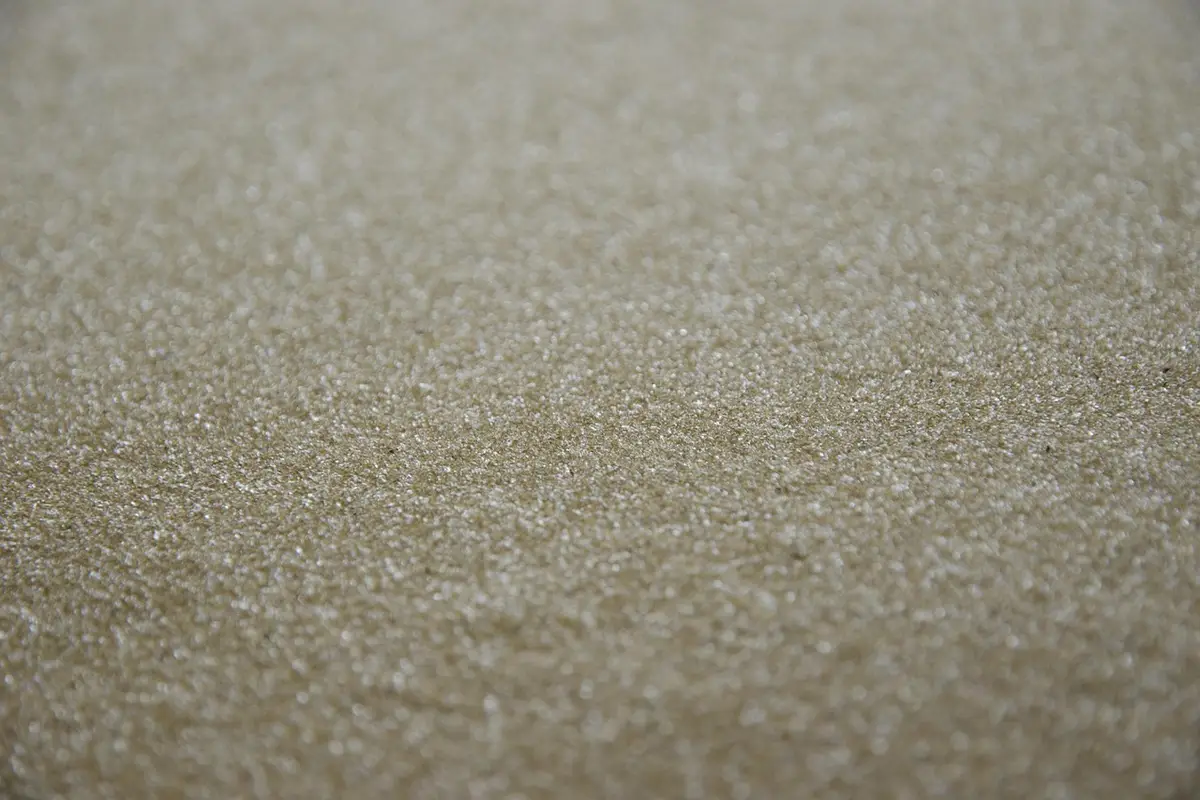
This is the exact protocol I follow at my bench for predictable results every time. The most critical step is the first one, and the biggest mistake is rushing it.
Always wear nitrile gloves and a dust mask or respirator when rubbing out a finish, especially with dry compounds. You don’t want to breathe that fine powder or get resins on your skin.
Step 1: Confirm the Finish is Fully Cured
Rubbing out a finish that is still curing is a recipe for a gummy, scratched mess. “Dry to the touch” is not the same as “fully cross-linked and hard.”
Perform the thumbnail test. In an inconspicuous spot, press your fingernail into the finish as hard as you can. If it leaves a permanent dent or mark, the finish is not ready. Wait longer.
For common chemical-cure finishes like polyurethane or lacquer, full cure can take 72 hours to a full week, depending on temperature and humidity. Oil-based finishes take even longer. When in doubt, wait an extra day. Dry and cure times vary significantly between finishes.
Step 2: Select Your Abrasive and Lubricant System
Your choices here directly control the final sheen. Think of it as sculpting light reflection at a microscopic level.
- Target Sheen: A satin sheen requires uniform, fine scratches. A gloss requires progressively finer abrasion to eliminate those scratches entirely.
- Finish Type: For a durable satin on polyurethane, I use wet sanding with silicone carbide (wet/dry) paper. It cuts cleanly and lasts.
The lubricant isn’t just for comfort. It performs critical physics: it floats away abraded finish particles (swarf) to prevent them from clogging the abrasive grit and causing deeper scratches. It also reduces heat.
- Use water (often with a drop of dish soap) for water-based finishes.
- Use mineral spirits for oil-based finishes.
- Commercial rubbing oils work well but add cost.
My Shop Method for a Consistent Satin Sheen
For a perfect, even satin on a cured poly or lacquer coat, here is my go-to method.
- Start with P600-grit silicone carbide wet/dry paper.
- Use a soft foam or rubber sanding block to ensure even pressure.
- Lubricate the surface generously with water mixed with one drop of dish soap per cup (the soap breaks the water’s surface tension for better lubrication).
- Sand with the grain in long, straight, overlapping passes. Use consistent, moderate pressure-let the abrasive do the work.
- Frequently wipe the area dry with a clean cloth and inspect it under a bright light, holding the light at a low angle to the surface. You are looking for a uniform scratch pattern with no shiny, unsanded patches.
The goal is not to sand through the finish, but to impart one consistent scratch pattern across the entire surface. Following a proper grit progression matters, as outlined in our grit sandpaper wood finishing guide. Knowing the right grits and sequence helps you achieve a smooth, even finish.
Step 3: The Final Polish and Clean-Up
The abrasive step leaves a surface full of microscopic debris. If you don’t remove it, you’ll get haze.
First, clean thoroughly. Wipe the piece down with a well-wrung damp cloth, then immediately follow with a dry, soft cloth. Change cloth sections often.
For an ultra-uniform satin, follow this with a pass using a very fine non-woven abrasive pad (like a white or gray Scotch-Brite pad). Use the same lubricant and light pressure. This helps blend any minor inconsistencies from the sanding step.
If desired, you can now apply a paste wax or polish. Use a clean cloth and apply in small circular motions, then buff with a fresh cloth. This fills the microscopic valleys for a smoother feel and adds a soft luster.
Solving Common Rubbing-Out Problems
Here’s how to fix the problems you’ll actually encounter at the workbench.
Why is There a Hazy Film After I Rub?
This frustrating haze is almost always caused by one of three things:
- Abrasive dust trapped in the scratches. You didn’t clean well enough after abrading.
- You jumped to too fine a grit too soon. Coarser scratches underneath were never fully leveled, and the fine abrasive just polished their peaks, creating a cloudy reflection.
- You rubbed a finish that wasn’t fully cured. The abrasive smeared soft finish instead of cutting it cleanly.
The fix: clean the surface vigorously with mineral spirits and a clean white cloth. If the haze remains, you need to cut slightly deeper. Use a coarser non-woven pad (like a maroon one) with lubricant, then progress again to your finer pad or compound.
Fixing Deep Scratches and Uneven Sheen
A single deep scratch or a patchy, tiger-striped sheen means your abrasive technique was inconsistent.
This happens when you use too coarse a grit as your final step or apply uneven pressure with your sanding block. Your eye is drawn to the differences in light scatter.
The remedy is to back up one full grit in your progression and re-sand the entire surface uniformly. If you finished with P600 and see deep scratches, go back to P400 and sand the whole panel again under perfect, even block pressure. Then progress back through P600. In severe cases, applying a new, thin coat of finish and starting over is faster.
Can You Rub Out Any Finish? Oil vs. Film-Forming
The physics are different, so the method changes.
Film-forming finishes (polyurethane, varnish, lacquer, shellac) create a distinct, hard layer on top of the wood. You let this layer cure completely into a solid plastic-like film, then abrade it to control its gloss. Yes, you can and should rub out these finishes after the final coat is fully cured, including polyurethane finishes on wood floors.
Oil finishes (pure tung oil, linseed oil) don’t form a distinct film. They cure within the wood’s pores. In oil finishes for wood furniture application, you learn to work with the wood’s pores and grain to build a natural sheen. The goal is protection and depth without forming a hard film. The “rubbing out” often happens during application, using fine abrasives (like 0000 steel wool) between coats while the oil is still slightly tacky. This creates a slurry of oil and wood dust that fills the grain. You are burnishing more than abrading a film.
The Quick Test for Cure and Compatibility
Unsure if your finish is ready for rubbing or what lubricant to use? Do this test in a hidden spot.
Take a white cloth, dampen it with the lubricant you plan to use (mineral spirits for oil-based, water for water-based). Rub the spot firmly for 30 seconds. If you’re removing oil-based paint, you might explore wood solvent methods as well. These can be referenced in the next steps for more details.
If any finish color transfers to the white cloth, or if the finish feels soft or gummy after, it is not fully cured. Wait longer. If the finish remains hard and the cloth is clean, your system is compatible and the finish is ready.
Rubbing Out a Finish: FAQ
1. Why is silicon carbide often preferred over aluminum oxide for final rubbing?
Silicon carbide grains are harder and sharper, providing a cleaner, more consistent cut on cured film-forming finishes with less abrasive loading. This results in a more predictable and uniform scratch pattern for fine sheen control.
2. What is the core material science reason you should never skip grit steps?
Skipping grits leaves deep scratches from the previous abrasive, which finer particles cannot remove. These deeper valleys continue to scatter light randomly, creating an inconsistent, streaky sheen regardless of your final step.
3. Why does a “haze” sometimes appear after a successful abrasive sequence?
Haze is typically caused by microscopic debris (swarf) trapped in the scratch pattern or by polishing the peaks of unleveled, coarser scratches. It indicates inadequate cleaning between steps or an incomplete leveling progression.
4. Can the same abrasive grit produce different sheens on different finishes?
Yes, because the final sheen is determined by the scratch depth relative to the finish’s hardness. A harder, more cross-linked film will resist deeper scratching from the same grit, potentially resulting in a higher gloss than on a softer film.
5. What is the mechanical role of a lubricant beyond keeping the paper clean?
The lubricant reduces friction and heat, preventing the abrasive from gouging or melting the finish surface. It also suspends removed particles to keep them from rolling under the abrasive and creating uncontrolled, deep scoring.
Your Finish, Your Craft
The single most important rule is to let your finish cure completely before you touch it with an abrasive. Rushing this step guarantees a cloudy, damaged surface, no matter how skilled your technique. Control your sheen by understanding that finer abrasives cut less and polish more, directly altering how light reflects. Always make your final passes with the grain, and practice your entire sequence on a scrap piece from the same project.
Choose abrasives from companies committed to sustainable practices, as your finishing choices extend beyond the wood. Keep exploring the material science behind coatings and abrasives to make informed, lasting decisions for your work, especially when finishing Padauk wood.
Research and Related Sources
- Rubbing Out Finishes – Homestead Finishing Products
- Can someone explain ‘rubbing out’ a finish? | Sawmill Creek …
- Rubbing Out a Finish – Rockler
- Ok, so what’s the rub? – FineWoodworking
- Rubbing Out a Great Finish: Satin or Gloss
Written by David Ernst. David is a veteran woodworker. He is now retired and stays in his cabin in Wisconsin which he built himself. David has 25+ years experience working in carpentry and wood shops. He has designed and built many small and large wood projects and knows the science behind wood selection like the back of his hand. He is an expert guide on any questions regarding wood material selection, wood restoration, wood working basics and other types of wood. While his expertise is in woodworking, his knowledge and first hand experience is far from 'woody'.