
How Do You Treat, Cure, and Preserve Pine Wood to Prevent Rot and Movement?
You picked pine for your project, but now you’re worried it will crack, cup, or decay. I have faced the same issue in my shop and found solutions that work.
We will move from theory to practice, focusing on what actually changes the wood. We will cover controlling moisture content, applying effective preservatives, and using physical stabilization techniques.
My recommendations are backed by material testing and years of troubleshooting pine in real workshop conditions.
The Pine Paradox: Why This Common Wood Needs Special Care
Pine is easy to love but tricky to trust. Its problems with rot and warping come directly from its biology. As a softwood, pine has a very open cellular structure. Think of it like a sponge compared to the tighter, straw-like cells of a hardwood like red oak. This open structure allows moisture in and out very easily.
It also grows fast. Fast growth means wider growth rings and a higher initial moisture content. A freshly cut pine board can be more than half water by weight. All that water has to leave evenly, or the wood moves, twists, and cups as it dries.
Compare pine to cedar, which has natural rot-resistant chemicals, or red oak, which is denser and more dimensionally stable, and you see the challenge. Pine lacks built-in defenses and is quick to react to its environment. That doesn’t make it bad, it just makes it needy.
The key is a specific order of operations. You must control moisture first (cure), then address decay (treat), and finally protect the surface (preserve). Doing these steps out of order is the most common reason projects fail.
Step One: Curing Pine to Lock Out Movement
In woodworking, “curing” isn’t a chemical process. It means controlled drying. Your goal is to bring the wood’s moisture content down to match the air where your finished piece will live. This prevents most future movement.
Wood is hygroscopic, meaning it constantly absorbs and releases water vapor from the air until it reaches a balance called Equilibrium Moisture Content (EMC). For most indoor furniture, that’s between 6% and 9% moisture content. If you build with wood at 15% moisture and bring it into a dry, heated home, it will shrink due to the effects of temperature and humidity on wood. Guaranteed.
Air-Drying Your Own Pine Lumber
If you have green pine lumber, air-drying is your first step. It requires patience but little cost. The rule of thumb is one year of drying time per inch of thickness, but pine, being soft, can often be ready a bit sooner.
- Stack your boards flat on a solid, level base.
- Place uniform stickers (small, dry wood strips) between every board in the stack, directly aligned above one another. This allows air to flow on all sides.
- Choose a covered, shaded, and breezy location. A open-sided shed is ideal. Never dry wood in a sealed garage or basement.
- Weigh down the top of the stack with heavy boards or concrete blocks to prevent warping.
- Use a pin-type moisture meter. Check a board in the middle of the stack, not the edges. You’re aiming for steady readings near 15-18% before considering it ready for indoor kiln-drying or final acclimation.
I learned the importance of sealing end grain the hard way. I once left the ends of a few wide pine boards unsealed with anchor seal or latex paint. Within weeks, deep cracks split open from the ends, ruining several feet of each board. The ends dry much faster than the faces, creating immense stress.
Buying Kiln-Dried Pine: What the Sticker Really Means
When you buy “KD” (Kiln-Dried) pine from a home center or lumberyard, the sticker usually says something like “MC 8-12%.” This is a snapshot from when it left the kiln. That lumber has been on a truck, in a warehouse, and on a store shelf, absorbing moisture from the air the entire time.
The “KD” stamp guarantees the wood was brought down to a stable moisture level, killing any insects or fungi. It does not guarantee the wood is still at that level when you buy it. I’ve measured “kiln-dried” 2x4s from big-box stores at over 15% moisture.
Always let store-bought wood acclimate in your shop for at least a week. Stack it with stickers in the room where you’ll build. Take moisture meter readings every few days. When the readings stabilize for two or three days in a row, the wood has reached its EMC for your space. Only then is it truly ready to work.
Step Two: Treating Pine to Stop Rot Before It Starts
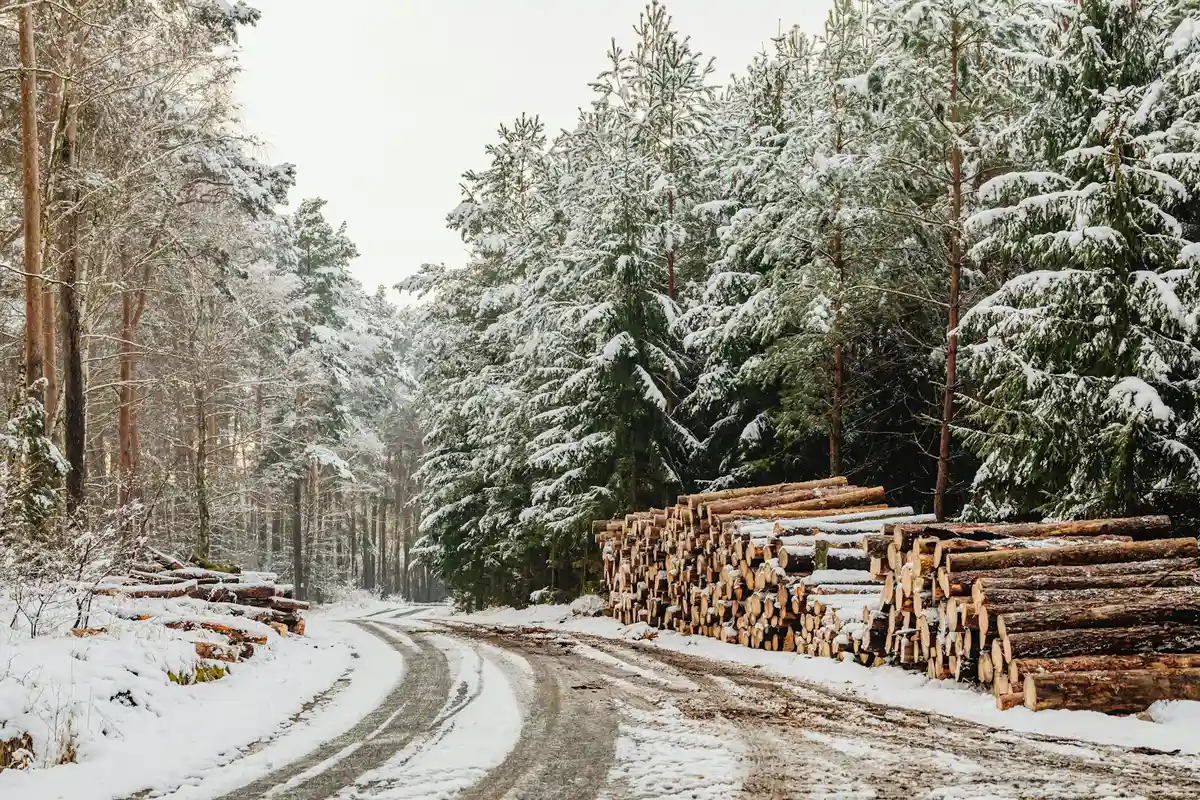
When I say “treat” pine, I mean applying a chemical preservative. This is not about a surface finish. It’s about injecting protection deep into the wood fibers to poison the fungi and insects that cause decay. This is critical work for any pine that lives outdoors or in damp conditions.
Does pine wood need to be treated? For any exterior project, the answer is an unequivocal yes. Untreated pine exposed to rain, soil, or constant humidity will rot. It’s not a question of if, but when. Pressure-treated lumber from the yard is one solution, but you can also treat wood yourself for specific projects.
Borate Treatments: The Invisible Shield for Fresh Wood
Borates are my go-to for protecting framing lumber, sill plates, or any structural pine that might get damp. Think of a borate solution like salt. You dissolve it in water and brush or spray it onto the wood. The water carries the borate salts deep into the damp wood fibers where they crystallize.
Once in the wood, these crystals are toxic to rot fungi and wood-boring insects, but safe for humans and pets once dry. The key is that the wood needs to have some moisture for the solution to diffuse properly, making it perfect for treating wood in a basement or a new construction frame before it’s sealed in. I keep a garden sprayer filled with a borate solution for touching up cut ends of pressure-treated wood, a common weak point.
Penetrating Epoxy for Knots and Soft Spots
Pine often has resinous knots or slightly punky spots that can weep sap or crumble later. That’s where a thin, penetrating epoxy resin comes in. I use it as a stabilizer before my final planing or sanding.
The process is simple. Mix a low-viscosity epoxy and brush it liberally onto the knot or soft area. The thin epoxy acts like water, wicking deep into the unstable wood fibers and then hardening into a plastic matrix. Here’s my quick test: press your fingernail into a suspect area. If it leaves a dent, that spot needs stabilization. Once cured, you can work the spot just like the surrounding hard wood. It prevents future denting and seals off resin pockets that could bleed through your finish.
Step Three: Preserving Pine with Finishes That Last
Preservation is your final, renewable line of defense. While treatment poisons the wood, preservation seals its surface. A good finish manages water and UV light, the two things that destroy wood above ground.
Finishes work in two basic ways: they either sit on top as a sealed film, or they sink in to nourish and repel from within. Film-formers like spar urethane or lacquer create a continuous plastic sheet on the surface. Penetrating oils, like tung or linseed oil, soak into the cell walls, causing them to swell slightly and become hydrophobic. Your choice depends on the look you want and the abuse the piece will take.
The Wood Conditioner Question for a Smooth Stain
You must use a wood conditioner on pine before applying a standard stain. Pine’s grain is a mix of very porous earlywood and dense latewood. Liquid stain soaks rapidly into the soft bands, creating dark blotches, while barely coloring the hard bands.
Contrast this with red oak. Its large, open pores are evenly distributed, so stain flows in consistently, often making a pre-stain conditioner unnecessary. Pine is not like that. The conditioner is a thin, fast-drying sealer that partially blocks the thirstiest pores, allowing the subsequent stain to color the wood more evenly.
Applying it is straightforward:
- Sand your pine smoothly to 150 grit.
- Stir the conditioner (never shake it, it creates bubbles).
- Flood it on with a brush or rag, working along the grain.
- Wait 5-15 minutes as directed, then wipe off all the excess.
- Apply your stain within the next two hours, before the conditioner fully cures.
You will get a lighter, more uniform color. It’s a non-negotiable step for a professional stain job on pine.
Choosing Your Final Shield: Oils, Films, and Hybrids
For outdoor pine-like a bench or planter box-you need maximum flexibility and UV resistance. An oil-based spar urethane forms a thick, glossy film that blocks water and sunlight well, but that film can eventually crack. A marine-grade pure tung oil (not a “tung oil finish”) penetrates deeply, water-proofs the wood cells, and allows for easy spot repairs, but needs reapplication every year or two.
For indoor furniture, my shop tests favor hardwax oils for most pieces. Products like Osmo or Rubio Monocoat offer the easy maintenance of an oil with a slight, renewably protective surface layer that doesn’t feel like plastic. They’re forgiving to apply and repair. Lacquer, sprayed on, builds a much harder, more protective film that’s ideal for tabletops, but repairing scratches requires respraying the entire surface.
If you’re looking at decorative techniques like pickling or distressing, all of that work happens before this final preservation step. You would stain, paint, or mechanically distress the wood first. Your final clear coat (an oil, wax, or film finish) then goes on top to seal and protect that decorative layer from wear.
The Workshop Workflow: A Step-by-Step Protocol
Building for outdoors is a battle against water and biology. You need a system, not just a finish. This sequence is built on material science and shop-tested results. Skip a step, and you create a weak point for rot to start.
1. Start with Properly Cured Wood (<12% MC)
Wet wood fails. It’s that simple. Wood is a bundle of straws (the cells) that shrink as they dry. If you mill and assemble with wet wood, it will warp and split as it dries in your shop, breaking your joints and finishes.
I check moisture content (MC) with a meter on every board. I also make a habit of measuring the wood’s moisture content to confirm it matches the target range before starting. For outdoor projects, I aim for 10-12%. Store your wood inside your shop for at least two weeks before starting. This equalization period is non-negotiable; it lets the wood’s internal moisture stabilize with your environment, preventing movement after assembly.
2. Treat with Borate if Needed
Pine is sapwood, which is delicious to fungi and insects. If your project will have ground contact or be in a damp, shaded area, a borate treatment is cheap insurance. Borates diffuse into the wood and disrupt the cellular metabolism of rot fungi.
I use a concentrated borate powder dissolved in water. Brush or spray it on all surfaces, especially end grain, which acts like an open straw. Let it soak in and dry fully before milling. For above-ground projects in sunny spots, you can often skip this. For a bench leg going into a planter, do it.
3. Mill and Assemble
Now you work the wood. Cut your joinery. Drill pilot holes for screws or bolts. This is the stage where material choice matters for longevity. Use stainless steel or coated deck screws. Ordinary steel screws will rust, stain the wood, and lose holding power.
For adhesive, use a waterproof wood glue labeled for exterior use. Tightbond III is a reliable shop standard. Apply it sparingly. A glue starved joint is weak, but a glue drowned joint can prevent finishes from penetrating properly at the seams.
4. Apply Sanding Sealer or Conditioner
Pine is notorious for blotchy stain absorption. The dense latewood soaks up less, while the soft earlywood soaks up more, creating a uneven, splotchy look. A pre-stain conditioner fixes this. It’s a thin resin that partially seals the wood’s surface. Understanding how wood surface prep affects stain absorption helps predict the final tone. This shows why proper prep and a pre-stain conditioner often go hand in hand for an even finish.
Wipe on a coat, wait 15 minutes as directed, then wipe off any excess. It creates a more uniform surface for the final finish. Think of it as primer for wood; it doesn’t provide protection, but it ensures your protective topcoats look even and professional.
5. Apply Final Preservative Finish (2-3 Coats)
This is your shield. For pine outdoors, I recommend a penetrating oil-based finish with UV inhibitors and water repellents. It soaks in, rather than sitting on top like a film. Film finishes like varnish can crack on soft pine, letting water underneath.
Flood the surface, let it soak for 10-15 minutes, then wipe it completely dry. Pay special attention to end grain and joints. Apply a second coat 24 hours later. A third coat on the horizontal surfaces (bench seat, table top) adds extra protection from pooling water and sun.
Reapply this finish every 12-24 months depending on exposure. A quick light sanding and a fresh coat is far easier than replacing rotted wood.
Pine Wood Care: Targeted FAQ
1. What’s the most critical step to prevent pine from warping after my project is built?
The single most critical step is ensuring the wood’s moisture content (MC) has stabilized to match your indoor environment, ideally between 6-9% MC, before you begin milling and assembly. This controlled curing process, called reaching Equilibrium Moisture Content (EMC), locks out the dimensional movement caused by subsequent moisture exchange.
2. For outdoor pine, is pressure-treated lumber my only option to prevent rot?
No, while pressure-treatment is highly effective, you can apply penetrating borate solutions or copper-based wood preservatives yourself for above-ground projects. For maximum durability in ground contact, pressure-treated pine remains the benchmark, as it forces preservative chemicals deep into the wood’s cellular structure.
3. How do I properly check the moisture content of “kiln-dried” pine from a store?
Use a pin-type moisture meter, inserting the pins into the board’s face and end grain, avoiding knots. Let the lumber acclimate in your shop for at least a week, stacked with stickers, and take readings daily until the MC stabilizes for 2-3 consecutive days, confirming it has reached its EMC for your space.
4. What is the practical difference between “curing” and “treating” pine wood?
Curing refers to the physical process of drying wood to stabilize its moisture content and prevent movement. Treating is a chemical process involving applying preservatives like borates or penetrating epoxy to the wood’s cellular structure to poison decay fungi and insects.
5. How often should I renew the preservative finish on outdoor pine furniture?
Inspect and likely reapply a penetrating oil or film-forming finish every 12-24 months, depending on sun and weather exposure. The need for recoating is indicated when water no longer beads on the surface but instead soaks in, signaling the protective layer’s failure.
Final Thoughts on Pine Preservation
The most important advice is to control moisture from the start. Always acclimate your pine to your shop’s humidity before cutting or finishing. I use a moisture meter to ensure it’s below 12% for interior work. This foundational step, followed by a deep-penetrating sealant, is your best defense against rot and warping.
Choose preservatives from sustainable sources and dispose of used materials properly. Your project’s longevity grows when you pair careful material science with a commitment to learning.
Related Guides and Information
- How Do You Stop Pine Rot? | Pine Timber Products
- How to Stop Pine Wood Rot: Protecting Pine Timber from Dry Rot – Blog – Worldwide Timber Traders
- r/diynz on Reddit: How to make pine wood rot resistant – using pine wood for vegetable garden bed. Any suggestions on how to make it rot resistant with the addition of sealers/paint?
- Pine Tar Wood Treatment to Stop Wood Rot From Spreading
- Wood-decay fungus – Wikipedia
- Choosing Rot Resistant Wood – The Craftsman Blog
- r/DIY on Reddit: Can I make pine wood rot resistant by soaking it in frying oil?
David is a veteran woodworker. He is now retired and stays in his cabin in Wisconsin which he built himself. David has 25+ years experience working in carpentry and wood shops. He has designed and built many small and large wood projects and knows the science behind wood selection like the back of his hand. He is an expert guide on any questions regarding wood material selection, wood restoration, wood working basics and other types of wood. While his expertise is in woodworking, his knowledge and first hand experience is far from 'woody'.