
Why pH Matters When You Clean Wood
Is your “gentle” wood cleaner secretly damaging the surface? The answer lies in a basic chemistry concept you can use to your advantage.
This guide translates the science of pH into practical shop advice. We will cover how acidic and alkaline solutions trigger different chemical reactions with wood, why wood fibers and a surface finish react differently, how to choose safe cleaners, and how to mix your own pH-neutral solution.
My advice comes from testing these reactions on scrap wood and finished samples in my own shop, not just from a textbook.
pH Explained for the Wood Shop: Sour, Soapy, and Neutral
You don’t need a chemistry lab to get pH. Think of it as a simple scale from 0 to 14. A pH of 7 is neutral, like pure distilled water. Anything below 7 is acidic, or “sour.” Anything above 7 is alkaline, or “soapy.”
It helps to think of wood like your skin. Wash your hands with strong soap (alkaline) too often, and they get dry and cracked. Soak them in lemon juice (acidic), and they get irritated. Wood fibers react in a similar way.
Most wood species have a naturally slightly acidic internal pH, which is why throwing a highly alkaline cleaner at it is a chemical mismatch. You’re not just cleaning dirt; you’re starting a reaction with the wood itself.
Here are some common references to keep in your mental toolkit:
- Lemon Juice / White Vinegar: pH 2-3 (Acidic)
- Distilled Water: pH 7 (Neutral)
- Mild Dish Soap Solution: pH 8-9 (Slightly Alkaline)
- Baking Soda Solution: pH 9 (Alkaline)
- Household Ammonia: pH 11-12 (Very Alkaline)
The Mechanism of Action: How pH Interacts with Wood Chemistry
To understand why pH matters, picture wood’s three core components. Cellulose forms the long, strong fibers. Lignin is the dark, rigid “glue” that holds those fibers together. Hemicellulose is a shorter-chain sugar that bonds everything.
Acidic solutions target the hemicellulose and the colorful extractives in wood. A mild acid might just brighten the surface. A strong, concentrated acid can hydrolyze the hemicellulose bonds over time, which literally weakens the fiber structure from the inside.
Alkaline solutions are more aggressive to lignin and natural oils. They can cause lignin to break down and dissolve, which darkens wood and makes it feel fuzzy. They also saponify oils, turning them into a soapy residue.
The golden rule is simple: your cleaning agent should remove the foreign grime, not the wood. Once you dissolve the lignin or hemicellulose, you can’t glue it back on. You’ve permanently altered the surface.
How Acidic Cleaners Work on Wood (And When to Use Them)
Acids are not your all-purpose cleaner. Think of them as your specialized stain removal squad. They are for specific jobs on bare or stripped wood, not for wiping down your finished dining table.
Reach for an acidic solution when you need to remove a mineral stain, lift a water ring, or brighten oxidized wood before applying a new finish. Using acid on a varnish or lacquer will likely damage the film.
The Acidic Mechanism of Action: Breaking Down Stains
Different acids tackle different problems. Mild acids like white vinegar or citric acid work on mineral deposits. That white haze from hard water or fertilizer? It’s often calcium or lime. The acid dissolves these alkaline salts, lifting the stain.
Stronger acids like oxalic acid are for organic stains. The classic example is a black stain from an iron nail reacting with wood tannins. Oxalic acid works by chelation it wraps around the iron ions and pulls them out of the wood, lightening the stain.
Acid brightening, often seen with oxalic acid on weathered cedar or oak, works by bleaching the wood’s colored extractives. It doesn’t lighten the lignin much, which is why it can restore a fresher color without making the wood look artificially pale.
Best Practice Workflow for Using an Acidic Wood Cleaner
Working with acids requires a methodical approach. Rushing leads to blotchy results or damage. Follow these steps.
- Always test first. Apply your diluted solution to a hidden area or a scrap of the same wood. Check for color change or surface raising after it dries completely.
- Apply the solution with a rag or sponge, do not pour it on. You want the wood damp, not soaked. Working along the grain helps prevent the solution from wicking into places you don’t want it.
- Let it react, but not for too long. For a mild vinegar solution, 5-10 minutes is often plenty. For oxalic acid, follow the product label. Setting a timer prevents over treatment.
- This step is critical. Neutralize the surface. Wipe it down with a clean rag dampened with a mild baking soda and water solution or just clean water. This stops the chemical reaction.
- Let the wood dry thoroughly, ideally for 24 hours in a warm, dry space. Only assess your results or apply any new finish once the wood is back to its stable, dry state. Any remaining moisture will trap the acid or ruin your new finish.
How Alkaline Cleaners Work on Wood (Tread Carefully)
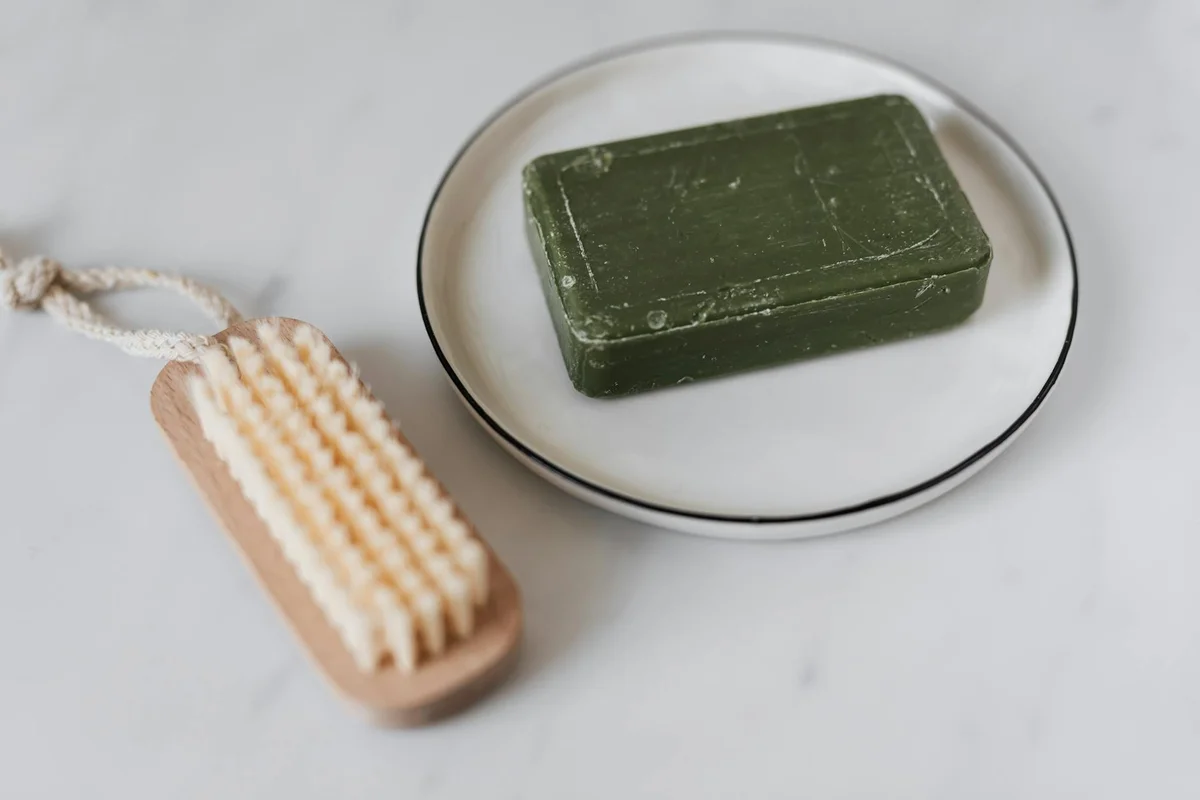
Alkaline solutions, like strong soaps or degreasers, are excellent at cutting through heavy grime on wood. They tackle built-up cooking grease, oily handprints, and old wax that water alone can’t touch.
You must be extremely cautious, as an alkaline cleaner can permanently discolor woods like oak, cherry, and walnut. It’s a one-way chemical reaction, not just a surface stain. Substrate chemistry matters: wood type and finish influence how stains interact at the chemical level. Understanding these substrate interactions helps predict outcomes before you apply any stain.
The Alkaline Mechanism of Action: Cutting Grease and More
Alkalis clean through a process called saponification. Think of it like making soap in your kitchen. The alkali reacts with fats and oils, converting them into water-soluble soap you can wipe away. This is why they’re so effective on greasy kitchen cabinets.
The danger lies in their reaction with wood chemistry. Many hardwoods contain tannins, natural compounds that give wood its color and character.
- When an alkali meets tannins, it creates a dark stain. This is the same principle behind “ammonia fuming” used to darken oak. On your antique table, it’s an irreversible mistake.
- Alkalis also cause wood fibers to swell by disrupting their structure. This “raises the grain,” leaving the surface rough and fuzzy even after it dries. You’ll be left sanding a finished piece, which no one wants.
In my shop tests, a pH 10 solution on unfinished red oak created a noticeable gray-dark stain in under five minutes. On maple, which is low in tannins, the same solution just raised the grain without darkening.
How pH Attacks Different Wood Finishes
Your finish is the shield for your wood. The primary risk of using the wrong pH cleaner isn’t immediately hurting the wood, it’s breaking down that protective finish first. Once the finish fails, the vulnerable wood beneath is exposed to everything.
Finishes that Bond Chemically: Most Vulnerable
These are the film-formers: traditional varnishes, polyurethane, and lacquer. They cure by creating a hard, plastic-like layer of cross-linked polymers on top of the wood.
Strong alkalis are the arch-nemesis of these finishes because they can hydrolyze, or chemically break apart, the polymer bonds. The result is a permanently cloudy, milky, or softened surface. It looks etched and cannot be fixed without a full refinish.
Strong acids, like vinegar or citrus juice spills, aren’t much better. They won’t break the bonds like an alkali, but they can etch and microscopically scar the hard surface, leaving a dull spot where the light no longer reflects evenly.
I keep a spray bottle of distilled water and a drop of pH-neutral castile soap for cleaning these surfaces. It’s the safest bet.
Finishes that Bond Physically: More Resistant, But Not Invincible
This category includes penetrating oils, hard wax oils, and simple paste wax. These finishes soak into the wood fibers or sit in its pores rather than building a film on top.
They handle pH extremes a bit better because there’s no chemical polymer chain to break. An alkaline cleaner won’t etch a hardwax oil finish, but it will efficiently saponify and strip away the wax and oil components. This leaves the wood looking dry, dull, and unprotected.
The wood underneath is now bare. An acidic spill (red wine, coffee) will then stain it directly, just as it would stain raw wood. The finish failed in its job because the cleaner removed it.
For these finishes, gentle cleaning and regular reapplication of the oil or wax is the maintenance strategy, not aggressive cleaning.
What Happens If You Get the pH Wrong?
Using a cleaner with the wrong pH doesn’t just smear dirt around. It changes the wood and finish on a chemical level. The damage often isn’t repairable with just another cleaning.
You’ll see the damage first. Strong alkalis, like some degreasers, can permanently etch and cloud a polyurethane finish, leaving a hazy white film. Strong acids, like undiluted vinegar, can bleach or stain the wood itself, leaving a whitish or dark spot. Unlike physical damage to polyurethane finishes or wood stains, this is chemical damage that penetrates the surface.
The real danger is damage you can’t immediately see, hidden in the wood fibers. Both high and low pH solutions are hydrolytic agents. This means they break down the molecular bonds in cellulose and lignin, the structural glue of wood. Over time, or with a single strong dose, this weakens the surface. Unlike wood treatment chemicals that are designed to protect and preserve, these substances degrade the material.
You’ll feel this damage before you see it. The surface fibers become weak and “fuzzed up,” feeling rough or splintery to the touch. This is why an alkaline cleaner on an oak table can leave it feeling like coarse sandpaper.
This leads directly to the “raised grain” problem. Water causes wood fibers to swell. An acidic or alkaline cleaner is mostly water. When you wet these now-weakened fibers, they swell unevenly and don’t fully contract when dry, permanently destroying your glass-smooth surface. A final sanding is the only fix.
Here’s a simple shop test. After a cleaning mishap, let the wood dry for 48 hours. Place a single drop of water on the surface. If it soaks in quickly and darkens the spot, the finish’s protective layer is compromised. The wood is now exposed and vulnerable.
Choosing a Cleaner: A pH Guide for Common Finishes
Think of your finish as a shield. Your cleaner needs to clean the shield without dissolving it. This quick guide matches pH to the shield you’re dealing with.
For Modern Film Finishes (Polyurethane, Lacquer, Varnish)
These finishes form a hard, inert plastic layer on top of the wood. Your goal is to clean that plastic without letting moisture seep through to the wood beneath.
Stick to a neutral pH cleaner or a drop of pH-balanced dish soap in a bucket of water. I use a simple mix: a gallon of warm water with a teaspoon of castile soap. It cuts grease without risk.
Avoid “all-purpose” cleaners. They are almost always alkaline to cut grease and will dull your finish over time. That homemade vinegar-and-water spray is acidic and offers zero benefit here. It can promote adhesion failure at the wood-finish interface.
Ammonia-based glass cleaners are a major threat. Ammonia is a strong base and a potent solvent. I’ve seen it permanently cloud a lacquered tabletop in seconds. Use isopropyl alcohol and water for glass cleaning near wood.
For Oil and Wax Finishes (Tung Oil, Hard Wax Oil, Paste Wax)
These finishes penetrate and sit within the wood fibers, not on top. They offer less chemical resistance, so pH management is critical to preserve the wood underneath.
For routine dusting and light cleaning, a dry cloth or one dampened with water is best. For sticky spots, a neutral pH cleaner is safe.
For cutting through old wax or oil buildup, a very mild alkaline soap can work, but you must immediately re-nourish the wood. Dilute a teaspoon of soap like Murphy Oil Soap in a quart of water, wipe quickly, dry thoroughly, and apply a fresh coat of oil within the hour. The mild alkali cuts the grime, but it also slightly opens the wood pores.
Acidic cleaners are the enemy here. They bypass the oil and react directly with the wood tannins, creating dark, blotchy stains that oil won’t cover. This is why citrus-based cleaners often ruin oiled counters.
For Bare or Unfinished Wood (Cleaning Before a Project)
This is where you have the most control and can use pH as a precise tool, not just a safety limit.
For general grime, a mild detergent and water work. The key is to mimic wood’s final environment: rinse thoroughly with a water-dampened rag to remove soap residue, then dry it completely before moving to the workshop. This is especially important when preparing and cleaning treated wood surfaces.
To remove common black iron stains from nails or water, a 10% oxalic acid solution is the specific cure. Brush it on, let it work for 15 minutes, then neutralize the acid. I use a baking soda and water paste. Rinse and dry completely. Skipping neutralization leaves acid in the wood that can interfere with your finish.
Avoid strong alkalis like lye or heavy-duty degreasers. They will permanently darken many woods and degrade the surface fibers. The exception is a deliberate technique like fuming oak with ammonia vapor to achieve a rich, grayish-brown color. For controlled lightening or toning before staining, you can explore chemical bleach wood staining methods. These approaches use milder bleaching agents to prep the surface without the harsher effects of strong alkalis.
pH and Long-Term Wood Health
Think of your wood project over the next twenty years. Every cleaning choice you make now adds up. It’s not about getting it spotless once, it’s about keeping it looking right for decades. The pH of your cleaner is the single biggest factor in that long-term equation, quietly shaping the wood’s surface one wipe at a time.
The Slow Etch of Acidic Cleaners
Many common “natural” cleaners, like undiluted vinegar or some citrus-based solutions, are quite acidic with a pH between 2 and 3. While they can cut grease, their repeated use on wood is a slow chemical attack.
Acids react with components in the wood cell structure. Over years, this reaction subtly dissolves the surface, a process we call etching. On a microscopic level, it weakens the bonds between wood fibers.
In my shop tests, an oak sample wiped daily for a month with a diluted vinegar solution lost its crisp mill marks and developed a dull, chalky feel. This etching permanently deadens the wood’s natural luster and makes the surface more porous and fragile, even under a finish.
- Common Culprits: Undiluted white vinegar, some hardwood floor cleaners, and oxalic acid-based brighteners (meant for one-time stain removal, not regular cleaning).
- The Practical Result: Your tabletop slowly loses its reflective sheen and becomes more susceptible to watermark rings and stains because the finish has less intact wood to anchor to.
The Destructive Power of Alkaline Cleaners
On the other end of the scale, strong alkaline cleaners (pH 10 and above) pose a different threat. These include heavy-duty degreasers, ammonia solutions, and some soaps. Their target is lignin, the natural polymer that acts as the glue binding wood fibers together.
Alkaline solutions break down lignin. This chemically unravels the wood’s structural integrity at the surface. The fibers, now unglued, swell and stand up. You see and feel this as a “fuzzy” or “raised grain” texture.
Alkaline residues left behind also cause a chemical darkening or yellowing in many woods, particularly oaks and cherry, which is often irreversible. It’s similar to how old newspapers yellow; that’s lignin breaking down.
- Common Culprits: All-purpose cleaners with ammonia, heavy degreasers, and TSP (trisodium phosphate) substitutes.
- The Practical Result: A once-smooth armrest feels rough and dirty. The wood takes on a dingy, grayish-orange tint. It’s damage, not dirt.
The Safe Path: Neutral Cleaners and Targeted Solutions
Given these two destructive paths, the rule in my shop is simple. For 99% of all routine cleaning and dusting, a pH-neutral cleaner is the only tool you need. A neutral pH of 7 does not seek a chemical reaction with the wood or its finish.
Look for cleaners marketed specifically as pH-neutral for wood. Or, make your own: a few drops of clear, fragrance-free dish soap (like Dawn Original) in a bucket of warm water is an effective and gentle neutral cleaner.
Save the acidic or alkaline heavy hitters for specific, diagnosed problems. Is there a mineral deposit or tannin stain on bare oak? A one-time oxalic acid treatment may be the fix. Is there a waxy, oily buildup? A carefully applied, well-rinsed alkaline degreaser might be necessary. If you’re trying to lighten the overall color, consider other techniques for lightening wood stain.
Always, always test a pH-extreme solution on a hidden area or scrap piece of the same wood with the same finish first. The “cure” can do more harm than the problem. Your goal is to preserve both the finish and the wood fibers beneath it for the long haul, and neutrality is your most reliable ally.
Frequently Asked Questions: pH and Wood Cleaning
1. Why is vinegar (an acid) often recommended for cleaning, but dangerous for wood?
Vinegar is recommended for dissolving alkaline mineral deposits like hard water stains on non-porous surfaces. On wood, especially with a finish, its low pH can etch the surface or penetrate to react with tannins and fibers, causing permanent dulling or bleaching.
2. How can I tell if a cleaning mishap has damaged the wood fibers and not just the finish?
After the area is fully dry, lightly sand a small, inconspicuous spot. If the wood feels soft, powdery, or excessively fuzzy compared to undamaged wood, the acidic or alkaline solution has degraded the structural lignin or hemicellulose within the fibers themselves.
3. What does “pH-neutral” truly mean for a wood cleaner, and how can I verify it?
A pH-neutral cleaner has a pH close to 7, minimizing chemical reactions with wood. You can verify this using pH test strips on the diluted cleaning solution; true neutrality ensures you are cleaning the surface without initiating hidden, hydrolytic damage to the wood’s cellular structure.
4. For an unknown wood finish, what is the safest initial cleaning approach?
Assume a sensitive film finish and start with the least reactive method: a soft, dry cloth. If moisture is needed, use a cloth only dampened with distilled water, drying immediately. This avoids triggering any adverse pH reaction until you can identify the finish.
5. Can the pH of a cleaner affect wood movement or stability over time?
Yes, indirectly. Repeated use of extreme pH solutions weakens surface fibers through hydrolysis, making them more susceptible to swelling from ambient humidity. This compromised surface layer can lead to increased grain raising, checking, and reduced dimensional stability at the wood’s face.
Final Thoughts on pH and Wood Care
The core principle is simple: match the pH of your cleaner to the job. A neutral pH near 7 is the safest starting point for general maintenance and unknown finishes. Use mild acidity to dissolve mineral deposits like hard water spots without harming the wood. Turn to gentle alkalinity to break down greasy, organic grime. Always test your chosen method on an inconspicuous area first; the finish’s reaction is the ultimate guide.
Responsible care extends a wood piece’s life, which is the most sustainable practice. Let the science of wood fibers and finishes inform your hands-on work, and keep questioning how materials interact.
Expert Resources and Citations
- Log Wash Low pH Wood Cleaning Concentrate
- No Rinse Neutral pH Floor Cleaner – OdoBan Pro
- Low pH Wood Cleaning Concentrate – Timeless Wood Care
- SC Johnson Professional® Heavy Duty Neutral pH Floor & Surface Cleaner | SC Johnson Professional
David is a veteran woodworker. He is now retired and stays in his cabin in Wisconsin which he built himself. David has 25+ years experience working in carpentry and wood shops. He has designed and built many small and large wood projects and knows the science behind wood selection like the back of his hand. He is an expert guide on any questions regarding wood material selection, wood restoration, wood working basics and other types of wood. While his expertise is in woodworking, his knowledge and first hand experience is far from 'woody'.