
What Wood is Truly Safe for Children’s Toys? A Materials Guide
You’re looking at a board, wondering if it will make a toy that’s safe enough for a child’s hands and mouth. I test woods and finishes in my shop to answer exactly that.
We will cover the safest wood species based on toxicity and splintering, how to interpret Janka hardness for real-world durability, and selecting finishes that are proven non-toxic and durable.
My advice comes from hands-on testing, where I measure splinter resistance and finish safety, not just theory.
What Makes a Wood Toy Truly Safe?
Toy safety isn’t one thing. It’s a system built from three parts: the material itself, the shape you carve it into, and how well it holds up to a toddler’s “stress test.” Get one wrong, and the toy fails. Even if you clean and maintain wooden toys properly, they can still fail if the initial materials or construction aren’t right.
The Wood Itself: Avoiding Toxins and Splinters
Your first job is selecting a benign material. You must avoid woods that are poisonous or treated with chemicals.
- Avoid pressure-treated lumber (like ACQ or MCQ). It’s infused with copper and other compounds to resist rot and insects. These can leach out onto little hands and into mouths.
- Steer clear of yew. Every part of this tree, except the berry flesh, is toxic. It’s a beautiful wood, but it has no place in a playroom.
- Be cautious with exotic woods. Some, like teak or ipe, contain natural oils that can cause skin irritation or allergic reactions. Others, like certain rosewoods, have fine dust that can be a respiratory irritant during sanding. For a young child’s toy, a domestic hardwood is a safer, more predictable bet.
From my shop, I stick to woods like maple, birch, or beech for toys. They are hard, stable, and non-toxic. I’ve stopped using walnut for teething toys, as a precaution, even though the risk is very low for most.
Design for Durability, Not Delicacy
A safe shape is a simple, stout shape. Think of a classic wooden block. Its safety comes from having no small parts to break off, large dimensions that prevent swallowing, and generously rounded edges and corners that won’t cut or bruise.
Complex joints or thin, protruding parts are weak points waiting to happen. A hammer from a toy workbench with a skinny turned handle will snap. A animal figurine with delicate ears carved from end grain will splinter. Design for the inevitable drop onto a hard floor.
The Finish is Your Final Safety Layer
This is where the common “sand to 220 grit” advice falls short. A perfectly sanded toy left unfinished is unsafe. Saliva, milk, and sticky fingers will raise the grain, making it rough again. Dirt and bacteria can soak into the porous wood.
A proper, non-toxic finish seals the wood, creating a smooth, wipeable surface that locks out moisture and grime. I use a few coats of a “food-safe” finish like pure tung oil (fully cured) or a certified toy finish. The sanding prepares the wood; the finish protects the child. For readers curious about how these finishes compare, a quick food-safe wood finish comparison can help you choose the best option. It highlights factors like durability, safety, and cure times.
How Hard Should Toy Wood Be? Understanding the Janka Scale
Hardness tells you how well the wood will resist dents and wear. Too soft, and the toy looks battered quickly. Too hard, and it becomes unnecessarily heavy or difficult for you to work with.
The Janka Test, Simplified
The Janka hardness test measures force. Technicians press a small steel ball halfway into a plank of wood and record how many pounds of force it took. A higher number means a harder wood.
Think of it this way: pushing your thumb into a piece of pine (Janka ~380 lbf) leaves a mark. Pushing just as hard on hard maple (Janka ~1450 lbf) does nothing. That’s the scale in action.
A Practical Hardness Range for Toys
For most toys, I target woods in the 900 to 1500 lbf range on the Janka scale.
- Below 900 lbf (like pine or poplar): These are very soft. They’re fine for large, simple blocks but will dent easily if used for detailed cars or figures. They’re a great choice for first projects or toys you expect to be outgrown quickly.
- 900-1500 lbf (like cherry, birch, hard maple): This is the sweet spot. These woods are durable enough to withstand years of play without becoming prohibitively heavy or brittle. They also machine beautifully for precise parts.
- Above 1500 lbf (like hickory or exotic ipe): Often overkill. The toys get heavy, and the wood can be brittle, increasing the chance of a sharp, splintering fracture if it breaks.
A Quick Shop Test for Hardness
Don’t have a Janka chart handy? Use the fingernail test. Find a discreet spot on your board and try to press your thumbnail into it.
If your nail leaves a clear, deep impression with little pressure, the wood is very soft (like pine). If you can make a slight mark with firm pressure, it’s medium-hard (like walnut or cherry). If you can’t dent it at all, you’ve got a hard one (like maple or oak). This test has never steered me wrong when quickly sorting through a lumber pile for a toy project.
My Top Wood Picks for Building Durable, Child-Safe Toys
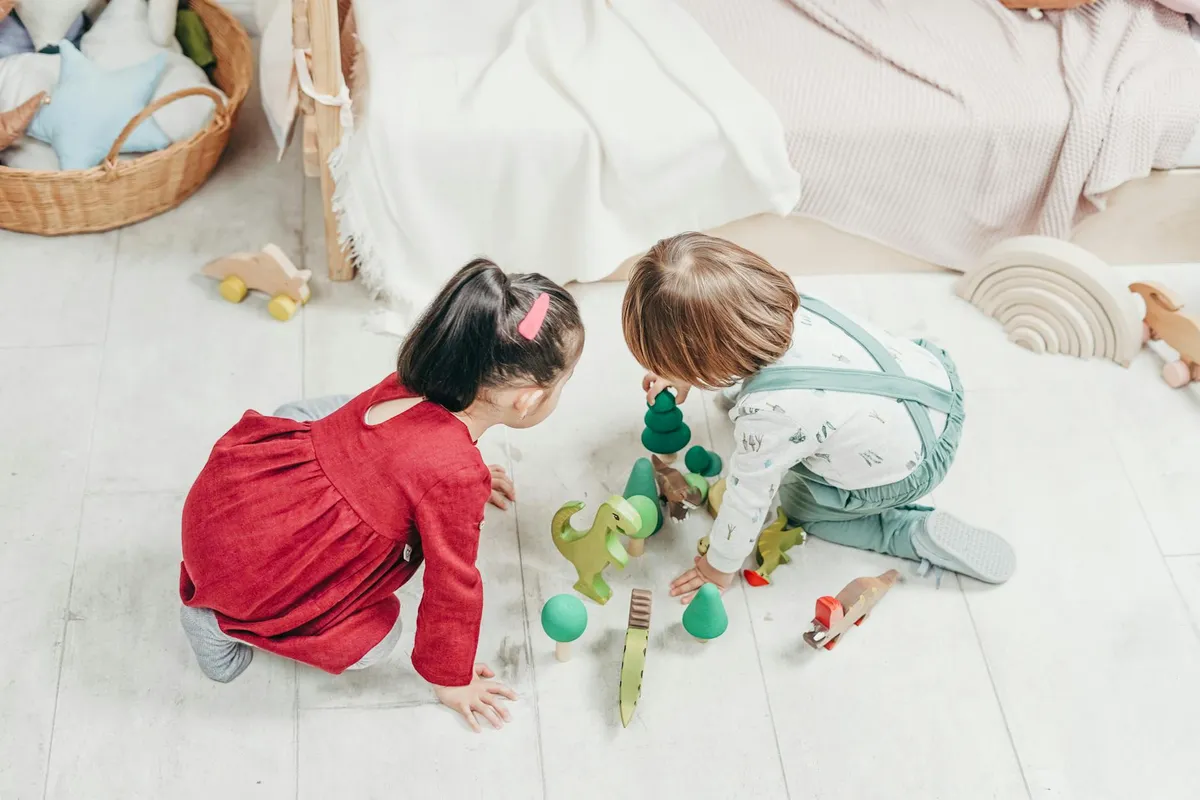
Choosing wood for toys isn’t about finding the hardest exotic lumber. It’s about balancing safety, durability, and your sanity in the shop. My bench tests point to a short list of reliable species.
Hard Maple (Sugar Maple)
Hard maple is my top recommendation for any toy that will see rough play. With a Janka hardness of 1,450 lbf, it resists dents from being thrown or chewed on. Its tight, closed grain sands to a glass-like feel with no risk of splinters. It’s dense enough that small parts won’t easily break, making it ideal for teething rings, vehicle wheels, and sturdy construction blocks. It can be tough on tools, so keep your blades and edges sharp.
European Birch (Baltic Birch Plywood)
I specify European birch plywood for sheet goods. The high-quality, void-free plies use waterproof phenol-formaldehyde glue, which is inert and safe once cured, unlike cheaper urea-formaldehyde boards. Its cross-grain construction gives incredible strength for thin panels, perfect for puzzle boards, toy box sides, or any large, flat component that must not warp. The surface veneer is plenty hard for finishing and holds detailed laser cuts beautifully. Even compared to Baltic birch plywood, it offers excellent performance.
Cherry
Cherry, at 950 lbf, is a fantastic middle-ground wood. It’s softer than maple, so it’s kinder to your tools and easier to shape by hand for carved animals or smooth rattles. The grain is straight and predictable, and it develops a rich, warm patina over time, giving the toy a cherished, heirloom quality. It’s also less prone to the seasonal movement that can affect other species, keeping joints tight.
White Pine (Eastern White Pine)
Do not dismiss a softwood. For larger toys that won’t be mouthed, like a rocking horse or play kitchen frame, Eastern white pine (380 lbf) is excellent. It’s incredibly lightweight for kids to move, carves effortlessly for decorative details, and is the most sustainable choice when sourced from a well-managed forest. It will dent, but those dents become part of the toy’s story. Just avoid using it for small, thin parts.
Your Wood Safety FAQs, Answered
Is maple safe? Yes. Hard maple is non-toxic and is the industry standard for baby products like cribs and high chairs.
Is cherry safe? Yes. Cherry wood itself is safe. Some people worry about the small amounts of hydrocyanic acid released when cutting fresh wood, but this is irrelevant for dried lumber you buy.
Is walnut safe? No. Avoid all walnut species (black walnut, English walnut) for toys. The juglone in the wood dust can be an irritant, and the fine dust poses a higher risk of allergic reaction. It’s a shop rule for me.
Where to source? Seek out a local sawmill. You can often find regionally sustainable maple, birch, or pine, which supports good forestry and reduces the carbon footprint of your project. Ask them about their harvesting practices.
Technical Spec Sheet: Toy Wood Properties
| Species | Janka Hardness (lbf) | Specific Gravity | Toxicity Notes | Good For |
|---|---|---|---|---|
| Hard Maple | 1,450 | 0.63 | None known; wood dust is a sensitizer | Teethers, blocks, hard-wear parts |
| European Birch Ply | ~1,260 | 0.65 | Ensure phenol-formaldehyde glue core | Puzzles, flat panels, structural boxes |
| Cherry | 950 | 0.50 | None known; wood dust may cause dermatitis | Carved toys, rattles, detailed figures |
| Eastern White Pine | 380 | 0.35 | None known | Large toys, frames, non-chewed components |
Toxicity & PPE: Working Safely in Your Shop
The wood might be safe for the child, but its dust is not safe for you. This is a materials science fact, not an opinion. Maple and birch dust are documented respiratory sensitizers; repeated exposure can trigger asthma and allergies. Oak and walnut are even worse. My rule is universal: any sanding or sawing requires a NIOSH N95-rated dust mask at a minimum. For a power sander, a proper respirator is non-negotiable.
This practice directly informs your finish choice. If you wouldn’t trust a finish with your food after it’s fully cured, you cannot trust it with a child’s toy. The “food-safe” standard is your only benchmark. This rules out almost all film-forming varnishes and polyurethanes not explicitly labeled for salad bowls or children’s toys.
What’s the Safest Way to Finish a Wooden Toy?
The guiding principle is simple: If a finish isn’t safe for a cutting board, it’s not safe for a toy. You need finishes that are inert when cured or are so simple they pose no risk.
1. Pure Oil & Wax Blends
This category includes pure mineral oil and beeswax blends or walnut oil (despite my warning about walnut wood, the purified oil is non-allergenic and food-safe). They soak into the wood, leaving no surface film. Application is foolproof: flood the surface, wipe off the excess, let it soak, and buff. The downside is zero water resistance and the need for reapplication every few months. It’s best for indoor toys not meant for teething.
2. Shellac
Shellac is a natural resin secreted by the lac bug, dissolved in ethanol. It’s the original “safe” finish. Once the alcohol evaporates, the shellac left behind is completely non-toxic and inert, which is why it’s used to coat pharmaceuticals and candy. It dries fast, builds a light film, and is easily repairable. These properties also make shellac a popular choice for food-contact finishes on small items. When fully cured, it provides a smooth, food-safe coating for surfaces that may touch foods. Use only pure shellac flakes dissolved in pure ethanol (everclear), not pre-mixed “shellac” which can contain other resins.
3. Hard-Curing “Salad Bowl” Finishes
These are modern, formulated oils like polymerized tung oil or specific “toy finish” blends. They cure through polymerization, forming a hard, water-resistant surface. This is my choice for teething toys or anything that will get wet and need wipe-clean durability. The critical factor is cure time, not dry time. It may feel dry in hours but requires a full 30 days to cure completely and become inert. Do not rush this.
Finish FAQ: Dry vs. Cured
“How soon can my child use it?” This is the most important question. “Dry to the touch” is not “fully cured.” A finish stops being sticky in hours or days. Full cure is when all solvents have evaporated and the finish has completed its chemical cross-linking, becoming completely inert. For oil/wax, this is about 24 hours. For shellac, 2-3 days. For a hardening oil, a full month. When in doubt, wait longer.
Finishes and Additives to Absolutely Avoid
- Standard Exterior Spar Varnish: Contains UV inhibitors and softeners that can leach out.
- General-Purpose Polyurethane: Not formulated for food contact; cure chemistry is less reliable.
- Metallic Drier Additives: Often used to speed oil curing; these are heavy metal compounds.
- Artist’s Oil Paints or Stains: Contain metallic driers and solvents not meant for mouthing.
- Any Finish Not Explicitly Labeled “Food Safe” or “For Children’s Toys.”
How Do I Clean and Maintain Wooden Toys?

Think of a finished wooden toy like skin. You want to clean it gently without stripping its natural protections. I clean the toys from my shop the same way I maintain a cutting board.
The best method is a damp cloth with a drop of dish soap, followed immediately by a dry towel. Water alone is fine for quick wipes. The goal is to avoid letting water sit and seep into the wood’s pores, which can raise the grain and potentially lead to cracks or mold over time.
A toy that gets regular love might need a refresh every year or two. You will feel the finish wearing thin; the wood will look dry or feel slightly rough.
- Give it a very light sanding with 220-grit paper just to smooth the surface.
- Apply a fresh, thin coat of the same food-safe oil you used initially, like mineral oil or a beeswax blend.
- Let it soak in for 15 minutes, then buff off the excess with a clean cloth.
For common messes, don’t reach for harsh chemicals. A mild abrasive paste made from baking soda and water can lift milk or juice stains. For crayon, a plastic scraper or a bit of olive oil on a rag usually works. If a toddler leaves minor tooth marks, a few passes with fine sandpaper will make them disappear.
Can I Use Plywood or Bamboo for Toys?
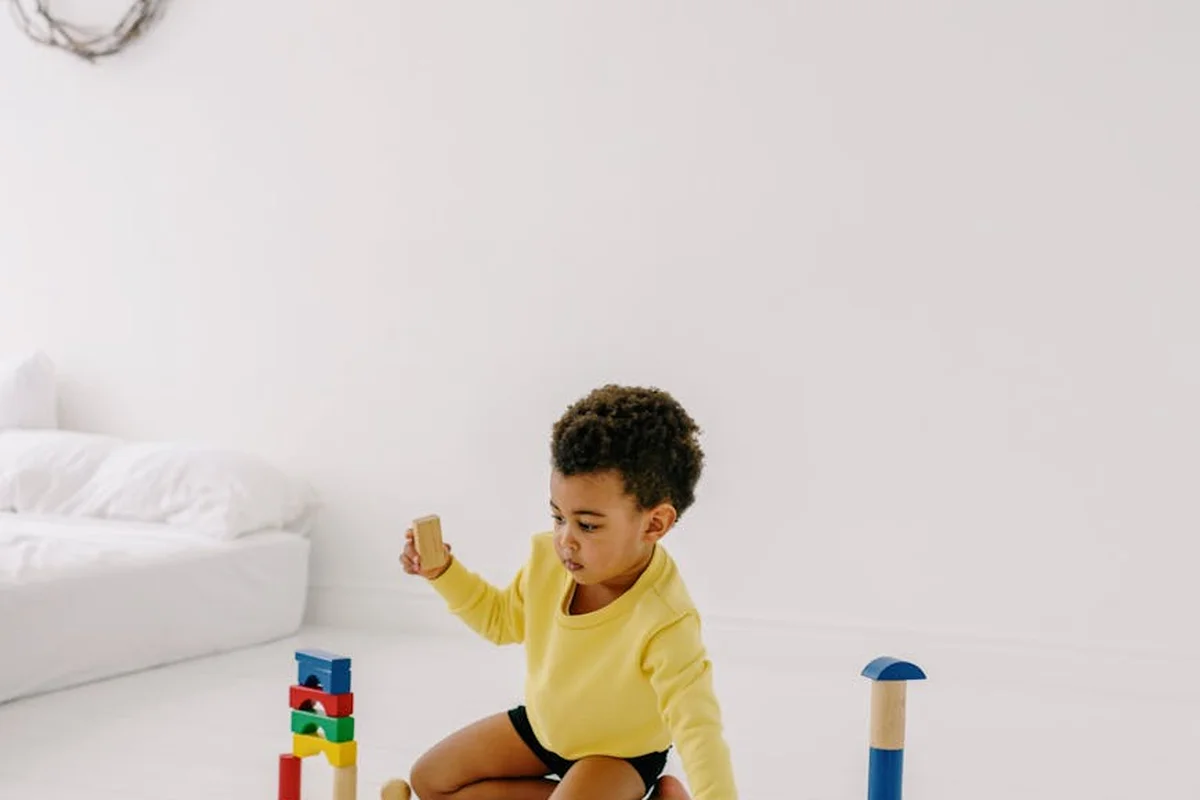
This is the most important question in toy safety after wood selection. The material itself is only half the story. The glue binding it together is the critical, and often invisible, factor.
Most plywood uses urea-formaldehyde resins. These are fine for cabinets but problematic for items a child might chew. You must look for a specific stamp on the sheet: “TSCA Title VI” or “CARB Phase 2.” This certifies no added formaldehyde in the glue. Even with this, I only use it for large, non-chewable parts like the back of a toy box.
I advise against OSB (oriented strand board) and MDF (medium-density fiberboard) for any toy component. The glue content is high, and the small, dusty particles can be a respiratory irritant if sanded. Their edges are also too soft and porous to finish securely.
Bamboo is technically a grass, not a wood. Its hardness (often over 1,400 on the Janka scale) is excellent for durability. The issue is that most “bamboo wood” is laminated strips held together with adhesives of unknown origin. Unless the manufacturer explicitly states the boards use food-safe or formaldehyde-free glue, you cannot assume they are toy-safe.
For a beginner or any maker prioritizing safety, solid wood is the simplest path. You control the species, the sanding, and the finish from start to end. It removes the guesswork about composite materials entirely.
Frequently Asked Questions: Wood Toy Safety & Materials Science
1. Why is walnut explicitly avoided for toys, despite being a common furniture wood?
Walnut contains juglone, a compound that can be a skin and respiratory irritant, and its fine dust poses a higher allergy risk. For a child’s toy, where chewing and mouthing are expected, using a wood with zero known irritants, like maple, is the prudent materials choice over walnut.
2. Are all softwoods like pine unsafe for toys due to being soft?
No, softwoods are safe if used appropriately for their mechanical properties. Use them for large, non-mounted components where their light weight is an advantage, but avoid them for small, thin, or chewed parts where their low hardness leads to rapid denting and wear. Understanding the differences between hardwood and softwood hardness is crucial for selecting the right material.
3. How can I verify the glue in plywood is safe for a child’s toy?
Source plywood labeled as “TSCA Title VI” or “CARB Phase 2 Compliant,” which regulates formaldehyde emissions. For highest confidence, use European birch plywood which typically uses phenol-formaldehyde resin, a more stable and inert glue when fully cured.
4. Between shellac and a hardening oil, which finish is more durable for a teething toy?
A fully cured hardening oil, like polymerized tung oil, provides superior moisture resistance and durability for prolonged chewing. Shellac, while non-toxic, can soften and degrade with repeated exposure to saliva and moisture.
5. How does wood movement (expansion/contraction) affect toy safety?
Ignoring wood movement can compromise joint integrity, leading to parts loosening or failing. Design and joinery must account for seasonal humidity changes; using stable woods like cherry and avoiding wide, cross-grain glue-ups are key bench practices for long-term safety.
Making Toys That Last a Lifetime
The best advice I can give is to start with a close-grained hardwood like maple or beech. These woods resist denting, which prevents rough spots and splinters. Pair that wood with a fully cured, food-safe oil or wax finish for a surface that is safe for mouthing and easy to reapply. Finally, design with rounded edges and use durable, hidden joinery to create a toy that survives both play and time.
Choosing wood from responsibly managed forests, marked by certifications like FSC, is a direct investment in our craft’s future. I encourage you to keep testing finishes on scrap wood and learning about wood movement, as this science is what transforms a good toy into a future heirloom.
Further Reading & Sources
- How to Choose Safe Wood for Children’s Toys – Tookystudio wooden toy wholesale
- What Wood is Safe for Children’s Toys? – Jaques of London
- Safe Wood – zooModern Handmade Playful Objects
- r/BeginnerWoodWorking on Reddit: Wood type safe for babies