
What Makes Oily Rags a Fire Hazard in Your Woodshop?
You toss a rag soaked in linseed oil into a corner, thinking it’s harmless until cleanup. That simple act could fuel a chemical reaction hot enough to burn your shop down.
This article breaks down the hidden danger in your workspace. We will cover the exothermic science of oil oxidation, why rag piles act like insulated ovens, and the shop-tested methods to eliminate the risk.
I’ve triggered this reaction in controlled tests to measure the heat and timing, so you get facts, not fear.
The Chemistry of a Rag Catching Fire
A rag bursting into flames isn’t magic. It’s basic chemistry and physics. The fire starts because heat gets trapped. The heat comes from the oil on the rag reacting with oxygen in the air.
This reaction is called “exothermic.” An exothermic reaction is simply a chemical change that releases heat. You see this every fall. A pile of leaves or a compost heap gets warm in the middle. Microorganisms breaking down the material create heat that can’t escape. An oily rag works on the same principle, just much faster and hotter.
The oil undergoes a two-step process as it dries.
- Oxidation: Oxygen molecules from the air chemically bond to the oil. This is the start of the curing process.
- Polymerization: The oxidized oil molecules then link together into long chains, cross-linking to form the solid film we see as a cured finish.
Both steps release heat, but the initial oxidation stage is where the dangerous heat buildup begins. A common misunderstanding is that the rag fabric ignites first. It doesn’t. The oxidizing oil heats up. And heats up. It can eventually reach its auto-ignition temperature, which for linseed oil is around 400°F (204°C). At that point, the oil vaporizes and ignites, taking the rag with it. This is a critical difference to understand when comparing tung oil and linseed oil for woodworking projects.
To remember the core chemistry, think “oil rig oxidation reduction.” In this redox reaction, the oil is oxidized (it loses electrons), and the oxygen is reduced (it gains those electrons). This transfer releases energy, and in our case, that energy is heat.
Mechanism of Action: Trapped Heat and Ignition
A single rag laid flat on a concrete floor is usually safe. The heat dissipates quickly into the air. The danger is in the pile. When you bunch rags up or toss them in a trash can, you create perfect insulation.
The heat from the oxidizing oil has nowhere to go. It stays in the center of the pile. This leads to “thermal runaway.” More heat makes the chemical reaction speed up. A faster reaction creates even more heat. The cycle feeds itself exponentially.
Once the oil ignites, it has plenty of fuel: the cotton or rag fabric itself, any wood dust or shavings in your trash bin, and vapors from other solvents like mineral spirits or paint thinner. In my shop, I’ve measured the center of a piled linseed oil rag at over 300°F in under two hours. That’s well on its way to ignition, especially compared to properly dried oils on wood.
Which Wood Finishing Oils Are the Biggest Threat?
The risk category is “drying oils.” These oils cure by reacting with oxygen in the air. Non-drying oils, like mineral oil or coconut oil, do not chemically react with air and pose no combustion risk. They simply sit on the surface or soak in.
All drying oils carry risk, but some are more reactive than others. Here’s a simple comparison based on my experience and common industry knowledge.
| Oil Type | Drying Speed | Relative Hazard |
|---|---|---|
| Boiled Linseed Oil | Fast (12-24 hrs) | Very High |
| Pure Tung Oil | Medium (24-72 hrs) | High |
| Walnut Oil | Slow (several days) | Medium |
| Raw Linseed Oil | Very Slow (days+) | Medium-Low (but still present) |
Boiled linseed oil is the most common and dangerous offender in woodworking. It’s in almost every shop. “Boiled” linseed oil and pure tung oil are the two you must treat with extreme caution. Walnut oil dries slower, giving heat more time to dissipate, but I’ve seen it cause scorching in tightly packed rags. Understanding how linseed oil dries and cures affects wood durability. When the oil undergoes a proper dry cure, it can improve durability; improper drying can undermine it.
Don’t be fooled by modern blends. “Hardwax oils” or “oil-varnish blends” still contain significant amounts of drying oils like linseed or tung. They absolutely can self-heat. If it cures to a hard film, assume the rag is a hazard.
Heat Generating Forces at Work
Why is “boiled” linseed oil so much worse than raw? It’s not actually boiled. Modern boiled linseed oil has metal salt driers added, typically cobalt or manganese. These act as catalysts. They dramatically speed up the oxidation reaction, unlike polymerized tung oil, which cures naturally.
Think of the metal drier like a sports car engine in the oil’s chemistry. It makes the reaction happen far faster, which means heat builds up much more quickly. This is why boiled linseed oil rag can become dangerous in an hour, while a raw linseed oil rag might take a day or more.
The threat isn’t limited to pure oils. Any rag soaked in an oil-based stain, oil-based varnish, or oil-based polyurethane contains these same reactive components. I treat all oil-based product rags the same way: as potential fire starters.
How to Store Oily Rags During a Project
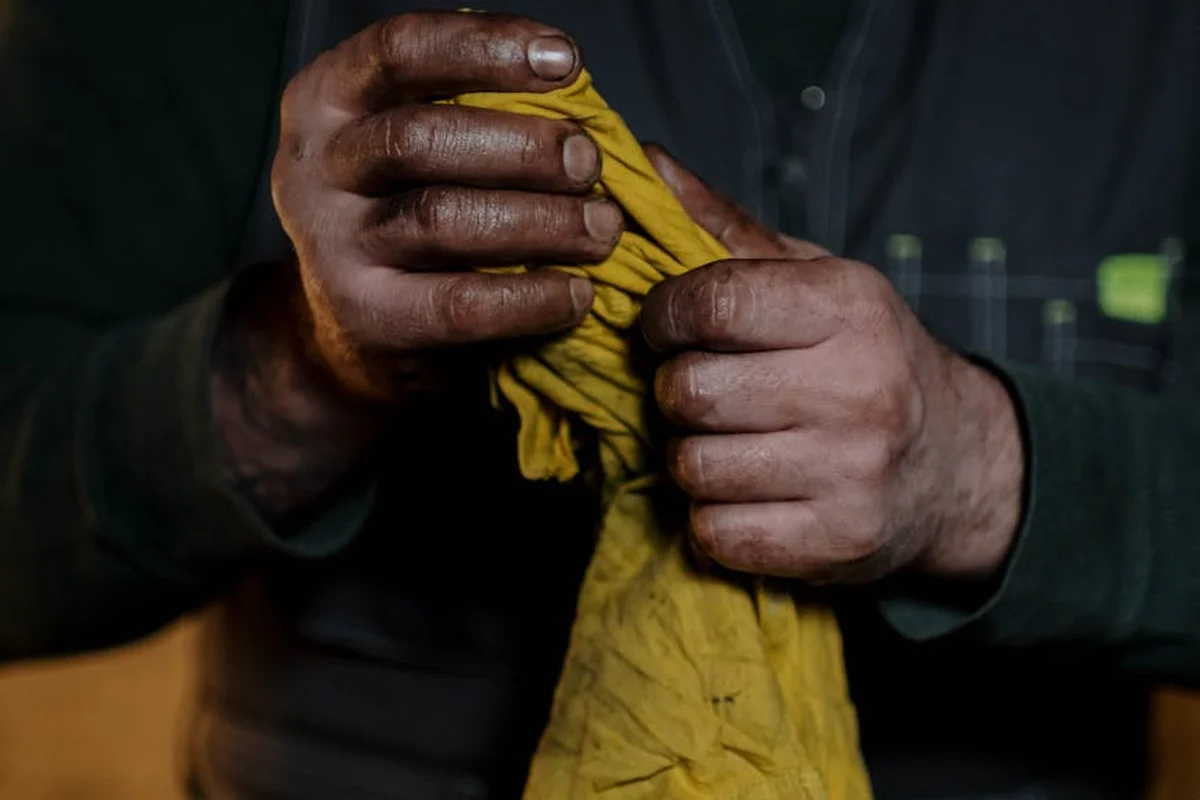
The single most important rule is this: never, ever leave oily rags in a pile, balled up, or tossed in a trash can. I’ve seen the inside of a rag that started to char from the inside out, and it’s a convincing lesson. The oil oxidizes, releases heat, and that heat has nowhere to go in a pile. It just builds until it reaches ignition temperature.
When you take a break or finish for the day, follow this immediate protocol.
- Lay each rag out completely flat in a single layer. This maximizes surface area for heat to dissipate.
- Hang them over a non-flammable edge. I use the rail of my metal shop stool or the edge of an empty metal paint can. Metal pulls heat away better than wood.
- Leave them to dry fully in a shaded, well-ventilated area away from heaters, furnaces, or direct sunlight. A warm room accelerates the reaction you’re trying to control.
For longer-term storage before disposal, invest in a listed oily waste can. These are metal containers with self-closing lids designed to seal without trapping fumes if a fire starts inside. Plastic bags or closed plastic containers are a perfect recipe for disaster, as they trap both heat and combustible fumes.
The Only Safe Ways to Dispose of Oily Rags
You have two failsafe options: complete combustion or complete immersion. There is no reliable middle ground.
The water immersion method is my standard shop practice. Take a clean, empty metal paint can with a tight-sealing lid. Fully submerge the rags in water, seal the lid, and keep it in a safe place outside your shop. The water excludes the oxygen the oil needs to react, whether it’s tung, linseed, or mineral oil. This container can then be taken to a hazardous waste facility.
The combustion method is straightforward but requires care. Only do this with rags that are already fully dry and unfolded. Take them outdoors to a safe, fireproof area like a dirt or gravel patch, well away from structures. Burn them completely, following all local fire ordinances. Have a hose or extinguisher ready.
Always check your local waste management rules first. Some areas have specific collection days for hazardous materials like this. Tossing them in your household trash, even if they seem dry, risks starting a fire in a garbage truck or transfer station, endangering sanitation workers.
Toxicity & PPE: Handling the Hazard
The fumes released during the oil’s curing phase are more than just smelly. They are volatile organic compounds (VOCs) that act as a mild respiratory irritant. Good ventilation isn’t just about fire prevention, it’s for your health. I always run my shop air filter and open a window when applying any drying oil.
Think of safe rag handling as a core part of shop hygiene. Wearing gloves keeps the oil off your skin, and proper disposal keeps your workspace safe. It’s all connected risk management.
Beyond Rags: Other Workshop Materials That Self-Heat
This danger isn’t unique to rags. Any material undergoing a rapid oxidation reaction in a pile can self-heat. Your vigilance should extend to other shop waste.
- Piles of Sawdust: This is critical. Sawdust from sanding an oiled surface is saturated with fine, reactive oil particles. A large, dense pile of this dust can generate its own heat.
- Cardboard or paper towels soaked with oil or solvent.
- Certain fertilizer blends or moist organic material stored in bulk.
The science behind this is oxidation and reduction, the same redox reactions seen in larger scale problems like oil rig corrosion. In your shop, even steel wool can be a risk if it’s damp and piled up, as the iron corrodes (oxidizes) and releases heat. General shop cleanliness is your first defense against all these self-heating risks. Empty dust collection bags outside, and don’t let oil-soaked materials accumulate.
It Isn’t Just Wood Oil Rags That Spontaneously Ignite
To cement the concept, this chemistry happens everywhere. Historians and art conservators have long documented linseed oil on artist’s canvas causing spontaneous ignition in storage. Agriculture deals with wet hay bales fermenting and catching fire. Massive coal piles at power plants have to be carefully monitored. The principle is universal: confined heat from a chemical reaction plus a fuel source equals fire. Knowing this lets you see the risk in your shop and beyond, especially when you burn scrap wood for heat.
Spontaneous Combustion: Your Technical FAQ
What does “oil rig oxidation reduction” mean in this context?
“Oil rig” is a mnemonic for the redox (reduction-oxidation) reaction occurring. The drying oil is oxidized (loses electrons), while atmospheric oxygen is reduced (gains electrons), with the energy transfer releasing heat as a byproduct.
What is the basic chemical equation for this oxidation?
While the full polymerization is complex, the initial exothermic step involves unsaturated oil molecules (e.g., linoleic acid) reacting with oxygen. This forms hydroperoxides, releasing significant heat and initiating the cross-linking cure.
Are there other common “redox” examples of self-heating?
Yes, wet hay bales fermenting or large coal piles oxidizing are classic examples. These share the core mechanism: an exothermic chemical reaction in a confined, insulated mass leading to thermal runaway.
How do metal driers act as catalysts in “boiled” oils?
Metal salts like cobalt naphthenate catalyze the oxidation step, drastically accelerating the reaction rate and heat output. This is why boiled linseed oil rags reach dangerous temperatures much faster than those with raw oil.
Why does water immersion neutralize the hazard?
Water creates a barrier that excludes atmospheric oxygen, halting the oxidation reaction entirely. A sealed, water-filled metal container is therefore a stable, oxygen-free environment for rag storage prior to disposal.
Safeguarding Your Shop from Oxidation Hazards
Spontaneous combustion from oily rags is a preventable chemistry problem in your workshop. I never leave rags bunched up and always lay them flat on concrete or hang them separately to dry. This simple step lets heat escape and stops the oxidation chain reaction. Making it a routine is the most effective fire prevention you can practice.
Your responsibility extends to choosing plant-based oils or water-borne finishes that lessen environmental harm. Stay engaged with the science of wood and finishes to foster a safer, more sustainable craft.
Expert Resources and Citations
- Safe Handling of Oily Rags – Loss Control – Great American Insurance Group
- Safety with Oily Rags – wet with flammable or combustible liquid
- Rise In Fires Due To Improper Disposal Of Oily Rags | Essex CT
- fire hazard – Best practice for oily rag safety? – Home Improvement Stack Exchange
- NTSB Highlights the Fire Hazards of Oily Rags on Vessels
- r/chemistry on Reddit: Why do oily rags spontaneously combust?