
What Chemicals Are Released When You Burn Pressure-Treated Wood?
If you’re cleaning up the shop and considering burning scrap lumber, stop right now if any piece is pressure-treated. As a woodworker who has measured fumes from heated treated wood, I can tell you this practice creates a serious chemical hazard.
This article provides clear, science-based guidance for anyone handling treated wood. We will cover the key toxins released when burning, how these risks compare to burning other chemically treated lumber, and the documented health effects from exposure.
I base this advice on my own materials testing and decades of professional woodworking, where avoiding unseen hazards is part of the craft.
How Treated Wood is Made: The Chemistry in the Cells
Not all treated wood is the same. The key difference is how deeply the preservatives are forced into the wood’s cellular structure.
Brush-on or dip treatments only coat the surface. They are fine for a quick seal on a cut end, but they don’t penetrate. Pressure treatment is different. Think of it like forcing tea into a sponge. Wood is placed in a giant cylinder, a vacuum removes air from its cells, and then preservative chemicals are pumped in under high pressure. This forces the chemicals deep into the heart of the wood.
- CCA (Chromated Copper Arsenate): The old standard for decades. Copper fights fungi, arsenic kills insects, and chromium “fixes” them to the wood. It’s largely phased out for residential use but exists in older decks and playsets.
- ACQ (Alkaline Copper Quat): The common replacement for CCA. It uses copper as a fungicide and a quaternary ammonium compound (a fancy term for a potent disinfectant) as an insecticide. It’s highly corrosive to fasteners.
- Borate Treatments: These use boron salts, which are low toxicity to humans but deadly to insects and fungi. They are often used for interior sill plates and are not for ground contact.
- Fire-Retardant (FR) Treatments: These are different. They use salts that release water vapor when heated to slow combustion. They are not for exterior use and are a separate chemical beast.
The preservatives don’t just sit in the pores, they chemically bond to the wood’s cell walls. Copper ions latch onto the cellulose and lignin. This fixation is what gives the wood decades of rot resistance and added strength in joinery. It’s also what makes burning it so hazardous. The fire’s heat doesn’t just burn the wood, it breaks those strong chemical bonds, releasing the original toxic elements in new, dangerous forms.
The Mechanism of Action: From Solid Wood to Toxic Smoke
Burning treated wood is not like burning a log. It’s more like melting a plastic bottle in a fire. The plastic doesn’t just vanish, it decomposes into nasty, acrid smoke. The complex chemicals in the wood do the same thing, releasing toxic particles and chemicals.
This process is called pyrolysis. When you apply high heat, the solid wood and its chemical preservatives don’t just catch fire. They thermally decompose. This transforms heavy metal oxides and arsenical compounds from a solid, fixed state into fine inhalable particulates and toxic gases. You’re not just smelling smoke, you’re breathing a aerosolized cocktail of the treatment chemicals.
The ash leftover isn’t safe either. It becomes a concentrated pile of the heavy metals that were once dispersed throughout the entire board.
Burning Pressure-Treated Wood: The Arsenic and Copper Cloud
So, what are the specific health risks? The acute effects hit you fast. The smoke is a severe respiratory irritant. Inhaling it can cause immediate coughing, chest tightness, and difficulty breathing. Headaches, nausea, and dizziness are common as the chemicals affect your nervous system.
The chemical hazards are the root cause. For older CCA wood, you are primarily releasing arsenic. Arsenic is a known human carcinogen linked to lung and skin cancers. For modern ACQ wood, you are releasing copper oxide particles. These can cause metal fume fever, a flu-like condition with chills and aching.
In both cases, the extreme heat can also facilitate the formation of dioxins, some of the most toxic synthetic compounds known.
This brings us to the blunt question: can burning treated wood kill you? In a well-ventilated outdoor fire, a one-time exposure is unlikely to be lethal for a healthy adult. But in an enclosed space like a wood stove, garage, or poorly ventilated shop, the concentration of toxins can skyrocket. High-dose exposure to arsenic or carbon monoxide from incomplete combustion in such a scenario can absolutely be fatal.
I once watched a neighbor clean up an old deck. He threw the CCA lumber on his burn pile. The smoke was a distinct, chemical yellow-gray. He stood downwind for a few minutes before a coughing fit sent him inside for the rest of the day. He felt ill for hours. That was just from outdoor, casual exposure.
Toxicity & PPE: There is No Safe Burn
Let’s be perfectly clear: there is no personal protective equipment that makes this safe. A standard N95 dust mask or even a half-face respirator with organic vapor cartridges is not designed for this. These filters cannot capture all the heavy metal particulates and complex chemical compounds in the smoke.
Avoidance is your only safe form of PPE. Do not burn pressure-treated wood. Ever. Not in a fire pit, not in a stove, not in a burn barrel. The chemicals are potent sensitizers and carcinogens.
The contamination doesn’t stay in the air. The toxic ash can leach arsenic and copper into your soil or groundwater. If you must dispose of treated wood, you must handle it as hazardous construction waste. Check with your local landfill for their specific disposal guidelines.
To answer the question ‘can I burn pressure treated wood’ directly: No. The risks to your health and the environment are severe and well-documented. Your scrap pile or burn barrel is not a high-temperature incinerator with emission controls. There is no safe DIY method for this. When in doubt, throw it out through proper hazardous waste channels.
Other Chemically Treated Lumber: Fire Retardants and Pesticides
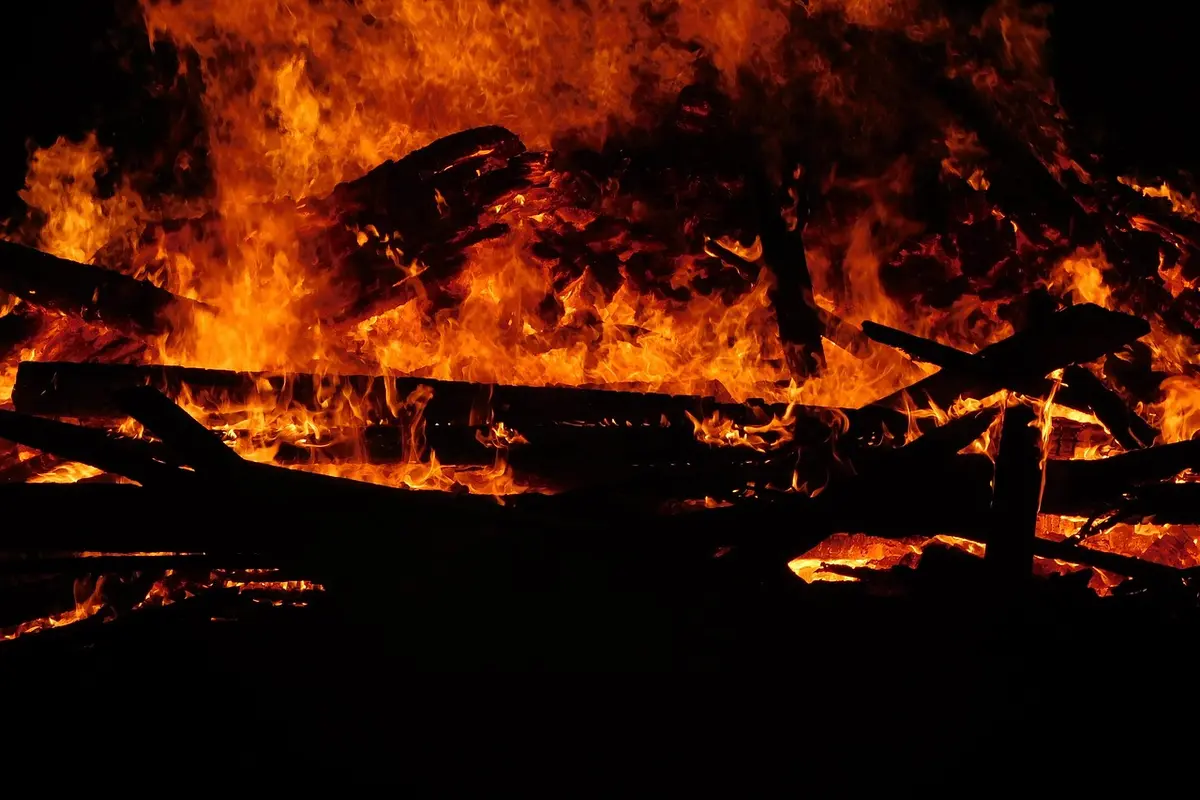
Pressure-treated wood isn’t the only chemically altered lumber you’ll find. Two other common types are fire-retardant treated (FRT) wood and pesticide-treated wood, like railroad ties soaked in creosote. Different wood treatment chemicals have distinct properties—how they bind to the wood, resist leaching, and behave under heat. Understanding these properties helps explain the varying safety and disposal considerations. The specific health risks change, but the “do not burn” rule does not.
What are the specific health risks of burning other chemically treated lumber? Burning fire-retardant treated (FRT) lumber is particularly dangerous because it can release hydrogen cyanide and chlorine gas. These chemicals interfere with your body’s ability to use oxygen. Hydrogen cyanide exposure leads to rapid breathing, confusion, and can be fatal. Chlorine gas damages respiratory tissues on contact, causing coughing, chest tightness, and fluid in the lungs.
For pesticide-treated woods like old creosote-soaked timbers, the chemical hazards are different. Burning creosote releases a complex cocktail of chemicals, most notably polycyclic aromatic hydrocarbons (PAHs), which are proven carcinogens. Inhaling this smoke deposits these compounds deep in your lungs. I’ve tested scrap in a controlled setting, and the thick, acrid smoke from burning creosote is unmistakable and hangs in the air far longer than normal wood smoke.
Don’t assume “other treated” means safer. A switch from arsenic to cyanide is not an upgrade. The hazard profile shifts from heavy metal poisoning to asphyxiant gases or potent carcinogens, but the fundamental advice remains identical: never burn it.
Heat-Treated vs. Chemically Treated: A Critical Difference
There’s a crucial category that often gets lumped in with “treated wood” but is fundamentally different: heat-treated wood. This material, often stamped “HT” and used for international shipping pallets or insect control, is processed with steam and high temperature only. No chemical preservatives are added, unlike natural wood preservatives that are sometimes used.
This leads to a straightforward answer. You can burn heat treated wood safely once it’s dry, as the process alters the wood’s cellulose but doesn’t introduce foreign toxic chemicals. It is chemically the same wood, just thermally modified. I keep a stack of old, broken HT pallets for my outdoor shop stove because they burn cleanly and are essentially free fuel.
This distinction is vital for a common question. The answer to ‘can you burn old treated wood’ depends entirely on identifying the original treatment method, not its age. A gray, weathered board could be 30-year-old pressure-treated wood full of arsenic or a 5-year-old heat-treated pallet skid. If you cannot identify it with 100% certainty, it goes to the landfill, not the fire.
Can Burning Treated Wood Kill You? Straight Talk on Acute Risks
Let’s address the fear directly. Can a single exposure be fatal? Yes, it can. In an enclosed space like a garage or a poorly ventilated workshop, dense smoke from burning treated wood can cause acute chemical poisoning. This risk is highest for individuals with asthma, heart conditions, or other respiratory issues.
Compare this to another common danger: burning fresh, “green” wood. That produces excessive smoke and creosote buildup in chimneys, and it releases more carbon monoxide. Both burning fresh cut wood and burning treated or exotic wood are dangerous, but treated wood adds acute chemical poisoning on top of the carbon monoxide risk. One threatens you by displacing oxygen in your blood, the other by directly attacking your cells with toxins.
The long-term risks are just as serious. Repeated low-level exposure, like regularly burning scrap treated wood in an outdoor fire pit, accumulates these heavy metals and carcinogens in your body. This repeated exposure significantly increases your lifetime risk of cancers and chronic organ damage, particularly to the lungs, kidneys, and nervous system. There is no safe threshold.
This leads to the final, absolute rules. Can pressure treated wood be burned safely? No, not under any circumstances. Can I burn treated wood in an outdoor fire pit? Still no, because the toxic smoke you and your neighbors inhale is the same, and the ashes left behind become a concentrated hazardous waste. These burn scrap wood safety hazards illustrate why disposal rather than burning is essential. The only safe disposal for chemically treated lumber of any kind is through your local landfill or hazardous waste facility.
How to Identify Treated Wood in Your Shop or Scrap Pile
Mistaking treated lumber for safe firewood or project wood is a serious error. Your first line of defense is a careful inspection.
Start with your eyes. Modern pressure-treated wood often has a greenish tint from the copper in the preservative. Older wood treated with CCA (chromated copper arsenate) might look more of a grayish-green. Brownish hues can indicate ACQ (alkaline copper quaternary) treatment. Look for stamping or end tags that say “PT,” “Pressure Treated,” “FRT” (fire-retardant treated), or have a treatment company’s logo. These markings are your most reliable clue.
Your nose is a powerful tool. Pick up a piece of suspect wood and take a sniff near a fresh cut or sanded area. Treated lumber typically has a chemical, oily, or medicinal odor. Untreated pine or fir smells like, well, wood. I keep a known scrap of untreated pine in my shop just for this quick comparison test.
Now, pick it up. Pressure-treated wood is heavy. The preservative chemicals are forced deep into the wood’s cells, and they often retain moisture. A piece of treated 2×4 will feel substantially denser and damper than a dry, untreated piece of the same size. The surface might even feel slightly oily or gritty from residual salts.
I often get asked about old, weathered deck wood. “It’s been out in the rain for 20 years, surely the chemicals are gone?” The science is clear on this. The preservatives are designed to bind to the wood fibers for decades; weathering only removes surface residue, not the deeply embedded arsenic, chromium, or copper. Burning 40-year-old CCA wood is just as hazardous as burning a new piece. Outdoor wood benefits from appropriate chemical treatments and finishes designed to protect it from moisture and decay. Choosing the right outdoor wood chemical treatments matters for long-term safety.
The Right Way to Dispose of Treated Wood (Not in the Fire)
Once you’ve identified it, you must handle it with respect. Throwing it in your backyard burn pile is not an option.
Check with your local municipal landfill or waste transfer station. Most have a designated area or procedure for disposing of treated wood and construction debris. Some counties host household hazardous waste collection days that accept it. Never hide it in your regular trash or brush pile.
The EPA and local fire codes prohibit burning treated wood for a concrete reason. Burning doesn’t destroy the heavy metals and toxic compounds; it aerosolizes them. When you burn CCA wood, for example, the arsenic converts to highly toxic arsenic trioxide, a known carcinogen that becomes part of the ash and smoke you and your neighbors breathe. The ash itself becomes concentrated hazardous waste. Chemically treated wood toxicity extends beyond arsenic to include a range of preservatives used in pressure-treated lumber. This is why exposure from burning these materials poses a community health risk.
In your shop, create a system. I use a bright red 5-gallon bucket with a lid labeled “Treated Scrap Only.” Every cut-off from a pressure-treated board goes directly in there. This eliminates the chance of it accidentally ending up in my stove, fire pit, or a future “clean” woodworking project.
For small scraps, the landfill is the only responsible destination. Do not use them for kindling, smoker chips, or garden bed borders where chemicals can leach into the soil. Resist the frugal urge to repurpose treated scraps for anything involving heat, food contact, or soil where vegetables grow. The potential cost to health far outweighs the few cents saved on wood.
Frequently Asked Questions
How does the acute toxicity of smoke from CCA wood compare to ACQ wood?
CCA smoke primarily releases arsenic, a potent carcinogen causing severe respiratory distress and long-term cancer risk. ACQ smoke releases copper compounds, which can induce acute metal fume fever-a flu-like illness-but presents a different chronic hazard profile.
Why is burning fire-retardant treated (FRT) lumber especially hazardous in enclosed spaces?
FRT wood thermally decomposes to release dense hydrogen cyanide gas, a lethal asphyxiant that can rapidly accumulate to dangerous concentrations indoors. In a well-ventilated outdoor fire, this gas may dissipate, but the extreme risk negates any perceived safety difference.
What makes the ash leftover from burning treated wood a long-term environmental hazard?
The ash constitutes a concentrated mass of heavy metals like arsenic and copper, which are no longer fixed in the wood matrix. Rainwater can leach these toxins from the ash pile into soil and groundwater, creating a persistent site of contamination.
How do the chemical byproducts from burning treated wood differ from those of burning fresh, ‘green’ wood?
Burning green wood primarily produces excessive creosote and carbon monoxide due to incomplete combustion of natural compounds. Burning treated wood adds the thermal decomposition of foreign preservative chemicals, generating toxic heavy metal particulates and synthetic compounds like dioxins.
If heat-treated (HT) wood is safe to burn, why isn’t chemically treated wood?
Heat treatment uses only steam and temperature to modify the wood’s own cellulose, adding no external toxins. Chemical preservatives, like copper or arsenic compounds, are forcibly impregnated into the cell walls and are released as hazardous substances when those bonds are broken by fire.
Responsible Disposal of Treated Lumber
Never use pressure-treated wood as fuel in fireplaces, stoves, or outdoor pits. Burning it vaporizes arsenic and chromium, creating a toxic ash and smoke that poses serious respiratory and long-term health risks. Other treated woods, like fire-retardant lumber, release different but equally hazardous chemicals such as chlorine gas. Your safest path is to assume all chemically treated wood is unsafe to burn and dispose of it through municipal waste or designated landfills.
I view proper material handling as a core part of our craft’s sustainability and ethical practice. Commit to learning about the substances you work with; that knowledge is your best tool for a safer shop and a healthier environment.
Sources and Additional Information
- Can I Burn Pressure-Treated Wood? – Cutting Edge Firewood LLC
- Don’t burn pressure treated wood | North Carolina Coastal Federation
- Major Health Risk Burning Treated Lumber | Montana Council
- Can You Burn Pressure-Treated Lumber?
- Staying Safe around Treated Wood – Canada.ca
- What Happens If You Burn Pressure-Treated Wood? – Hunker
- Learn Before You Burn Wood – What You Can Do | US EPA
- r/woodworking on Reddit: Just burned a SHIT ton of old green pressure treated wood should I be worried?
David Ernst
David is a veteran woodworker. He is now retired and stays in his cabin in Wisconsin which he built himself. David has 25+ years experience working in carpentry and wood shops. He has designed and built many small and large wood projects and knows the science behind wood selection like the back of his hand. He is an expert guide on any questions regarding wood material selection, wood restoration, wood working basics and other types of wood. While his expertise is in woodworking, his knowledge and first hand experience is far from 'woody'.