
Which Wood Species Pair Best with Cherry? A Materials Science Guide
Pairing wood with cherry for furniture isn’t just about picking a pretty color; you need woods that move and finish at similar rates to avoid cracks and gaps. I’ve tested these combinations on my bench to see what actually holds up.
We will cover grain and color compatibility, expansion coefficient matching, finishing behavior, and ethically sourced species options.
My advice comes from hands-on shop testing and a background in wood materials science.
What Exactly is Cherry Wood and Why Does it Pair Well?
Let’s clear up the color question first. Freshly milled cherry is a light pinkish-tan. It’s not red. Leave it in the sun, and over months and years, it undergoes a photochemical reaction, deepening to that famous rich red-brown. I keep sample blocks in my shop window to track this change; it’s a slow, beautiful process.
This evolving color is your first pairing advantage. You’re not matching a static hue. You can design for how the piece will look in a year or a decade.
The grain is its other superpower. American black cherry (*Prunus serotina*) has a fine, consistently straight grain with a satiny, closed-pore texture. There are no loud patterns or dramatic swirls to fight against. Think of cherry as a calm, neutral wall color in a room-it provides a beautiful backdrop that lets other elements shine without creating visual chaos.
As a material, it sits in a practical sweet spot. With a Janka hardness around 950 lbf, it’s harder than pine but softer than oak. It’s also relatively stable, shrinking and swelling about 3.7% radially and 7.1% tangentially from green to oven-dry. This medium stability means it won’t dramatically fight against woods with similar movement rates.
The Craftsman’s Rules for Mixing Woods Successfully
Mixing woods isn’t random. It’s applied materials science. A lasting, beautiful pair rests on four pillars. Ignore one, and your project might fail or just look “off.”
1. Color Contrast: The Visual Anchor
This is the most obvious rule. You need contrast, but it must be intentional. A slight mismatch looks like a mistake. A bold difference looks like a design choice.
Use the “value scale” trick from painting: squint at your wood samples. If they blur into one mass, you need more light/dark separation. Cherry’s eventual mid-to-dark red-brown calls for either very light woods or very dark ones. Mid-toned woods like plain-sawn red oak often clash, creating a muddy, indecisive look.
2. Grain Harmony: The Texture Conversation
Grain is texture. Pairing woods is like combining fabrics. You wouldn’t put bold paisley next to strong stripes. Cherry’s fine, quiet grain is your versatile “cotton twill.” It pairs elegantly with two opposites: other subtle grains (like maple) for a unified look, or one boldly figured wood (like quartersawn white oak) as a stunning accent. Let one wood lead the texture conversation.
3. Similar Workability: The Shop Reality
This is the shop-floor rule. If one wood sands to a glass-like finish in three passes and another tears out and requires extensive filling, you’ll hate your life. Their differing reactions to plane blades, scrapers, and sandpaper will make achieving a uniform surface feel nearly impossible.
Cherry machines and finishes beautifully with minimal tear-out, so partner it with woods that behave similarly under your tools. This is where exotics with interlocking grain or extreme hardness can become a frustrating match, despite looking good on paper.
4. Compatible Movement: The Long-Term Bond
Wood moves with seasonal humidity changes. If you glue a stable wood to an unstable one across the grain, the differential movement creates immense stress. Joints can fail, or cracks can appear.
You don’t need identical movement rates, but they should be in the same ballpark. Cherry’s moderate movement pairs well with other temperate hardwoods. This is the hidden reason some classic pairs, like cherry and maple, work so well for generations-they expand and contract at a similar, gentle rhythm.
Putting It All Together: The Recipe Analogy
Think of cherry as a sweet, mellow base note like vanilla. It can carry stronger “flavors.” A dash of bold, dark walnut (the espresso) makes a classic, striking contrast. A mix with creamy maple (the sweet cream) creates a softer, harmonious blend. But you wouldn’t use both intense walnut and spalted pecan with wild grain-that’s too many competing strong flavors for the mild cherry base to support.
Start with one accent wood. Master the balance of these four rules with that single pair. That’s the core of answering “cherry wood pairing.”
Best Wood Matches for Cherry: From Shop Floor to Finished Piece
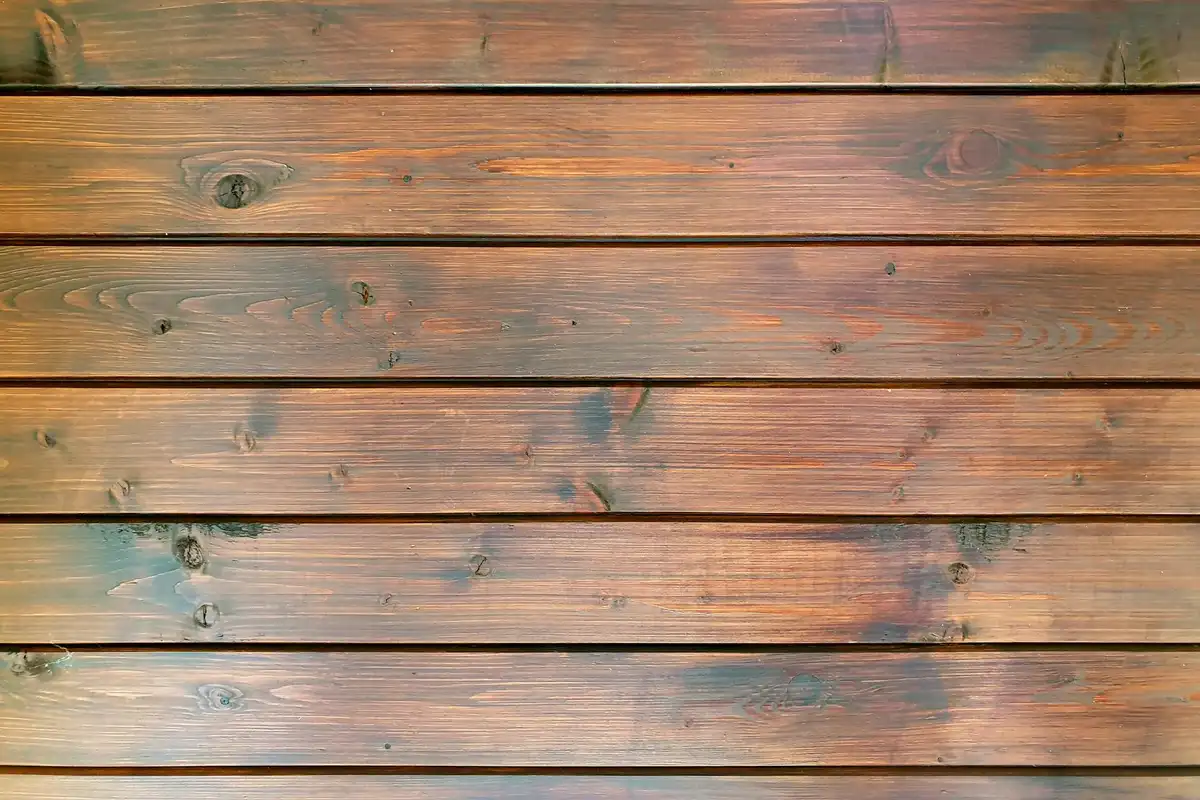
Choosing a companion wood isn’t just about color. You need to think about matching wood colors and species, workability, wood movement, and where the piece will live. These are my go-to pairings, tested in the shop and explained through the lens of wood science.
American Black Walnut: The Classic Contrast
Walnut and cherry is the quintessential pairing for a reason. Freshly milled, the deep chocolate brown of walnut sits starkly against cherry’s pinkish-red hue. The real magic happens over decades. Both woods darken with age and UV light, but they do so in harmony. The cherry deepens to a rich, warm red-brown, while the walnut mellows to a softer, silvery brown.
This shared aging process means a piece that looked dramatic when new will mature into a unified, timeless heirloom.
From a workability standpoint, they are a dream team. Both have a Janka hardness in the 1000 lbf range (walnut at 1010, cherry at 950), so they machine, sand, and finish at nearly identical rates. I often use walnut for drawer fronts on a cherry case, or as thin inlay lines and accent bands. If you’re searching for “what blocks look good with cherry wood,” start here. A walnut butcher block top on a cherry base is a stunning, functional statement.
- Pro Tip: The color contrast is most pronounced when first finished. For a preview of the aged look, leave offcuts in a sunny window for a few weeks.
- Pitfall: Walnut can have dramatic color variations from heartwood to sapwood. Select your boards carefully to maintain a consistent dark accent.
Hard Maple: The Subtle Partner
Maple is the perfect supporting actor. Its pale, creamy white color and typically quiet, tight grain pattern provide a neutral backdrop that makes cherry’s color and more active grain the undeniable star. This makes it ideal for parts you want to be visible but not competing.
I regularly use hard maple for cabinet interiors, shelves, and the backs of frame-and-panel doors. In a Shaker-style piece, maple drawer boxes inside a cherry case are both beautiful and durable. Think of maple as a visual “deep breath” that gives the eye a place to rest before returning to the richness of the cherry.
Workability requires a note of caution. Hard maple lives up to its name with a Janka hardness of 1450 lbf, over 50% harder than cherry. In the hardwood vs softwood Janka hardness spectrum, maple’s higher rating explains why machining it presents different challenges. Your tools must be razor-sharp to avoid tear-out and burning. Expect to sharpen your plane iron or router bits more frequently when switching from cherry to maple in the same project.
- Pro Tip: Soft maple (950 lbf) is much closer to cherry in hardness and is often sold interchangeably. Ask your supplier which you’re getting if workability is a primary concern.
- Pitfall: Maple can “blotch” under some stains and finishes because of density variations in its grain. A pre-stain conditioner or using a clear finish only is often best.
White Oak: For Texture and Durability
Pairing cherry with white oak is about complementary textures. Cherry offers a smooth, often figured, uniform canvas. White oak brings a rugged, architectural feel with its prominent ray fleck-those shimmering silver lines visible on quarter-sawn surfaces-and its grayish-brown tones.
This combination adds a layer of rustic sophistication, perfect for pieces that need to feel both refined and sturdy.
It’s an excellent choice for table bases, cabinet frames, or any structural element where you want visual weight. The analogy for “what color wood floor with cherry cabinets” would be a white oak floor; its durability handles traffic while its texture grounds the warmer cabinetry.
You must specify white oak. Red oak has a more porous, pinkish grain that clashes with cherry’s subtlety. White oak is also rot-resistant, making it suitable for kitchen or bathroom applications. Be mindful of tannins. White oak has a high tannin content, which can bleed under certain water-based finishes or react with some adhesives. Understanding white oak vs red oak anatomy helps explain these differences. Their distinct vessel and pore structures influence finish interaction and moisture response.
- Pro Tip: Use a “tannin blocker” or shellac seal coat on the oak before final finishing to prevent bleed-through, especially if painting the oak elements.
- Pitfall: The difference in hardness is significant (White oak: 1360 lbf). Account for this in joinery; a too-tight tenon in hard oak can split the softer cherry mortise.
Poplar: The Reliable, Unseen Workhorse
Not every pair needs to be seen. For every beautiful cherry table top, there are aprons, braces, and drawer bottoms. This is where poplar shines. It is the ultimate secondary wood: affordable, incredibly stable, and easy to work.
I use poplar for drawer sides, case backs, dust panels, and any painted element. Its stability (low movement coefficient) means it won’t warp and stress the primary cherry structure. Using poplar for hidden parts is a smart material economy, reserving your more expensive, beautiful cherry for the surfaces that matter most.
It answers “what blocks go with cherry wood” from a purely structural perspective. While its green and purple streaks can be off-putting for visible use, they disappear under paint or inside a case. Its Janka hardness (540 lbf) is about half that of cherry, so it cuts like butter but can dent if used for a shelf that will see heavy objects.
- Pro Tip: If you must have a poplar part visible (like a painted interior), its even grain accepts paint exceptionally well without raised grain issues.
- Pitfall: Don’t use it for thin, unsupported shelves or drawer fronts where durability is key. Its softness is a liability on high-wear surfaces.
Cherry Wood Technical Spec Sheet
These numbers aren’t just trivia. They dictate how cherry behaves in your shop and in your home, guiding which woods it pairs with best.
- Janka Hardness: 950 lbf (pounds-force). This measures resistance to denting. Woods with similar hardness (like walnut at 1010) will wear evenly on a tabletop. Much harder woods (like maple) can be paired but require design consideration for joints.
- Specific Gravity: 0.50 (dried). This is a measure of density compared to water. Cherry is a medium-density hardwood. It’s heavy enough to feel substantial but not so heavy that large panels become unmanageable.
- Toxicity/Irritant: Minimal, but the dust is a documented respiratory irritant and can cause dermatitis. Always use dust collection and wear a mask. This is true for almost all wood dust.
- Movement Coefficient: Radial: 0.0026, Tangential: 0.0044. These are the critical numbers for stability. They predict how much a board will shrink or swell with changes in humidity. Woods with similar coefficients (like poplar or soft maple) experience less stress when joined together, reducing the chance of cracked panels or failed glue joints.
The takeaway: for large glued-up panels or wide frames, pairing cherry with a wood of similar movement, like walnut or poplar, is a safer long-term bet than using a high-movement wood like white oak.
One final shop note on finishing: Cherry is known for blotching due to its variable pore structure. A washcoat of 1lb-cut shellac or a dedicated sanding sealer will create a more even base for stains. Also, because cherry darkens with light, any finish with UV blockers will slow, but not stop, this beautiful aging process. Understanding stain finishing application methods—wipe-on, brush-on, or spray-on—helps you control blotching and color uniformity. The chosen method, together with the washcoat, shapes the final look.
Material Substitution: Smart Alternatives to Classic Pairs
Sometimes your design calls for a specific look, but your budget or local lumberyard has other ideas. You can still achieve a beautiful result by knowing which woods can stand in for the classics.
Alder: The Budget Cherry
If you love cherry’s warm, pinkish-tan hue but need a more affordable option, look at alder. Freshly milled, alder has a very similar pale color that darkens to a warm brown over time, though it won’t reach cherry’s deep red-brown. The key difference is in structure. Alder is much softer, so it dents easily.
Use alder for pieces that won’t see heavy impact, like cabinet doors and frames, or for painted projects where only the grain texture matters. It works easily with both hand and power tools, making it a fantastic practice wood for cherry-style designs.
Birch: A Finer, Quieter Maple
Maple is the go-to pale wood, but its wild grain patterns and hardness can dominate a design. For a subtler look, I often choose birch. It has a tighter, more consistent grain and a finer texture.
Birch provides a calm, creamy background that lets the cherry’s rich color and figure take center stage without competition. It’s excellent for drawer sides, cabinet interiors, or any secondary element where you want a clean, modern pale wood. Baltic birch plywood properties—uniform cores, tight grain, and strong edge stability—keep panels flat and predictable. That stability makes it a solid choice for drawers, cabinets, and other fine carpentry. Be aware it can blotch with stain, so test first.
Walnut Alternatives: Richness with Responsibility
Genuine black walnut is a prized pairing, but it’s expensive and can be overharvested. For a similar deep, chocolate-brown contrast, you have two responsible paths.
First, consider a sustainably sourced mahogany like Khaya (African Mahogany). It’s stable, carves beautifully, and ages to a dignified brown. Second, use a domestic wood like ash. Ash has a bold, open grain but takes dark stains incredibly well. A dark walnut stain on ash creates dramatic contrast with cherry.
Using a stained domestic wood like ash often has a lower environmental footprint than shipping an exotic species, and it supports sustainable forestry closer to home. The ash wood’s janka density contributes to durability, helping products last longer. This supports sustainable design choices.
Cherry “Food Pairing” for Kitchens
In kitchens, cherry works alongside other materials daily. Think of this as “food pairing” for your cabinetry. For floors, hickory or white oak offer a pleasing textural contrast and can handle the punishment of foot traffic better than cherry. For countertops or butcher block accents, hard maple is a classic, durable companion.
The goal in a kitchen is to pair cherry with woods that are tougher in high-wear areas, creating a hierarchy of material that is both beautiful and logical.
How to Build with Cherry and Another Wood: Practical Steps
Mixing woods is more than just aesthetics. You are joining materials with different physical properties. A little foresight prevents problems.
Joining Different Woods Without Trouble
The biggest science challenge is differential wood movement. All wood expands and contracts with humidity changes, but not at the same rate. For example, cherry moves about 30% more across its grain than maple does.
This matters in specific constructions. When making a wide tabletop with cherry edges and a maple center, never glue the long-grain edges together in a way that restricts cross-grain movement. Use a breadboard end? Attach it only to the cherry core with a sliding mortise-and-tenon or figure-8 fasteners, never glued solidly along its length.
Always design so the wood with the higher movement rate (usually the darker, softer wood) can move freely without breaking the joint or splitting itself.
For standard edge-gluing into a panel, your glue strategy is simple. Use the same high-quality wood glue (like PVA or polyurethane) on both woods. Apply glue evenly and clamp promptly. The bond between the two different woods will be as strong as the wood fibers themselves if the joint is well-fitted.
Finishing to Tie the Look Together
The finish is your final tool to harmonize the look. A clear, non-yellowing topcoat like a water-based polyurethane or lacquer is my default. It protects the wood and lets both species age at their natural rates.
Remember, cherry darkens significantly over years, while maple stays relatively pale. A wood like walnut will slowly lighten to brown. The contrast between the woods you assemble will evolve over the life of the piece, which is part of its character.
If the initial contrast is too stark for your taste, you can gently steer the colors closer. Apply a very light, diluted stain or a coat of amber shellac to the lighter wood (like maple or birch) before the final clear coats. This warms it up, reducing the bright white effect.
Never skip the test. Glue up a small sample scrap of your actual wood pairing. Sand and finish it exactly as you plan to for the project. This reveals the true final color and shows you how the woods interact with your chosen finish. It’s the only way to be sure.
Cherry Wood Pairing FAQ: Technical & Practical Considerations
Why is movement coefficient the most critical technical factor for a lasting pair?
Differential seasonal movement between joined woods is the primary cause of structural failure, such as cracked panels or failed glue joints. Pair cherry with species of similar tangential/radial movement rates, like walnut or poplar, to ensure long-term dimensional harmony.
Is soft maple a better pairing for cherry than hard maple?
Yes, for workability. Soft maple’s Janka hardness closely matches cherry’s, allowing for uniform machining and sanding with less tool wear. Its subtler grain and lighter color also provide a less competitive visual backdrop than often bold hard maple.
How do I manage blotchy finishes when pairing cherry with a pale wood like maple?
Apply a uniform washcoat (e.g., 1lb-cut shellac) to both woods before any stain to equalize absorption across their differing pore structures. This controlled sealant layer ensures an even color base, preventing cherry’s variable density from creating muddy contrasts, especially when finishing cherry wood.
What are the best “food pairing” woods for kitchen floors under cherry cabinets?
Choose species with higher hardness and pronounced texture for durability and visual grounding, such as white oak or hickory. Their robust wear resistance handles traffic, while their open grain or strong figure provides a deliberate textural counterpoint to cherry’s smooth facade.
Are there any wood species I should explicitly avoid pairing with cherry?
Avoid woods with extremely high movement coefficients, like beech, or very oily exotics, like teak, as their differential seasonal movement or adhesion chemistry can compromise joints. Also, generally avoid mid-toned woods with strong red or orange undertones (e.g., some mahoganies), as they can create a visually clashing, indeterminate color field with aged cherry.
Final Thoughts on a Balanced Palette
The most important rule is to let cherry be the star. Use your secondary species to provide quiet contrast in grain or a subtle shift in tone. Cherry’s warm, evolving color asks for cooler or neutral companions like maple, or deeper, stable anchors like walnut. Your choice should also respect how each wood moves and works in your shop, ensuring the pair will age gracefully together without stress.
Please source your materials from suppliers who can verify sustainable forestry practices. Your best learning comes from testing finish samples on your wood pairings before committing to the final piece.
References & External Links
- r/BeginnerWoodWorking on Reddit: Complementary woods that go well with cherry?
- Paint Colors That Go Well With Cherry
- Mixing Woods – Cherry + Walnut or Cherry + Cherry?
- If Your Home Features Cherry Wood, These Paint Color Tips Are For You
- A Styled Approach to Mixing Wood Species – Thos. Moser
Written by David Ernst. David is a veteran woodworker. He is now retired and stays in his cabin in Wisconsin which he built himself. David has 25+ years experience working in carpentry and wood shops. He has designed and built many small and large wood projects and knows the science behind wood selection like the back of his hand. He is an expert guide on any questions regarding wood material selection, wood restoration, wood working basics and other types of wood. While his expertise is in woodworking, his knowledge and first hand experience is far from 'woody'.