
How Do You Repair Structural Wood Cracks: Epoxy, Dutchmen, or Butterfly Keys?
A structural crack in wood isn’t just a flaw; it’s a failure waiting to happen if repaired wrong. Your fix must restore original strength while respecting the material’s nature.
This guide breaks down the wood science and shop practice behind three proven methods. We will cover the fluid dynamics of epoxy resin for penetration, the grain-matching strategy of Dutchmen patches, and the mechanical locking action of butterfly keys.
My advice comes from a decade of stress-testing repairs in my own shop, measuring how each method handles shear force and seasonal movement.
Why Wood Cracks and How to Diagnose the Damage
Wood breathes. It’s hygroscopic, which means it constantly absorbs and releases moisture from the air. This causes it to swell and shrink. When internal stress from this movement exceeds the wood’s strength, it splits.
Not every split is an emergency. You need to diagnose the type.
- A surface check is a shallow crack along the growth rings, often just in the surface fibers. It’s cosmetic.
- A structural crack runs deep, often through the thickness of the board. It weakens the piece and will worsen if the wood is still moving.
- A missing chunk is exactly that, where a piece has splintered out entirely, creating a void.
Your first job is to check for movement. Tape a small piece of paper over the crack at its widest point. If the paper tears within a week, the wood is still active. For a structural crack that is still moving, you must address the cause of the stress first, or your repair will fail.
Understanding this is the key to knowing how to fix split wood correctly. A stable crack in a wood table is a repair project. A moving crack is a symptom of a larger problem.
The Science Behind Your Repair Kit: How Epoxy Bonds to Wood
Glue needs tight joints. Epoxy doesn’t. When epoxy’s two parts mix, a polymerization reaction occurs, creating a hard plastic. This plastic grips wood in two key ways, making it a versatile choice for woodworking projects.
First, it forms a mechanical bond. Liquid epoxy wicks into the wood’s porous cell structure. As it cures, it locks in place like countless microscopic anchors. Second, some formulations create a mild chemical bond, adhering to the wood fibers themselves.
This dual action is why you choose different epoxies. A low-viscosity, penetrating epoxy is thin like water. I use it for hairline structural cracks because it flows deep to glue the split from the inside out. A high-viscosity, gap-filling epoxy is thick like honey. It’s for filling voids and missing chunks where you need bulk that won’t sag.
A good wood epoxy repair product clearly states its viscosity and intended gap-fill capacity on the label. For damp wood or exterior projects, you must seek out specialty marine or exterior-grade epoxies designed to cure in those conditions and accommodate wood’s moisture content in adhesive bonding.
This bulk-filling capability is precisely why epoxy works for a missing chunk. Yellow glue would just pool at the bottom of the hole. Epoxy fills the entire cavity, bonding to all the interior surfaces and becoming a structural part of the wood itself.
Best Practice Workflow: Mixing and Applying Epoxy for Wood
Epoxy is chemistry. Precision matters. Ignore the instructions, and you get a sticky mess or a brittle filler.
- Temperature is everything. 70°F (21°C) is the sweet spot. Cold epoxy is thick, slow to cure, and won’t penetrate. Heat makes it runny and shortens your working time dramatically.
- Mix ratios are not suggestions. Use graduated cups or pumps for absolute accuracy. Stir slowly and thoroughly for a full two minutes, scraping the sides and bottom.
- Know your pot life. This is your working time from mix to when it’s too thick to use. It’s always shorter than the cure time.
- Add filler for strength and color. For cracks, I make “wood flour” by sanding some of the project wood. Mixing this dust into the epoxy makes a paste that’s stronger than epoxy alone and blends better.
Here is a key troubleshooting tip. If your epoxy kicks off too fast, your workspace is too hot. If it stays tacky for days, it’s too cold, or you mis-measured the ratio. There’s no fix once mixed. You must scrape it out and start over.
For cleanup, acetone is the common solvent. Acetone will instantly melt most varnishes and finishes, so contain your cleanup to epoxy spills only. If you spill acetone on a finished surface, you’ll be left with a white, cloudy stain. The only fix is to sand through the damaged finish and reapply it.
Filling and Stabilizing Cracks with Colored Epoxy Resin
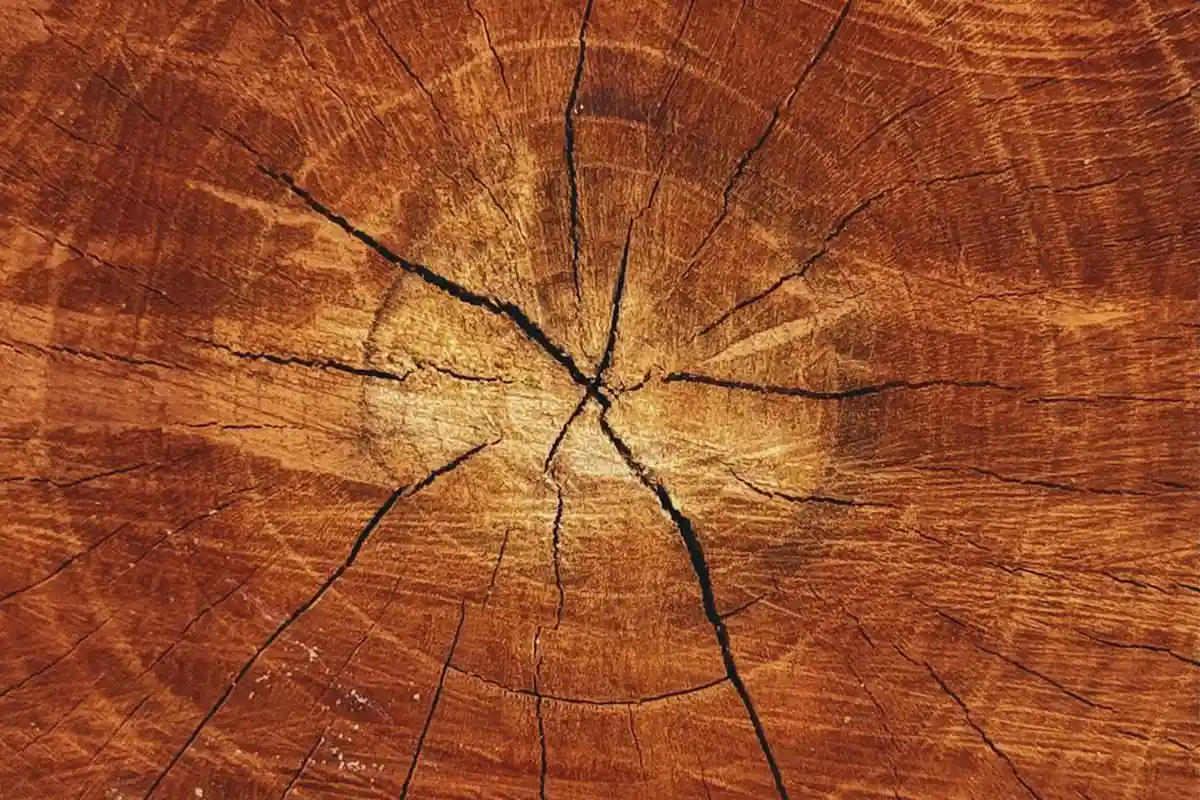
Before you add any mechanical fix, you need to stop the crack from moving and stabilize the wood around it. This is where epoxy excels. It wicks deep into the wood fibers, bonds tenaciously, and creates a solid, immovable mass inside the crack. Think of it as giving the wood a rigid internal skeleton. For a how to fix a crack in wood furniture, this is often the only step you need for a stable, beautiful repair.
The single biggest mistake is applying epoxy to dirty, oily, or damp wood. Epoxy cannot bond to contaminants. First, clean the crack thoroughly. I use compressed air to blow out dust, then flush the gap with denatured alcohol on a rag or brush. This is critical for wood epoxy repairs damp wood in name only; the wood must be dry to the touch and at room temperature for the epoxy to cure properly.
Your wood epoxy repair kit will have two parts: resin and hardener. Mix them slowly and thoroughly for the full recommended time. Scrape the sides and bottom of your cup. Rushing this creates weak spots.
For a clear, bubble-free fill, use a slow-curing epoxy. It gives bubbles more time to rise to the surface. You can pop stubborn ones with a quick pass of a heat gun or a torch held far away. For a colored fill, add pigments made for epoxy. You can match the wood or create a bold contrast. I often mix a shade slightly darker than the wood; it will look like a natural grain feature when sanded.
Apply the epoxy so it slightly overfills the crack. A syringe or a glue bottle with a fine tip gives you the most control. Let it cure fully, which usually means waiting a day. Then, scrape off the excess with a sharp cabinet scraper or block plane before sanding flush. Epoxy stabilizes the weakness, bonding the separated fibers so they act as one piece again. This method is frequently the best first step, as it restores integrity before you add any visible hardware like butterflies.
Replacing Lost Strength with a Dutchman (Cross-Grain Patch)
A Dutchman is a wood patch that replaces a missing or badly damaged section. Unlike a butterfly key, which sits on top and bridges a crack, a Dutchman is *inlaid* into the board. It becomes part of the surface. You use it when a board has a split, a knot has fallen out, or a chunk is missing.
The science here is all about grain direction. Wood is strong along its grain but weak across it. If you patch a hole with a piece where the grain runs the same direction as the board, seasonal movement will push that patch right out. A proper Dutchman has its grain running perpendicular, or cross-grain, to the host wood. This opposing orientation locks the patch in place as the wood expands and contracts around it.
Here is the process. First, define the damaged area. Use a sharp chisel or a router with a straight bit to create a clean, geometric recess with straight sides and a flat bottom. A rectangle or a diamond shape works best. The sides should be slightly undercut, meaning the bottom of the hole is wider than the top. This creates a mechanical lock.
Next, make the patch. Trace the recess onto a donor piece of wood. Cut the patch slightly oversized. The grain of this patch must run across the short dimension of your traced shape. Hand-fit it with a plane and sandpaper until it drops into the recess with a light tap. It should fit snugly without forcing.
Glue it in with wood glue, clamp it, and let it dry. Once cured, plane and sand it flush. The magic of a well-executed Dutchman is that the cross-grain patch, when finished, becomes nearly invisible if you match the wood species and color closely. It provides both structural strength and a seamless visual repair.
Locking Movement with a Decorative Butterfly Key
A butterfly key, or bowtie inlay, is more than decoration. It is a mechanical lock. Its job is to span a crack so the wood on either side cannot slide past each other and open further. This stops a split from growing.
You cut the butterfly from a solid block of wood and inlay it across the crack. The process is straightforward.
- Trace your butterfly template onto the workpiece, straddling the crack.
- Use a sharp chisel or a router with a clean-up bit to cut the recess. Go slow, just deep enough to hold the key.
- Fit your pre-cut butterfly key into the recess. It should be a light tap fit, not forced.
- Glue it in place with wood glue, clamp it flush, and plane it smooth after the glue dries.
You can make this repair a bold feature or hide it completely, and your choice of wood for the key decides the look. For contrast, use a dark wood like walnut or wenge on a light maple slab. To disguise the repair, use the same wood species, carefully matching the grain direction. This classic solution is perfect for stabilizing a long crack in a live-edge table or a wide slab.
Mechanism of Action: How a Butterfly Key Resists Shear Force
Think of the crack in your wood like two tectonic plates trying to slide apart. This sliding force is called shear. A butterfly key works like a door latch.
The wide “wings” of the key are embedded in the solid wood on either side of the split. The grain of the key runs perpendicular to the crack. When the wood tries to move, the long edges of the key’s wings press against the end grain of the recess you cut. Wood is very strong when force is applied against its long grain like this. The key cannot be pulled out sideways.
Compared to epoxy or a Dutchman, a butterfly key provides active, ongoing resistance to movement. Epoxy is a adhesive bond that can be brittle. A Dutchman patch replaces missing material but doesn’t mechanically lock movement across a crack. The butterfly key physically bridges the gap and uses wood’s own strength to hold the line.
Choosing Your Repair: Epoxy, Dutchman, or Butterfly?
No single fix is best for every job. Your choice depends on the damage, the required strength, and how you want it to look.
| Method | Best For | Strength | Visual Goal | Tools Needed |
|---|---|---|---|---|
| Epoxy Resin Fill | Filling voids, stabilizing punky wood, sealing hairline cracks. | High bond, but can be brittle. Does not stop wood movement. | Can be clear or pigmented. Often a visible, modern repair. | Syringes, mixing cups, tape for dams. |
| Dutchman Patch | Replacing a missing, rotted, or damaged chunk of wood. | Very strong. Becomes a structural part of the piece. | Can be near-invisible with grain matching, or decorative with contrast. | Handsaw or router, chisels, glue. |
| Butterfly Key | Mechanically locking a crack to prevent it from widening. | Excellent ongoing resistance to shear force across the crack. | Typically a decorative highlight, but can be disguised. | Chisels, router, template, saw. |
Pick epoxy for filling gaps and stabilizing. Choose a Dutchman when you need to replace solid wood. Go for a butterfly key when your main goal is to stop a crack from moving.
You often combine methods. For a cracked table leg, I inject thin epoxy deep into the crack for adhesion, then inlay a butterfly key across the outside for long-term mechanical security. Remember, you can fix warped wood in the sense of filling gaps caused by the warp, but epoxy will not pull a bowed board straight. It fills the symptom, not the cause.
Pro Tips for Durable, Invisible, and Long-Lasting Repairs
Your repair will only ever be as good as the wood it’s applied to. Wood is a hygroscopic material, meaning it constantly absorbs and releases moisture from the air, expanding and shrinking as it does. This movement never stops. Trying to fix a crack in wood that is still actively shrinking is like trying to glue a piece of paper that’s still on fire. It’s much better to prevent cracks rather than repair them.
Always repair wood that is at its Equilibrium Moisture Content for your environment, which for most indoor furniture means wood dried to 6-8% moisture content. You can check this with a moisture meter. Kiln-dried wood from a reputable supplier is your best starting point. Repairing “green” or wet wood guarantees failure because the wood will continue to dry and shrink, pulling your dutchman or epoxy patch apart from the inside.
Mastering the Clamp-Up
For a crack that needs to be closed, pressure is everything. You can’t just pour epoxy into a gap and expect it to pull the wood together. Epoxy is a gap-filling adhesive, not a clamp.
Start by determining the direction of force needed. Often, you’ll need to apply pressure perpendicular to the crack to close it. Use a caul-a scrap piece of wood-between your clamp and the workpiece to distribute pressure evenly and prevent denting. For wide panels, use multiple clamps in a staggered pattern. A trick I use is to slowly tighten each clamp a little at a time, walking down the line, to close the crack evenly without causing new stresses.
If the crack won’t close fully, your wood may still be moving, or internal stresses may require a butterfly key to stabilize it before you attempt to glue it shut. Never force a clamp to the point of damaging the wood; a small, stable gap filled with epoxy is better than a cracked board.
Finishing Over the Patch
A repair can look perfect after sanding, only to become a glaring eyesore once you apply oil or finish. This is called “telegraphing.” Different materials absorb finishes at different rates. Epoxy is non-porous, while the surrounding wood is thirsty. A coat of danish oil will soak into the wood and darken it but will bead up on the epoxy, leaving a shiny, light spot.
The solution is to seal the entire piece first. Use a dewaxed shellac sanding sealer or a thin “wash coat” of your final finish diluted 50/50 with the appropriate solvent. This creates a uniform, sealed surface over both wood and repair. This initial seal coat ensures your top coats of varnish or oil will cure evenly on the surface, making your repair virtually disappear. Always test your finishing schedule on a sample piece with a similar epoxy patch.
Repairs for the Outdoors
Exterior repairs face a brutal enemy: ultraviolet light and thermal cycling. Standard epoxy turns chalky and degrades under prolonged UV exposure. For any outdoor repair, you must use a UV-stable epoxy resin, often labeled as “marine grade” or “outdoor.”
But the epoxy is only half the battle. The wood around it still needs protection. An exterior epoxy repair must be considered a structural component only; you must then protect the entire piece with a quality film-forming finish like a spar varnish, which contains UV blockers. Even with this, expect to maintain the finish regularly. The repair itself will hold, but the wood’s surface will weather if left unprotected.
The Wood for the Patch: A Matter of Ethos
When you cut a butterfly key or a dutchman, you’re using new wood to save old wood. Where that new wood comes from matters. I keep a bin of offcuts from past projects-walnut, cherry, oak. Using a contrasting species for a butterfly key is a classic look, but using a matching species from your scrap pile is an honest celebration of conservation.
Every repair we execute is a small stand against a disposable culture. It is applied patience. The energy and resources already embodied in that old tabletop or beam are immense. By skillfully repairing it, we honor that investment and add our own chapter to its story. This isn’t just woodworking; it’s stewardship.
Final Grain: Trusting the Repair
There’s a satisfying truth in materials science: a well-glued joint is stronger than the wood fibers around it. When you fit a dutchman with precise shoulders or laminate a butterfly key into a clean mortise, you are creating a mechanical lock bonded with modern adhesive. The repaired section often becomes the most stable, robust part of the entire workpiece. You are not making it “good as new”; you are making it better than it was.
If the process feels daunting, start with scrap. Practice routing the mortise for a butterfly on a piece of plywood. Fit a dutchman into a board you don’t care about. The skills are straightforward, but they demand a confident hand. That confidence comes from repetition.
Finally, step back and look at the saved piece. The visual history of the crack, now stabilized, speaks of care and longevity. In a world of cheap replacements, that is the deepest satisfaction our craft offers.
Frequently Asked Questions: Wood Repair Science in Practice
How do I choose between low-viscosity and high-viscosity epoxy for a crack?
Select a low-viscosity (thin) epoxy to wick into and bond the internal surfaces of a hairline structural crack. Use a high-viscosity (thick) gap-filling epoxy to replace missing volume in a void or wide split, as it will not sag.
What makes an epoxy suitable for exterior woodwork repairs?
Exterior-grade epoxies are formulated with UV inhibitors to resist solar degradation and are designed to cure properly in fluctuating temperatures. Always protect the cured epoxy and surrounding wood with a UV-blocking topcoat, like spar varnish, as the epoxy itself provides structure but not lasting surface protection. UV degradation of wood finishes is a real concern. A UV-rated topcoat helps protect color and surface integrity over time.
Can I use epoxy on wood that is slightly damp?
No, epoxy requires a dry substrate for a proper chemical cure and mechanical bond. To ensure proper moisture conditions, measure wood moisture content to confirm it’s at or near equilibrium for your indoor environment. For a guaranteed bond in challenging conditions, use a specialty epoxy formulated for higher moisture tolerance, but surface dampness must still be removed.
When should I use a penetrating epoxy instead of a filler?
Use a penetrating epoxy as a stabilizing treatment for sound but cracked wood, as it soaks in to glue fibers from within before any filler is added. It is not a gap-filling product; follow stabilization with a structural paste or filler epoxy if a visible cavity remains.
When should I seek a professional wood epoxy repair service?
Seek a professional if the structural integrity of a load-bearing element is in question or if the damage exceeds your tooling and material capabilities. A reputable craftsperson will diagnose wood movement, select the correct structural repair method (epoxy, Dutchman, or butterfly key), and can execute complex grain-matching for invisible patches. They will also account for wood’s anisotropic properties when planning joinery repairs, ensuring grain direction and movement are respected. This is especially important for precision joinery where hidden patches must blend with the surrounding grain.
Final Thoughts on Structural Repairs
The right repair depends entirely on the crack’s story. Use epoxy to fill a void, a Dutchman to replace lost wood and restore strength, and a butterfly key to lock movement and relieve tension. Your job is to diagnose the cause first, then match your solution to the physical need. A thoughtful repair respects the wood’s history while ensuring its future.
Choosing to repair, not replace, is a sustainable act that honors the material. The best woodworkers are perpetual students, always testing methods and observing how wood and their fixes age together over time.
Related Guides and Information
- Repairing Split Wood : 6 Steps (with Pictures) – Instructables
- r/woodworking on Reddit: Best way to reinforce this crack?
- To repair or not to repair cracked wood :: BioResources
- Epoxy crack repair | American Association of Woodturners
- How-to Repair a Crack on a Wood Surface | Behr
- How to Fill Cracks in Wood with Epoxy Resin Step by Step – Carved
- How to Repair Cracks in Wood Furniture | Laurel Crown Furniture
Written by David Ernst. David is a veteran woodworker. He is now retired and stays in his cabin in Wisconsin which he built himself. David has 25+ years experience working in carpentry and wood shops. He has designed and built many small and large wood projects and knows the science behind wood selection like the back of his hand. He is an expert guide on any questions regarding wood material selection, wood restoration, wood working basics and other types of wood. While his expertise is in woodworking, his knowledge and first hand experience is far from 'woody'.