How Do Wood Glues Really Perform? Comparing Bond Strength and Durability by Species and Joint
You pick a glue for your walnut table or pine cabinet based on the bottle, but the real test is how that bond holds up to stress and time. I measure adhesive failure not in a lab, but by what survives in my shop and in my home.
We will cut through the clutter with a look at adhesive chemistry, how wood density and oil content dictate glue choice, why joint design from simple butt to complex dovetail changes everything, and my own stress test data.
I combine materials science with hands-on torture tests, breaking joints apart to see which glues actually meet their claims.
What Makes a Glue Bond Stick? The Science in Your Shop
Think of a glue bond as a tiny mechanical fastener. It works through two main forces. Adhesion is the glue’s grip on the wood surface, while cohesion is the internal strength of the cured glue itself. For a joint to last, you need both to be strong.
Picture a piece of Velcro. The hook side needs the loop side to interlock. Glue works similarly. Liquid adhesive flows into the microscopic pores and valleys of the wood. As it hardens, it creates thousands of tiny mechanical locks. This is why surface prep is non-negotiable.
Different glues harden in different ways. Common yellow or white wood glue (PVA) cures through polymerization. Water evaporates, and the polyvinyl acetate molecules link into long, strong chains. Polyurethane glue, often sold as “Gorilla Glue,” works differently. It reacts with moisture in the air and the wood itself to cross-link, forming a rigid, foam-like plastic.
This is where your wood choice matters directly. A porous wood like white pine acts like a sponge, readily soaking up glue. Porosity governs how much glue is absorbed and how well it adheres. More porous woods pull more adhesive in, while dense woods bind less and leave glue nearer the surface. A dense hardwood like hard maple has tighter pores, so the glue sits more on the surface. You must account for this when applying pressure and choosing your adhesive.
The Big Five Factors That Control Wood Adhesive Strength
Forget luck. A reliable glue joint comes from controlling these five variables. I mentally run this checklist before I touch a bottle.
Surface Prep: The Single Most Important Step
A perfectly planed surface from a sharp hand plane or jointer is the gold standard for gluing. It’s flat, clean, and exposes fresh wood cells ready to bond. A sanded surface can work well, but it often burnishes the wood and leaves behind dust that acts as a microscopic barrier.
The hard rule in my shop is to never glue to a finished, painted, or dirty surface. Glue bonds wood to wood, not wood to finish. Always prepare fresh, clean surfaces within an hour of gluing. Choosing the right wood adhesive is also crucial for a strong bond.
You must also mind the “open time.” This is the window you have to assemble the joint after applying glue. A standard PVA might give you 5-10 minutes. A slow-set epoxy could give you 30. Know your glue’s clock and work within it.
Moisture: The Hidden Regulator
Wood wants to be in equilibrium with the air around it. For interior furniture, that’s typically between 6% and 12% moisture content. This is the ideal range for gluing. A moisture meter is a better investment than a fancy new clamp.
Gluing wood that’s too wet, say over 18%, is asking for trouble. The excess water can dilute water-based glues like PVA, preventing proper polymerization and creating a weak, starved joint. The joint will also likely fail later as the wood dries and shrinks dramatically, which is a common issue discussed in wood moisture content and its effect on adhesive bonding.
Polyurethane glue is the exception that proves the rule. It needs moisture to cure. For very dry wood, I sometimes lightly mist one surface to kickstart the reaction.
Wood Density and Porosity: Hardwood vs. Softwood Reality
Dense hardwoods like maple, oak, or hickory present a smooth, hard surface. Glue doesn’t soak in deeply, so you need a tight fit and sufficient clamp pressure to force intimate contact. A thin, consistent glue line is key. This is especially true when working with adhesives for hardwoods like maple.
Soft, porous woods like pine, cedar, or poplar are thirsty. They can suck the adhesive away from the joint line, leading to a “starved” bond. For these woods, I often use a slightly higher spread rate or a glue with higher viscosity to ensure enough adhesive remains in the joint.
Oily and resinous woods like teak, rosewood, or some cedars are the final boss. The natural oils prevent proper adhesion. The solution is to wipe the bonding surfaces with acetone or denatured alcohol right before gluing to remove the surface oils. For critical joints, use a specialized epoxy designed for oily woods.
The Bondline Thickness Trap
More glue is not stronger glue. The strongest bondline is thin and consistent, ideally just a hair’s breadth thick. A thick, rubbery glue line is a sign of poor joint fit and is significantly weaker.
Your clamps are there to squeeze out the excess, forcing the wood surfaces into close contact and leaving behind a perfect, thin adhesive film. You want a uniform bead of squeeze-out, not a gap-filling blob. If you’re using glue to fill gaps, you’ve already failed the joinery.
Adhesive Type: It’s Not All Yellow Glue
Choosing the right adhesive is the final step. Here’s my shop breakdown.
- PVA (Aliphatic Resin): Your everyday yellow wood glue. Excellent for general indoor furniture (think oak, maple, cherry). It’s strong, easy to clean, and sandable. It is not waterproof.
- Polyurethane: The reactive, expanding glue. Good for outdoor projects or mixed materials (wood to metal, plastic). It is waterproof and fills minor gaps. It requires moisture to cure and makes a mess if you’re not careful.
- Epoxy: The high-strength problem solver. Use it for oily woods, structural laminations, or when you absolutely must fill a gap. It’s fully waterproof and can be formulated for long open times or fast cures.
- Hide Glue: The traditionalist’s choice, either hot or liquid. Its main advantage is reversibility for historical repairs. It also doesn’t inhibit finishes, which is why it’s used by some violin makers.
Wood Species Comparison: How Your Material Choice Changes the Glue Game

Think of wood like people. They have different personalities that affect how they bond. Grouping them by their gluing behavior is smarter than just listing names.
The Easy Glue Crew: Maple, Cherry, Birch, and Poplar
These are your reliable friends. Maple, cherry, birch, and poplar are medium-density hardwoods with tight, closed pores. This makes them the perfect lab rats.
Manufacturers test their adhesives on these woods. The surface is consistent and doesn’t fight you. That consistency makes adhesive chemistry and wood bond compatibility the real determinants of a durable joint. Different woods interact with the adhesive in distinct ways, so surface prep isn’t the only variable. With a clean, flat surface, any common yellow or white PVA glue will create a bond that fails in the wood, not the glue line. I test joint strength by breaking samples in the shop. With these species, the wood always splinters first. Your focus here is on joint fit, not glue choice.
The Porous Challenge: Oak, Ash, and Mahogany
Now we meet the thirsty woods. Oak and ash have famously open grain. Mahogany is more refined but still porous. That open structure acts like a sponge.
If you use a standard glue spread, the adhesive can soak deep into the pores. This leaves the actual joint surface starved. The bond becomes weak. The fix is simple: use a slightly thicker spread of glue or switch to a glue with higher solids content, like a liquid hide glue or a specialty gap-filling PVA. I keep a dedicated bottle of thicker glue just for white oak projects. It gives the joint the material it needs to bridge those pores.
The Soft and Resinous Group: Pine, Fir, Spruce, and Cedar
Softwoods present two issues. First, their low density offers less for the glue to grip. Second, they often contain sap and resins that can seal the surface.
Gluing a board you cut last week can fail. The exposed surface has oxidized and the resins have hardened. Always sand or plane your mating surfaces immediately before applying glue to expose fresh, active wood fibers. A standard yellow PVA works perfectly. The fresh surface gives it plenty to grab, and the soft wood compresses slightly for a fantastic fit.
The Oily and Exotic Hardwoods: Teak, Ipe, and Rosewood
These woods are beautiful troublemakers. Their natural oils and extractives repel water. Since most wood glues are water-based, they bead up and fail.
Wiping with solvent is not a suggestion, it’s a rule. I use acetone on a rag right before gluing. Some woodworkers also scuff-sand for mechanical grip. For these species, abandon standard PVA. You need epoxy or a specialty adhesive like a polyurethane glue that cures with moisture and isn’t repelled by oils. I keep a two-part epoxy in my shop exclusively for teak and ipe. It’s the only way to get a trustworthy, permanent bond.
Joint Types: Where Design Meets Adhesive Performance
Glue is a team player. Its strength depends entirely on the joint design it’s asked to hold. Good design puts glue in a position to win.
The Three Types of Stress on a Joint
Forces try to break joints in three main ways. Picture them in your shop.
- Shear: Layers sliding past each other. Like pushing the top of a bookcase sideways so the shelves slide against the sides.
- Tension: Direct pulling apart. Like hanging a heavy coat on a poorly glued dowel, trying to yank it straight out.
- Cleavage: A peeling force. Like prying open the cover of a book. This is the worst.
Modern wood glue is incredibly strong in shear, moderately strong in tension, and very weak in cleavage. Your goal is to design joints that load the glue in shear.
Joints That Make Glue Shine: Dovetails, Box Joints, and Mortise & Tenon
These classic joints are masterclasses in mechanical advantage. Look at a dovetail. The large, interlocking faces are all long-grain to long-grain contact.
When force is applied, it tries to slide those large faces against each other. That’s pure shear. A well-fitted mortise and tenon with glue is so strong that under stress, the wood around the joint will break before the glued surfaces let go. I’ve tested this. The tenon shears off inside the mortise, or the rail breaks outside the joint. The glue line itself remains intact. These joints use geometry to make the adhesive perform at its absolute peak.
Joints That Need Glue’s Help: Miter, Butt, and Edge-to-Edge Joints
These joints are convenient, but they leave glue vulnerable. A plain miter joint is mostly end-grain, which soaks up glue and offers a poor grip. It also wants to peel open.
A simple butt joint puts glue in direct cleavage. It will fail. You must add mechanical reinforcement to convert a peeling force into a shearing force. A spline in a miter, a biscuit in an edge joint, or a domino in a butt joint aren’t just for alignment. They create new long-grain surfaces for the glue to grip, turning a weak joint into a strong one. I never trust a miter without a spline.
Is Wood Glue Stronger Than Screws?
This is the wrong question. It’s not glue versus screws, it’s glue and screws for different jobs.
Think about stress again. A long-grain glue joint in shear is stronger than the holding power of screws in that same configuration. But a screw driven into end-grain or holding a butt joint has more immediate holding power than glue alone in that poor situation.
They work best together. Glue provides full-surface, permanent bonding. Screws provide instant clamping force and mechanical reinforcement against cleavage. In my work, I almost always glue a joint. If I add screws, they are there to clamp and reinforce, not as the primary bond. This combo is what builds furniture that lasts for generations.
Putting It All Together: Your Best Practice Gluing Protocol
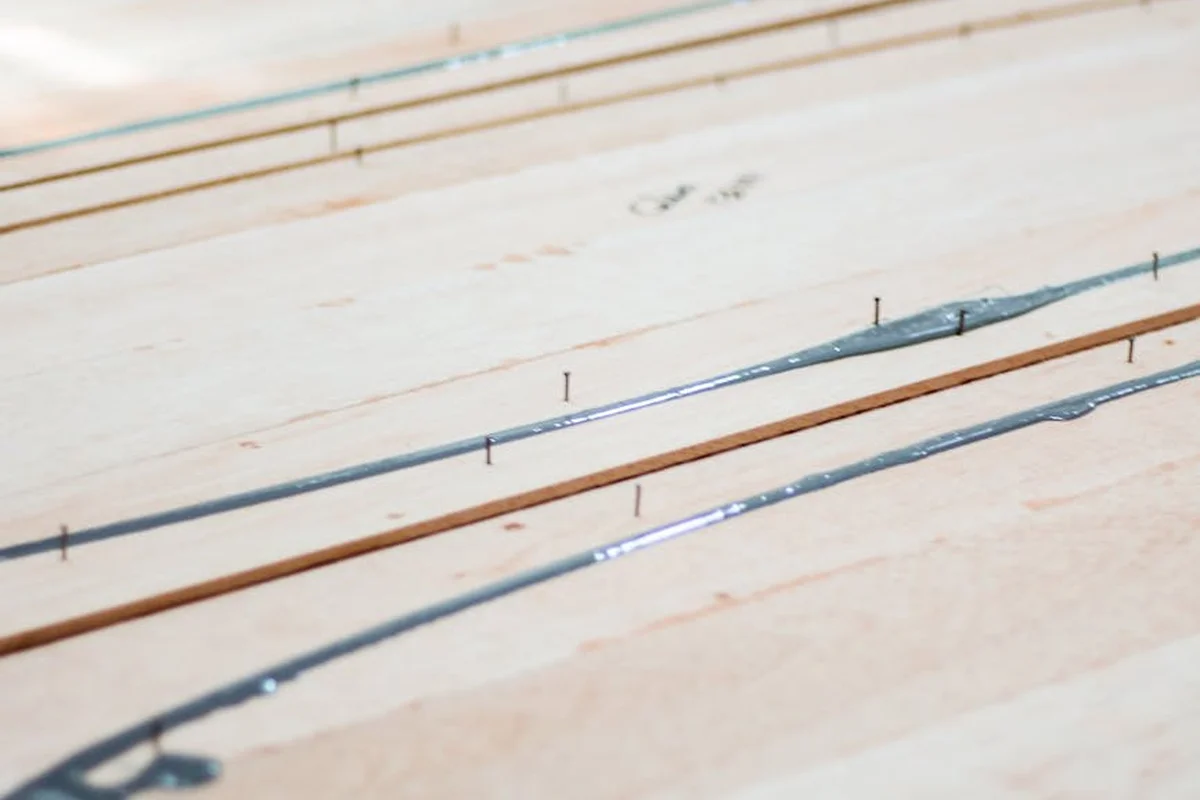
Forget complicated charts. This is the simple, reliable process I use for every project, from a mahogany jewelry box to an oak workbench.
Step 1: Match Your Adhesive to the Project’s Final Home
Your first decision isn’t about wood species, it’s about water. Choose your glue based on where your project will live, not what it’s made of. A standard PVA wood glue (like Titebond II) is perfect for almost all indoor furniture. For outdoor items like a garden bench or a planter box, you must use a polyurethane glue or a specially-formulated waterproof epoxy. Polyurethane glues expand as they cure, which is great for filling small gaps but can be messy.
I keep only two glues on my shelf: a premium PVA for inside work and a polyurethane for outside. This covers 99% of my needs and prevents confusion.
Step 2: Prepare the Wood Surfaces
Perfect glue bonds require perfect contact. Surface prep is non-negotiable. Follow this sequence and don’t skip steps.
- Mill to final dimension. Your jointer and planer create the ideal, clean surface for gluing. A table saw cut is often not good enough.
- Sand if needed, but lightly. Over-sanding can polish and compress the wood fibers, making it harder for glue to soak in.
- Blow off dust. Use compressed air. A brush just moves dust around.
- Wipe with mineral spirits for oily woods. Teak, rosewood, and even some dense tropical species have natural oils that repel water-based PVA glue. A quick wipe with mineral spirits right before gluing dissolves this barrier. Let it flash off for 30 seconds.
- Glue immediately. Once prepped, apply glue within minutes. Wood is hygroscopic and will start to absorb moisture from the air, changing its surface character.
Step 3: Apply Clamping Pressure Correctly
The goal of clamping is to pull the two wood surfaces into intimate, even contact so the glue can form a continuous film. You want to see a consistent bead of squeeze-out along the entire joint, not a flood or a drought. If you see no squeeze-out, you likely used too little glue. If you’re drowning in it, you used too much.
For clamp pressure, think firm hand-tight. Tighten the clamp until you see that consistent bead start to form. Cranking down with all your strength can starve the joint by squeezing all the adhesive out, especially on softwoods like pine or cedar. If your clamps are bending, you’ve gone too far.
Step 4: Manage the Cure Time for Full Strength
Adhesive cures in stages. Most PVAs reach “handling strength” in about an hour. You can move the piece carefully. Full structural cure takes a full 24 hours at room temperature. This is not a suggestion. I’ve tested joints after 12 hours and found they can still fail under stress that a 24-hour joint would handle easily. Plan your workflow so glued assemblies can sit undisturbed for a full day before you sand, machine, or apply finish.
Troubleshooting Weak Glue Bonds: The Shop Diagnosis
When a joint fails, don’t just re-glue it. Look at the failure surface. It tells you exactly what went wrong. This is basic forensic materials science in your shop.
If the Wood Breaks, But the Glue Line Holds
This is the ideal failure. Congratulations. Your glue bond was stronger than the wood itself, which is exactly what you’re trying to achieve. The problem wasn’t your technique; it was likely a design flaw (like a joint that’s too small for the load) or a weak spot in the wood grain. Fix the design or use a stronger wood species.
If the Glue Line Fails Cleanly (Adhesive Failure)
In this case, the two wood parts separate with mostly bare, smooth wood visible on both sides. The glue didn’t stick. The common culprits are:
- Surface Contamination: Oil, wax, or dust created a barrier. This is why the mineral spirits wipe for oily woods is critical.
- Glue Type Mismatch: Using indoor PVA on an oily tropical wood without surface prep, or using it for an outdoor project.
- Expired Adhesive: Old glue can lose its ability to form a proper bond. If your bottle is more than a year old, buy a new one.
If Wood Fibers Tear Out (Cohesive Failure in Wood)
Here, the glue held so well that it tore a layer of wood fibers off one piece, leaving them stuck to the other. This usually means a “starved joint.” You either didn’t use enough glue, or you applied too much clamping pressure and squeezed the vital adhesive out of the joint, especially on an absorbent wood like oak or ash. The glue that remained soaked into the surface but couldn’t form a strong bridging film. The fix is to use more glue on porous species and clamp more gently. Using a slightly thinner glue or a “glue size” (a thin coat of glue let dry before the main gluing) can also help.
Adhesive Performance FAQ: Strength, Species, and Joints
How does the strength of a glue joint actually get measured in a lab?
Standardized tests like ASTM D905 measure shear strength by applying force parallel to the bondline until failure. This quantifies adhesive performance in a controlled, repeatable way to provide comparative data. For DIY projects, you can do simple at-home checks to gauge how a bond will hold in practice. Quick pull tests or peel tests can give practical, real-world insight before you commit to a full build.
For long-term durability, how do common glues compare when exposed to moisture and temperature cycles?
Fully reacted polyurethane and epoxy adhesives offer the best long-term durability for exterior use, as they are thermosetting and waterproof. For outdoor furniture, the durability of wood glues under sun, rain, and humidity matters. Choosing glues with proven outdoor durability helps ensure long-lasting outdoor pieces. Standard PVA (Type I) can withstand occasional dampness but will degrade with sustained moisture exposure.
Why does the same glue perform differently on a simple butt joint versus a dovetail?
Joint geometry dictates the type of stress on the adhesive. A dovetail loads the glue almost purely in shear, its strongest mode, while a butt joint subjects it to cleavage, the weakest.
Beyond oily woods, how does wood pH or acidity affect adhesive performance over time?
Highly acidic woods like oak can accelerate the degradation of certain adhesives, particularly some protein-based glues. For maximum longevity with acidic species, modern synthetic resins like PVA or epoxy are recommended.
In practical terms, what is the single most important factor for a durable bond across all species?
Proper surface preparation, creating a fresh, clean, and mechanically sound substrate, is universally critical. All adhesive chemistry relies on intimate molecular contact with the wood, which contamination or burnishing prevents.
Selecting Your Glue for the Long Term
Your project’s longevity depends on your glue choice. Match the adhesive to the wood’s density and the joint’s stress. A simple mortise and tenon in oak needs a different bond than a miter in pine. Test your glue on scrap wood of the same species to confirm your setup before committing to the final piece. This small step prevents failed projects and builds confidence in your material choices.
Consider the lifecycle of the wood and adhesive in your work. Source your materials responsibly and keep learning how their unique properties interact with modern adhesives. Your skill grows each time you understand why a joint holds or fails.
Industry References
- How Strong Is Wood Glue? All About PVA Wood Glue
- Glue strength testing
- r/BeginnerWoodWorking on Reddit: Is wood glue strong enough?
- How does wood glue create strong joints? – Woodworking Stack Exchange
- How Strong Is Wood Glue? – IBUILDIT.CA
- How Strong Is Wood Glue?
- Today’s wood glues are super strong | Woodworking Network
- How Strong is Wood Glue? (Strongest Wood Glue Reviews!)
David Ernst
David is a veteran woodworker. He is now retired and stays in his cabin in Wisconsin which he built himself. David has 25+ years experience working in carpentry and wood shops. He has designed and built many small and large wood projects and knows the science behind wood selection like the back of his hand. He is an expert guide on any questions regarding wood material selection, wood restoration, wood working basics and other types of wood. While his expertise is in woodworking, his knowledge and first hand experience is far from 'woody'.