
Wood Dust Allergy or Irritation: What’s the Real Long-Term Risk?
You might shrug off a sneeze after sawing pine or a rash from walnut dust, but one of these reactions can become a permanent, shop-altering condition. I see too many woodworkers ignore the warning signs until it’s too late.
This article provides clear, actionable science on how irritation and sensitization work in your body, which wood species are most likely to cause long-term problems, and the proven shop practices that actually protect you.
I base this guidance on my own material safety testing and years of tracking health responses in a working shop environment.
What’s the Difference Between Irritation and Sensitization?
Let’s get this straight in shop terms. Think of irritation like a scratch. You sand some pine without a mask, you inhale the dust, and your nose and throat feel raw. That’s a direct physical injury. It’s unpleasant, but it usually goes away once the dust clears.
Sensitization is different. It’s not an injury, it’s your immune system learning. With sensitization, your body decides a specific component in the wood dust is a dangerous invader. The first time you’re exposed, it quietly builds a defense plan. It’s like your body is declaring war and filing the warrant for later. You feel nothing.
The real danger comes the next time you’re exposed to that same wood dust. Your primed immune system launches a full allergic attack. This reaction can be severe and lasts a lifetime. Once sensitized, even tiny amounts of that specific dust can trigger a major response. Wood dust exposure carries various health risks beyond just allergies.
What are the key differences between sensitization and irritation reactions?
| Factor | Irritation | Sensitization (Allergy) |
|---|---|---|
| Onset Time | Immediate. You feel it during or right after exposure. | Delayed. Reaction happens hours after exposure, once the immune system activates. |
| Main Symptoms | Coughing, scratchy throat, runny nose, eye watering. | Asthma-like wheezing, chest tightness, severe congestion, possible skin rashes. |
| Permanence | Temporary. Stops when exposure stops. | Permanent. Your immune system now recognizes that wood as a threat for life. |
| Trigger | Can be caused by large amounts of almost any wood dust. It’s a volume game. | Caused by specific allergenic compounds in certain woods, even in small amounts. |
Here’s the core takeaway you must remember: Irritation is a nuisance you feel now; sensitization is a lifelong allergy you can develop later.
The Shop Science: How Your Body Reacts to Dust
Understanding the “why” makes the safety rules make sense. Let’s break down what’s happening in your body.
The Mechanism of Irritation: Physical Sandpaper
Wood dust isn’t smooth. Under a microscope, the particles are jagged. When you breathe them in, they physically scrape and abrade the delicate, wet lining of your nose, throat, and lungs. This damage causes inflammation, which is your body’s healing response. It sends fluid and cells to the area. That’s why you get a runny nose and a cough. It’s a mechanical problem, like rubbing coarse sandpaper on your skin. This is why controlling and cleaning wood dust in your workspace is crucial.
The Mechanism of Sensitization: A Case of Mistaken Identity
Sensitization is an immune system error. Some woods contain unique proteins or chemicals (like plicatic acid in cedar or lapachol in ipe) that your body can mistakenly tag as a threat.
The process follows a specific cascade:
- Initial Exposure (The Setup): You sand a board of Western Red Cedar. Your lungs inhale dust containing plicatic acid. Special immune cells sample this “invader” and decide it’s dangerous. They create a memory of it, but you feel completely fine. No symptoms at all.
- Silent Priming: Over days or weeks, your body produces antibodies specifically designed to attack that cedar compound the next time it shows up. You are now sensitized.
- Re-Exposure (The Reaction): A month later, you plane a cedar plank. The moment that familiar dust hits your lungs, your armed immune system overreacts. It releases a flood of chemicals like histamine, causing inflammation far worse than a simple scratch. Your airways swell and tighten. You wheeze. You struggle to breathe.
How does long-term exposure increase the risk of developing respiratory sensitization?
Think of it like a lottery where every exposure is a ticket. The more you work with a sensitizing wood without protection, the more chances you give your immune system to “learn” it’s an enemy. Long-term, low-level exposure is one of the most common ways woodworkers become sensitized, because the silent priming phase gives no warning.
Health & Safety Profile: The High-Risk Woods
Not all woods carry the same risk. While any dust in high volume can irritate, only some contain the potent compounds that trigger sensitization. A toxic woods safety guide can help identify which species pose the greatest risk and outline practical precautions.
- Western Red Cedar: The classic example, known for causing “cedar asthma.” Plicatic acid is the culprit.
- Certain Mahoganies & Tropical Hardwoods: Woods like Iroko, Mansonia, and some true mahoganies contain sensitizing quinones and alkaloids.
- Exotic Hardwoods: Ipe, Padauk, and Rosewoods are frequent offenders. Their beautiful colors and durability come from complex chemistry that can provoke the immune system.
Hardwoods are often a higher risk than softwoods like pine or fir. The dust particles are finer and can travel deeper into your lungs. More importantly, hardwoods generally have more complex extractives and natural chemicals that your body can react to.
Toxicity & PPE Note: In material safety sheets, these woods are formally classified as respiratory sensitizers. This isn’t a suggestion. When working with them, a proper, well-fitted respirator with P100 particulate filters is non-negotiable. A dust mask is not enough, especially when dealing with chemically treated wood.
What types of wood are most commonly associated with causing allergic sensitization?
The woods listed above are the usual suspects. However, individual sensitivity varies. I’ve met woodworkers who react violently to oak or maple, which are generally considered low-risk. The safest practice is to treat all fine wood dust as a potential sensitizer and protect yourself accordingly every single time, especially when dealing with toxic dust or sap chemicals.
What It Feels Like: Symptoms in the Shop
Knowing what to watch for can help you identify a problem early.
Irritation Symptoms (The “Scratch”):
These start fast, while you’re still working or right after.
- Immediate, dry coughing or sneezing
- A scratchy, sore, or dry throat
- Runny or stuffy nose
- Watery, itchy, or red eyes
- A gritty feeling in your eyes or nose
Sensitization/Allergic Symptoms (The “War”):
These are more severe and have that dangerous delay.
- Asthma-like symptoms: wheezing, shortness of breath, chest tightness
- Severe rhinitis: intense sneezing fits, completely blocked nose
- Flu-like malaise: feeling tired, achy, or generally unwell hours later
- Contact dermatitis: red, itchy skin rashes, especially on forearms, neck, or face
The delayed reaction is the sneaky part. You can work with a wood all day Monday, feel fine, and then wake up Tuesday night struggling to breathe. This delay often makes people blame a cold instead of the real cause: the wood dust from the previous day.
What are the typical symptoms of wood dust-induced irritation versus allergic sensitization?
Irritation is like a sunburn on your airways; it’s surface-level discomfort that happens now. Allergic sensitization is like your lungs having an anaphylactic reaction; it’s a systemic, delayed immune response that affects your whole breathing apparatus. If your symptoms appear hours after you’ve cleaned up and showered, think sensitization, not irritation.
How to Build Your First Line of Defense
Let’s talk about workplace exposure limits. For your shop, this simply means keeping dust levels too low to measure easily. It’s not about surviving a cloud. It’s about creating an environment where that cloud never forms.
Think of it like sound. A loud noise is irritating. Constant, loud noise causes permanent hearing damage. You wouldn’t run a router without hearing protection. Your lungs deserve the same respect.
The most effective protection follows a hierarchy. You must tackle it in this order.
- Dust Collection at the Source. This is your number one priority. A shop vacuum or dust collector hooked directly to your tool captures over 90% of the dust before it becomes airborne. I test every new attachment by running some scrap pine through the table saw and checking the air. If my collector is working, the dust goes into the hose, not onto my floor.
- Shop Air Filtration. This is your secondary sweep. A ceiling-mounted air filter captures the fine, suspended dust that escaped your primary collection. Run it for several hours after you finish working. It cleans the air you’re breathing while you sand or move between tools.
- Proper Respirator Use. This is your final, personal barrier. A simple dust mask (N95) filters non-oily particles. A respirator with P100 cartridges is better. The ‘P’ means it’s oil-proof, which is critical because some wood dusts and finish mists contain oils that can degrade an N95 filter. For sanding exotic woods or applying finishes, I never use anything less than a P100.
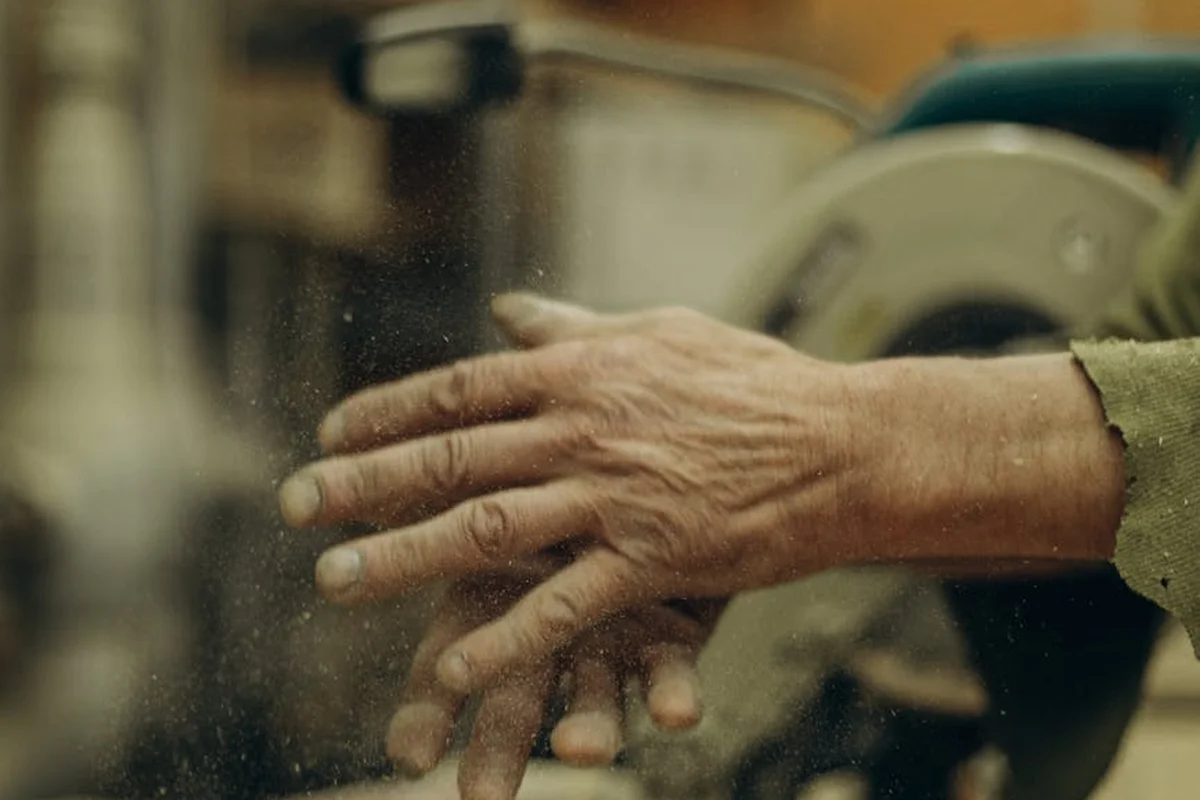
Here is a simple test. After making a cut, hold your hand up in a shaft of light. Can you see a haze of dust hanging in the air? If you can, your first two lines of defense have failed. Time to check your duct connections, filter bags, or upgrade your system.
How can workplace exposure limits help prevent both risks? By aiming for “low, always,” you prevent the repeated high-dose insults that lead to chronic irritation. More importantly, you minimize the chance of a single, high-concentration exposure to a sensitizing agent, which is often how that permanent switch gets flipped.
What are the best practices for monitoring and controlling exposure? Your eyes and nose are your first monitors. Dust in the air or a strong smell means exposure is too high. Control it mechanically first: seal up leaks in your dust collection, use sharper tools to create larger chips instead of fine dust, and always run your air filter. Your respirator is a backup, not the main plan.
The Long-Term Cost of Ignoring the Dust
Repeated irritation is not a minor nuisance. Your respiratory system is made of living tissue, not steel. Constant inflammation from dust particles scars and stiffens the delicate airways. This can lead to a permanent, chronic cough (bronchitis) and lungs that can’t move air as efficiently. You slowly lose your breath.
Sensitization is a different, more final problem. Your immune system makes a fatal misidentification. It decides a compound in the wood dust is a dangerous invader and commits that to memory. Once sensitized, your body’s reaction is permanent and often gets worse with each exposure, especially when combined with certain wood stains. I’ve met woodworkers who can no longer enter a shop where certain woods are being cut without having a severe asthma attack. Their hobby, and for some, their career, was over.
This leads to cross-reactivity. Sensitization is often to a specific chemical family. If you become allergic to Western Red Cedar (plicatic acid), your body may also react to other cedars, cypresses, or junipers. It’s like your immune system sees cousins and assumes they’re all the same threat.
The stakes are not hypothetical. We are not discussing a temporary rash. Ignoring wood dust can permanently rewrite your body’s relationship with the craft, ending your ability to work with beloved species like Cocobolo, Cedar, or even common Mahogany.
What are the long-term health risks of untreated or repeated irritation? The path typically leads from chronic bronchitis to a condition like woodworker’s lung (a type of hypersensitivity pneumonitis), where lung tissue becomes scarred. This damage is often irreversible and reduces your overall lung capacity for life.
Does sensitization to one type increase risk to others? It can, through cross-reactivity. More broadly, a sensitized immune system is in a heightened state of alert. While not guaranteed, having one allergy may make developing others slightly more likely. It underscores why prevention, not treatment, is the only rational strategy in the shop.
Frequently Asked Questions: Wood Dust Exposure Risks

How does long-term wood dust exposure increase the risk of developing respiratory sensitization?
Repeated, low-level exposure provides ongoing opportunities for your immune system to mistakenly identify a wood’s compounds as threats, initiating the silent sensitization process. This cumulative effect means consistent, unprotected exposure, even to small amounts of sensitizing dust, is a primary risk factor for developing a permanent allergy.
What are the best practices for monitoring and controlling wood dust exposure to minimize both risks?
Prioritize engineering controls: ensure your dust collector creates effective capture at the source and use an air cleaner to remove suspended fines. Visually monitoring for airborne haze after cuts provides immediate, practical feedback on your system’s efficacy, signaling when adjustments are needed.
Does sensitization to one type of wood dust increase the risk of sensitization to other types?
Yes, through cross-reactivity, where the immune system recognizes similar compounds in different woods. Furthermore, a sensitized immune system can remain in a heightened state, potentially lowering the threshold for developing new sensitivities to unrelated species over time.
What are the long-term health risks of untreated or repeated wood dust irritation?
Chronic inflammation from persistent irritation can lead to permanent scarring and stiffening of airway tissues, a condition known as chronic bronchitis. This progressive damage reduces lung function and can develop into more serious respiratory diseases like occupational asthma or hypersensitivity pneumonitis.
How can workplace exposure limits for wood dust help prevent both irritation and sensitization?
Adhering to strict exposure limits by maintaining a visibly dust-free shop environment prevents the high-volume exposures that cause chronic irritation. Critically, it also minimizes the critical dose of allergenic compounds needed to initiate the immune system’s sensitization process during any single work session.
Your Shop, Your Health: A Practical Perspective
The critical takeaway is that sensitization is a lasting allergic change in your body, not a temporary irritation. Ignoring it can permanently narrow your woodworking future. My shop rule is simple: connect dust collection and wear a respirator for any task that creates fine particles. There is no shortcut for consistent, rigorous dust control.
Source your wood from suppliers committed to sustainable forestry, as ethical harvesting often means fewer chemical treatments. In outdoor use, chemical treatments can boost longevity and protection against moisture and pests. Your safety and our forests both benefit from a mindset of continuous learning and respect for the material.
References & External Links
- Workplace exposure to wood dust and the prevalence of wood-specific sensitization – PMC
- Wood Allergies and Toxicity | The Wood Database
- Toxic Wood and Wood Allergies information
- CCOHS: Wood Dust – Health Effects
David is a veteran woodworker. He is now retired and stays in his cabin in Wisconsin which he built himself. David has 25+ years experience working in carpentry and wood shops. He has designed and built many small and large wood projects and knows the science behind wood selection like the back of his hand. He is an expert guide on any questions regarding wood material selection, wood restoration, wood working basics and other types of wood. While his expertise is in woodworking, his knowledge and first hand experience is far from 'woody'.