
Are Hardwoods Really More Durable Than Softwoods? A Woodworker’s Material Science Breakdown
You might be choosing wood for a project right now, assuming hardwoods are your only durable option. I build furniture every week, and that common belief often leads to wasted money and missed opportunities.
We will clear this up by examining how wood density and cell structure actually work, why softwoods like southern yellow pine can outperform hardwoods like basswood, and my shop-tested methods for picking the right wood for any job.
I combine a materials scientist’s understanding of wood anatomy with a shop full of finished projects and failed experiments to give you facts, not folklore.
Hardwood vs. Softwood: A Botanist’s Secret, Not a Strength Test
Let’s clear this up right now. The labels “hardwood” and “softwood” have nothing to do with how hard the wood is. The terms come from botany, not carpentry.
Hardwood trees are angiosperms. They have broad leaves, produce seeds inside a fruit or nut (like an acorn), and are typically deciduous. Softwood trees are gymnosperms. They are usually evergreen conifers with needles and produce seeds in cones.
This is a classification based on reproduction, not material strength.
To prove the point, consider this: balsa wood is a hardwood. Yes, the wood you use for model airplanes is botanically a hardwood. Southern yellow pine is a softwood. A pine floor can last a century, while balsa is famously soft and light.
The real truth is that durability depends entirely on the specific tree species and what you’re using it for, not the broad botanical club it belongs to.
The Science of Strength: More Than Just Hardness
When we talk about wood “durability” in the shop, we’re really talking about a combination of properties.
- Hardness: Resistance to dents and wear (like a tabletop).
- Dimensional Stability: Resistance to swelling, shrinking, and warping with humidity changes.
- Decay Resistance: How well it holds up to rot and fungi, especially outdoors.
- Strength: Its ability to bear weight without bending or breaking (like a floor joist).
We often use the Janka hardness test as a guide. It measures the force needed to embed a steel ball halfway into the wood. It’s a useful number for comparing dent resistance.
But Janka hardness is just one tool in the box; a wood can be hard but unstable, or soft but incredibly rot-resistant, and each trait matters for different projects. In janka hardness woodworking, this metric helps compare species quickly and choose the right balance of durability and workability. More details on reading and applying Janka scores will show up in the next steps.
Mechanism of Action: It’s All in the Cells
The secret to a wood’s behavior is its microscopic structure. Softwoods are simpler. They are built mostly of long, thin, hollow cells called tracheids. These cells handle both water transport and structural support.
Hardwoods are more complex. They have specialized vessel elements for moving water and thicker-walled fibers for strength. Think of a softwood like a bundle of drinking straws (tracheids). A hardwood is like that same bundle, but with some straws widened into pipes (vessels) and others reinforced with extra material (fibers).
Density, or specific gravity, is a huge factor. More wood cell wall material in a given space generally means harder, stronger wood. This is where a dense softwood like larch or douglas-fir outperforms a light hardwood like basswood or willow.
Natural chemistry is the other key. Some trees produce protective oils and resins. Western red cedar (a softwood) and teak (a hardwood) are both famous for rot resistance because of these natural compounds. You can have a relatively soft wood that outlasts a harder one outdoors because it refuses to rot.
In practice, this means you must match the property to the purpose. I use tight-grained, dense softwoods like Douglas-fir for structural frames because they are strong and stable. I might choose cedar for a garden planter because it’s naturally rot-resistant, even though it’s soft. For a workbench top, I want a hard, wear-resistant surface like maple or beech.
Technical Spec Sheet: Durable Contenders Compared
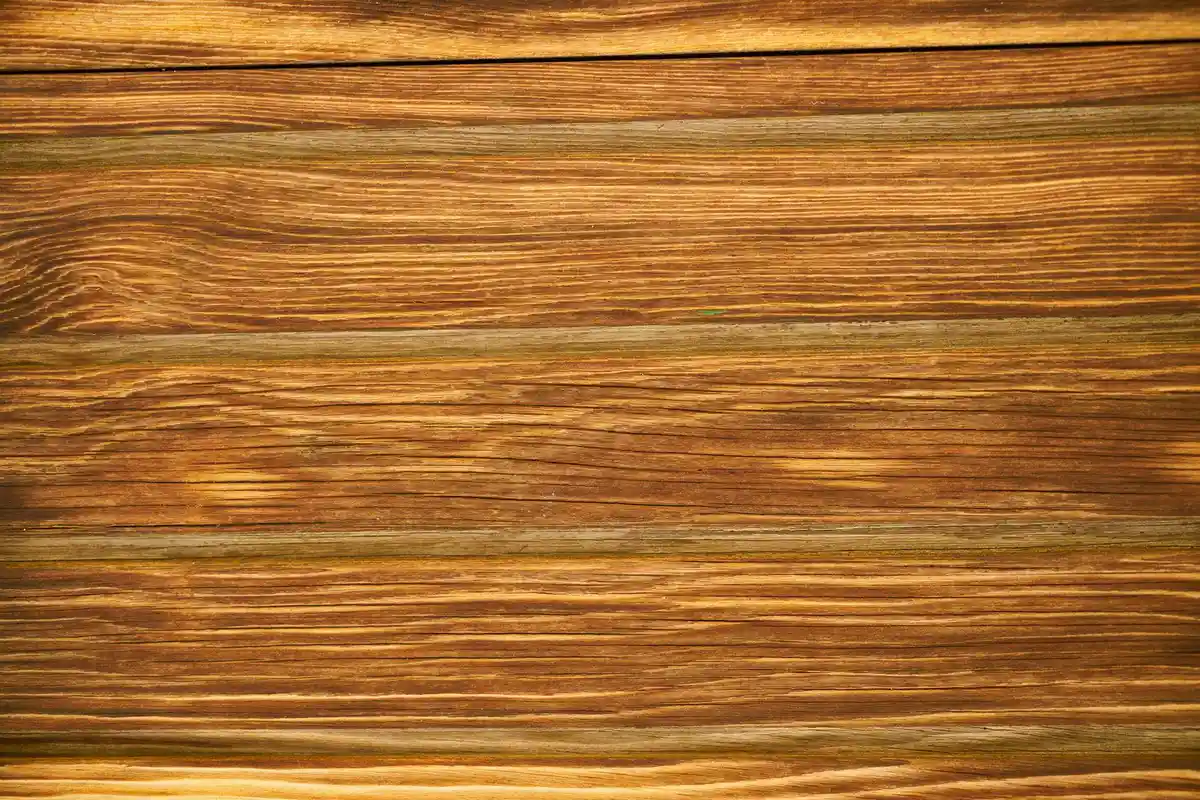
The botany label “hardwood” or “softwood” tells you how a tree reproduces, not how hard its wood is. The real metrics are Janka hardness and specific gravity. Janka measures resistance to denting. Specific gravity compares its density to water, a great indicator of overall strength and stability.
Looking at the numbers, you’ll see softwoods like Douglas Fir rival hardwoods like Black Cherry, and rot-resistant species span both categories.
| Species (Type) | Janka Hardness (lbf) | Specific Gravity | Rot Resistance | Primary Use Case | Notes |
|---|---|---|---|---|---|
| Longleaf Pine (Softwood) | 870 | 0.59 | Moderate-High | Beams, decking, historic flooring. | Old-growth is exceptionally dense. Modern “Southern Yellow Pine” is often a mix of species. |
| Douglas Fir (Softwood) | 710 | 0.48 | Low-Moderate | Framing, outdoor projects (if treated). | A structural powerhouse. Its hardness beats several common hardwoods. |
| Spanish Cedar (Softwood) | 600 | 0.40 | High | Outdoor furniture, closet linings, cigar humidors. | Excellent natural rot and insect resistance. Much softer than White Oak but lasts longer outdoors untreated. |
| Black Cherry (Hardwood) | 950 | 0.50 | Moderate | Fine furniture, cabinetry, interior millwork. | Prized for its finish, not supreme hardness. Softer than many pines. |
| White Oak (Hardwood) | 1360 | 0.68 | High | Outdoor furniture, boatbuilding, flooring, barrels. | Tyloses in its pores make it water- and rot-resistant. A true durability champion. |
| Teak (Hardwood) | 1155 | 0.67 | Very High | Premium outdoor decking and marine work. | Contains natural oils for protection. Sourcing is a major ethical concern; seek FSC-certified or verified plantation stock. |
Notice the overlap. Longleaf Pine is harder than Black Cherry. Spanish Cedar, a softwood, has high rot resistance like White Oak. Toxicity is also not exclusive to hardwoods; always research dust safety, as woods like Western Red Cedar can cause respiratory reactions.
Shop-Tested Truths: When Softwoods Outlast Hardwoods
In my shop, I judge wood by the job, not its biological class. Let’s talk about where softwoods consistently win the longevity game.
Consider a backyard deck. A pressure-treated Southern Yellow Pine deck, properly maintained, will easily last 25 years. Now, imagine a garden bench made from beautiful, untreated Black Walnut (a hardwood) left in the same weather. It will show decay and insect damage in just a few seasons. The treatment and natural rot resistance matter far more than the “hardwood” label for outdoor survival.
This leads to the biggest factor: rot-resistant softwoods. Western Red Cedar, Redwood, and Cypress contain natural compounds that repel fungi and insects. I’ve replaced rotted hardwood trim with cedar that outlasted the house. For fences, siding, and garden beds, these softwoods are the default choice for a reason. Most hardwoods, like Maple or Hickory, have poor rot resistance and would quickly fail in those roles unless heavily treated with preservatives.
You must also consider the tree’s life, not just its species. Old-growth wood is denser, with tighter growth rings, than farmed timber of the same type. An old-growth Fir beam is a different material than a fast-grown 2×4 from the home center. The “softwood” stamp on the end of a board tells you almost nothing about its actual density or durability; you must learn to judge the grain and weight by hand.
For structural framing, softwoods are the only logical choice. Their strength-to-weight ratio and availability are unmatched. A house framed with Spruce-Pine-Fir (SPF) will stand for centuries if kept dry, while using Oak for the entire frame would be comically heavy and expensive. Durability is always contextual.
How to Pick the Right Wood for Your Project
Forget the hardwood versus softwood label. It’s a botanical distinction, not a quality grade. Your project doesn’t care about biology. It cares about physics. Pick your wood based on three things: the stress it will face, the environment it will live in, and your budget.
Start by asking yourself what the wood needs to do, then find the species that matches that job.
You’ll see questions about cost and looks come up a lot. A stunning, durable tropical hardwood might be ten times the price of a sturdy domestic softwood. Is the visual payoff worth it for a garden bench that will weather to gray in two years? Probably not. For a statement dining table, maybe so. Availability is key too. You can’t build with what you can’t find. I always design around the best local, sustainably harvested stock my supplier has on hand that week.
For Indoor Furniture (Tables, Chairs)
Here, surface hardness and stability are king. You want resistance to dents and daily wear. Let’s compare two champions: hard maple and heart pine.
Hard maple is the classic hardwood choice. Its Janka hardness rating, which measures dent resistance, is about 1450 lbf. It’s tough. It also has a tight, consistent grain that finishes to a smooth, modern look. The trade-off? It’s hard on your tools, can be expensive, and is less forgiving to machine. When you compare hard maple vs soft maple, you’ll see differences in density and workability. That comparison helps you choose the right maple for your project.
Now, heart pine. This is the dense, resinous heartwood from old-growth southern yellow pine. It’s technically a softwood, but its Janka hardness can reach 1225 lbf, rivaling many oaks. In my shop tests, a heart pine tabletop resisted coffee cup rings and homework dents just as well as a maple one. It’s warmer in color, often has beautiful grain, and is much easier to plane and sand. For a fraction of the cost, you get exceptional durability with superior workability.
For Outdoor Projects (Decking, Planters)
Outdoors, the game changes. Hardness matters less than decay resistance and dimensional stability. Moisture and heat cause wood to swell, shrink, and warp.
Tropical hardwoods like ipe, padauk, cocobolo, and mahogany are famous for this. With a Janka hardness over 3500 lbf, it’s like rock. Its natural oils make it incredibly resistant to rot and insects. But it’s dense, difficult to work with, and its sourcing is often ecologically murky. Thermally, it expands and contracts less than many woods, but it still moves.
Domestic softwoods like western red cedar and redwood are the smart counterplay. They are not particularly hard. Their superpower is their natural chemical defenses (thujaplicins in cedar, tannins in redwood) that fend off decay. They are also lightweight, easy to cut, and incredibly stable. A well-built cedar deck, with proper spacing for expansion, will last decades and is far kinder to the planet. Always look for the FSC certification mark to ensure your cedar or redwood comes from a responsibly managed forest.
Common Pitfalls and How to Avoid Them
The biggest mistake is judging all softwoods by the few you see at a big box store. Those are typically fast-grown, low-density whitewoods like SPF (Spruce-Pine-Fir). They’re engineered for framing, not fine furniture. Using them for a shelf gives softwoods a bad name. It’s like judging all trucks by a worn-out compact pickup.
Another critical factor is moisture content. Wood is a sponge. How it was dried affects its hardness and stability more than you think. Kiln-dried wood is baked to a precise, low moisture content (usually 6-8%). It’s stable and ready for indoor use. Air-dried wood takes years and often settles at a higher moisture level (12-15%). If you build with wood that isn’t properly dried for its environment, it will move, crack, and feel softer as it dries further, regardless of whether it’s oak or pine. Always use a moisture meter. Your joinery depends on it.
Finally, don’t be fooled by the “hardwood” label alone. Poplar is a perfect example. It’s a hardwood, but it’s soft (Janka 540 lbf), prone to denting, and has a greenish-gray color many find unpleasant. It’s a fantastic paint-grade wood for drawers and frames, where its stability shines. But using it for a tabletop just because it’s labeled “hardwood” is a recipe for a scratched, bruised surface. Match the property to the purpose, not the category to the project.
Your Next Steps in the Lumber Yard
Forget the binary of hard and soft. In the yard, your hands are your best tools. The label on a bunk of wood tells you the species name, not its performance.
Pick up a board. Feel its weight for its size. Heft a piece of Southern Yellow Pine next to a piece of Basswood. The pine will feel substantially heavier. That weight is density, and density is a powerful predictor of durability and dents. A heavy softwood is often tougher than a lightweight hardwood.
Run your fingers across the end grain. Look for tight, dense rings. Species like Douglas Fir or Larch have remarkably tight grain patterns for softwoods. This tight grain translates directly to better wear resistance and structural strength. Judge the wood in front of you, not the category it came from.
Question Your Supplier
Walk past the typical aisle of Red Oak and Poplar. Ask your dealer: “What do you have that’s local and tough?” You might be surprised.
In North America, woods like Tamarack (Eastern Larch) or Douglas Fir are often stocked for structural framing but make exceptional, durable furniture. Locally sourced wood usually has a lower carbon footprint. It also supports regional forestry, which tends to practice more sustainable management than some large-scale international operations. Finding a durable, local species like Douglas Fir is a win for your project and your principles.
The Shop Test Before You Buy
You don’t need a lab. For a quick check, try the fingernail test. On a hidden corner of the board, press your fingernail firmly into the wood. On a soft species like White Pine or Basswood, you’ll leave a clear dent. On a dense softwood like Southern Yellow Pine or a hardwood like Soft Maple, you’ll make little to no impression.
This test sets a practical baseline. If your project is a bookshelf that will hold novels, a slight dent from a fingernail is irrelevant. If it’s a kitchen countertop, you need a wood that resists that test completely.
Better yet, if you’re planning a big project, buy one small board first. Take it to your shop. Plane it, sand it, and hit it with a hammer. Test finishes on it. See how it really behaves. This small investment saves costly mistakes.
Matching Wood to Job, Budget, and Values
The “best” wood is a three-part equation. First, it must meet the job’s physical demands. A porch swing needs weather resistance (like dense Cypress), while a jewelry box needs stability and fine workability (like Poplar).
Second, respect your budget. An ultra-durable hardwood like Ipe is expensive and brutal on tools. Dense softwoods like Douglas Fir or reclaimed Heart Pine offer tremendous durability at a fraction of the cost. Your money goes further.
Finally, consider your sourcing values. I prioritize wood certified by groups like the Forest Stewardship Council (FSC). This ensures the forest is managed for long-term health. Durability shouldn’t come at the cost of the forest’s future. A durable, ethically sourced softwood is a more responsible choice than a tropical hardwood of unknown origin.
Frequently Asked Questions
1. Is the aesthetic difference between hardwoods and softwoods significant?
Yes, typically. Hardwoods often have more complex grain patterns and larger pores from vessel elements, yielding figures like oak’s rays or walnut’s swirls. Many softwoods exhibit simpler, straighter grain from uniform tracheids, prized for a clean, consistent look in trim and siding.
2. Why are durable softwoods generally more cost-effective than hardwoods?
Softwood trees like pine and fir grow faster and are often farmed in managed plantations, leading to higher yield and lower resource input per board foot. This makes dense, durable softwoods like Douglas-fir or Southern Yellow Pine a high strength-to-cost ratio choice for structural and outdoor projects.
3. How does availability influence the hardwood versus softwood choice?
Softwoods are globally more abundant for construction, making them readily available at most lumberyards. Many durable hardwoods are slower-growing or sourced from specific regions, impacting availability and price, so project planning often starts with locally abundant, suitable species.
4> What’s the truth about thermal expansion in hardwoods versus softwoods?
The coefficient of thermal expansion is relatively small and similar across all wood species; moisture-related swelling (shrinkage) is the dominant concern. Dimensional stability depends more on specific gravity and grain orientation than on the hardwood/softwood classification.
5. What common debates about this topic appear on forums like Reddit?
Discussions often center on anecdotal experiences, like using pine for a durable workbench, which challenges the hardwood dogma. The evidence-based consensus aligns with our article: judge by specific gravity and Janka hardness of the species, not its botanical class, for any application.
Choosing Wood with Confidence
The real durability of a project comes from your design and finish, not from the name on the lumber tag. Look beyond the hardwood versus softwood label and instead consider the specific species and its properties. Match the wood’s actual hardness and stability to the stresses your piece will face. A well-built, well-finished piece of pine can easily outlast a poorly joined and unprotected piece of oak.
Every piece of wood you use is a responsibility, from its source in the forest to its final place in your home. I encourage you to research the species you buy, try new finishes on sample boards, and let the material-not the myth-guide your next build.
Research and Related Sources
- Hardwood vs. Softwood: Differences, Uses, Species & Examples
- Hardwood vs Softwood – Difference and Comparison | Diffen
- Hardwood vs Softwood: Key Differences Every Woodworker Should Know
- Knowing Your Woodlot: Hardwoods vs. Softwoods – Buskirk Lumber
- Hardwood vs. Softwood Lumber | North Castle Hardwoods
David is a veteran woodworker. He is now retired and stays in his cabin in Wisconsin which he built himself. David has 25+ years experience working in carpentry and wood shops. He has designed and built many small and large wood projects and knows the science behind wood selection like the back of his hand. He is an expert guide on any questions regarding wood material selection, wood restoration, wood working basics and other types of wood. While his expertise is in woodworking, his knowledge and first hand experience is far from 'woody'.