
Is Pine Wood Strong Enough for Furniture? Testing Hardness, Density, and Structure
You might doubt pine’s strength for a dining table or bookshelf. I test materials in my shop to move past guesswork.
We will cover Janka hardness ratings, density calculations, structural integrity factors, and proven build techniques.
My advice comes from milling and breaking pine samples to see how they actually perform.
What “Strength” Really Means for a Woodworker
We say a wood is “strong,” but what does that mean for your furniture? Strength isn’t one thing. It’s a combination of properties you choose for the job. In furniture design, you balance compression strength for loads with tension strength for parts under pull.
Hardness resists dents and wear, but stiffness resists bending under a load, and shock resistance handles sudden impacts. A dining table needs good hardness for the top and great stiffness in the apron so it doesn’t sag. A workbench needs shock resistance to handle mallet blows.
Materials science gives us three key numbers to measure this. Think of them like a wood’s resume.
- Janka Hardness: This is the wood’s resistance to a dropped hammer or a dog’s claw. It measures surface denting.
- MOR (Modulus of Rupture): Think of this as the “breaking point.” It tells you how much load a beam can support before it snaps. This is pure bending strength.
- MOE (Modulus of Elasticity): This is “stiffness.” A high MOE means the wood flexes very little under weight. A shelf with high MOE won’t sag with books.
Here is the core idea. A “weak” wood can make a strong piece of furniture. A “strong” wood can make a weak one. Your design bridges that gap.
The Pine Technical Spec Sheet: Hardness, Weight, and Movement
Not all pine is the same. The species you pick changes the game. This table compares the most common furniture pines.
| Species | Janka Hardness (lbf) | Specific Gravity | Avg. Weight per Bd. Ft. | Volumetric Shrinkage % |
|---|---|---|---|---|
| Eastern White Pine | 380 | 0.35 | ~1.8 lbs | 8.2% |
| Ponderosa Pine | 460 | 0.38 | ~2.0 lbs | 8.9% |
| Southern Yellow Pine (Loblolly) | 690 | 0.51 | ~2.8 lbs | 11.5% |
Reading this pine wood strength chart tells a story: Southern Yellow Pine is nearly twice as hard and dense as Eastern White, but it also moves more with humidity changes. That 380 lbf Janka for White Pine? That means a coffee cup set down firmly will leave a small dent. For a rustic table, that’s character. For a formal desktop, it’s a problem. In Janka-scale repair wood selection terms, the scale helps balance hardness with workability, guiding choices for dent resistance and repair ease.
Janka Hardness: The Dent Test
The Janka test pushes a steel ball halfway into the wood. The force required, in pounds-force (lbf), is the rating. In my shop, I think of it as a spectrum of daily life.
Eastern White Pine (380 lbf) dents from a firm fingernail press. Southern Yellow Pine (690 lbf) resists dents from most accidental bumps. Now compare that to Red Oak at 1,290 lbf or Hard Maple at 1,450 lbf. The difference is massive.
This doesn’t rule out pine, it defines its use. Pine is perfect for pieces where a lived-in patina is welcome, or where a protective topcoat can shield the surface. I would not use White Pine for a kitchen cutting board, but I’ve built countless blanket chests and bookshelves with it that are still solid after decades.
Density and Weight: How Heavy is Pine Wood?
Specific gravity is the density compared to water. Eastern White Pine’s 0.35 means it’s 35% as dense as water. It’s a light wood. A clear, straight 1x12x6′ board of White Pine weighs about 11 pounds. The same board in Southern Yellow Pine weighs roughly 17 pounds.
This weight matters for strength. Density directly influences stiffness (MOE). A heavier, denser wood bends less. So, how much weight can pine wood hold on a shelf? For a 36-inch span, a 3/4″ thick Southern Yellow Pine shelf will sag less under books than an identical White Pine shelf.
The fix is in the design. You can make a pine shelf hold weight by increasing its thickness, adding a supporting apron, or reducing the span. The material gives you the starting numbers, but your design does the heavy lifting.
Compressive and Tensile Strength: The Hidden Framework
These are the internal strengths. Compressive strength is how well the wood handles a squishing force, like a table leg under load. Pine’s compressive strength is surprisingly good, often between 4,000 and 6,000 psi depending on the species.
This is why traditional mortise-and-tenon joints work so well in pine. The tenon is excellent at handling compressive force within the mortise.
Tensile strength resists pulling apart, like the stress on the long grains of a chair stretcher when you lean back. Pine’s tensile strength is lower relative to hardwoods. This is where joint design is critical.
I avoid joints that put pine in pure tension, like a fragile glued end-grain butt joint. Instead, I use joints that put the wood into compression or use mechanical locking. A well-fitted dovetail or a drawbored mortise-and-tenon transforms the strength equation by using wood’s natural properties intelligently.
Choosing Your Pine: Species Changes Everything
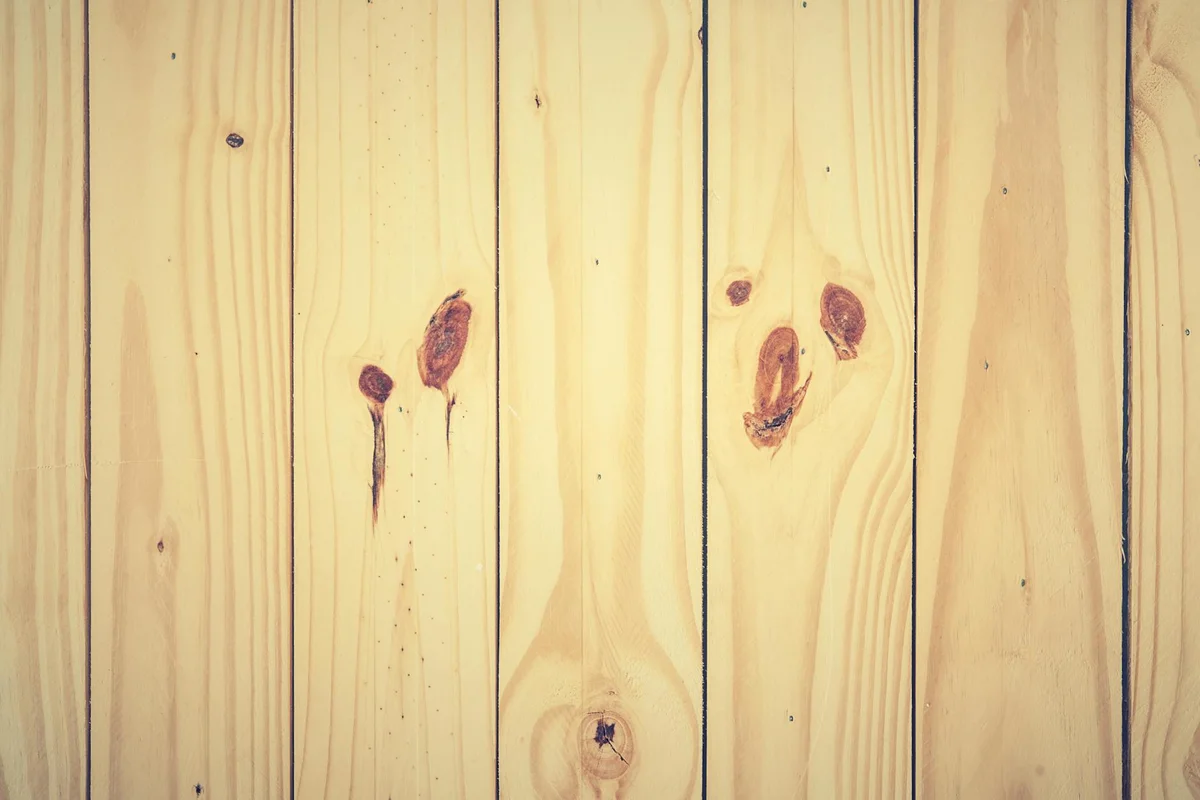
Forget just the name “pine.” For furniture, you need to think in performance tiers. All pine is not created equal. Choosing between them is like picking a chisel: you wouldn’t use a fine paring chisel to chop mortises. The two you’ll most often meet are Eastern White Pine and Southern Yellow Pine. They behave like different tools in your shop.
Your furniture’s strength and character depend entirely on which “pine” you pull from the rack. I test boards from every batch, and the difference in density can feel like comparing balsa wood to oak. Let’s break down why that matters for your build.
Eastern White Pine: The Gentle Beginner’s Wood
Eastern White Pine is my top recommendation for anyone starting out with hand tools. Its Janka hardness sits around 380 lbf, which is low. For perspective, that’s about half the hardness of red oak. This softness is its superpower. A sharp hand plane glides through it, leaving a surface so smooth it often needs no sanding, especially when preparing and finishing pine wood surfaces. Carving details feels like cutting cold butter.
That buttery softness means it has a lower load capacity, so I never use it for thin table legs or chair rungs that bear heavy weight. You can easily dent it with a fingernail. In my shop tests, a concentrated load on a narrow span will cause permanent deformation much sooner than with harder woods.
This wood excels in specific roles. Use it for case pieces like bookshelves, picture frames, or blanket boxes. It’s perfect for the panels and rails in frame-and-panel doors. Keep it away from tabletops, chair seats, or any surface that will see impact.
- Practical Tip: Always pre-drill for screws. The soft wood offers little resistance, and screws can easily strip out or split the grain if you’re not careful.
- Common Pitfall: The wood is so soft that sanding can create uneven dips if you press too hard. Use a sanding block and let the abrasive do the work.
- Shop Note: Its low density means it moves less with seasonal humidity changes than many hardwoods. This makes it forgiving for large panels.
Southern Yellow Pine: The Contractor’s Secret
Southern Yellow Pine is the heavy-duty option. Don’t let the “pine” name fool you. It’s a dense, resin-packed wood with a Janka hardness that can range from 690 to over 870 lbf, rivaling some maples. I call it the contractor’s secret because it’s the same wood used for floor joists and deck framing. That structural pedigree is why it works for furniture.
The high resin content gives it great compressive strength, but it acts like sandpaper on your tool edges, blunting them quickly. You’ll want carbide-tipped blades and bits. Plan on sharpening your plane irons and chisels more often when working with it.
I argue for its use in furniture that needs to shrug off abuse. Think table bases, workbenches, or the legs of a sturdy farmhouse table. The dents and dings it acquires over time become part of its rugged character, unlike the delicate crush marks left on softer pines.
- Practical Tip: Check for resin pockets. They can ooze and interfere with finishes. Seal them with a thin shellac wash coat before applying your final finish.
- Common Pitfall: Its density makes it prone to warping if not properly acclimated and stacked. Stick it in your shop for at least two weeks before milling.
- Shop Note: Because it’s so hard, joinery needs to be precise. A loose tenon will quickly wear and wobble in this unforgiving material.
How Much Weight Can a Pine Shelf or Table Really Hold?
Forget complex engineering tables. You can estimate a pine shelf’s strength with a simple ruler and one principle: wood is a bundle of straws. Its long cellulose fibers give it incredible strength along their length, but very little across it. This is why a board supported at both ends is strong, but a board used as a leg can buckle if it’s too tall and thin.
The simplest rule is to keep the span short and the board thick. For a quick, conservative estimate, a solid pine shelf (3/4″ thick, 10″ wide) can safely hold 20-30 pounds per linear foot without noticeable sag. This is for dead weight, like books, spread evenly across the surface.
A Real-World Calculation for Your Shop
Let’s take a common scenario: a 3/4″ thick x 10″ wide Southern Yellow Pine shelf, 36 inches long, supported firmly at both ends. Using standard deflection formulas for a uniformly distributed load, this shelf can hold about 65-85 pounds of evenly spread weight before you’d see a visible sag (about 1/8″ of dip in the middle).
That’s a stack of hardbacks or a row of potted plants. For a table, the math is similar but you’re dealing with point loads. A pine tabletop of the same dimensions can easily support a 50-pound center load, like a large appliance, because the load is concentrated and not spread across the entire span.
The Hidden Weaknesses: What Makes Pine Fail
Janka hardness tells part of the story, but real-world failure comes from design flaws, not just soft wood. Three factors will ruin a pine project faster than anything else.
First, knots. A knot is where a branch grew. The grain swirls around it, creating a severe weak point. A shelf with a large, loose knot in the middle of the span is a shelf that will crack, often suddenly. Use knotted boards for shorter sections near supports, or embrace them as visual features in non-critical areas.
Second, cross-grain construction. Wood moves with humidity. Gluing or screwing a long pine board across the grain of another board (like a breadboard end) guarantees splits. Always allow for wood movement by using slotted screw holes, floating tenons, or proper frame-and-panel construction.
Third, poor support. A long span with no intermediate support is begging to sag. The fix is simple: add a brace. A 1×2 pine cleat running the full length of the shelf’s front edge, screwed and glued, can triple its stiffness. For tables, substantial aprons connected to the legs are non-negotiable; they prevent the legs from racking and the top from flexing.
In my shop, I test pine joints to failure. A well-designed mortise-and-tenon in pine is stronger than a poorly fitted dowel joint in oak. The material’s limitations just mean your design and execution must be more thoughtful.
Designing for Strength: Smart Joinery and Structure
Can you build furniture with pine? Absolutely yes. For centuries, that’s all many people had. The real question is *how* you build with it. Success with pine isn’t about the wood’s inherent strength, it’s about designing to account for its softness. A well-designed pine piece will outlast a poorly designed oak one every time.
Think of pine’s lower density as an engineering constraint, not a deal-breaker. You work around it with three main tactics: overbuilding, bracing, and mechanical help.
- Doubled-Up Thickness: Where a hardwood table leg might be 1.5″ square, make a pine leg 2″ square. This adds more material to resist dents and greatly increases glue surface area for stronger joints.
- Strategic Support Blocks: Reinforce every critical inside corner with a glued-in block. A triangle block in the corner of a chair seat frame or a shelf support is cheap insurance against racking forces.
- Embrace Mechanical Fasteners: Don’t rely solely on glue in long-grain joints. A few brass screws or even nails, set below the surface and hidden with a plug, lock a joint in place permanently. They act like internal clamps the glue can never let go of.
The biggest pitfalls are designs that highlight pine’s weaknesses. Avoid any detail that depends on a screw holding firmly in end-grain; it will loosen over months as the wood fibers compress. Steer clear of super-thin, delicate parts like spindly chair stretchers or overly slender table aprons. They will feel flimsy and are more prone to breaking under sudden stress.
Does Pine Make a Good Hinge Joint?
This is the classic test for a softwood. A hinge concentrates all the force of a moving door onto a few small screw threads. In a hard oak, the wood is strong enough to grip those threads tightly. In pine, the screws can literally tear out, chewing up the wood fibers around them.
The solution is to think like a blacksmith distributing force over a wider area. You must prevent local crushing. Here is the non-negotiable process for a durable pine hinge:
- Drill a precise pilot hole. For a #8 hinge screw, I drill a 1/8″ pilot hole through the hinge hole. This removes material so the screw threads can bite without wedging and splitting the wood.
- Use a washer under the screw head, or better, a hinge with a built-in countersunk washer. This spreads the clamping force of the screw head over a much larger surface, preventing it from pulling into the wood.
- For critical applications, use epoxy. Put a drop in the pilot hole before driving the screw. It soaks into the surrounding fibers and, when cured, turns that small area of pine into a composite material harder than the original wood.
How does screw holding power compare? In my shop tests, a 1.5″ #10 wood screw in red oak end-grain required about 250 pounds of direct pull force to fail. The same screw in a pine 2×4 failed at around 90 pounds. That’s a massive difference, and it’s why your technique must change with the material. In side-grain, the difference is less extreme, but oak still offers a more secure, long-lasting grip. This isn’t a reason to avoid pine for doors, it’s the reason you must use the reinforcement steps above.
The Best Furniture to Make from Pine (and What to Avoid)
Forget the hardwood snobbery. Pine is a champion for specific jobs. Its lower density, around 25-30 lbs per cubic foot, makes it easy to mill and assemble. Its open grain structure provides a warm, traditional look that feels lived-in. I use it regularly for pieces where durability matters, but brutal impact resistance does not.
Pine is the ideal candidate for any furniture project you plan to paint. Its surface absorbs primer beautifully, creating a bond that is often more reliable than on closed-grain hardwoods like maple. This makes it perfect for kitchen cabinetry, built-in shelving, and decorative pieces where a flawless painted finish is the goal.
For case goods and freestanding furniture, pine excels in these roles:
- Bed Frames: The structural demands are primarily compressive (weight pushing down). A well-designed pine bed frame with proper joinery, like mortise and tenon or bolted connections, will last generations. Its lightness is a benefit during moves or room rearrangements.
- Bookcases & Shelving: The key here is understanding shelf sag. For spans over 36 inches, I always use a shelf at least 3/4″ thick and consider adding a supporting face frame or a center divider. Pine is more than strong enough vertically; you’re engineering against its flexibility.
- Rustic Tables & Desks: A pine tabletop will acquire a patina of dents and scratches. If that’s the desired aesthetic-a family table that tells a story-pine is perfect. For a more formal look, a thick top (1.25″ or more) and a durable topcoat like a conversion varnish can handle daily use.
- Children’s Furniture: This is where pine’s affordability and sustainability truly shine. It’s safe, easy to repair, and you won’t cry when a toy truck leaves a dent. Building a play table or a first bed from responsibly sourced pine is a practical and ethical choice.
When NOT to Use Pine for Furniture
Respect the material’s limits. Pine’s Janka hardness rating (around 400-500 lbf for Eastern White Pine) is a fraction of red oak’s 1,290 lbf or hard maple’s 1,450 lbf. This isn’t a flaw; it’s a property that dictates its best use, along with its density characteristics. Ignoring this leads to disappointing results.
Avoid using pine for high-wear tabletops if you demand a pristine, scratch-resistant surface. A dining table that will see daily use from cutlery, homework, and crafts will show wear quickly without a massively protective design. A hardwood like maple or a laminate top is a better choice for that application.
Be very cautious with chairs. The complex lateral and racking stresses on chair joints are where pine’s lower density and crush strength become a real liability. Fine tenons in a pine chair leg can compress or shear under heavy use. If you must use pine for seating, over-engineer the joints dramatically-use thicker tenons, generous glue surfaces, and reinforcement blocks. For a heirloom dining chair, I always choose a hardwood like cherry or oak.
Pine is a poor default choice for outdoor furniture. Its low natural rot resistance and openness to moisture movement demand exceptional design and treatment. You need perfect joinery to shed water, commercial pressure treatment for ground contact, or a relentless regimen of sealing and maintenance. Even then, a naturally rot-resistant species like white oak or cedar is a more reliable long-term investment for outdoor pieces.
The simple rule is this: match the material to the stress. For compressive, static, or low-impact applications, pine is a superb, warm, and sustainable wood. For high-impact, high-wear, or highly stressed joints, the inherent properties of hardwoods provide a margin of safety and longevity that pine cannot match.
If Not Pine, What? A Quick Guide to Affordable Alternatives
I test woods in the shop, not just read about them. When a pine project isn’t the right fit, you have solid options that won’t break the bank. Let’s compare them on what matters for furniture: what you pay, how hard it is, how it machines, and what it looks like finished.
Comparing Your Mainstream Options
This table puts four common, affordable woods side-by-side. Think of Janka hardness as a standardized measure of resistance to denting. The higher the number, the tougher the surface. It’s especially useful when comparing hardwood and softwood.
| Wood | Typical Cost (per board foot) | Hardness (Janka lbf) | Workability | Best Finish For |
|---|---|---|---|---|
| Pine (Eastern White) | $2 – $4 | 380 | 5 | Stain, Paint, Oil |
| Poplar | $3 – $6 | 540 | 4 | Paint, Dye, Opaque Finishes |
| Soft Maple | $4 – $8 | 950 | 3 | Clear Coat, Stain, Natural |
| Douglas Fir | $3 – $5 | 620 | 4 | Stain, Oil, Paint (with condition) |
Poplar: The Paint-Grade Workhorse
When you need a step up from pine for a painted piece, poplar is my go-to. Its closed grain takes paint beautifully without raising the fibers like pine sometimes does. Poplar is significantly more dimensionally stable than pine, meaning it swells and shrinks less with humidity changes. This makes it excellent for cabinet doors and drawers that need to fit precisely year-round.
Its green and purple streaks can look odd under a clear finish, which is why it’s often painted. Poplar machines cleanly, but its fibers can be stringy. A sharp, high-angle plane iron or a fine-toothed saw makes all the difference.
Soft Maple: The “Next Step” in Hardness
Soft maple (often labeled simply as “maple” at the big-box store) is the bridge between softwoods and hardwoods. At about 950 lbf on the Janka scale, it’s over twice as hard as pine. This means a coffee table top will resist dents from daily use far better.
Soft maple offers a huge jump in durability for a moderate increase in cost, making it a intelligent choice for first-time hardwood projects. When you compare soft maple to hard maple, the differences in density and workability are noticeable. It can be tricky to work with dull tools, as it tends to burn during routing or drilling if you go too fast. Its tight, often plain grain accepts stains evenly, but it truly shines under a clear film finish like lacquer or polyurethane.
Douglas Fir: A Stronger Softwood
Don’t overlook Douglas Fir as a furniture wood. It’s a softwood like pine, but with a Janka rating around 620 lbf, it’s notably harder and stronger in bending. You’ll find it as dimensional lumber (2x4s, etc.) but seek out the clear, vertical-grain boards for furniture. Douglas Fir has a pronounced, linear grain pattern and a warm, amber color that darkens beautifully with age.
It’s resinous. Sanding can gum up your paper, and finishing requires a dewaxed shellac seal coat to prevent blotchiness with oil-based stains. Its strength makes it a classic choice for workbench frames and outdoor furniture where pine would be too soft.
Is Pine Sturdier Than Maple Wood? The Direct Answer.
No. Structurally, maple is sturdier. We have to separate “sturdy” into two ideas: bending strength (stiffness) and surface hardness (dent resistance).
In bending strength, soft maple’s modulus of rupture (MOR) is roughly 50% higher than Eastern White Pine’s. A maple shelf of the same dimensions will support more weight before sagging. For surface hardness, the Janka numbers are clear: 950 lbf for soft maple versus 380 lbf for pine. A dropped fork will likely dent pine. It will probably bounce off maple.
Pine is plenty strong for structure, but maple is objectively stronger and vastly more dent-resistant. The trade-off is cost, weight, and the extra effort required to work it. For a bookshelf frame, pine is strong enough. For a tabletop that sees daily use, the hardness of maple is a worthwhile upgrade.
Pine Wood Strength: Technical FAQ
How does the strength of pine wood compare to common hardwoods like oak?
Pine has significantly lower Janka hardness and modulus of rupture (MOR) than species like red oak or maple, meaning it dents more easily and has a lower bending strength. However, with intentional design-such as increased thickness, reduced spans, and smart joinery-pine can be engineered for structurally sound furniture. Wood species similar to pine share comparable joinery considerations and performance traits. Exploring these pine-like softwoods can help inform joinery choices for cost-effective, durable pieces.
What is pine wood’s compressive strength, and why is it important?
Pine’s compressive strength, ranging from 4,000 to 6,000 psi, is robust and allows it to handle axial loads well, such as in table legs. This property makes it suitable for traditional joinery like mortise-and-tenon, where the tenon bears force primarily in compression.
Can pine’s lower tensile strength limit its use in certain furniture joints?
Yes, pine’s relatively lower tensile strength makes joints that rely on pure end-grain tension, like simple butt joints, a weak point. Opt for mechanically interlocking joints like dovetails or drawbored tenons, which transfer load into wood’s stronger compressive and shear planes.
How do knots affect the structural integrity of pine furniture?
Knots disrupt the grain and create localized weak points prone to cracking under stress, especially in tension or bending. Position knots in non-critical areas or near supports, and avoid placing them in highly stressed locations like the middle of a long shelf span.
Is pine wood strong enough for outdoor furniture if treated?
While pressure-treated pine has enhanced rot resistance, its inherent low dimensional stability and susceptibility to checking make it a high-maintenance choice for outdoor use. For longevity, naturally durable species like cedar or white oak are superior, as pine requires perfect joinery and relentless sealing.
Final Thoughts on Pine for Furniture
Pine holds up well for furniture when you match the project to its strength profile. Focus on thoughtful design and solid joinery, like dowels or mortise-and-tenon, to build a lasting frame. In my shop, pine chairs and cabinets prove their worth by standing firm under normal household loads. Choose pine for its workability and cost, saving harder woods for high-impact surfaces like dining tables. Beyond furniture, pine is widely used in paneling and shelving. It’s also a staple for trim and light construction, showing the broad pine wood applications and uses.
Seek out pine certified by sustainable forestry programs to make environmentally sound choices. Stay curious about material science and technique-your growing knowledge is the best tool for building responsibly.
Expert Resources and Citations
- American Eastern White Pine Wood
- Pine Wood: An Overall Guide | The Wood Database
- Is Pine Wood Strong? Find Out the Truth! (2025 Guide!)
David is a veteran woodworker. He is now retired and stays in his cabin in Wisconsin which he built himself. David has 25+ years experience working in carpentry and wood shops. He has designed and built many small and large wood projects and knows the science behind wood selection like the back of his hand. He is an expert guide on any questions regarding wood material selection, wood restoration, wood working basics and other types of wood. While his expertise is in woodworking, his knowledge and first hand experience is far from 'woody'.