
How Often Should You Oil a Wooden Salad Bowl? The Wood Science of Acidic Foods
You reach for that beautiful wooden bowl for every salad, but each splash of vinegar or lemon juice might be weakening the wood fibers. I see this concern often in the shop, and it stems from a real material interaction.
Let’s move past guesswork and look at the polymer level of the wood. We will cover how food acids break down lignin and cellulose, determining your bowl’s true oiling schedule, and the correct way to clean after dressing.
This guidance is distilled from my own absorption tests on hardwoods and a materials-focused approach to woodcraft.
Why Wood Salad Bowls Need Special Care
Wood is a living, breathing material long after it becomes a bowl. Scientifically, we call it hygroscopic. It constantly absorbs and releases water vapor from the air.
Picture the wood’s cellular structure as a tight bundle of millions of microscopic drinking straws. When these straws take in moisture from a wet salad or humid air, they swell. When they dry out, they shrink. This movement never stops.
Your goal with a salad bowl isn’t to create a plastic-like seal. That’s impossible and would trap moisture inside, leading to rot. The goal is to manage and balance this natural moisture exchange.
A food-safe oil acts as a temporary, protective barrier. It fills the microscopic pores on the wood’s surface, slowing down how quickly moisture can rush in or out. Think of it as applying a light raincoat to the wood, not encasing it in solid plastic. This is why it’s important to use food-safe oils specifically designed for wood sealing and finishing. This gives the wood time to adjust to changes more evenly, which prevents the stress that causes cracks and warps.
The Right Oil for Your Bowl (And What to Avoid)
Not all oils are equal for food contact. You need to understand drying versus non-drying oils.
Drying oils, like pure tung oil or fully polymerized linseed oil, cure into a solid film. They are durable and excellent for cutting boards and wooden utensils. Non-drying oils, such as common vegetable or olive oil from your kitchen, never fully harden. They stay sticky, go rancid, and create a foul-smelling, gummy surface you cannot easily fix.
For simplicity and reliability, I recommend a pure, food-grade mineral oil or a mineral oil and beeswax blend. Mineral oil is inert, won’t spoil, and is widely available. A beeswax blend adds a bit more water resistance and a pleasant sheen.
You must avoid standard “boiled linseed oil” from the hardware store and any film-forming finish like varnish or polyurethane. Even pure linseed oil offers limited protective properties; it does not form a durable barrier and can wear away with use. Its protective layer is translucent and can become uneven, making it easier for stains and water to seep in. Most boiled linseed oil contains metallic dryers that are toxic. Varnishes create a hard shell that will eventually chip with use and washing, allowing food and moisture underneath to spoil. A chipped varnish finish on a bowl is worse than no finish at all, trapping contaminants against the wood.
Here’s what works in my shop: I warm a 4-to-1 mix of pure mineral oil and cosmetic-grade beeswaste until the wax melts. I apply it heavily to a clean, dry bowl, let it soak for an hour, then wipe it completely dry. It’s safe, effective, and easy to renew.
How Often to Oil a Wooden Salad Bowl: The Real Schedule
Forget complex calendars. Your bowl will tell you when it needs oil. The simple rule is to oil it when it looks and feels thirsty.
Start with a visual test. Hold the bowl under good light. A freshly oiled bowl has a warm, rich luster. A thirsty one looks dull, dry, and pale, especially on the high spots and the interior where food touches. The color appears faded.
Next, do a tactile test. Run your fingertips across the surface, particularly the inside. If it feels rough, chalky, or dry instead of smooth and slightly supple, it’s time for oil. Your hand is a better tool than any schedule.
For a new bowl or one you’ve just refurbished, expect to oil it more often. I recommend a light coat every two to four weeks for the first two months. This builds up a stable, polymerized layer in the wood fibers.
After that, frequency depends entirely on use and your home’s climate. A bowl used twice a week for acidic salads in a dry, heated house might need oil every month. One used occasionally in a humid climate might only need attention every three months.
Here’s the key takeaway many worry about: you cannot really over-oil a salad bowl in a way that harms it. Applying oil before it’s needed is just wasteful, as the wood can’t absorb it and you’ll wipe it all off. It won’t make the wood “soggy” or ruin it. Wait for the signal.
The Mechanism of Action: How Oil and Acid Affect Wood
Understanding a few material principles turns maintenance from a chore into logical care. The right oil, like mineral oil or a beeswax blend, is a “drying oil” for this purpose.
When you apply it, the oil wicks deep into the wood’s microscopic pores and cell structure. Through a process called polymerization, it slowly hardens and cures from the inside. This hardened oil doesn’t just sit on the surface; it forms a flexible, internal shield that occupies space where water wants to go.
Now, consider vinegar or lemon juice. These are water-based acids. When they hit the wood, two things happen. First, the water causes the wood cells to swell. Second, the acid can break down lignin, the natural glue between wood fibers. This interaction is crucial when understanding how stains affect wood surfaces.
After the meal, the liquid evaporates and the wood cells shrink back down. This repeated swell-and-shrink cycle is the enemy. Each cycle can force the grain to rise (creating roughness), drive stains deeper, and, over many cycles, stress the wood into a crack.
Think of the oil treatment as a conditioner for the wood’s cellular “skin.” A well-conditioned piece of wood has its pores partially filled with that polymerized shield. When the acidic dressing arrives, the oil barrier slows down how much liquid gets in and how fast it gets in. This dramatically flattens the swell-shrink cycle, giving the wood a much easier life.
Immediate cleaning after use is non-negotiable because it shortens the attack time. Oiling on a regular basis based on the thirst test ensures that protective barrier is always present and effective.
The Best Practice Workflow: Cleaning After Acidic Dressings
Acidic foods like vinegar or lemon juice are the main challenge for a wooden bowl. The acid reacts with the wood’s surface fibers and can break down the protective oil finish. This opens the door for stains and lets water penetrate deeper. Your goal is to neutralize and remove the acid quickly. However, it’s important to understand the pH balance when cleaning wood to avoid further damage.
Your Immediate Post-Meal Action Plan
Follow these steps as soon as you’re done serving. Speed matters here.
- Wipe it out, don’t soak it. Use a dry paper towel or soft cloth to remove all food residue.
- Rinse with cool water. Hot water opens the wood’s pores, which you don’t want.
- Use a tiny drop of mild dish soap (like Dawn) on a soft cloth or sponge. Scrub gently.
- Rinse thoroughly with cool water again to remove all soap.
Immediate and complete drying is non-negotiable for preventing water damage and mold.
The Critical Drying Process
Do not let the bowl air dry wet. This is where most people go wrong.
- Towel dry immediately. Use a clean, absorbent dish towel to wipe the entire bowl, inside and out.
- Place the bowl upright on a dish rack or towel. Never store it while damp or place it in a sealed cabinet.
- Ensure good air circulation around it. Keep it away from direct heat sources like stoves or heaters, as rapid drying can cause cracks.
Fixing Stubborn Acidic Stains
If you missed the quick cleanup and see a dark stain, don’t panic. You can often lift it.
Make a thick paste with baking soda and a few drops of water. Spread a thin layer over the stained area and let it sit for 10-15 minutes. The baking soda is mildly alkaline and can neutralize the remaining acid. Wipe it away with a damp cloth, dry the bowl thoroughly, and check the stain. For very light, superficial stains, this often does the trick.
Troubleshooting Common Wooden Bowl Problems
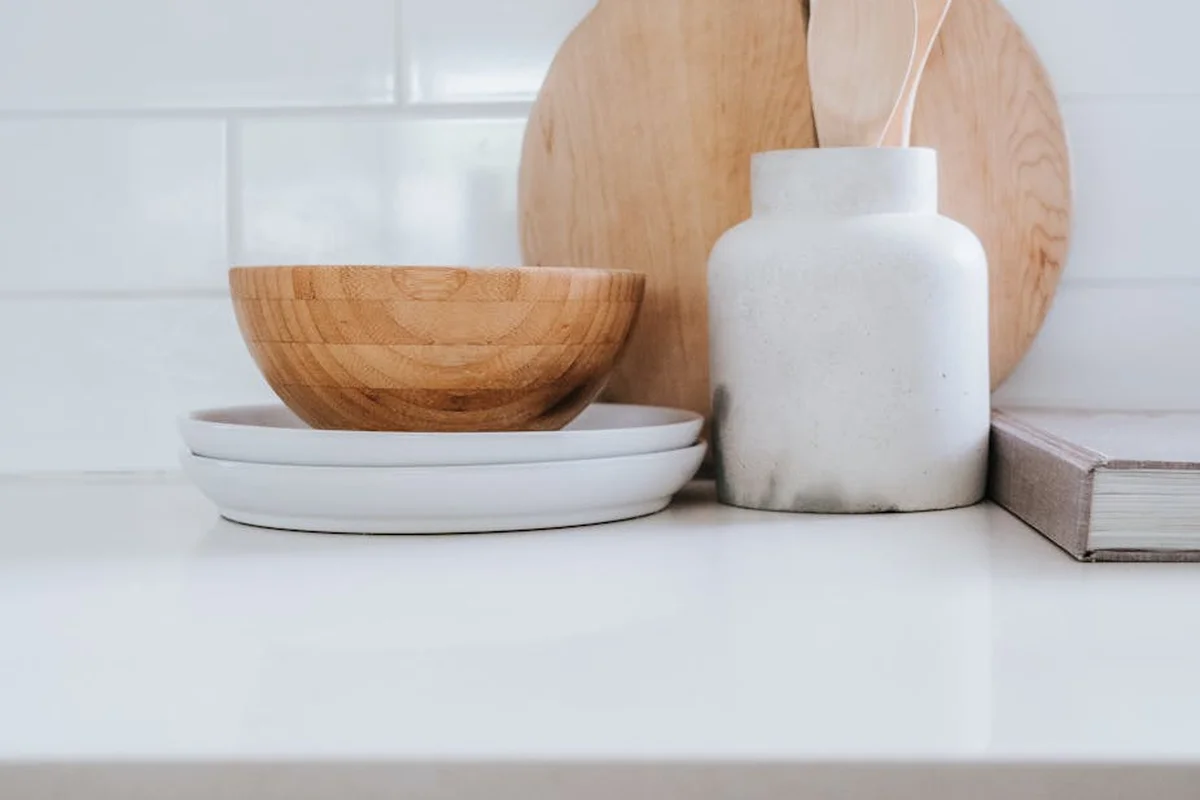
Even with great care, issues can pop up. Here’s how to diagnose and fix the most common ones.
Gray Stains or a Dull Film
This is usually a combination of water penetration and mild surface mold. The wood fibers are damaged but it’s often just on the surface. Lightly sand the area with 220-grit sandpaper until the fresh wood color returns, then re-oil the entire bowl.
White, Cloudy Water Spots
These are mineral deposits from hard water trapped in or on the finish. Try wiping the spot with a cloth dipped in white vinegar. If the white remains, the water has likely penetrated the finish. A very light sanding with 320-grit or finer paper followed by re-oiling will usually restore clarity.
Lingering Food Odors (Like Garlic or Onion)
Wood is porous and can absorb odors. Don’t use harsh chemicals. Instead, place the bowl in a sunny spot for a few hours. Sunlight and fresh air are remarkably effective at neutralizing odors. You can also wipe the inside with a lemon wedge or a paste of baking soda and water, let it sit for an hour, then rinse and dry thoroughly.
Small Cracks or Checks
Small surface cracks are often just in the finish, not the wood itself. Sand the area smooth and re-oil. For a tiny hairline crack in the wood, you can force food-grade mineral oil or beeswax into it. As the wood expands and contracts with humidity, it may close up. Monitor it. If it grows, the bowl’s structural integrity is compromised.
Simple Sanding & Re-oiling Protocol
- Sand the entire problem area (or the whole interior) with 220-grit sandpaper. Always sand with the grain.
- Wipe away all dust with a tack cloth or a slightly damp paper towel.
- Apply a generous coat of food-grade mineral oil or a beeswax-based board cream. Let it soak in for 20-30 minutes.
- Buff off any excess with a clean, dry cloth. Let the bowl cure for 24 hours before use.
This process refreshes the protective layer and addresses most minor surface flaws.
When is a Wooden Bowl Beyond Repair?
It’s time to retire a bowl when you see:
- Deep, structural cracks that you can fit a fingernail into. These harbor bacteria and can split further.
- A persistent, foul, or mildewy smell that won’t go away after sunning and cleaning. This indicates deep rot.
- Extreme warping that makes the bowl unstable on a flat surface.
FAQs on Bacteria & Wood Safety
Many people worry wood is less sanitary than plastic. The science says otherwise. Wood has natural antimicrobial properties (phylophenols). Studies, like one from UC Davis, show bacteria like E. coli and Salmonella planted on wooden boards die off over time, while they can survive and multiply on plastic surfaces. The key is proper cleaning and drying. A well-maintained wooden cutting board is a safe, durable kitchen tool.
Wooden Salad Bowl Maintenance FAQ
Can I serve hot foods in a wooden salad bowl?
No, avoid hot foods as they cause rapid, uneven thermal expansion, stressing the wood fibers beyond what oil can mitigate. This significantly increases the risk of warping and checking compared to acidic dressings.
How often should I sand my bowl to refresh the surface?
Sand only when necessary to remove physical damage like stains or raised grain, not as part of routine oiling. Frequent sanding unnecessarily removes the milled surface and the polymerized oil layer within the top fibers.
What is the difference between “seasoning” and “oiling” the bowl?
In wood science, “seasoning” refers to the initial drying of lumber, while “oiling” is maintenance. For the end-user, so-called “seasoning” is simply the initial, repeated oil applications that build a stable polymerized barrier within the wood’s cell structure.
How should I store the bowl if I won’t use it for a month?
Clean, dry, and oil it first, then store it in a climate-stable environment away from heat vents or dampness. This minimizes the wood’s hygroscopic response to ambient humidity swings during inactivity and helps prevent mold growth. Proper storage techniques are essential for preserving wood quality.
Is food-grade mineral oil truly inert and safe for long-term use?
Yes, pharmaceutical-grade mineral oil is a purified hydrocarbon that does not oxidize or become rancid, making it chemically inert for this application. Unlike some wood treatment chemicals, it is non-toxic and remains stable, only requiring reapplication as it is physically worn or washed from the wood’s pores.
Preserving Your Wooden Bowls for Generations
Oil your wooden salad bowls every few months, or when the wood looks dry, to maintain a protective barrier. This routine replenishes the natural oils lost to washing and use, keeping the wood resilient. Always wipe bowls clean with a damp cloth immediately after serving acidic dressings like vinaigrette to prevent the acid from etching the finish. Consistent care like this minimizes swelling and cracking, ensuring your bowls remain both functional and beautiful.
Selecting bowls made from ethically sourced wood supports sustainable forestry and honors the material. I find that reading up on wood cell structure and oil penetration science makes maintenance more intuitive and effective.
References & External Links
- How to Oil Wooden Bowls – Earlywood
- Care and maintenance: Wood salad bowls and boards – Terrestra
- Wood Care | Using Food Safe Oils for Wooden Bowls and Boards – Andrew Pearce Bowls
- Maintaining Your Wood Bowl and Care Tips | NH Bowl and Board | New Hampshire Bowl and Board
- How To Season A Wooden Salad Bowl Properly? – KimEcopak
- Wood Bowl Care: The Dos and Dont’s of Seasoning Your Wooden Bowl