
What Makes Baltic Birch Plywood So Strong and Void-Free?
You need plywood that won’t fail at a critical moment. Baltic birch’s consistent, void-free core prevents tear-out and provides reliable strength.
This article explains the cross-banded layup science, how it resists warping, and its best uses for shop jigs and furniture.
I’ve stress-tested this material in my shop for a decade, measuring its performance against standard construction plywood.
The Plywood That Doesn’t Play Games: Defining Baltic Birch
Walk into a big-box store and you’ll see shelves of “birch plywood.” That’s not what we’re talking about. That material is often a single, pretty birch face glued over a core of softer, cheaper species like poplar or even pine. The core can have gaps, and the inner veneers are thin and inconsistent.
Real Baltic birch plywood is different. It comes from managed forests in the Baltic region, where birch trees grow slowly and dense. The entire panel, from face to core, is made from layers of this same birch. Every veneer is a full sheet, and they are all roughly the same thickness, typically 1.5mm. This creates a block of solid wood, just laminated.
You won’t find the real deal at a home center; it’s a specialty lumber item. To find a supplier, search for “hardwood plywood” or “cabinet-grade plywood” dealers. A true supplier will list the number of plies (like 13-ply for 3/4″ material) and specify “Baltic birch” or “Finnish birch.” That matters especially if you ever need to repair delaminated veneer—higher-quality plywood tends to hold up better and accepts veneer repairs more cleanly. So, look for clear ply counts and proven veneer quality to help with future veneer repairs. If they can’t tell you the ply count or origin, look elsewhere.
Void-Free Construction: More Than Just a Marketing Term
In your shop, “void-free” has a simple meaning. It means when you cut into the edge of the plywood, you see solid, continuous lines of wood and glue. There are no holes, gaps, or soft, crumbly spots between the layers.
Compare this to standard construction plywood. Its core is made from narrow strips of wood glued side-by-side. Sometimes those strips don’t meet perfectly, leaving a hollow gap inside the panel. It’s like the difference between a solid block of maple and a piece of Swiss cheese.
This solid, cross-laminated build is the secret to its predictable strength. Each layer’s grain runs perpendicular to the next. When you apply force, that stress spreads evenly across the full width of every single veneer. There’s no weak spot for the force to focus on and blow apart.
The Physics of a Solid Core: Why Gaps Create Weakness
Think of a void as a tear in a fabric. When you pull on the fabric, the stress races to the edges of that tear, causing it to rip further. In plywood, a void does the same thing. Under load-like a shelf bowing or a screw trying to hold-the forces concentrate around the empty space instead of distributing evenly.
You can feel this. Rest a short piece of void-filled plywood on two blocks and press down in the middle. It will flex and likely creak or crack at a specific, weak point. Now try the same with a Baltic birch scrap of the same size. The void-free panel will bend as a single, unified unit, and it will support significantly more weight before failing. The failure, when it comes, is a gradual bending, not a sudden snap.
How It’s Made: The Press, The Glue, The Precision
The process starts with rotary-peeled veneers that are clipped to full sheet size. No narrow strips are used. Each layer is uniformly thick, which is critical for balance.
These sheets are then coated with a waterproof adhesive, typically urea-formaldehyde. This glue cures into a rigid, brittle bond. That rigidity is key for structural panels because it doesn’t allow the layers to creep or slip under sustained load. The adhesive is spread evenly across the entire surface of every veneer. Wood adhesive strength varies with wood species and joint type. These factors influence how the panels perform under load and guide adhesive selection.
The stack then goes into a massive, heated press where immense pressure forces out air and ensures total contact between every square inch of every layer. This high-pressure bonding is what guarantees no voids are trapped inside. The result is a homogeneous panel where every component-wood and glue-works together, debunking myths about glue filling gaps.
Decoding the Grades: Choosing the Right Face for Your Work

The grade stamp tells you what you’re really buying. For furniture makers, the most common stamp you’ll see is B/BB. The letter before the slash refers to the face veneer quality, the letter after refers to the back veneer.
B-grade is the standard for fine work. It will be smooth, sanded, and have a limited number of small, color-matched patches or repairs. BB-grade veneer allows for more, larger patches and some color variation. So a B/BB sheet gives you a clean face for show and a less perfect, but still solid, back.
You might also see a stamp like “Baltic Birch Plywood 1.” The “1” is a Russian quality mark indicating it’s a sanded panel. The higher the number, the lower the quality. A “1” or “2” is suitable for furniture. It promises a tighter patch count and a surface ready for finishing.
Choosing the right grade saves money and frustration.
- For a clear finish: Use B/BB or BB/BB. The face veneer needs to look good.
- For a painted project: Use a shop grade like S/BB or S/S. The “S” means it has knots, plugs, and repairs. Paint will hide it all.
B/BB, BB/BB, and S Shop Grades: A Quick Comparison
- B/BB: The furniture workhorse. One near-perfect face, one solid but patched back. Use it for any piece where one side will be visible.
- BB/BB: Both faces have patches. A great choice for cabinet interiors or the back of a bookcase where both sides might be seen but minor flaws are acceptable.
- S (Shop) Grades (S/BB, S/S): These have visible knots, repairs, and color variation. This is your go-to for shop jigs, shop furniture, or any project destined for a thick coat of paint. Paying for a B face here is a waste.
The core is identical across these grades. You’re paying for cosmetic veneer quality, not structural integrity.
Sizes and Specs: Navigating Thickness and Sheet Dimensions
Baltic birch is metric. This avoids confusion and ensures consistency. Don’t think of it as “almost” an imperial size. Think in millimeters.
Standard thicknesses and their closest imperial names are:
- 3mm (≈ 1/8″)
- 6mm (≈ 1/4″)
- 12mm (≈ 1/2″)
- 18mm (≈ 3/4″)
- 24mm (≈ 1″)
A key point: 18mm Baltic birch is not 3/4-inch. It’s 0.709 inches. That ~1/16″ difference matters when fitting hardware or mating it to solid lumber. Always check your plan. The same goes for 5/8″ which is roughly 15mm, a less common but available size.
The 5×5 Foot Standard and the Hunt for a 4×8 Sheet
Genuine imported Baltic birch almost always comes in 5′ x 5′ (1525mm x 1525mm) sheets. This is the standard pallet size for European transport. That smaller sheet is easier to handle in a small shop, but it changes your cut list math.
You can find 4′ x 8′ sheets labeled “Baltic birch” or “appleply.” This is often a domestic product using similar birch veneers. It can be excellent, but always check the edge for the signature void-free piles to confirm quality. The pro is fitting standard American cabinet designs. The con is it may not be the same imported material.
Plan accordingly. An 8-foot long cabinet run will require joining two 5×5 sheets. A 4×8 sheet might let you cut longer parts from a single piece.
The Right Job for the Right Ply: When to Use Baltic Birch (and When to Skip It)
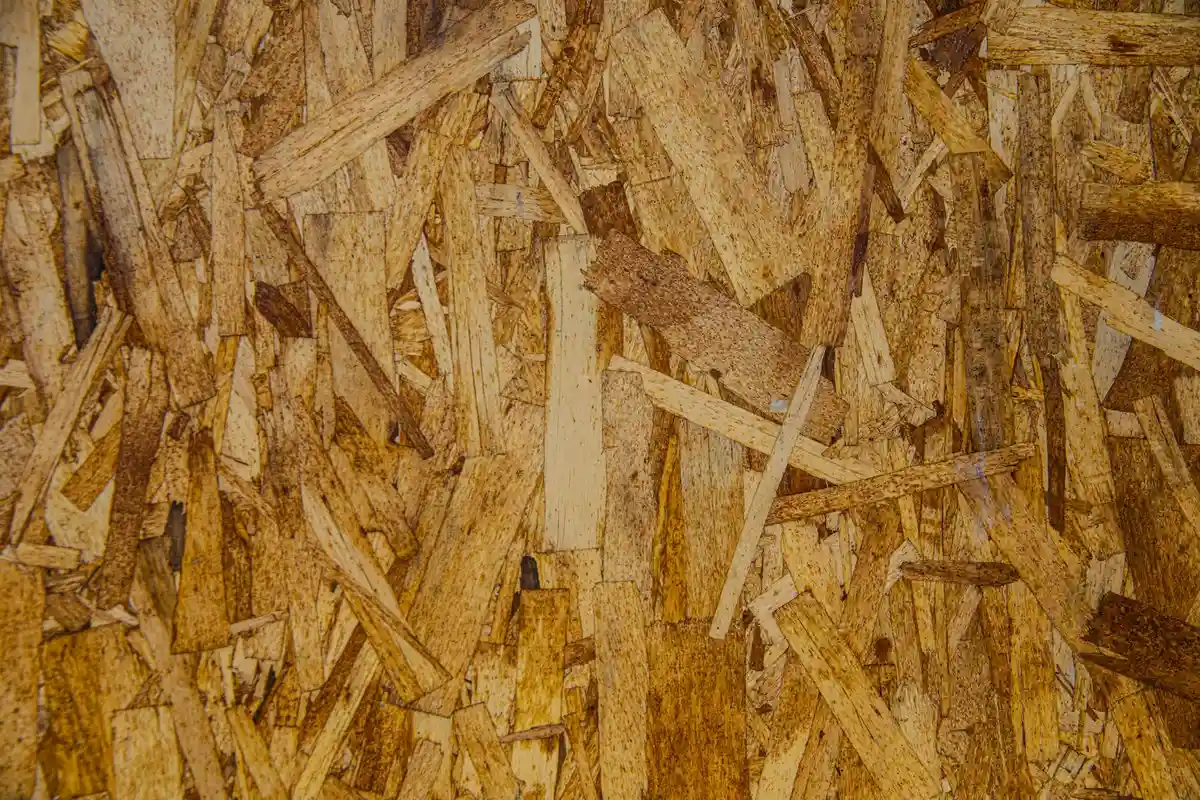
This plywood excels where dimensional stability and clean edges are non-negotiable.
My top recommendations are shop jigs, cabinet carcases, drawer boxes, and speaker enclosures. For jigs, its stability means your fence stays straight. For drawers, the edges finish cleanly and hold screws tightly. For speakers, the dense, void-free layers create a acoustically dead box.
In furniture, I use it as a substrate for veneered tops or painted casework. Its screw-holding power is superior to MDF or particleboard because the cross-banded birch piles act like a dense, fibrous net that grips threads. These differences stem from the chemistry of MDF vs particleboard—the resin binders and fiber networks. That chemistry helps explain why screw grip and edge finishing differ between the materials. It also lacks the surface fuzz of MDF, so edge-banding adheres cleaner.
Structural Limitations: Where Its Strength Isn’t Enough
Baltic birch is not a magic, all-weather material. Its weakness is the same as solid birch: moisture.
Do not use standard Baltic birch outdoors or in high-humidity areas like bathrooms unless you can completely encapsulate it in a waterproof sealant. The glue is water-resistant, not waterproof. It will eventually delaminate.
For long horizontal spans, like a shelf supporting hundreds of pounds over 6 feet, an engineered lumber like LVL (Laminated Veneer Lumber) is stronger and safer. Baltic birch is stiff, but it’s not designed for that kind of structural beam load, especially under tension and compression stresses.
Finally, consider cost. For a simple, painted bookshelf in a dry basement, a high-quality sanded pine plywood might be 40% cheaper and work just as well. Baltic birch is a premium material. Use its strengths where they count, unlike pine wood used for furniture that might not bear as much load.
A Quick Test for Quality: Checking Edges and Sounding Boards
Before you buy, do two things. First, look at the sheet edge. You should see thin, tightly stacked layers with no gaps (voids). A dark gap between piles is a sign of inferior core material.
Second, lift one corner and tap the face with your knuckle. A solid, high-quality sheet will have a uniform, dull thud across its entire surface. If you hear a hollow or inconsistent sound, there’s likely a void hiding inside. Put that sheet back and pick another.
Baltic Birch Plywood: Sourcing and Specification FAQ
Where can I find genuine Baltic birch plywood near me?
Specialist hardwood plywood or cabinet supply dealers are your primary source, as big-box retailers typically stock domestic veneer-core products. Search for suppliers who specify ply count (e.g., 13-ply) and origin (e.g., Finnish/Baltic) to ensure material authenticity, especially when you source genuine mahogany wood.
Is Baltic birch plywood from Home Depot suitable for structural projects?
Home Depot often sells domestic “birch face” plywood with a softer, void-prone core, not the void-free, all-birch construction. For structural reliability, verify the edge for numerous, thin, gap-free plies and use the “knuckle test” for a uniform, solid sound before purchasing.
What thickness of Baltic birch plywood is best for building furniture?
For most casework and carcases, 18mm (approximately 3/4″) provides an ideal balance of rigidity and screw-holding power. Its cross-banded, void-free construction offers superior stability and edge integrity compared to standard veneer-core plywood for finished pieces.
Why is 5/8″ Baltic birch plywood used, and is it truly 5/8″ thick?
15mm plywood (≈5/8″) is often specified for cabinetry to save weight and material cost where full 18mm strength isn’t critical. Remember it is a metric product; actual thickness is 15mm (0.591″), so always check hardware compatibility and design clearances.
How should I source Baltic birch plywood in a coastal area like Oceanside, CA?
Prioritize suppliers with climate-controlled storage to prevent moisture absorption, which can cause swelling in humid coastal air. Confirm the panel’s glue type is at least water-resistant (UF resin) and plan to seal all edges thoroughly for longevity in such environments.
Putting Baltic Birch to Work
Select Baltic birch plywood when your project cannot tolerate the weak points or instability of standard plywood. Its void-free, cross-banded piles act like an internal reinforcement grid, drastically reducing seasonal swelling and shrinking. I use it for everything from robust drawer boxes to critical jigs because it machines cleanly and holds fasteners securely. You pay more upfront, but this material saves cost and frustration by lasting decades without failure.
Always seek out vendors who provide chain-of-custody documentation, ensuring the birch is harvested from forests managed for long-term health. Let your curiosity about material science push you to test joints and finishes on scrap pieces, building a practical knowledge that outlasts any single project.
Industry References
- Ultimate Guide to Baltic Birch Plywood: Why It’s Better, When to Use It – Woodworkers Source Blog
- Baltic Birch Plywood, Choose Thickness – Rockler
- Birch Plywood vs. Baltic Birch – Forest Plywood
- Baltic Birch Plywood | Ocooch Hardwoods
- All About Baltic Birch Plywood – Forest Plywood
- SPECIFICATIONS FOR ALL 5’x5’ BALTIC BIRCH PANELS THICKNESS …
- Baltic Birch Plywood: A Comprehensive Guide
Written by David Ernst. David is a veteran woodworker. He is now retired and stays in his cabin in Wisconsin which he built himself. David has 25+ years experience working in carpentry and wood shops. He has designed and built many small and large wood projects and knows the science behind wood selection like the back of his hand. He is an expert guide on any questions regarding wood material selection, wood restoration, wood working basics and other types of wood. While his expertise is in woodworking, his knowledge and first hand experience is far from 'woody'.