
What Makes Walnut Hard, Heavy, and Beautiful? A Wood Scientist’s Guide
You’re considering walnut for a furniture build and need to know if its numbers support a durable design. Let’s move past the guesswork and look at the material science.
This article breaks down the key data points that matter in the shop. We will cover its Janka hardness rating and what that means for dents and wear, its specific gravity and how it affects weight and stability, and the unique way its pores and tannins interact with oils and finishes.
My advice comes from years of milling, testing, and finishing walnut in my own shop, correlating lab data with real-world results.
What exactly is “Walnut” wood? Clearing up the confusion.
When someone in North America asks for walnut for a furniture project, they almost always mean American Black Walnut. Its scientific name is Juglans nigra. This is the benchmark. It’s our domestic premium furniture wood, prized for generations.
Is there a difference between walnut and black walnut wood? In practical terms, yes. “Black Walnut” is the specific tree. “Walnut” can be a broader category that includes other species. If you order just “walnut” from a supplier, you should confirm it’s American Black Walnut.
Other species like English or Common Walnut (Juglans regia) exist. They are often lighter in color and slightly softer. They’re excellent for carving. For building durable furniture, American Black Walnut is the superior choice. I always specify it.
Visually, Black Walnut is stunning. Its heartwood ranges from a rich, milk-chocolate brown to deep purplish-black. The grain is usually straight, but can be wavy or curly, creating beautiful figures. It is an open-grain wood, meaning the pore structure is visible. This gives it a tactile texture. People call it a “warm” wood because of its deep, inviting color, not its physical temperature.
The Walnut Wood Technical Spec Sheet
Here are the numbers that matter for American Black Walnut. I keep these in my shop notebook.
- Janka Hardness: 1,010 lbf (4,500 N). This is the force needed to embed a 0.444-inch steel ball halfway into the wood.
- Specific Gravity (Density): 0.55 (at 12% moisture content). This means it’s about 55% as dense as water. It’s a medium-density hardwood.
- Tangential Shrinkage: 7.8%. This is the amount it shrinks across the grain (tangent to the growth rings) as it dries from green to oven-dry. It’s a key number for predicting wood movement.
The moderate density and hardness make walnut a dream to work with hand tools or machines; it cuts cleanly and holds detail beautifully. Being a true hardwood, walnut’s Janka hardness sits higher than many softwoods, guiding tool selection and finish outcomes. Understanding hardwood versus softwood and Janka hardness can help tailor design decisions and movement considerations in your project. The shrinkage number is moderate. This means it’s relatively stable for a hardwood, but you still must account for wood movement in your designs.
A note on toxicity: Walnut sawdust, especially from the bark and dark heartwood, can be an irritant. I always wear a respirator. Some people have stronger skin reactions. The wood itself is not toxic once finished and in use. There are potential walnut toxicity allergenic risks from dust exposure, especially for sensitive individuals. If you have a known walnut allergy, take extra precautions.
How hard is walnut? The Janka hardness test explained for furniture makers.
The Janka test is simple. Imagine trying to push a small steel ball bearing into a block of wood. The test measures exactly how much force that takes. It’s a great proxy for how well a wood resists dents and wear.
American Black Walnut scores 1,010 on the Janka scale. To understand that number, you need comparisons.
- Eastern White Pine: 380 lbf (Very soft)
- Black Walnut: 1,010 lbf (Medium)
- Red Oak: 1,290 lbf (Hard)
- Hard Maple: 1,450 lbf (Very hard)
Walnut sits firmly in the middle of the common furniture hardwoods, harder than cherry but softer than oak or maple. This is its sweet spot.
I often see searches for “walnut janka hardness vs magnolia vs oak.” Magnolia is not a standard furniture hardwood. Its Janka is around 700-800 lbf, so it’s softer than walnut. Comparing walnut to oak is more useful. Red Oak (1,290 lbf) is about 25% harder than Walnut. White Oak (1,360 lbf) is even harder. Looking into Janka hardness for woodworking can help you make better decisions when selecting wood.
What does this mean for your furniture? A 1,010 Janka rating means walnut is plenty durable for almost any indoor furniture. A dining table will resist daily dents from dishes and silverware. A chair frame will hold up to use. It might show a dent from a sharp corner hit harder than a maple table would, but that’s part of its character. It’s a perfect balance of workability and durability.
Heartwood vs. Sapwood: Does hardness vary within the same board?
The difference between walnut heartwood and sapwood is dramatic. The heartwood is the dark, valuable brown wood. The sapwood is a pale, creamy yellow. They look like two different species.
In terms of hardness and density, the difference is measurable but small. The heartwood, being older and full of natural extractives (which give it the color), is slightly denser and harder. The sapwood is slightly softer. In the shop, you might notice the sapwood cuts a tiny bit easier.
The real difference isn’t in hardness, but in stability and color consistency. The heartwood’s extractives make it more resistant to decay and insects. The pale sapwood can also react differently to some finishes, sometimes staying lighter.
My practical advice is to plan your projects around this. For a uniform look, I cut the sapwood off and use it for secondary parts or small projects. Some designers intentionally contrast the sapwood and heartwood for a striking effect. If you do this, just be aware that the color difference is permanent. The pale sapwood will not darken to match the heartwood over time, even with a clear finish. You often need to use a tinted stain or dye to blend them.
Walnut density and weight: The hidden factor for stability and strength.
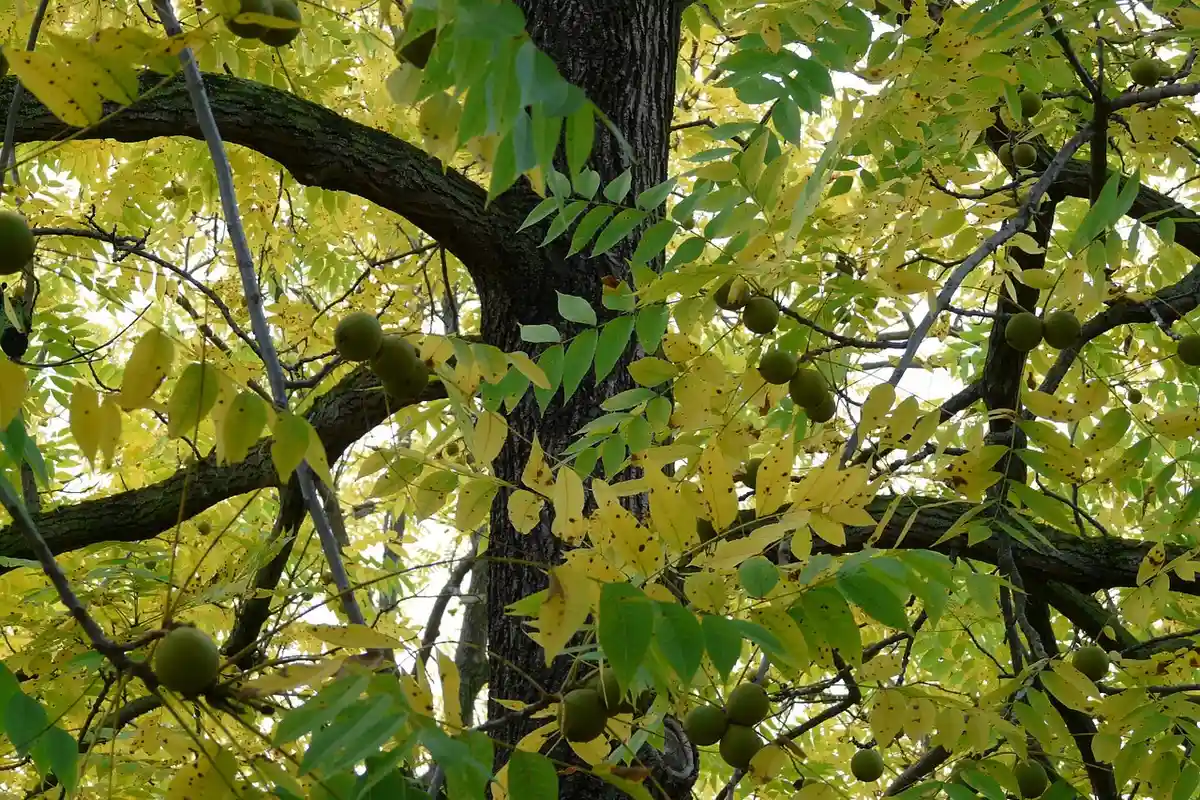
When woodworkers talk strength, they jump to Janka hardness. That’s important for dents. But for a table that won’t sag or a chair leg that won’t flex, you need to talk about density.
Density, often called specific gravity for wood, is a measure of how much actual wood cell wall is packed into a space. Think of it as the wood’s “heft factor.” A higher density typically means a stiffer, stronger board pound for pound.
Black Walnut, dried and ready for your shop, has an average specific gravity of about 0.55. In simpler terms, it weighs roughly 38 pounds per cubic foot. That puts it in a sweet spot.
- Maple (hard): Heavier and denser (about 44 lbs/ft³). Stiffer, but harder on your tools.
- Red Oak: Similar density to walnut (about 38 lbs/ft³). They feel comparable in weight.
- Cherry: Lighter than walnut (about 35 lbs/ft³). More flexible.
- Pine (Eastern White): Much lighter (about 25 lbs/ft³). Far less stiff.
Walnut’s medium density gives it a great balance of workability and inherent stiffness. This stiffness, the Modulus of Elasticity (MOE), is what lets you design a walnut dining table with a confident span. It resists bending under load better than cherry or pine.
Density also clues you into wood movement. Walnut has a moderate movement rate. It’s stable, but not rock-solid like teak. Its medium density means it still contains pores and cellular space that will absorb and release moisture. You must account for seasonal movement in your designs, but walnut is more forgiving than many oaks.
The finishing properties of walnut: Should you stain it?
Does walnut take stain well? Technically, yes. But you almost never should. Staining walnut is like putting cheap syrup on a fine steak. You cover up what you paid for.
The rich, variable chocolate tones of walnut are its signature feature, achieved by natural compounds called juglone and other extractives. These are what give it color and some natural decay resistance. A stain can blotch over this beautiful, complex base.
Walnut’s color evolves with light. Freshly milled walnut often has warmer, purplish or grayish streaks. Under UV light, the darker heartwood will lighten to a warm, soft brown over years. The lighter sapwood, if left in, will darken to a golden tan. The overall contrast mellows.
Surface prep is key. Walnut has a semi-open grain, sometimes with dramatic pores. For a glass-smooth feel, you’ll need a grain filler. I often skip filler for a more tactile, natural surface. Sand progressively to 180 or 220 grit. Stop there. Sanding finer can burnish the pores and make some finishes sit on top, rather than soak in.
For clear finishes, your choice dictates the look.
- Oil (Tung, Danish, Linseed): Soaks in, enhances depth and chatoyance (the shimmer). It offers minimal film protection but feels wonderful. It will initially darken the wood slightly, then let it age naturally.
- Varnish (Polyurethane, Arm-R-Seal): Builds a protective film on top. Oil-based varnish will add a warm amber tint. Water-based varnish stays clearer but can give a slightly cold, plastic look if applied too thick.
- Lacquer: Dries fast, builds quickly, and stays very clear. It’s a professional favorite for preserving the exact color at the time of finishing.
Best Practice Workflow: Applying an Oil Finish to Walnut
This protocol is for a wiping oil like Danish oil or pure tung oil. It’s my go-to for bringing out walnut’s character safely and predictably. Test every step on scrap from the same board first.
- Prepare your space. Work in a ventilated area with no open flames. Have a metal can with water ready for used rags. Lay rags flat to dry single-use after use, never ball them up. Spontaneous combustion is real.
- Sand and de-whisker. Sand your piece to 180 grit. Wipe the entire surface with a damp rag or sponge to raise the grain. Let it dry completely (30 minutes). Sand lightly with 180 or 220 grit just to cut off the raised “whiskers.” Vacuum and tack-cloth thoroughly.
- Apply the first coat. Flood the surface with oil using a rag or brush. Keep it wet for 15-20 minutes, adding more to any areas that soak dry. The goal is a uniform wet film, not a puddle.
- Wipe off ALL excess. With clean, absorbent rags, wipe the surface completely dry. No shiny, tacky residue should remain. This step prevents a gummy finish.
- Initial cure. Let the piece sit for 24 hours in a dust-free space. After the first coat, the grain may feel slightly rough again. That’s normal.
- Apply subsequent coats. Lightly sand with 320 grit or a gray synthetic pad to smooth the surface. Remove dust. Apply a thinner, quicker coat of oil. Wet the surface, wait 5-10 minutes, then wipe completely dry again. Repeat this step for 2-3 total coats.
- Final cure. Allow the piece to cure for at least 72 hours, preferably a week, before light use. Full hardness develops over a month. The beauty of this method is its foolproof thin coats and deep, natural results.
Is walnut a good wood for…? Applications from dining tables to cutting boards.

Yes, walnut is an excellent wood for furniture. I use it often in my shop. Its deep, rich color and varied grain patterns give projects an immediate sense of warmth and quality. Walnut also works predictably. It saws cleanly, planes smoothly, and holds intricate details from a router bit beautifully.
The main compromise with walnut is that you pay a premium for its beauty and you accept a wood that is softer than common choices like oak or maple. It is a luxury material, not a utility wood. Its elevated cost is reflective of this luxury status.
Is walnut a good wood for a dining table?
For a dining table top, walnut performs well. Its Janka hardness rating of 1,010 lbf is in a practical middle zone. It’s hard enough to resist many dents from daily use, but not so hard that it’s brutally difficult to machine. A walnut table will develop a gentle patina over decades, which many find desirable.
Walnut’s real strength for table tops is its dimensional stability. It has a low shrinkage rate. This means a wide, glued-up panel is less likely to cup or warp dramatically with seasonal humidity changes compared to many other species. You still must account for wood movement in your design, but walnut is forgiving.
Is walnut a good wood for cutting boards?
I do not recommend walnut for a heavy-use cutting board. While its tight grain and lack of large pores are good traits, its moderate hardness is the issue. At 1,010 lbf, it’s significantly softer than maple (1,450 lbf) or hard maple (1,450+ lbf). Knife cuts will sink deeper into walnut, leaving more pronounced scars over time.
Regarding food safety, black walnut is not toxic. Its dust can be an irritant, but the finished wood is inert and safe for food contact. It lacks the pronounced natural antimicrobial properties found in woods like black cherry or sugar maple, so proper cleaning is essential, especially when working with woods that might harbor toxic dust, sap, or chemicals.
How does walnut compare?
It helps to see walnut next to other common furniture woods.
- Vs. Cherry: Cherry is slightly softer (950 lbf) and lighter, changing color dramatically to a deep red with light exposure. Walnut is darker from the start and more stable.
- Vs. Maple: Maple is much harder (1,450 lbf) and more wear-resistant, ideal for floors and heavy-use surfaces. It can be challenging to hand-tool and has a less dramatic grain.
- Vs. Red Oak: Red oak is harder (1,290 lbf) and far more porous, making it unsuitable for cutting boards. It’s often less expensive but lacks walnut’s refined appearance and stability.
Choose walnut for its looks and workability in heirloom furniture; choose maple or oak for pure hardness in high-traffic applications.
Tips for working with walnut wood in your shop.
Walnut is a joy to work if you respect its characteristics. Sharp tools are non-negotiable. A dull blade or bit will burn the wood and crush its fibers, leaving a sooty, fuzzy surface instead of a crisp cut.
For planing and jointing, take lighter passes than you would with oak. Walnut’s interlocked grain can cause tear-out. If you get tear-out, try reversing the board’s direction through the planer or using a very sharp, high-angle hand plane.
Gluing heartwood to sapwood
Walnut often has stark color variation between its dark brown heartwood and nearly blonde sapwood. This can be a design feature. To glue these pieces together, prepare the surfaces immediately before gluing. The pale sapwood can have higher extractive content, which sometimes inhibits adhesion.
I wipe joint surfaces with a clean, damp rag to remove any residual oils or dust. Use a standard wood glue like PVA (Titebond I, II, or III) and apply normal clamping pressure. The bond will be strong, even if the color line is visible.
Dust control and health
Walnut dust is a known respiratory irritant. More critically, the fine dust from sanding or machining can trigger allergic reactions in some people, similar to its leaves and nuts. Always use a dust collector connected to your tools.
When sanding, wear a NIOSH-rated N95 dust mask or a respirator. Good dust control isn’t just about shop cleanliness; it’s a necessary health precaution with this wood—especially considering the potential hazards of wood dust exposure.
Sourcing sustainable walnut
North American Black Walnut is a superb, renewable resource when harvested responsibly. Look for suppliers who can verify sustainable forestry practices, often through certifications like the Forest Stewardship Council. This ensures the wood comes from managed forests that prioritize regeneration and ecological health.
Avoid imported “walnut” species that may come from unverified sources. Domestic black walnut has a reliable supply chain. You support sustainable forestry and get a superior, consistent material for your projects.
Walnut Hardness & Density: Frequently Asked Questions
What does a Janka hardness of 1,010 lbf specifically mean for my tools and process?
This mid-range hardness means walnut machines with less resistance than maple or oak, reducing wear on cutterheads and allowing for crisp detail. It also means sanding progresses quickly, but you must avoid pressing too hard to prevent rounding over sharp edges.
How should I interpret a Janka hardness chart when comparing walnut to magnolia?
Magnolia (~750 lbf) is noticeably softer than walnut, making it more prone to denting and less suitable for high-wear furniture. Pine wood also tends to be softer than walnut, but walnut’s superior hardness provides the necessary structural integrity for durable tables and casework where magnolia would be insufficient.
What is the actual laboratory procedure for the Janka hardness test?
The test uses a universal testing machine to press a 11.28-mm steel ball into the wood at a controlled rate until the ball reaches half its diameter. The maximum force recorded (in pounds-force or newtons) is the Janka rating, providing a repeatable, comparative measure of indentation resistance.
Black Walnut is listed at 1,010 lbf, but how consistent is this value in practical sourcing?
While 1,010 lbf is the standard published value, actual hardness can vary ±10% due to growth conditions and specific gravity within a board. For critical applications, sample-test offcuts with a manual Janka tester or correlate hardness by assessing the board’s weight and ring density.
What is the key takeaway from a Janka hardness scale that includes walnut, oak, and maple?
The scale quantifies walnut as a strategic middle-ground: it offers significantly better dent resistance than softwoods or poplar, while remaining easier to tool than oak or maple. This positions it ideally for detailed furniture that must withstand daily use without punishing your tools.
Making Walnut Furniture Last
Focus on walnut’s balanced Janka hardness and density when designing pieces meant for generations, not just years. I rely on its predictable machining to craft tight, strong joints that resist racking and wear. Always select a finish that soaks into walnut’s open pores to lock out moisture and enrich its natural depth. Treating the wood as a system of strength, stability, and surface protection is how you build truly durable furniture.
Choose walnut sourced from responsibly managed forests to support ethical material cycles. When evaluating sustainability, consider how cherry compares with walnut in terms of sourcing and lifecycle. Never stop testing finishes and joinery methods, as hands-on experience is the best teacher for how wood science translates to lasting craft.
Expert Resources and Citations
- Walnut – American Hardwood Information Center
- European Walnut Wood Properties & Uses – W.L West & Sons
- Black Walnut | The Wood Database (Hardwood)
- Walnut Wood: Color, Grain & Characteristics – Vermont Woods Studios
- Walnut Lumber Characteristics: Color, Grain & Traits
- American walnut hardwood | AHEC
- Everything You Need To Know About Walnut Wood [+ FAQs] – Timber Actually
- Walnut Wood Characteristics: The Total Guide to Walnut Hardwood – 2021 – Myers Architectural Millwork
Written by David Ernst. David is a veteran woodworker. He is now retired and stays in his cabin in Wisconsin which he built himself. David has 25+ years experience working in carpentry and wood shops. He has designed and built many small and large wood projects and knows the science behind wood selection like the back of his hand. He is an expert guide on any questions regarding wood material selection, wood restoration, wood working basics and other types of wood. While his expertise is in woodworking, his knowledge and first hand experience is far from 'woody'.