
Is Your Woodshop Pet-Safe? A Materials Science Guide to Toxicity
You’re building a dog bed or a cat tree, but could the wood or finish you’re using make your pet sick? I’ve mixed sawdust with science in my shop for years to answer exactly that.
This guide provides practical, tested advice for woodworkers. We will cover toxic wood species, hazardous finishes, and how to design inherently safe projects.
My recommendations come from personal materials testing and dissecting safety data for the workshop.
Woods That Are a Direct Risk to Cats and Dogs
As woodworkers, we think about grain and hardness. Pets experience wood as a chew toy or a nap spot. The natural chemicals in some woods, which we value for color or durability, can be harmful to animals. The risk comes in two forms: poisoning from ingestion and skin irritation from contact.
Toxicity Through Ingestion vs. Contact
Ingestion is the main danger. When a dog chews a black walnut stump or a cat nibbles a cherry wood spoon, they ingest compounds like juglone or cyanogenic glycosides. These can cause stomach upset, neurological issues, or worse.
Contact dermatitis is less common but real. Some woods, like teak or rosewood, have oils that can irritate skin. A dog lying on a bed of fresh shavings from these woods might get a rash on its belly.
The key difference is this: contact might cause a rash, but ingestion of the wrong wood can lead to a life-threatening emergency.
Avoid These Woods in Pet Projects
This list focuses on woods you’re likely to have in your shop or yard. When in doubt, assume an exotic wood is risky.
- Black Walnut: Especially dangerous when moldy. The hulls, wood, and sawdust contain juglone.
- Cherry, Peach, Apricot, Plum (Stone Fruits): All parts contain cyanide-releasing compounds, concentrated in the leaves and pits, but the wood poses a risk.
- Yew, Oleander: Extremely toxic. Even small amounts ingested can be fatal. Often used in landscaping.
- Brazilian Rosewood and Other “Rosewoods”: Yes, Brazilian rosewood is toxic to cats and dogs. The dust and oils are irritants, and ingestion is a problem. This includes similar dense, oily exotics sometimes sold as “lucky wood.”
- Pressure-Treated Lumber: Not a natural wood, but critical to mention. It’s infused with copper and arsenic compounds to resist rot and is highly toxic if chewed.
A non-toxic wood label isn’t a safety guarantee. A large splinter from a safe pine board can still cause an intestinal blockage if swallowed.
How Pets Get Exposed in Your Home and Shop
Pets find ways we don’t anticipate. In my shop, the biggest wake-up call was seeing my dog lap water from a bucket I’d used to wipe down a walnut workbench.
- Chewing: Furniture legs, tool handles, trim, and wood toys are all fair game for a bored pet.
- Fetching Sticks: That stick from the yew tree in your yard is a direct toxin delivery system.
- Sawdust and Shavings: Dogs and cats lick their paws. If they walk through fine dust, they ingest it. Never use toxic wood shavings (like walnut) for small animal bedding. It’s a concentrated hazard.
- Contaminated Water: A spilled cup holding finishing rags, or water pooling on a freshly treated board, becomes a toxic puddle.
Sawdust is an invisible threat. It settles on their fur, their bed, and their food bowl if you’re not meticulous about clean-up.
Recognizing Trouble: Symptoms of Wood or Finish Poisoning
If your pet has chewed a known toxic wood, don’t wait for symptoms. Call your vet or an animal poison control center immediately. Time is critical.
General symptoms to watch for include:
- Vomiting or diarrhea
- Excessive drooling or pawing at the mouth
- Lethargy or weakness
- Loss of appetite
- Difficulty breathing
- Tremors or seizures
This list is a prompt for action, not a diagnostic tool. Always seek professional veterinary care.
Choosing Pet-Safe Wood and Sheet Goods
For projects like pet beds, feeding stands, or chew toys, stick to woods with a long history of safe use. These species have low natural toxicity and minimal irritating oils.
- Maple (hard or soft)
- White Oak (Red oak is debated, so I avoid it for safety)
- Ash
- Poplar
- Pine (Ensure it’s properly dried/kilned to minimize sap)
Remember, “safe” refers only to the wood’s innate chemistry. Any finish, stain, or treatment you apply changes the safety equation entirely.
The Truth About Plywood, MDF, and Particleboard
With sheet goods, the wood fibers themselves are usually safe. The danger is in the glue. Most common plywood and particleboard, including MDF and particleboard, use urea-formaldehyde (UF) resins as a binder. Formaldehyde gas off-gasses over time and is an irritant.
For a pet bed that will be in a well-ventilated area, standard plywood is often fine once sealed. For an enclosed space or a pet prone to chewing, I look for “No Added Urea-Formaldehyde” (NAUF) or soy-based glue products. They are common now.
MDF and particleboard are the riskiest if chewed. They can crumble easily, and a pet ingesting those glue-saturated crumbs gets a concentrated dose of chemicals.
| Wood Type | Primary Risk | Safe for Pet Project? |
|---|---|---|
| Maple, Poplar, Pine | Low natural toxicity; risk from splinters | Yes, excellent choice |
| Standard Plywood | UF resin off-gassing; edges if chewed | With caution; seal thoroughly |
| MDF/Particleboard | UF resins; crumbles easily if chewed | Not recommended |
| NAUF Plywood | Minimal chemical off-gassing | Yes, best sheet good option |
| Black Walnut, Cherry, Yew | High natural toxicity | No, avoid completely |
| Pressure-Treated Lumber | Chemical preservatives (arsenic, copper) | Never, for any project |
The Real Challenge: Pet-Safe Finishes, Glues, and Cleaners

Choosing the wood is step one. The real test is what you put on it. The golden rule for any finish in a pet’s space is simple: it must be fully cured and non-toxic if licked or chewed. A “food-safe” label is a good start, but durability matters too when facing claws, water, and the occasional accident.
Finishes That Cure Safe and Hard
For items with little wear, like a decorative shelf, pure food-grade mineral oil and beeswax are safe and easy to apply. They soak in and don’t form a film. They are not durable, however, and will need frequent reapplication on a well-used cat tree or feeding station.
For projects that need to last, my shop tests point to two winners. Fully cured hard wax oils (like those based on linseed or tung oil mixed with wax) and modern water-based polyurethanes. Once cured, they form a hard, inert surface that resists moisture and is safe for contact.
You must understand the cure. Traditional oil-based polyurethane, lacquer, and especially varnish rely on solvents (VOCs) to dry. As the finish hardens, these solvents evaporate. That smell is toxic vapor. Water-based finishes typically emit far fewer VOCs, reducing toxicity concerns and improving indoor air quality. They can be more forgiving in occupied spaces, with less lingering odor after application. A surface can feel dry to the touch in hours but can off-gas harmful solvents for weeks, a real danger to birds and small mammals. A water-based poly cures primarily through water evaporation and coalescence, reaching a safer state much faster, often within days.
Now, let’s clear up cedar oil. “Is cedar wood oil safe for cats/dogs?” It depends. The cedar oil used as a natural pest repellent in bedding is potent and can irritate pet respiratory systems. It is not a furniture finish. The “cedar oil” sometimes in finishes is usually just aromatic and not the concentrated repellent. As a rule, I never apply essential oils, including cedar, directly to a pet project. The risk of irritation outweighs any unproven benefit.
Adhesives and Additives
Your glue choice is critical. Standard PVA wood glues (yellow or white) and traditional hide glue are non-toxic and inert once fully cured. I’ve used them for decades on kitchen items. They are perfectly safe for pet furniture.
You must be cautious with instant cyanoacrylate (CA or “super”) glue and two-part epoxies. Before full cure, they can release fumes and are skin irritants. Never use them in an area a pet can access during the curing window, which for some epoxies can be 24-72 hours. A curious paw or nose could get stuck or irritated.
For outdoor projects like a doghouse, avoid copper-based preservatives, which are toxic. Look for alkaline copper quaternary (ACQ) or copper azole treatments; they are common and safer once fixed in the wood. For a fully pet-safe option, use a naturally rot-resistant wood like cedar or white oak and seal it with a fully cured, outdoor-rated hard wax oil.
Toxicity & PPE: Working with These Materials
Safety starts in the shop. Sanding any wood, even maple or pine, creates fine dust. This dust irritates human lungs and is even worse for smaller pet lungs. Always sand in a ventilated area, preferably with dust collection, and keep pets out of the workspace entirely. Controlling and cleaning wood dust is a key part of safe shop practices. Regular cleanup helps maintain air quality and reduces exposure for both you and pets.
The same goes for applying finishes. That well-ventilated area should be a pet-free zone until the piece no longer has any chemical odor and is fully cured according to the manufacturer’s instructions. This isn’t just for their safety, it keeps pet hair from embedding in your fresh finish.
Building Projects Your Pet Can Safely Use
Good design is the first layer of safety. Think like a pet. Round over any sharp corners a dog might chew. Ensure cat trees and bed frames are massively stable and cannot tip. Avoid small, detachable parts that could become choking hazards. A project that fails physically is just as dangerous as one that fails chemically.
Bed Frames, Feeders, and Climbing Structures
For cat trees, the posts get shredded. Softwoods like pine will look torn up fast. I use a hardwood like poplar or oak for the main scratching posts. It costs more but withstands claws far better and doesn’t need replacing.
Areas that will get wet, like under a water bowl or a puppy pad tray, need a superior seal. For these spots, a fully cured water-based polyurethane or a marine-grade hard wax oil provides the best moisture barrier. Never leave end grain unsealed, as it soaks up water like a sponge.
Cleaning matters. Harsh, solvent-based cleaners will break down your safe finish over time. Use a pH-neutral, non-toxic cleaner diluted in water. This preserves the seal and ensures no toxic residue is left behind for your pet to lick.
When NOT to Use a Wood
Material choice is about application. A food bowl stand made from porous, unfinished pine will absorb spills, bacteria, and odors, creating a hygiene issue. For this, use a non-porous material like a sealed hardwood, or even a laminate, for easy cleaning.
Finally, know your pet’s history. If your rabbit had a reaction to cedar shavings, do not use cedar for its hutch, even if the wood itself is often considered safe. An animal with a known sensitivity is your most important guide. When in doubt, choose a bland, well-sealed hardwood and monitor your pet’s interaction with the new furniture.
Keeping Your Shop a Safe Zone for Curious Paws
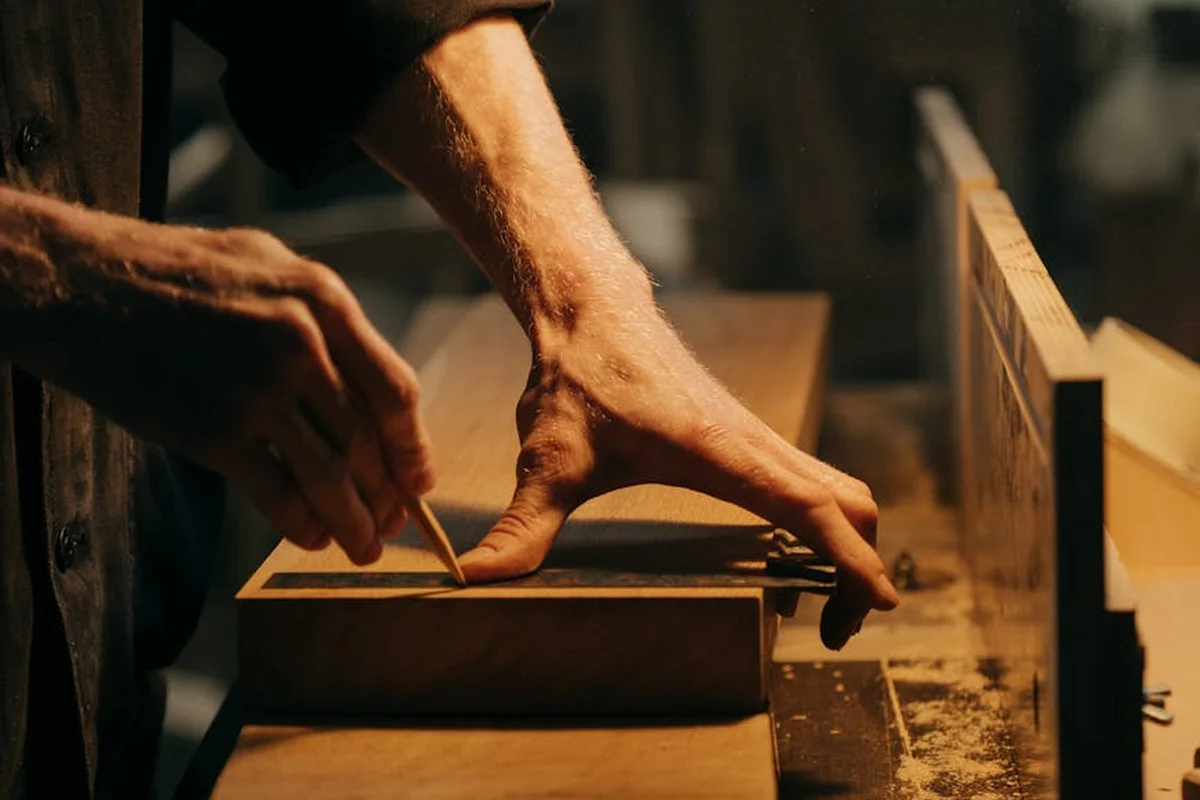
This is not about pet-proofing your space for an hour. It is about establishing workshop hygiene as a non-negotiable standard. Sawdust is not just messy. A splinter is not just a nuisance. To a pet, these are ingestible hazards that can cause internal blockages or introduce toxins. Your shop discipline directly protects their health.
Dust, Scraps, and Spills Management
My rule is absolute: no pets in the shop during active work. This includes sanding, sawing, and applying any finish. The risks are immediate and invisible. Fine dust from woods like walnut or pressure-treated lumber can coat their paws, which they later lick clean.
Your cleanup protocol must be thorough. A quick broom sweep is not enough for fine particulate.
- Use a shop vacuum with a HEPA filter to capture the finest dust particles that settle on every surface.
- Sweep for larger chips and splinters, paying special attention to corners where a curious nose might investigate.
- Dispose of oily rags and solvent-soaked paper towels immediately in a sealed metal container. These can spontaneously combust and the residues are highly toxic.
Store every chemical in a sealed, latched cabinet, not on an open shelf. I use a simple locker. Cats can jump, dogs can bump, and a knocked-over bottle of mineral spirits creates a dangerous and costly spill.
The Curing Project Lock-Down
A finished piece is not safe the moment it feels dry to the touch. Curing is the process where solvents evaporate and the finish molecules fully cross-link, becoming inert. During this off-gassing period, volatile organic compounds (VOCs) are released into the air.
You need a dedicated curing zone. My garage loft, with a fan in the window, serves this purpose. It is well-ventilated, temperature-stable, and has a door I can close. This area is a strict pet-free zone until the cure is complete.
How do you know when a finish is fully cured and safe? Manufacturers’ “dry times” are often misleading. I rely on the thumb test. Press your thumbnail firmly into an inconspicuous spot. If it leaves any visible dent or impression, the finish is still soft and off-gassing. A fully cured finish will be hard and resilient, showing no mark from firm pressure. For oil-based polyurethane, this can take up to 30 days. For a hardwax oil, it might be 7. The thumb test never lies.
Pet-Safe Woodworking: Your Top Questions Answered
How do I choose a truly pet-safe wood sealer?
Prioritize sealers that cure to an inert, hard film, such as modern hard wax oils or water-based polyurethanes. Verify they carry certifications like AFM Safecoat or are explicitly labeled as non-toxic after full cure.
Can I use wood stain on a pet project, and what makes it safe?
Yes, provided the stain is low-VOC, plant-based, or specifically formulated to be non-toxic. It must be top-coated with a fully cured, inert sealer to prevent any residual compounds from leaching.
Are all PVA wood glues safe for pet furniture after curing?
Standard aliphatic resin (yellow) and white PVA glues are non-toxic and inert once fully cured. Avoid using instant cyanoacrylate (CA) glues in areas accessible during their cure, as they release irritant fumes.
What is the safest wood preservative for an outdoor doghouse?
For maximum safety, use naturally rot-resistant species like white oak or cedar and protect them with a fully cured, outdoor-rated hard wax oil. Avoid older pressure-treated woods; if necessary, modern ACQ-treated lumber is safer once fixed and sealed.
What cleaner should I use on sealed pet furniture to maintain the finish?
Use a diluted, pH-neutral, non-toxic cleaner to avoid breaking down the sealant. This prevents chemical residues that pets might ingest while licking the surface.
Smart Material Choices for Pet Safety
The single most important rule is to always confirm the safety of your wood and finish before any pet comes near your project. I treat material safety data sheets and toxicity databases as essential shop references, just like my square or plane. This means defaulting to proven, low-risk options like white pine or poplar for pet furniture and avoiding finishes that off-gas volatile compounds. Your vigilance in selection is the primary barrier between your pet and potential harm.
Responsible woodworking extends to specifying lumber from forests managed for long-term health, supporting ecosystems that sustain us all. Commit to a mindset of continuous learning, as our understanding of material science and animal biology constantly evolves.
Relevant Resources for Further Exploration
- Dogs in the Shop – The Wood Whisperer
- Why Pressure Treated Wood Is a Risk for Pets – Colin Can Help: Expert Handyman & Home Services in Northeast Ohio
- Is it safe (for the animals) to use pressure treated wood for animal feeders and houses? – Woodworking Stack Exchange
- Non-Toxic and Toxic Woods – C.A.R.E., Inc. – Harmful Materials
- These Popular Hobbies Could Pose a Threat to Pets! | ASPCA
- r/woodworking on Reddit: Is pressure treated wood safe for animals? I’m building a tiny shelf, and my cat has a tendency to scrape his face or nibble on shelves and wooden furniture sometimes.
Written by David Ernst. David is a veteran woodworker. He is now retired and stays in his cabin in Wisconsin which he built himself. David has 25+ years experience working in carpentry and wood shops. He has designed and built many small and large wood projects and knows the science behind wood selection like the back of his hand. He is an expert guide on any questions regarding wood material selection, wood restoration, wood working basics and other types of wood. While his expertise is in woodworking, his knowledge and first hand experience is far from 'woody'.