
Microfiber or Cotton for Wood Cleaning: Which Preserves Finishes Better?
You wipe down your wood project, but is your cloth secretly damaging the finish? I have tested both microfiber and cotton on everything from shellac to polyurethane to find the safer choice.
This guide breaks down the material science into practical advice. We will cover how cloth fibers capture dust, my abrasion test results on common finishes, and specific cloth recommendations for oil, wax, and film finishes.
I base these recommendations on my own materials testing and years of finishing work in my shop.
The Shop Floor Verdict: Which Cloth Should You Grab?
For preserving a wood finish, the answer is microfiber, but with one critical rule. You must use the correct type. A cheap, coarse microfiber cloth will ruin your work faster than a soft cotton rag. If you’ll be rubbing out the finish, using the right abrasives matters for a smooth final result.
The conflict is simple. You need a cloth that cleans effectively without acting like sandpaper on your clear coat. Cotton is gentle but often just redistributes dust. Microfiber grabs dust powerfully but can introduce fine scratches if it’s low quality.
I learned this the hard way wiping down a table with a “shop towel” that felt a bit rough. It left a faint, cloudy haze in the satin finish under the light. That haze was a network of micro-scratches, and I had to polish the entire top again to remove it. The wrong wiping tool can undo hours of careful finishing work in seconds.
The Material Science: What Are You Actually Rubbing on Your Wood?
To understand the cleaning action, you need to see what these fabrics look like up close.
Cotton is a natural cellulose fiber. Under a microscope, it looks like a twisted, flattened ribbon with a rough, scaly surface. Think of it like a soft but textured rope. Those scales can catch and hold some debris, but they can also catch on microscopic high points in a finish if you rub with pressure.
Microfiber is typically a blend of polyester and polyamide (nylon). During manufacturing, the fibers are split using chemicals or mechanical grinding. This creates fibers that are 1/100th the thickness of a human hair, each with dozens of tiny hooks and channels. Imagine a field of Velcro burrs designed to snag particles, not a smooth ribbon like cotton.
Mechanism of Action: How Cloths Interact with Dust and Finish
Dry cotton cloth works mostly through friction and absorption. It pushes loose dust around unless you dampen it slightly with water or a cleaning spray. The moisture helps particles adhere to the cloth’s surface. It’s a passive method.
Microfiber works through two active mechanisms. First, the split fibers create a massive surface area that mechanically traps particles in its web. Second, the synthetic materials generate a mild static charge as you wipe, which actively pulls and holds dust. This dual action makes microfiber superior for fully removing abrasive dust from a surface.
Your primary goal is to remove grit without adding new scratches. Trapping dust is safer than pushing it. A dry, clean, high-quality microfiber cloth lifts dust away. A dry cotton cloth often just slides it from one spot to another, where it can be ground in on the next pass.
Weave and Weight: Not All Cloths Are Created Equal
The fabric type is only half the story. The weave determines how it feels and performs on your wood.
Common cotton weaves include terry cloth (think bath towels) and plain, tight weaves (like old t-shirts). Terry cloth has loops that can snag and shed lint. A worn-in, 100% cotton t-shirt is a popular choice because its knit is flat and lint-free.
For microfiber, common options are waffle weave and plush or suede weaves. The waffle pattern has a textured grid that increases surface area for grabbing. Plush microfiber has a short, soft nap. When searching for “microfiber vs cotton towels,” look for low-pile, plush microfiber labeled for cleaning glass or automotive finishes. These are engineered to be non-scratch.
Avoid the thick, fluffy “general purpose” microfiber towels. They can have longer, coarser fibers that are more abrasive. For both materials, weight matters. A heavier GSM (grams per square meter) indicates a denser, more durable cloth. For finishing work, a medium-weight, soft cloth beats a heavy, bulky one every time.
Testing for Scratches: A Simple Shop Experiment You Can Do
Forget the marketing. The best way to know what a cloth will do to your finish is to test it yourself. You don’t need a lab, just a scrap of wood with the same finish as your project and ten minutes. Understanding wood-stain chemistry helps you select the right product and how it will behave in your finish. The next steps will connect that chemistry to practical application.
Here’s how I run this test in my shop.
- Find a finished scrap. A piece of polyurethane-coated maple or a shellac-covered cherry offcut is perfect.
- Mark a grid on it using a pencil. This creates distinct test zones for each cloth.
- Take your test cloths. I always compare a new, soft cotton t-shirt piece against a clean, mid-grade shop microfiber cloth.
- Press down firmly with your fingers through the cloth and rub back and forth in one zone for each cloth. Use the same pressure and number of strokes for a fair test.
- Hold the scrap under a bright light or a shop lamp at a low angle. Tilt the board back and forth. Angled light reveals micro-scratches you can’t see head-on.
In my tests, a clean microfiber cloth almost always leaves fewer visible scratches than a new cotton cloth. The cotton, even though it feels soft, introduces fine, hazy marks. The real-world takeaway is that no cloth is perfectly safe, but your choice directly impacts the level of wear on the finish.
How Does Cloth Texture Scratch a Finish?
A common myth is that stiff fibers scratch the surface. That’s rarely the main culprit. Think of your cloth as a net. Dust and microscopic grit are the rocks in that net.
When you wipe, you drag those hard particles across the finish. They plough tiny grooves, creating a cloud of fine scratches we see as dullness. Cotton fibers are relatively smooth and round, so particles sit on top and roll easily. Microfiber fibers are split and star-shaped, designed to trap and hold particles within the cloth’s structure.
A clean, high-quality microfiber cloth reduces scratches because it traps debris instead of rolling it across your finish. The danger comes from cheap microfiber. If the polyester is coarse and stiff, the cloth itself can feel like fine-grit sandpaper. I’ve seen budget “detailer” cloths leave more marks than a clean cotton rag. Always feel the cloth on your cheek first. If it snags or feels abrasive, don’t let it near your finished wood.
The Best Practice Workflow: How to Clean Wood Without Harm
Cleaning wood isn’t one step. It’s a process designed to remove debris with minimal contact. This two-pass method protects the finish, especially when cleaning delicate mahogany wood surfaces.
Step 1: The Dry Dusting Pass
Always start dry. Your goal is to remove loose dust and grit before any moisture is involved.
I use a clean, dry, plush microfiber cloth for this. Fold it into quarters to give yourself eight fresh cleaning surfaces. Gently drag the cloth over the wood in one direction, lifting it between passes. Don’t scrub. Turn to a clean fold as each side gets dirty. This captures dust instead of pushing it around, which helps in controlling cleaning wood dust.
If you only have cotton, a barely damp cloth can help pick up dust through slight static, but it’s a distant second choice. The key word is “barely.” Wring it out until no water drips, then wring it again.
Step 2: Cleaning Sticky Spots and Grime
For fingerprints or light grime, you need minimal moisture. Dampen a section of your high-quality microfiber cloth with water, then wring it out completely. The cloth should feel cool to the touch, not wet. Wipe the soiled area and immediately follow with a dry section of the same cloth to buff away any moisture.
If using cotton, you must be even more careful. Saturate the cloth, then wring it until it’s almost dry. Wipe the spot, then immediately buff the area dry with a separate, absorbent cotton cloth like a diaper rag. Letting moisture sit on the wood, especially on seams or end grain, is an invitation for finish clouding or wood swelling. In stain finishing, the right application method—wiping, brushing, or spraying—helps keep moisture in check and ensure an even coat. The next steps will cover wood stain finishing application methods.
A specific warning: never use a wet, woven cloth like a terry towel or a bed sheet fabric on a finish. Their looped piles are excellent at holding grit and can leave deep, consistent swirl marks.
What About Cleaners and Polishes?
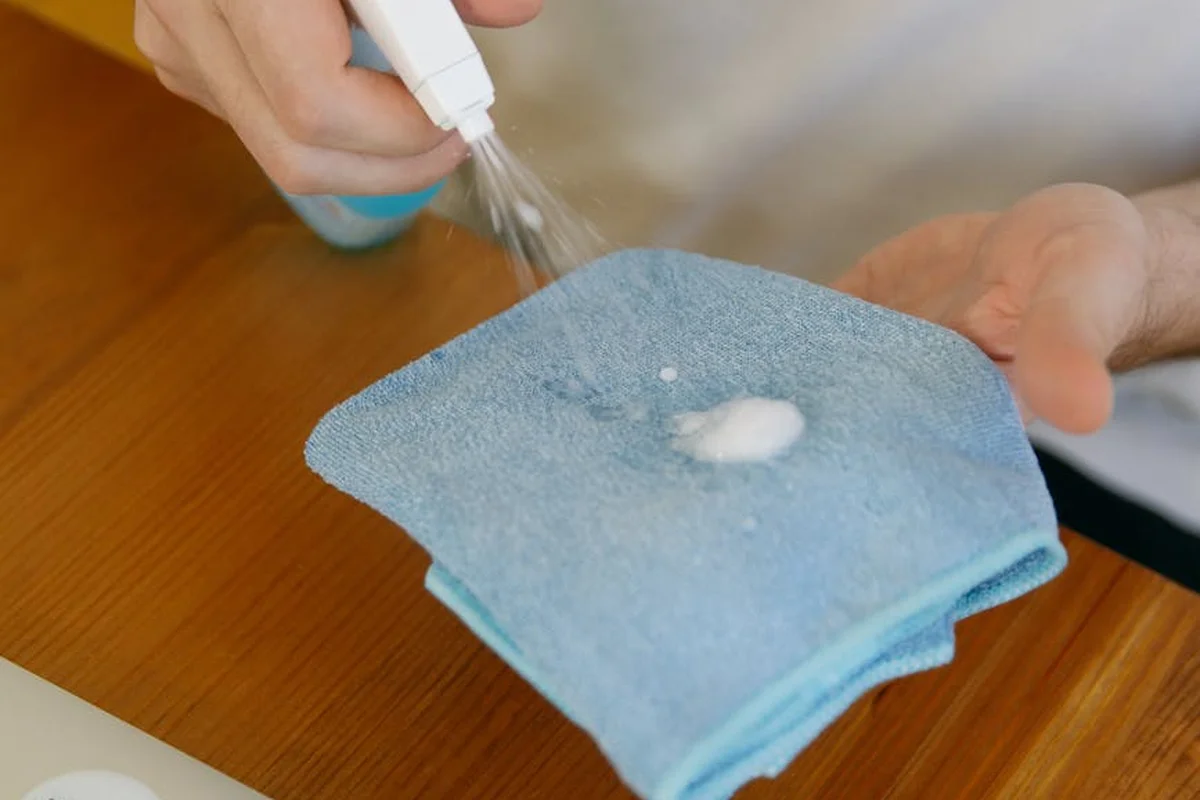
When using a dedicated wood cleaner or polish, control is everything. Never spray the product directly onto the wood. You’ll likely apply too much, which can lead to residue buildup or oily streaks, especially on treated wood surfaces.
Instead, spray a little onto your cloth first. Microfiber can absorb a surprising amount of liquid, which is good for preventing drips but bad for waste. With cotton, the product tends to sit on the surface, giving you more direct control for spreading.
After applying the product with your chosen cloth, always do a final buff with a separate, clean, dry cloth. For polishes, a soft cotton flannel gives a nice shine. For cleaners, a dry microfiber ensures no film is left behind. This final dry buff is the secret to a streak-free, protected surface.
Cloth Care and Longevity: Keeping Your Tools Clean
Your cleaning cloths are tools. Just like a chisel, a dirty cloth will do more harm than good. Proper cleaning keeps them effective and safe for your wood’s finish. Let’s break down how to wash each type correctly, especially when you’re planning to clean wood before and after staining.
Washing Microfiber: Avoiding Contamination
Microfiber is a synthetic material, typically polyester and polyamide, engineered at a microscopic level. Those tiny fibers create a static charge that grabs dust and holds onto liquid. Washing it wrong ruins that function.
Follow these rules to keep microfiber working.
- No fabric softener or dryer sheets. These products deposit a waxy coating that completely smothers the fibers’ static charge. Your cloth will just push dust around instead of trapping it.
- Wash in cool or warm water, never hot. High heat can melt the fine fibers, fusing them together.
- Use a mild, liquid detergent. Avoid powders or detergents with built-in softeners.
- Wash microfiber separately from cotton, towels, or other lint producers. Lint will cling to the microfiber’s static charge and transfer to your wood later.
- Air dry or use a no-heat tumble dry cycle. Heat from a dryer damages the fibers over time.
I keep a dedicated mesh laundry bag just for shop microfiber. It prevents contamination and makes the whole process simple.
Washing Cotton: Removing Debris and Stiffness
Cotton is more forgiving than microfiber, but it has its own pitfalls. The main issue is not the cloth breaking down, but what gets stuck in it.
Always inspect a cotton cloth for hardened spots of dried finish, wax, or polish before using it on a fine surface. Rubbing a stiff, crusty patch across your table will leave fine scratches, which can be difficult to repair, especially on delicate wood species.
For routine washing, use warm water and detergent. To remove stubborn polish or wax buildup, run the cloth through a second rinse cycle with half a cup of white vinegar. The acetic acid helps break down the oils and polymers. This is similar to the “detergent buildup” problem discussed in microfiber vs. cotton underwear threads online. Residue makes fabrics less absorbent and can transfer to your work.
You can machine dry cotton on low heat. Just check for stiffness afterward. A quick tumble with dryer balls helps keep it soft.
Troubleshooting: Common Problems and Fixes
Even with good cloths, things can go wrong. Here are the most common issues I see in the shop and how to solve them.
Why is My Finish Looking Hazy After Wiping?
A sudden haze means you’re depositing something onto the finish, not cleaning it. The culprit is almost always a contaminated cloth.
First, check your cloth. If you’ve been using it to dust, it’s now full of fine, abrasive particles. Wiping with it grinds that dust into the finish, creating micro-scratches that scatter light and look hazy. Second, ensure you’re using a cleaner compatible with your finish. Using a wax-based polish on a fresh oil finish can cause a cloudy film.
The fix is straightforward: use a fresh, clean cloth dedicated to final polishing. For the haze itself, try a light mist of a compatible detail spray or polish on a new cloth and buff gently. This often fills the micro-scratches and restores clarity.
Can I Use an Old T-Shirt or Flannel Sheet?
I see this question all the time, often in forums comparing microfiber and cotton sheets. The short answer is yes, but with big caveats.
A soft, worn-in 100% cotton t-shirt is one of the safest cotton options. The fibers are broken in and lint-free. It is far better than a stiff, new terry cloth towel, whose coarse loops can act like sandpaper on a delicate finish.
Flannel sheets, however, are a risk. They are designed to pill and release fibers to create loft and warmth. Those loose fibers will come off on your wood and get trapped in fresh finish. For woodworking, they are not ideal. Stick with tight-weave, used cotton or dedicated shop cloths.
What If I Hate the Feel of Microfiber?
Some people just dislike the squeaky, static grab of synthetic microfiber. That’s a valid tactile preference. You have alternatives.
First, look for ultra-soft microfiber blends marketed for car detailing or glasses cleaning. They have a different weave that feels less abrasive. Second, high-quality, lint-free cotton cheesecloth is a fantastic natural option. Buy it in bulk from a hardware store, not the grocery store. The grocery kind is too loose and sheds.
Remember, your technique is more critical than a perfect material. A clean cloth, used with light pressure, will almost always beat a “perfect” cloth used with heavy, grimy hands. Focus on keeping whatever cloth you choose scrupulously clean.
Frequently Asked Questions: Cloth Materials and Wood Finish Safety
Why are terry cotton towels and fluffy cotton bed sheets a poor choice for wood finishes?
Their looped or loose weaves are designed for loft and absorbency, not surface safety. These loops can easily trap and drag abrasive grit across a finish, acting like a network of fine sanding pads.
Is a high-quality cotton duvet cover or smooth cotton sheet a safer alternative to terry cloth?
While a tight, smooth weave is an improvement over terry loops, it still lacks the active particle-trapping mechanics of microfiber. It primarily pushes dust, requiring more passes that increase the risk of embedding grit.
I see debates online about microfiber vs. cotton for hair towels. Does that translate to wood care?
Yes, the core principle is similar: a plush microfiber towel is engineered to absorb and trap moisture (or dust) within its fibers, minimizing surface friction. A standard cotton towel relies on surface absorption and more abrasive contact.
Can the linting problem with new cotton sheets or some cotton underwear affect my wood project?
Absolutely. Lint is particulate debris. Any cloth that sheds fibers will deposit that lint onto your workpiece or, worse, into a wet finish you are applying, becoming a permanent defect in the cured film.
For final buffing of a wax or oil finish, is a soft cotton cloth acceptable?
Yes, for the final buffing step on a cured finish, a clean, lint-free cotton cloth like a worn t-shirt is excellent. Its smoother surface provides even friction to achieve a uniform shine without the static grab of microfiber.
Making Your Choice for a Lifetime Finish
The safest choice depends on the task. Use a high-quality, plush microfiber cloth for routine dry dusting to capture particles without abrasion. For applying or removing cleaners and solvents, a soft, undyed cotton cloth is your reliable tool. Always test your cloth and cleaner on an inconspicuous area first, as the finish itself is the most critical variable when cleaning or maintaining polyurethane finishes.
Extend the life of your cloths by washing them properly to preserve their function and reduce waste. Your growing understanding of material interactions is the most powerful tool you have for maintaining any fine wood surface. That same insight also applies to wood finishes, where stains interact with different substrates. Understanding those chemical interactions helps you choose and care for finishes on fine woods.
References & External Links
- Woodleys Microfiber Cloth – Wood Finishes Direct
- Cotton String Mops vs Microfiber String Mops for Wood Floors – Wood Wellness
- Stockinette Cloth and Cotton Cloth For Applying Wood Finishes
- tack cloth | LumberJocks Woodworking Forum
- Microfiber Vs. Terrycloth. | Woodworking Talk