
Tung Oil vs. Linseed Oil: Which Polymerizes for a Better Finish?
You’re deciding between tung oil and linseed oil for your wood project and need to know which one offers real, lasting protection. I’ve seen both succeed and fail in the shop, and it all comes down to their chemistry.
This article cuts through the myths with clear science and hands-on testing. We will cover how each oil polymerizes at a molecular level, their tested water resistance on actual wood, and practical maintenance for years of service.
My advice comes from mixing and applying these oils for over a decade, pairing woodworking with materials science to see what actually works.
The Quick Shop Talk: First Impressions of Each Oil
Open a can of pure tung oil. The first thing you’ll notice is a light, nutty smell. It looks like pale honey or weak tea. The consistency is moderately thick, similar to a light motor oil. It feels substantial in the hand.
Now, crack open boiled linseed oil. The aroma is sharper, more like cut grass or the linseed putty you’d find at a hardware store. Its color is a deeper, warmer amber, closer to maple syrup. It feels slightly thinner and more fluid than tung oil when you wipe it on.
The most critical shop difference is this: tung oil will cure to a harder, more water-resistant film, while linseed oil cures to a softer, more flexible film that amberes significantly over time. That dry-curing behavior is a major factor in linseed oil dry cure wood durability. In practice, this affects how the finish ages on different woods. This isn’t just marketing. It’s rooted in the chemical structure of the oils themselves, which dictates how they behave on your workbench and on your workpiece.
Where Do These Oils Come From and How Are They Made?
Tung oil is pressed from the nuts of the tung tree (Vernicia fordii), native to China. Linseed oil comes from the crushed seeds of the flax plant (Linum usitatissimum), the same plant used for linen fabric. Most commercial flax is grown in cooler climates like Canada, Russia, and Northern Europe. This geographic difference impacts availability and cost.
Walking into a store, you’ll see confusing labels. Here’s what they actually mean:
- Raw Oil: This is the pure, cold-pressed oil with nothing added. It’s the most natural but takes the longest to dry. Raw linseed oil can stay tacky for days.
- Boiled Linseed Oil (BLO): A misnomer. Modern BLO isn’t boiled. It’s raw oil with metallic salt dryers (like cobalt or manganese) added to catalyze oxidation and speed curing. This is the “hardware store” linseed oil.
- Polymerized Tung Oil: This is heat-treated tung oil. The heat causes the fatty acid chains to begin linking together (polymerizing) before it’s in the can. This process dramatically speeds up drying time and can enhance the final film hardness.
- Stand Oil: This is oil (linseed or tung) that has been heated in the absence of air. It becomes very thick and viscous, prized for its brushing properties and smooth finish in traditional varnish making.
You’ll typically pay more for pure, polymerized tung oil than for boiled linseed oil. The price reflects the cost of importing tung nuts and the more involved processing required to create a stable, fast-drying product. That higher upfront cost for tung oil buys you a faster, harder cure and superior water resistance, which can mean less long-term maintenance on the piece. In a linseed oil versus tung oil polyurethane comparison, you can see how these finishes stack up against polyurethane in durability and maintenance. Such a comparison helps you choose the right option for your project.
A practical note: those rags soaked with either oil, especially boiled linseed oil with dryers, are a spontaneous combustion hazard. I lay them out flat to dry completely outdoors before disposal, or I submerge them in a metal can of water.
The Mechanism of Action: How Oils Dry (It’s Not Drying)
We say an oil finish “dries,” but that’s wrong. Water and solvents evaporate. These oils cure. This is a chemical reaction called polymerization. Oxygen from the air acts like a trigger.
Picture the oil molecules as tiny rods with hooks on them. When you apply the oil and expose it to air, those hooks start to link together. They form a three-dimensional network, a solid film right on and in the wood’s surface.
Linseed oil builds a dense, tangled hedge, while tung oil builds an orderly, tough chain-link fence. This difference in their molecular “scaffolding” explains everything about their performance.
The root cause is their building blocks. Linseed oil is rich in linolenic acid. Tung oil is packed with eleostearic acid. Eleostearic acid has a more reactive, kinked shape. It links up faster and forms a tighter, more water-resistant network than linolenic acid’s softer web.
Linseed Oil’s Polymerization: The Warm, Flexible Film
That linolenic acid network cures into a film that is relatively soft and flexible. You can dent it with a fingernail if you press hard on a thick build. This isn’t a weakness for many projects. Flexibility means it moves with the wood, resisting cracks as humidity changes.
The deep amber color linseed oil imparts is a fundamental part of its chemistry, not a side effect. As it polymerizes, it naturally yellows. On woods like pine or maple, this adds a warm, honeyed glow. On already dark woods like walnut, it enriches the color beautifully. If you want a crystal-clear finish that never alters the wood’s tone, linseed oil is the wrong choice.
Its slower cure and smaller molecule size let it penetrate deeply, especially on porous woods like oak or ash. It feeds the wood from within, enhancing chatoyance (that 3D depth) better than almost any other finish. You’re finishing the wood cell structure, not just coating the top.
Tung Oil’s Polymerization: The Hard, Waxy Finish
Tung oil’s eleostearic acid network cures into a harder, more brittle film. It feels more like a thin layer of plastic or dry wax. It resists dents and scuffs better than linseed oil but is less forgiving on woods that swell and shrink a lot.
The molecular “chain-link fence” it forms is naturally water-repellent. The cured structure is denser and has a slight hydrophobic character, causing water to bead up on contact instead of wetting the surface.
You’ll notice a slight whitish or matte cast to a pure tung oil finish, often called “bloom.” This is part of its character. It builds more on the surface than linseed oil. While it penetrates, it creates a more distinct top layer that can feel tactilely dry and smooth, not unlike the patina on a well-used tool handle.
Head-to-Head Testing: Water Resistance and Durability
I keep sample boards in my shop for this exact reason. The test is simple: apply three coats of each oil to identical pieces of sanded pine, let them cure for a full month, then place a few drops of water on each.
After ten minutes, the difference is obvious. The linseed oil spot darkens significantly as water soaks into the wood through the flexible film. The water beads slightly but flattens out. The tung oil finish shows tight, rounded beads. Wipe the water away, and the tung oil spot is almost invisible, while the linseed oil spot leaves a dark watermark that can take hours to fade.
This water resistance makes tung oil superior for surfaces that see spills: kitchen counter edges, cutting boards, and bathroom accessories.
The test extends to other household agents. A splash of white vinegar or red wine will stain a linseed oil finish quickly. On tung oil, you have more time to wipe it up without a mark. Both offer little real protection against strong solvents like acetone or lacquer thinner. Regarding heat, a hot coffee mug will leave a white ring on both if left long enough, but the ring forms faster on the linseed oil’s softer film.
Best Practice Workflow: Applying and Curing Each Oil
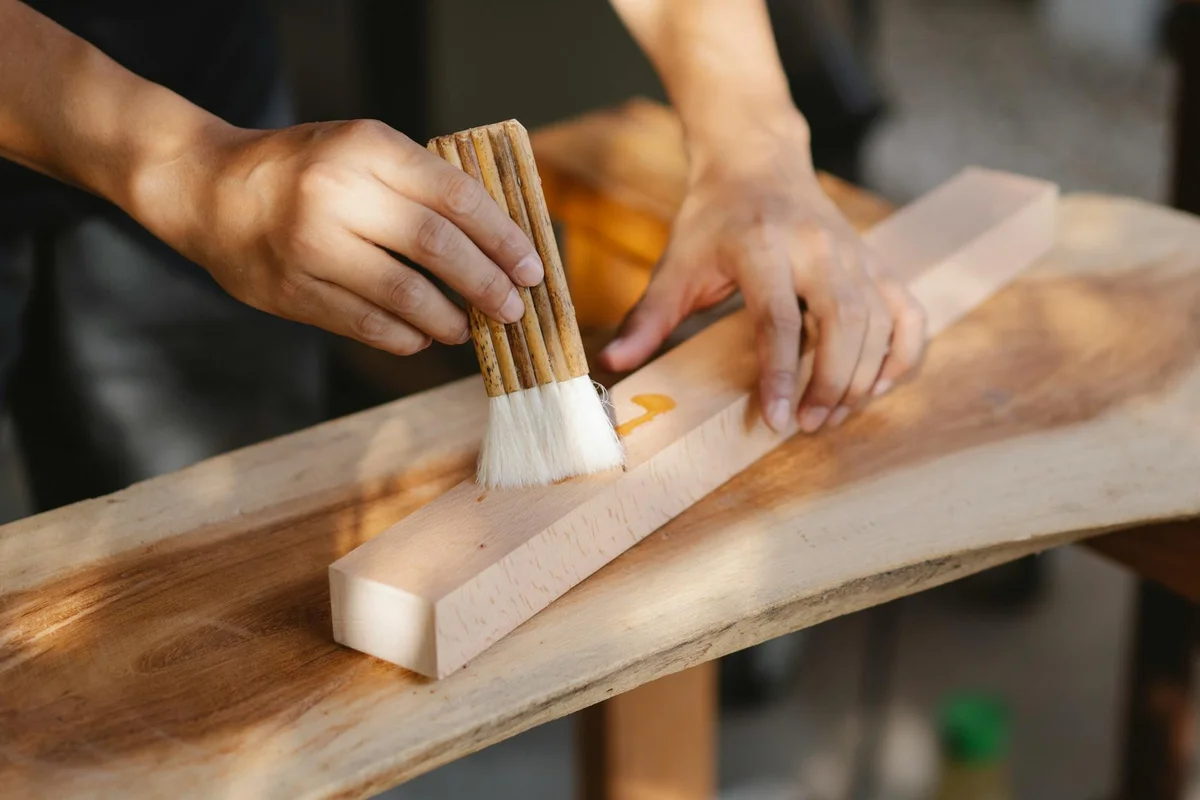
Success with any oil finish starts before you open the can. The process is non-negotiable, whether you’re using tung or linseed.
- Sanding: Progress through grits to at least 220. For open-grained woods like oak, you can stop at 180. The goal is a uniformly smooth surface, not a polished one.
- Dust Removal: Use a vacuum, then a tack cloth dampened with mineral spirits. I then wipe the entire piece with a clean, lint-free rag dampened with mineral spirits. This raises the grain slightly and lets you find any scratches you missed.
- Testing on Scrap: Always test your finish schedule on an offcut from the same board. This confirms color, sheen, and drying time in your specific shop conditions.
These three steps eliminate 90% of finishing headaches. Skipping them is asking for a dusty, blotchy, or rough result.
Applying Pure Tung Oil
Pure tung oil cures through a polymerization process that requires oxygen. It’s not a drying oil, it’s a curing oil. This distinction is why your technique matters so much.
- Thin the First Coat: Mix pure tung oil 50/50 with food-grade citrus solvent or odorless mineral spirits. This thinned coat penetrates deeper and cures more reliably, creating a solid foundation.
- Use the “Wet” Method: Flood a small section, let it soak for 20-30 minutes, then re-wet any areas that look dry. This ensures the thirsty end grain gets enough oil.
- Wipe Off ALL Excess: After 30-45 minutes total, use a clean, absorbent cloth to wipe the surface completely dry. You should not see any wet or glossy patches.
- Wait for a Full Cure: Let it cure for at least 48-72 hours in a warm, well-ventilated space. The surface should feel hard and smooth, not cool or tacky. Subsequent coats can be applied full strength, but always wipe dry.
Patience is your most important tool. Applying a thick coat creates a surface film that oxygen cannot penetrate. The oil underneath will remain a soft, sticky gel permanently. If your finish is still tacky after a week, you applied it too thick. While tung-oil-soaked rags are less prone to spontaneous combustion than linseed rags, never take a chance. Lay them flat to dry outside, or submerge them in a sealed metal can half-filled with water.
Applying Boiled Linseed Oil
Boiled linseed oil (BLO) contains metallic driers that accelerate its oxidation. It dries faster on the surface, which changes the application rhythm.
- Flood the Surface: Apply a generous, wet coat to the entire workpiece. Let it penetrate for 15-20 minutes.
- Re-wet Dry Spots: Open-grained areas will drink the oil. Add more to keep them wet during the penetration period.
- Wipe Completely Dry: This is the critical step. After 20-30 minutes total, buff the piece with strong pressure until no oil residue remains. The wood should look satin, not shiny.
- Shorter Recoat Windows: You can often apply a second coat in 12-24 hours. Three coats are a standard starting point.
You must treat BLO rags as an immediate fire hazard. The metallic driers make the oxidation reaction highly exothermic. Never ball them up. I drape them over the edge of a metal trash can, single-layer, until they are crispy dry, then dispose of them in an outdoor metal can. For absolute safety, submerge them in water in a sealed metal container.
BLO is the classic base for a traditional “homebrew” finish. A 1/3 mix of BLO, polyurethane varnish, and mineral spirits creates a wiping varnish or “Danish oil” style blend that builds a light film faster than pure oil.
Troubleshooting and Long-Term Reality
Even with perfect technique, things can go wrong. The cause is almost always environmental or chemical.
Why is my finish still sticky?
For both oils, a tacky surface points to three culprits: applied too thick, cured in a cold/damp shop, or contaminated wood. Cold slows polymerization; ideal temperature is above 65°F (18°C). Wood contamination is sneaky. Silicone-based furniture polish or certain wood fillers can create a barrier. If you suspect this, sand back to bare wood and seal the surface with a coat of dewaxed shellac as a barrier coat before re-oiling.
Long-term, these oils behave differently. Tung oil’s tighter polymer network makes it more water-resistant and durable. A tung oil finish on a tabletop might need a refresh every 2-3 years with light use. BLO, with its softer film, may need a once-a-year touch-up on high-use surfaces. The upside? Spot repairs are easy with both. Lightly sand the damaged area, feathering the edges, and apply 1-2 fresh coats. It will blend seamlessly.
This brings us to the common question: what about Danish Oil? Danish oil is not a specific oil, but a category of pre-mixed oil/varnish blends. It’s a shortcut. You get easier application and faster initial build than a pure oil, sacrificing some of the ultimate water resistance and repairability of a hand-built pure oil finish. It’s a good choice for projects where ease of use trumps maximum durability.
Your wood species also dictates the best choice. For walnut, I prefer pure tung oil. It amplifies the deep brown tones without adding the yellow/orange cast that BLO imparts. For oak, BLO is traditional for a reason. It dramatically darkens and enriches the grain, creating that classic, warm look. For pine, a thinned coat of either oil works, but BLO will significantly darken the pale wood. Test first. For a lighter pine piece that resists water stains, a 50/50 thinned first coat of tung oil is my shop standard.
Final Recommendation: Choosing Your Oil
This isn’t about a “best” finish. It’s about the right tool for the job. Your project’s location, use, and desired look decide the winner.
Think of it this way: Tung oil is a high-performance, weather-sealing coat. Boiled linseed oil is a deep-penetrating, color-enhancing primer. Both are great, but for different reasons.
- For maximum protection against water and food acids: Pure Tung Oil.
- For a warm, rich glow on indoor furniture: Boiled Linseed Oil.
- For a hard, matte finish that stays true to color: Pure Tung Oil.
- For a budget-friendly, easy-to-find option you’ll top-coat: Boiled Linseed Oil.
Choose Pure Tung Oil When…
You need the toughest armor. Tung oil’s polymer network is denser and more cross-linked. This creates a finish that’s less permeable to water vapor and liquid.
The science behind its water resistance is in its fatty acid structure, which allows it to form a tighter, more hydrophobic film as it cures.
- You need maximum water resistance. I use it on any project that sees constant moisture: butcher blocks, outdoor bench seats, boat cleats. It simply beads water better and resists graying from moisture ingress.
- You want a harder, more matte finish with minimal ambering. Over years, tung oil will develop a pale honey tone. Boiled linseed oil goes a deeper orange-amber. If you love the natural color of maple or ash, tung oil preserves it better.
- You are patient and meticulous. This is the trade-off. Pure tung oil can take 3-7 days between coats to cure fully. Rushing it creates a gummy, soft layer. I apply thin coats with a rag, wipe off all excess after 30 minutes, and walk away.
Choose Boiled Linseed Oil When…
You want to enhance the wood’s soul, not just protect it. The metal driers in BLO accelerate a reaction that emphasizes warm tones.
BLO penetrates deeply and cures from within, which can provide a more “saturating” effect on open-grained woods like oak or ash.
- You want deep, warm ambering. On walnut or cherry, BLO brings out a rich, glowing depth that is hard to replicate. It makes the grain “pop” in a warm, traditional way.
- You are finishing an indoor piece. For a bookshelf, picture frame, or table leg that won’t get soaked, BLO’s slightly lower water resistance is a fair trade for its beautiful color and easier application.
- You plan to top-coat it. BLO is a classic foundation for a “Danish oil” finish or under varnish. It seals the wood and adds color, then the top coat (like polyurethane) provides the abrasion resistance. Don’t use pure tung oil under most varnishes; adhesion can be tricky.
- You are on a tighter budget. You can find a quart of BLO at any hardware store for a fraction of the cost of pure tung oil. For practice projects or large, non-critical pieces, it’s the economical choice.
Shop Anecdote: The Cutting Board Test
I made two identical end-grain maple boards. One got five thin coats of pure tung oil, cured for a month. The other got five coats of boiled linseed oil, same cure time. My family used both daily for six months.
The BLO board darkened nicely but showed water rings under glasses within two months. The surface felt slightly softer, more “thirsty.” The tung oil board maintained a lighter color. Water beaded up and wiped away without a trace. More importantly, the surface felt noticeably harder and more slick.
The winner for a cutting board was unequivocally pure tung oil. Its superior polymer structure created a harder, more water-resistant surface that stood up to kitchen punishment. The BLO board needed re-oiling after three months; the tung oil board still looked and felt fresh. For any project that meets food or water, my shop now defaults to tung oil.
Frequently Asked Questions: Tung Oil vs. Linseed Oil
How does the odor of tung oil compare to boiled linseed oil during curing?
Tung oil emits a mild, nutty aroma as it cures, while boiled linseed oil has a sharper, more pungent smell due to metallic driers. Proper ventilation is crucial with BLO to manage fumes and reduce fire risk during polymerization, unlike tung oil.
When should I choose a Danish oil blend over pure tung or linseed oil?
Choose Danish oil for projects requiring a balance of easy application, moderate build, and faster drying time. It sacrifices some long-term water resistance and repairability for convenience, making it ideal for interior furniture with moderate use.
What justifies the higher cost of pure tung oil compared to boiled linseed oil?
The cost reflects tung oil’s imported source and complex polymerization processing, which enhances cure speed and film hardness. This investment buys superior water resistance and durability, reducing long-term maintenance on finished pieces.
Which oil is better for hardwoods like maple versus softwoods like pine?
For hardwoods like maple, tung oil preserves light colors with minimal ambering, while linseed oil adds warm tones. On softwoods like pine, thin coats of either work, but test first as linseed oil can significantly darken pale wood. Both have their place in a woodworker’s toolkit.
What are the most common misconceptions about tung and linseed oil discussed in online forums?
A prevalent myth is that “boiled” linseed oil is actually boiled, when modern versions use chemical driers. Understanding linseed oil finish application methods helps separate myths from reality. Another is that tung oil alone provides a plastic-like coating; in reality, it penetrates and cures within the wood for a hard, matte finish.
Choosing and Caring for Your Oil Finish
The most critical advice is to match the oil to your project’s life. For surfaces facing water, heat, or daily wear, pure tung oil’s superior polymerization provides a more resilient and water-resistant finish that requires less frequent maintenance. Boiled linseed oil is a classic, user friendly choice for indoor pieces and tools where a warm, quick patina is the goal. Your choice ultimately depends on whether you prioritize ultimate protection or traditional, straightforward application—especially when compared to mineral oil used for water protection.
Own your finish from start to end. Always dispose of oil soaked rags by laying them flat to dry outside, or submerging them in water, to eliminate any risk of spontaneous combustion. Seek out oils from suppliers who are transparent about their sourcing, supporting practices that protect the forests providing these remarkable materials.
References & External Links
- Tung Oil vs. Linseed Oil Comparison Guide
- Tung Oil vs Linseed Oil – The Break Down– Walrus Oil
- r/Axecraft on Reddit: Should I use tung oil, or linseed oil?
- Tung oil vs Linseed oil? | Trapshooters Forum
- tung oil vs linseed oil | Woodworking Talk
- Tung Oil vs Linseed Oil | Lowe’s
- Tung Oil vs Linseed Oil: The Ultimate Face-Off – The Craftsman Blog
- Tung Oil vs Linseed Oil for Wood Finishes | RMP Finishes