
Oil or Water-Based Finish: What’s the Real Difference for Woodworkers?
Choosing a finish often comes down to oil or water-based, but the right pick hinges on chemistry, not just convenience. I see this as a materials problem you solve in the shop, not just a label on a can.
Here, I’ll translate the science into practical choices for your next project. We will cover solvent chemistry and how it dictates drying, the formation of the final film layer, durability results from my abrasion tests, and clear application scenarios for each type.
My recommendations come from mixing, applying, and stress-testing these finishes on hundreds of board feet in my own shop.
What’s Actually in the Can? The Chemistry Breakdown
Think of any wood finish like a can of soup. The broth is the solvent, it carries everything. The solid ingredients are the resins, which stay behind to form the protective film. The spices are additives for flow, drying, or UV protection.
Oil-Based Finishes: Tradition and Evolution
Traditional “oil” finishes like pure tung or linseed oil are mostly just the resin. They soak in and harden. Modern oil-based finishes in a can are different. They use synthetic resins, like alkyd or oil-based polyurethane, dissolved in a petroleum solvent like mineral spirits. The solvent thins the resin for application, then evaporates, leaving the resin to harden. This is why they smell like a paint store. A linseed tung oil polyurethane comparison can reveal how traditional oils stack up against modern polyurethanes in durability, appearance, and maintenance.
Water-Based Finishes: A Modern Suspension
Water-based finishes don’t dissolve their resins. Instead, tiny particles of acrylic or water-based polyurethane resin float suspended in water. To make this work, manufacturers add co-solvents (usually glycol ethers). These co-solvents act like a temporary glue, keeping the formula stable in the can. When you apply it, the water and co-solvents evaporate, and the resin particles pack together to form a film.
Hybrid finishes, often labeled “waterborne,” are a bridge. They use modified oil or alkyd resins engineered to be dispersed in water, offering a middle-ground feel.
The Solvent Story: Why Carrier Liquids Matter
The carrier liquid dictates your shop experience. Mineral spirits (for oil-based) evaporate slowly. This gives you a longer “wet edge” for brushing but means longer drying times and a potent smell that lingers for days. Water evaporates very quickly. This leads to fast dry times and a much fainter odor.
The strong smell of oil-based finishes comes from VOCs, or Volatile Organic Compounds. VOCs are simply the volatile solvents that evaporate into the air as the finish dries; they’re what you smell. Water-based finishes have far fewer of them, which is better for indoor air quality.
Mechanism of Action: How They Become a Finish
An oil-based finish cures through a chemical reaction. When the resin (like linseed oil or alkyd) is exposed to oxygen in the air, its molecules begin to link together into long, tangled chains. This process is called oxidation and polymerization. Imagine a box of small magnets slowly snapping together into one big, rigid mat.
A water-based finish cures primarily through a physical process. As the water and co-solvents evaporate, the millions of hard resin particles are pushed closer together. The remaining co-solvents then soften them slightly, allowing the particles to fuse, or coalesce, into a continuous plastic film. It’s more like melting a pile of plastic beads into a sheet.
This fundamental difference-chemical reaction versus physical fusion-explains nearly every practical difference you’ll see in the shop.
How Finishes Dry: From Liquid to Protective Film
“Dry” and “cured” are not the same. A finish can be dry to the touch but still soft underneath, like a cake with a firm crust but a gooey center. “Dry” means the solvents have mostly evaporated. “Cured” means the film has reached its final hardened state.
In typical shop conditions (70°F, 50% humidity):
- Oil-Based Polyurethane: Dry to touch in 4-6 hours. Recoat in 8-12 hours. Fully cure in 30 days.
- Water-Based Polyurethane: Dry to touch in 1-2 hours. Recoat in 2-4 hours. Fully cure in 7-14 days.
Humidity helps water-based finishes dry faster. For oil-based finishes, high humidity can cause “blushing,” a whitish haze, as water condenses in the slow-drying film. This can be problematic when finishing wood in high humidity.
The thumbnail test is my go-to for checking cure: press your thumbnail firmly into an inconspicuous spot. If it leaves a permanent dent, it’s not fully cured. If no mark remains, you’re good to go.
Why Curing Time Changes Everything
The slow, chemical cure of an oil finish lets it penetrate deeper into the wood surface. This creates a richer, more three-dimensional look and that characteristic warm amber tone. The trade-off is a long wait between coats and more time for dust to settle on the sticky surface. Applying oil finishes to wood requires patience and care to achieve the best results.
The fast, physical cure of a water-based finish is a huge practical advantage. You can apply multiple coats in a single day. Dust has less time to stick, resulting in a smoother final coat with fewer “nibs” to sand out. The film sits more on top of the wood, which can look slightly more plastic-like.
Recoating is critical. For oil-based, you must sand between coats once it’s dry to the touch to ensure the next layer mechanically grips. For water-based, you have a “recoat window” (often 2 hours). If you miss it and the coat fully cures, you must sand for adhesion.
Side-by-Side in the Shop: Application and Performance
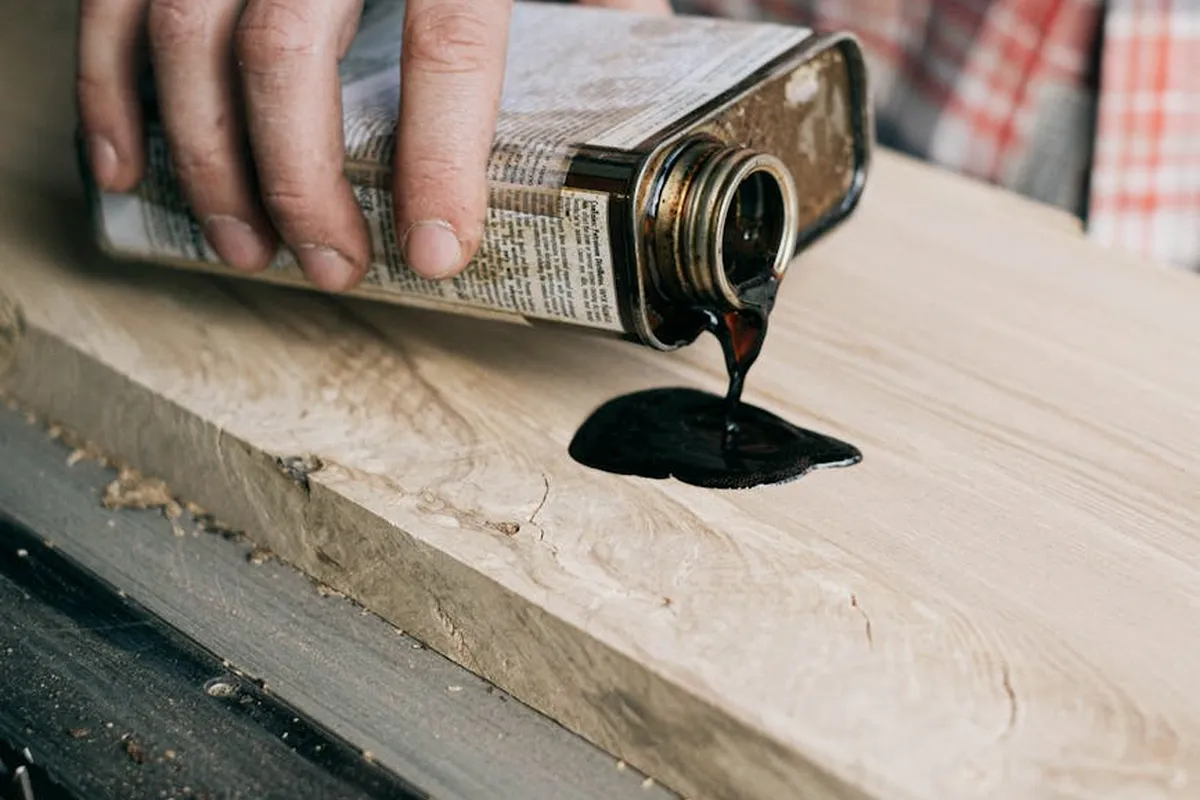
How a finish behaves in the can dictates how it behaves on your brush. This is where the chemical differences become physical.
For oil-based finishes, think slow and forgiving. The solvents evaporate slowly, giving you a long “wet edge” for brushing or wiping. This makes them excellent for hand application. You can brush a large panel without worrying about it drying mid-stroke. Spraying them requires careful thinning and a focus on controlling runs. The biggest pitfall with oils is over-application, leading to runs, sags, and a sticky surface that never fully cures. A thin, even coat is always better.
Water-based finishes are fast and finicky. They dry by water evaporation and then coalescence, which happens quickly. You must work fast and maintain a wet edge. Brushing can introduce foam and cause “tip drag,” where the brush pulls at a partially set film. I add a few drops of a commercial flow additive to my water-based poly to combat this. They spray beautifully straight from the can. For spraying and fast shop turnover, water-based is the clear winner, but it demands a quick, confident technique.
Once cured, the films differ. Oil-based films cure softer but more flexible. They dent more easily but resist cracking. Water-based films cure harder and more brittle, offering better scratch resistance but less inherent flexibility. Heat tolerance is similar for both once fully cured.
For exterior projects like a deck, flexibility and UV resistance are critical. Traditional oil-based spar varnishes use UV inhibitors and remain flexible to handle wood movement. Modern water-based exterior polys have caught up, offering similar UV protection. The choice outdoors often comes down to application ease (water-based) versus the traditional, warm look (oil-based).
Stains are a separate layer. Oil-based stains penetrate deeply and take longer to dry, allowing for easier manipulation. Water-based stains dry fast and raise the grain, requiring a light sanding after application. A gel stain is a hybrid, mostly oil-based but thicker to minimize blotch on porous woods like pine. You can use any stain under either topcoat; just ensure the stain is completely dry before applying a water-based finish to avoid reactivating it. Application methods—brush, wipe, or spray—shape the final look and color depth. Understanding these wood stain finishing application methods helps you choose the right approach for your project.
The Look and Feel: Ambering vs. Clarity
The most visual difference is color. Oil-based finishes contain modifying oils and resins that start with a warm, yellow tone. They also continue to amber slightly over decades as they age. On a wood like cherry, which naturally darkens with light, this ambering is a beautiful bonus, accelerating the rich, warm patina.
Water-based finishes are like clear plastic. They start water-white and stay that way. If your goal is to preserve the natural, bright color of maple, ash, or a painted surface, a water-based topcoat is the only way to go. It will not add any yellow tone.
Gloss levels work the same for both types. A “satin” sheen is achieved by adding microscopic flattening agents (like silica) to the finish. You can knock down the gloss of any finish by lightly abrading the final coat with fine steel wool or a synthetic abrasive pad.
Durability in the Real World: Kitchen Tables to Decks
In my shop tests, a fully cured film from a high-quality product in either category performs well. The differences are in the details of chemical resistance and repair.
Oil-based finishes generally have better initial resistance to solvents like alcohol and certain household chemicals because of their chemical structure. Water-based finishes excel at resisting water rings and clouding. For most kitchen table spills, both are adequate if wiped up promptly.
| Exposure | Oil-Based Tendency | Water-Based Tendency |
|---|---|---|
| Water (rings) | Moderate Resistance | High Resistance |
| Alcohol | High Resistance | Moderate Resistance |
| Household Acids (vinegar, citrus) | Similar, Good Resistance | Similar, Good Resistance |
| Heat (hot mug) | May temporarily imprint | May temporarily imprint |
Repairability is a major split. The slow cure and solvent nature of oil-based finishes allow for near-invisible spot repairs. You can sand a small area, apply a new coat, and the solvents will “burn in” and melt the layers together. Water-based finishes cure in discrete layers; spot repairs often show as a witness line, usually requiring a full sand and recoat of the entire surface.
Remember that stain type affects the final look, not the durability of the topcoat. A gel stain provides a more consistent color on blotchy woods, creating a uniform base for your protective oil or water-based polyurethane, especially when applied correctly.
Safety First: Toxicity, VOCs, and Your Health
This is not about a bad smell. It is about protecting your long-term health. The solvents in oil-based finishes are volatile organic compounds (VOCs) you do not want in your lungs or bloodstream.
Toxicity & PPE: What You Must Wear
Your safety gear is non-negotiable. For oil-based finishes, a dust mask is useless. You need a respirator with organic vapor cartridges (often pink) paired with a pre-filter for particulates. For water-based finishes, the liquid itself is low-odor and low-toxicity, but sanding the cured finish creates harmful dust. A simple NIOSH-rated N95 dust mask is essential for sanding.
Many oil-based finishes contain isocyanates or other compounds that are sensitizers. Repeated exposure to sensitizers, even without immediate symptoms, can trigger severe allergic reactions later, making you unable to be near the finish without a dangerous response.
Food safety depends entirely on full cure, which takes longer than dry time. An oil-based poly may feel dry in 24 hours but needs 30 days to fully cure and off-gas. Once fully cured, both types are considered inert and safe for incidental food contact (like a table). For direct food contact like a cutting board or toy, use a dedicated food-grade oil like mineral oil or a pure, hardened oil like tung oil.
Ventilation means moving air, not just having an open window. Use a fan to create cross-ventilation, pulling contaminated air out of the shop. For a spray booth, it must actively exhaust to the outside.
Environmental and Cleanup Impact
VOC content is the key environmental metric. Oil-based finishes can contain 400-600 grams per liter of VOCs. These compounds contribute to ground-level ozone and air pollution. Water-based finishes are typically below 350 g/L, with many under 50 g/L. This lower VOC profile can reduce exposure and concerns about VOC toxicity in indoor use. It makes water-based finishes a commonly considered option for safer, lower-toxicity applications. Some regions have strict VOC limits that ban high-VOC finishes.
Cleanup is a simple tell: water-based cleans with soap and water. Oil-based requires mineral spirits. Oily rags are a fire hazard; they must be laid flat to dry individually or stored submerged in water in a metal container before disposal. Never ball them up and throw them in a trash can.
Dispose of leftover finish as hazardous waste at a designated facility. Choosing a low-VOC, water-based finish is a responsible choice for indoor projects where its performance specs meet your needs. It reduces your health risk and environmental impact. Understanding the environmental impact and VOCs of wood finishes helps you compare options and make informed choices.
Making the Choice: Matching Finish to Project
Forget the product label for a minute. The right finish starts with three questions about your project. I think of it as a flowchart in my head.
First, ask about use. Will this piece live outdoors? Is it a kitchen table or a display shelf? A high-wear surface needs a tough, buildable film, which pushes you toward water-based polyurethane or a hard-wax oil. A decorative wall piece can use a simple oil for a pure, tactile feel.
Second, decide on the look. Do you want to amplify the wood’s color and grain with warm amber tones? An oil-based finish is the only answer. Do you need the wood color to stay exactly as it is, like with maple or ash? A water-based finish is your clear choice. For painted projects, the same logic applies: an oil-based paint yellows and cures to a harder film, while a water-based paint (latex or acrylic) dries clear and remains more flexible.
Third, consider your shop. Is ventilation poor? Do you need the piece usable in 6 hours? Water-based wins. Can you wait days for a full cure and do you have a well-ventilated space? Oil-based opens up more options. A hybrid finish, like a water-based poly with alkyd resins, can be a great middle ground, offering some ambering and a bit more working time than pure water-based.
My quick recommendations:
- For a traditional heirloom piece in walnut or cherry: Use a pure tung oil or an oil-based varnish. The patience is worth it.
- For a child’s toy or nursery furniture: A water-based, non-toxic polyurethane is the safe, fast, and durable pick.
- For a kitchen table that sees daily abuse: Consider a multi-coat water-based polyurethane for its scratch resistance and clarity, or a catalyzed hard-wax oil for easy spot repairs.
This is different from choosing, say, oil-based vs water-based block printing ink. With ink, you’re choosing based on paper absorption and clean-up, not durability. With wood, you’re protecting an organic, moving material. The single non-negotiable rule is to test your entire finish process on scrap from the same board first. Every project, every batch of wood, is different.
Troubleshooting Common Problems
Even with the right choice, finishes can act up. Here’s how to fix common issues based on their chemistry.
Blushing (a white, cloudy haze in a water-based finish): This is moisture trapped under the film. It happens when you apply in high humidity or on a cold surface. The fix is to let it dry completely, then lightly sand the blushed area. Apply the next coat in warmer, drier conditions. Adding a drop of water-based conditioner (flow aid) can sometimes prevent it.
Fish Eyes (small, crater-like holes): This is almost always silicone contamination from furniture polish or spray lubricants. Oil-based finishes are especially prone. You must remove all finish, clean the wood with mineral spirits or a dedicated silicone remover, and start over. Prevention is key: keep your shop clean of aerosols.
Brush Marks or Orange Peel: This is often an application or environmental issue. With water-based finishes, which dry very fast, you can’t over-brush. Use a synthetic brush, lay it on, and don’t go back. If it’s too cold, the finish can’t level out. Apply above 55°F (13°C).
A finish that stays tacky for days usually points to environment or film thickness. High humidity slows solvent evaporation for both types. Cold temperatures drastically slow the chemical curing of oils. Applying a coat too thick, especially with oil, can create a skin that traps uncured finish underneath. Ensure proper temperature (70-77°F or 21-25°C is ideal) and always apply thin coats.
Beyond the Basics: When to Mix and Layer
Sometimes, you want the best of both worlds. A common tactic is using an oil-based stain for deep, penetrating color, then protecting it with a clear water-based topcoat for durability and a non-yellowing shield. This works, but with a critical step: you must completely seal the oil stain first.
Oil needs to fully cure-not just dry-before a water-based finish can go on top. That can take 72 hours. Then, apply a barrier coat. I use a 1 lb. cut of dewaxed shellac. It sticks to everything and seals the oils in. Test this sandwich (oil stain > shellac > water-based poly) on scrap to ensure adhesion.
The major warning is against casual mixing. Never pour different finish types into one can. Don’t apply a water-based product directly over an uncured or waxed oil. They dry through different chemical mechanisms and will likely wrinkle, peel, or never fully harden. If you want to experiment, always keep the layers separate and use a proven compatible sealer like shellac in between.
Frequently Asked Questions: Oil vs. Water Finishes in Practice
For exterior projects like a deck, is oil-based or water-based polyurethane more durable?
Both can be formulated for exterior use with UV inhibitors. The choice hinges on application ease (water-based dries fast, less dust) versus the deeper penetration and warm ambering provided by oil-based finishes, which better handle wood movement over time.
How do oil-based and water-based paints differ when used on wood?
Oil-based paints cure by oxidation, forming a harder, more amber-tinted film that resists wear but yellows over time. Water-based (latex/acrylic) paints dry by coalescence, remaining color-true and flexible, which better accommodates seasonal wood movement.
What is the practical advantage of a gel stain over a traditional liquid stain?
Gel stains are primarily oil-based but thickened to sit more on the wood’s surface. This minimizes penetration into porous grains, drastically reducing blotch on woods like pine or maple compared to thin, penetrating liquid stains.
As a woodblock printer, should I choose oil-based or water-based ink?
Oil-based inks offer vibrant, slow-drying layers ideal for detailed paper absorption and archival work, but require solvent cleanup. Water-based inks clean up easily and dry quickly, but can warp thin paper and offer less color intensity on porous wood blocks.
When should I consider a hybrid or “waterborne” finish?
Consider a hybrid when you need a middle-ground: faster dry times and lower odor than oil-based, but with better flow and warmth than pure water-based. They use modified oils dispersed in water, blending application and performance properties.
Choosing Wisely: Finishes in the Real World
Your decision should always start with the wood’s final duty, not habit or hype. Oil-based finishes chemically bond to create a deep, repairable layer ideal for furniture facing daily use, while water-based ones form a fast, protective film that keeps colors true. I keep both in my shop, using oil for tables and tools that benefit from its gradual build, and water for projects like kid’s toys where quick turnaround and low odor are non-negotiable. Test your chosen finish on off-cuts first; this simple step reveals how it interacts with your specific wood, saving you from surprises on the final piece, especially when choosing between oil and water-based finishes.
Select products from manufacturers who prioritize sustainable forestry and transparent, low-VOC chemistry for a safer shop and a healthier ecosystem. Your journey with wood science never ends, so keep questioning and adapting your methods as materials and knowledge advance, especially when it comes to safe solvents and VOCs in wood finishing.
Deep Dive: Further Reading
- Water Based Finish vs Oil Based Finish: Myths and Comparisons – Plus Hardwood Flooring
- Water-Based vs. Oil-Based Polyurethane Floor Finish
- Water-Based vs. Oil-Based Polyurethane: Which Is Better?
- Oil base vs. Water base poly. Which do the pros prefer and why? : r/HardWoodFloors
- Which is a Better Hardwood Floor Finish: Oil-Based or Water-Based?
- Oil vs. Water-based Polyurethane: Bona
- Oil Based Polyurethane vs. Water Based Polyurethane
David is a veteran woodworker. He is now retired and stays in his cabin in Wisconsin which he built himself. David has 25+ years experience working in carpentry and wood shops. He has designed and built many small and large wood projects and knows the science behind wood selection like the back of his hand. He is an expert guide on any questions regarding wood material selection, wood restoration, wood working basics and other types of wood. While his expertise is in woodworking, his knowledge and first hand experience is far from 'woody'.