
Which Woods Are Safest for Children’s Furniture?
Choosing wood for a child’s bed or toy chest goes beyond strength and looks. You need a material that is durable against hard use and, more importantly, proven safe for constant contact.
This guide cuts through the noise with clear, tested advice. We will cover specific, low-risk wood species, the three material safety principles I use in my shop, and how to pair them with truly non-toxic finishes.
My recommendations come from hands-on materials testing and years of building furniture that meets strict safety standards.
What Does “Non-Toxic” Really Mean for Wood and Kids?
Safety here has two layers. The first is the wood’s own chemistry. The second is whatever you put on top of it. A “safe” wood is one that passes both tests.
Some woods are actively toxic. Pacific yew, for example, contains taxine alkaloids. These are the same compounds found in its poisonous needles and seeds. Dust or slivers from the wood can introduce this toxin.
More common are woods that act as irritants or sensitizers. Exotic species like cocobolo contain natural oils that can cause severe skin rashes and respiratory issues. This is an allergic reaction, not poisoning, but it’s still unsafe for a child’s constant contact.
For a child’s room, I treat “food-safe” as the only acceptable standard. This covers accidental mouthing, skin contact, and general peace of mind. If a finish is certified for a cutting board or a salad bowl, it’s inert and safe once fully cured.
Physical safety is just as critical. A wood prone to excessive movement or splintering is a hazard. You need a stable, durable material that will hold joints tight and surfaces smooth through years of use. The right wood choice solves for chemistry and structure at the same time.
Choosing Your Wood: A Shop-Tested Guide to Safe Species
Don’t just pick a wood from a list. Choose it for how it balances safety, cost, and your time in the shop. Let’s group them by their best role in your project.
The everyday hardwoods are your workhorses. Maple, birch, and beech are dense, tight-grained, and have no known toxins. They resist dents, take a silky-smooth finish, and are common at most lumberyards. They are harder to work with hand tools, but they build furniture that lasts generations.
For speed and ease, look to softwoods. Here, white pine is the champion. Yes, it’s soft and will dent. But for a bookshelf, a bed frame, or a toy box, its perfect balance of workability, stability, and zero toxicity is hard to beat. It planes like butter with hand tools and sands effortlessly. It’s the ideal wood for learning and for projects that don’t need to withstand hammering.
Your premium choices add color and character. Domestic black cherry is perfectly safe and mellows to a beautiful russet red. Black walnut is also safe for furniture, despite misconceptions. The juglone in the tree’s roots and hulls is not a significant concern in the dry, cured wood. Just sand it in a well-ventilated space, as the dust can be irritating to some.
Avoid confusion. “Brazilian cherry” (Jatoba) is a tropical hardwood and a common irritant. Stick with domestic black cherry. Likewise, avoid any “pressure-treated” or engineered woods like plywood or MDF unless you can 100% verify the adhesives used are formaldehyde-free and safe.
Technical Spec Sheet: Safe Woods for the Shop
| Species | Janka Hardness (lbf) | Specific Gravity | Toxicity Rating | Typical Radial Movement (%) |
|---|---|---|---|---|
| Maple (Hard) | 1450 | 0.63 | None | 4.8 |
| Birch (Yellow) | 1260 | 0.62 | None | 7.2 |
| Beech | 1300 | 0.64 | None | 5.5 |
| White Pine | 420 | 0.35 | None | 2.2 |
| Poplar | 540 | 0.42 | None | 4.6 |
| Black Cherry | 950 | 0.50 | None | 3.7 |
| Black Walnut | 1010 | 0.55 | Low (dust) | 5.5 |
Read the table like this: higher Janka means more dent resistance. Higher Specific Gravity means a heavier, denser wood. Lower Radial Movement means more dimensional stability with humidity changes.
Woods to Sideline for This Project
Set these aside not because they’re bad woods, but because their properties aren’t right for a child’s space. The “why” matters.
Yew is the prime example of a truly toxic wood. Its compounds can affect the heart and nervous system. Teak contains natural oils that are wonderful for outdoor furniture but can cause contact dermatitis, especially in sensitive skin.
Exotic rosewoods and ipe are severe respiratory and skin sensitizers for many people. I keep them out of the shop for kid’s projects entirely. The risk of a developing allergy isn’t worth the aesthetic reward.
Finally, avoid any wood with an unknown history. This includes reclaimed wood that might have been treated with old pesticides or finishes, and any modern composite panel that isn’t explicitly labeled as NAUF (No Added Urea Formaldehyde). Your safest bet is always known, domestic, solid lumber.
Finishing Safely: Creating a Durable, Kid-Proof Surface

A child-safe finish does two things. It becomes completely inert and non-toxic once cured, and it creates a barrier tough enough for juice, crayon wax, and repeated cleanings. The biggest mistake is choosing a finish based solely on its “natural” label in the bottle. A raw, unprocessed linseed oil can spoil and grow mold in your child’s highchair tray.
You must judge a finish by its cured state, not its liquid ingredients. A fully cured film-forming finish, even one derived from synthetic resins, can provide a safer, more sanitary surface than a poorly chosen oil that stays reactive.
Toxicity & PPE: Working Safe in the Shop
Virtually no finish is truly non-toxic during application. Your safety in the shop directly impacts the safety of the final piece. Here is the safety profile for common finish types during application.
Oils (Tung, Linseed, Hard Wax Oils): The oil itself is low-risk, but the chemical driers (metallic siccatives) often added can be respiratory irritants. Use ventilation. If you’re weighing tung oil versus linseed oil, factors like drying time and odor can guide your choice. A quick comparison between the two can help you decide the best fit. These finishes are generally food-safe once fully cured.
Shellac: The denatured alcohol solvent is highly flammable and a strong respiratory irritant. Excellent ventilation is non-negotiable. Once cured, shellac is the gold standard for food safety, used to coat pills and candy.
Water-Based Polyurethane: Emits fewer volatile organic compounds (VOCs) than oil-based, but aerosolized droplets are a respiratory irritant. Use a mask rated for vapors and particulates (like an organic vapor cartridge). It forms a plastic-like film that is inert and non-toxic when cured.
Protect yourself with gloves, forced ventilation (a fan in a window), and a proper respirator. “Non-toxic” application is a myth; safe handling is your responsibility.
My Go-To Safe Finish Protocols
After testing dozens of finishes in the shop, I rely on these three systems for children’s items. Each balances safety, durability, and repairability.
Hard Wax Oil for Easy Care
Products like Osmo Polyx-Oil are my first recommendation for tables and chairs. They blend natural oils and waxes with mild hardeners. Apply two thin coats with a white Scotch-Brite pad. It cures to a satin, open-pore feel in 2-3 days. The beauty is in the repair: a light sanding and a fresh coat on a damaged spot blends seamlessly. It handles milk spills perfectly, as the wax component beads liquids briefly for easy wiping.
Shellac for the Ultimate Food-Safe Barrier
For teething rails, toy blocks, or anything that will be mouthed, I use a 2lb cut of dewaxed blonde shellac. Apply 3-4 thin coats, sanding lightly between. It dries in minutes and cures fully in about 24 hours. Shellac forms a rock-hard barrier that is FDA-approved for direct food contact, making it uniquely suited for baby items. The drawback is poor alcohol resistance, so it’s not for a nightstand holding a sippy cup. Repair is easy: fresh shellac dissolves the underlying layers, creating a perfect weld.
Pure Tung Oil for a Deep Natural Look
For a rich, hand-rubbed look on a special crib or rocker, 100% pure tung oil is excellent. It polymerizes (hardens) within the wood fibers. Apply 3-5 very thin coats, wiping off all excess, allowing 5-7 days between coats. Full cure takes 30 days. It offers moderate water resistance but less spill-beading than a wax oil. Scratches can be spot-sanded and re-oiled. Always use pure tung oil, not “tung oil finish,” which contains varnishes.
I need to address the “salad oil finish” myth. Never use olive, vegetable, or coconut oil on wood. These oils never fully polymerize; they remain semi-liquid, go rancid, and attract dust and microbes. You are literally seasoning your furniture like a cast-iron skillet, and it will eventually smell and become sticky. Use a drying oil meant for wood.
Building for Reality: Safety Beyond the Material List
Choosing non-toxic wood and finish is only the start. The physical build determines real-world safety.
Hardwood vs. Softwood: A Practical Take
Is hardwood better? Not always. Hardwoods like maple are more dent-resistant, which is good for a tabletop. But a softwood like pine or poplar has more flex and forgiveness. A pine stool that gets kicked might dent, but a rigid hardwood piece under the same stress could develop a sharp fracture. There’s a common durability myth about hardwoods vs softwoods. In reality, durability is nuanced and depends on use, processing, and finish. I often use hardwoods for high-wear surfaces and stable, knot-free softwoods for structural frames. The species is less important than selecting clear, stable lumber and proper joinery.
Mechanical Safety: The Shop Adjustments That Matter
Your router and sander are safety tools. Break every sharp edge with a 1/8″ to 1/4″ roundover bit. This prevents splinters and reduces injury from falls. Avoid creating small parts or gaps between 1/16″ and 1/4″ that could trap tiny fingers. Design for stability: a bookcase must be anchored to the wall, and a high chair’s stance should be wider than its seat height. Test for racking by applying firm sideways pressure to your piece; if it wobbles, add a diagonal brace or a back panel.
Choosing the Right Adhesive
For joints, use a high-quality PVA (polyvinyl acetate) wood glue like Titebond II or III. These are non-toxic when cured, strong, and create a flexible bond that moves slightly with the wood. Avoid using CA (cyanoacrylate, or super glue) for primary joints. It bonds skin instantly, creates a brittle connection that can snap, and its fumes are severe respiratory irritants. Reserve CA glue for tiny, non-structural repairs. In woodworking chemistry terms, CA glue cures by moisture-triggered polymerization, which explains its rapid set and brittleness.
The Practical Comparison: Which Safe Wood is Right for Your Project?
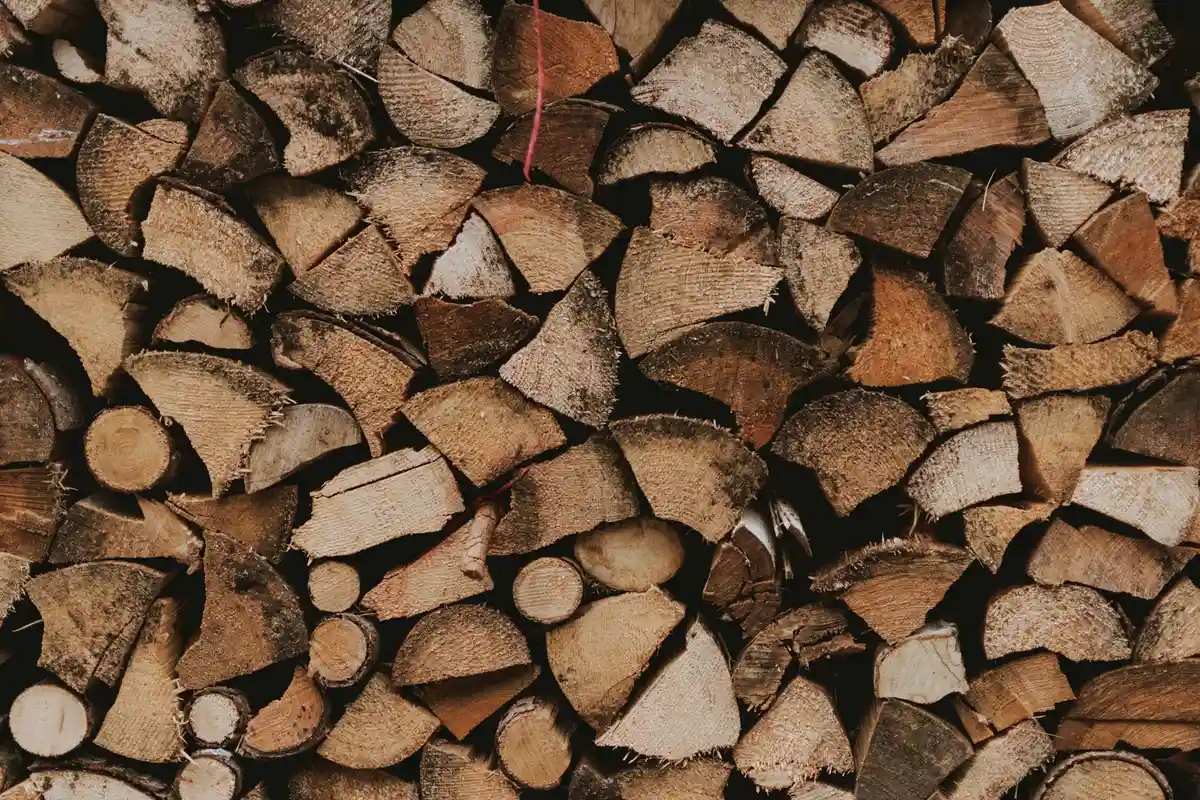
Choosing wood is like picking a teammate. You want one whose strengths match the game you’re playing. The “safest” wood is the one that is non-toxic, durable enough for its job, and a good match for your tools and skills.
The best choice is always a balance of four things: the child’s safety, the furniture’s purpose, the tools in your shop, and the money in your wallet.
Problem: You’re building a crib or a highchair.
This is safety-critical furniture. It must be incredibly strong, resistant to racking (side-to-side wobble), and hard enough to resist deep dents from toys or cups.
Solution: Use maple or beech.
Both are closed-grain hardwoods with a high Janka hardness rating (around 1450 for hard maple, 1300 for beech). This number measures how much force it takes to embed a steel ball halfway into the wood. In my shop, I think of it as “dent resistance.” For a crib rail that will get chewed on, you need that high number. It’s one of the first things I look for when selecting wood for any woodworking project.
I use hard maple for any load-bearing joints. Its tight grain holds screws and mortise-and-tenon joints superbly. Beech machines almost as well and is often more affordable in Europe. The science here is about cellular structure. These woods have dense, small fibers that distribute stress evenly, preventing sudden splits under load. A pine crib might be safe if over-engineered, but maple gives you a massive strength margin with less bulk.
- Shop Tip: These woods are hard on tool edges. Use sharp, carbide-tipped blades and plan for more sanding. Their density makes them heavy, a built-in stabilizer for tall furniture.
- Pitfall: Avoid softer “hardwoods” like poplar or aspen for primary structure here. Their lower dent resistance won’t stand up over years of use.
Problem: You’re making a play table, a bookshelf, or a step stool.
This furniture gets daily bumps and scrapes but isn’t holding a child 30 inches off the ground. Here, workability and cost become major factors.
Solution: Pine is perfect and forgiving.
I build most of my shop furniture from pine. For a child’s table, its softness (Janka ~400) is a feature. It’s easy to cut, shape, and sand smooth without expensive machinery. When a toddler inevitably dings the edge, the wood compresses instead of chipping, creating a safer, rounded corner. That’s the materials science: softwoods have a higher ratio of earlywood (spring growth) cells, which are less dense and more crushable.
Look for “knot-free” or “select” pine. Tight, solid knots are generally safe, but large or loose knots can pop out, creating a hazard. Pine also teaches you about wood movement. A wide pine tabletop will expand and contract more seasonally than a maple one, so your design must allow for that, like using figure-8 fasteners.
- Shop Tip: Pre-drill every screw hole in pine. Its softness offers poor screw thread retention, leading to splits and loose joints without a pilot hole.
- Pitfall: Don’t confuse “soft” with “weak.” A well-built pine bookshelf with proper joinery is plenty strong. Its limit is surface wear, not structural failure.
Problem: You’re crafting heirloom toys or a keepsake box.
These items are handled, held, and cherished. They need to feel wonderful in the hand, show beautiful grain, and be utterly safe for mouthing infants.
Solution: Cherry or walnut offer beauty and safety.
American cherry (Janka ~950) is my favorite for toys. It machines like a dream, sands to a silky finish, and its natural reddish hue deepens beautifully with light, aging with the child. Black walnut (~1010) is richer and darker, providing stunning contrast. Both are closed-grain, so they don’t have the large pores that can collect grime.
From a toxicity standpoint, these domestic hardwoods are inert once finished. The key is their dust. Always sand with a respirator. Walnut dust, in particular, contains juglone, a compound that can irritate airways. The finished wood, however, poses no risk.
Their medium density is the sweet spot: hard enough to carve fine details without fuzziness, yet not so hard that hand-shaping becomes a chore.
- Shop Tip: For small parts like toy wheels, cut with the grain running lengthwise for maximum strength. Cross-grain cuts snap easily.
- Pitfall: Sourcing matters. Reject pieces with sapwood (the lighter edge wood) if you’re concerned about uniformity, as it doesn’t darken like the heartwood. Always ask your supplier about their forestry practices.
The Final Choice: A Simple Flowchart for Your Shop
Still unsure? Walk through these questions.
- Is it structural (crib, highchair, bunk bed)? Yes → Choose Maple or Beech.
- Is it large, simple, or a first project (table, shelf)? Yes → Choose Pine.
- Is it a small, detailed object meant to last generations (toy, box)? Yes → Choose Cherry or Walnut.
Your budget and tool access filter this. You can build a stunning crib from cherry, but the cost and tool wear are high. You can carve a toy from pine, but it will show wear faster. There is no single “best” wood, only the best wood for *this* project in *your* hands. Start with what you have, prioritize safety, and the build will be a success.
FAQ: Material Science & Practical Shop Considerations
1. Is black walnut truly safe given its natural compounds?
The primary hazard is the dust during machining, which contains juglone and can be a respiratory irritant. The cured, solid wood itself is inert and presents no toxic risk through skin contact, making it a safe choice for finished furniture when proper shop PPE is used.
2. Why is the domestic origin of a wood species important for safety?
Many imported woods, like “Brazilian cherry” (Jatoba), are common sensitizers despite having familiar names. Sticking to well-documented domestic species (e.g., *Prunus serotina* for black cherry) provides predictable chemistry and minimizes the risk of undisclosed treatments or allergic reactions.
3. How does a wood’s movement coefficient impact safety?
High tangential or radial movement can compromise joint integrity over time, leading to racking or failure. Selecting a species with low movement, like white pine, enhances long-term structural safety by maintaining tight joinery under humidity fluctuations.
4. Can I safely use recycled or reclaimed wood for children’s furniture?
This carries significant risk due to potential contamination from old pesticides, lead-based paints, or unknown wood species. The only safe approach is to positively identify the species and its history, which is often impractical for a guaranteed non-toxic outcome. Especially when chemical treatments may not be visibly apparent.
5. Are there any safe plywoods or engineered woods for this application?
Yes, but you must specify panels with no added urea-formaldehyde (NAUF) adhesives, often labeled as CARB2 compliant or using soy-based binders. Always seal all edges and surfaces with a non-toxic finish to fully encapsulate the substrate.
Wood Safety as a Craftsmanship Standard
The most critical step is selecting a known non-toxic hardwood and pairing it with a child-safe finish. From my shop experience, this dual focus on material and coating is what builds genuine, long-term safety into a piece. Woods like maple or beech offer durability without the toxic risks of some exotics or treated lumber. Applying a water-based polyurethane or pure tung oil finish creates a durable, inert barrier that locks in safety for years of use.
Responsible woodworking extends to maintaining your furniture with simple, eco-friendly cleaners and sourcing wood from verifiably sustainable forests. I continue to learn about material science and finishing chemistry because our understanding of safety and sustainability always evolves.
Research and Related Sources
- Best Woods For Crafting Kid Friendly Furniture – Safe Wood Selection Guide
- The Ultimate Guide to Child-Safe Wood Finishes – Dannico
- What Are The Best Materials For Children’s Furniture?
- Piccalio – Kid Forward Furniture
- Kid Friendly Furniture – WoodandHearts
Written by David Ernst. David is a veteran woodworker. He is now retired and stays in his cabin in Wisconsin which he built himself. David has 25+ years experience working in carpentry and wood shops. He has designed and built many small and large wood projects and knows the science behind wood selection like the back of his hand. He is an expert guide on any questions regarding wood material selection, wood restoration, wood working basics and other types of wood. While his expertise is in woodworking, his knowledge and first hand experience is far from 'woody'.