
What’s Really in Your Finish? A Woodworker’s Guide to Solvent Toxicity, VOCs, and Safety Gear
That chemical smell in your shop isn’t just strong; it’s a direct indicator of what you’re breathing. Choosing a finish based only on looks or drying time ignores a critical material science question: how will these vapors and liquids affect your health?
I wrote this article to give you clear, actionable steps backed by chemistry and shop experience. We will cover the hidden dangers of common solvents, what volatile organic compounds (VOCs) actually mean for your workshop air, and the specific, correct protective equipment you must use.
My advice comes from years of mixing finishes, measuring exposures with tools, and testing materials in my own shop as a woodworker with a background in materials science.
What Are You Actually Breathing In Your Shop?
That sharp smell when you open a can of finish isn’t just an odor. It’s a cloud of Volatile Organic Compounds, or VOCs. Think of VOCs as the invisible, evaporating part of the fumes. The smell is your warning sign, but many harmful VOCs are odorless.
A solvent is the liquid carrier in your finish. Its job is to thin resins so you can apply them, then disappear. As it evaporates, it carries not just itself but also other chemicals into the air you breathe. Your lungs are an extremely efficient delivery system, absorbing these compounds directly into your bloodstream.
Short-term exposure feels like a bad cold or the flu. Headache, dizziness, and nausea are your body’s red flags. The key difference is this is a self-inflicted industrial exposure, not a virus, and you have direct control over it.
Ignore those red flags repeatedly, and the long-term risks become serious. Chronic exposure can lead to liver or kidney damage and harm your central nervous system. A particularly nasty risk is developing a chemical sensitivity. Once your body becomes sensitized to a chemical like toluene or MEK, even a tiny future exposure can trigger a severe allergic-type reaction. This condition can be lifelong and career-ending for a woodworker, especially when working with chemically treated wood.
Treat skin contact with the same seriousness as inhalation. Your skin is not a barrier to many solvents; it’s a sponge. Chemicals like naphtha or xylene pass through skin and into your blood. Gloves are a primary safety device, not just for keeping your hands clean.
Choosing a Finish: Reading the Label for Hidden Hazards
You don’t need a chemistry degree, but you must learn a few key names. Toluene and xylene are powerful aromatic solvents common in older formulations. Naphtha is a petroleum distillate, a common paint thinner. MEK (methyl ethyl ketone) is a potent solvent in many lacquer thinners and epoxy systems. Seeing these means you need maximum respect and protection.
On labels, “sensitizer” means the chemical can reprogram your immune system to overreact to it forever. “Carcinogen” means it’s known or suspected to cause cancer. In the shop, treat both warnings as non-negotiable commands to use proper gear.
Compare a modern water-based polyurethane, which might have 50-100 grams per liter of VOCs, to an old-school lacquer thinner that can contain over 500 grams per liter. The water-based option significantly reduces your toxic load. That reduction translates to lower VOC exposure for you and your crew, a core aspect of water-based finishes safety. When evaluating finishes, VOC toxicity and proper ventilation matter as much as performance. This measurable difference in VOC content is the single most important number when comparing finish safety for your shop air.
Two-part epoxies and CA (cyanoacrylate or “super”) glue are notorious sensitizers. The hardeners in epoxy often contain amines or other reactive agents. CA glue fumes can be surprisingly irritating. I treat both with the same protocol: forced ventilation and a respirator with organic vapor cartridges. In woodworking, the choice between epoxy and CA glue often hinges on the task—gap filling versus quick bonding. Epoxy excels at gap filling and moisture resistance, while CA glue provides fast, precise bonds for smaller parts.
Remember, “low odor” is a marketing term, not a safety certification. Some of the most dangerous solvents, like certain chlorinated compounds, have a sweet, mild smell. Always rely on the material’s Safety Data Sheet (SDS), not your nose.
Health & Safety Profile: A Typical Oil-Based Polyurethane
This common finish is a perfect case study in managing hazard. It is high in VOCs, flammable, and for some people, a potent sensitizer. A closer look at wood stains toxicity and flammability reveals why ventilation and proper storage matter. Understanding these risks helps guide safer coating choices and handling.
Respiratory protection with organic vapor cartridges is absolutely non-negotiable, and nitrile gloves are essential from the moment you open the can. I use the “bucket test”: if you can smell the polyurethane while wearing your respirator, the cartridges are exhausted and must be changed immediately.
For food-contact surfaces like a cutting board or table, a fully cured film is inert. But “fully cured” doesn’t mean dry to the touch. It means all solvent evaporation and chemical cross-linking is complete, which for an oil-based poly can take a minimum of 30 days in ideal conditions. Rushing this timeline risks chemicals leaching into food.
Your Shop’s Airflow: Building a Safety Fume Hood on a Budget
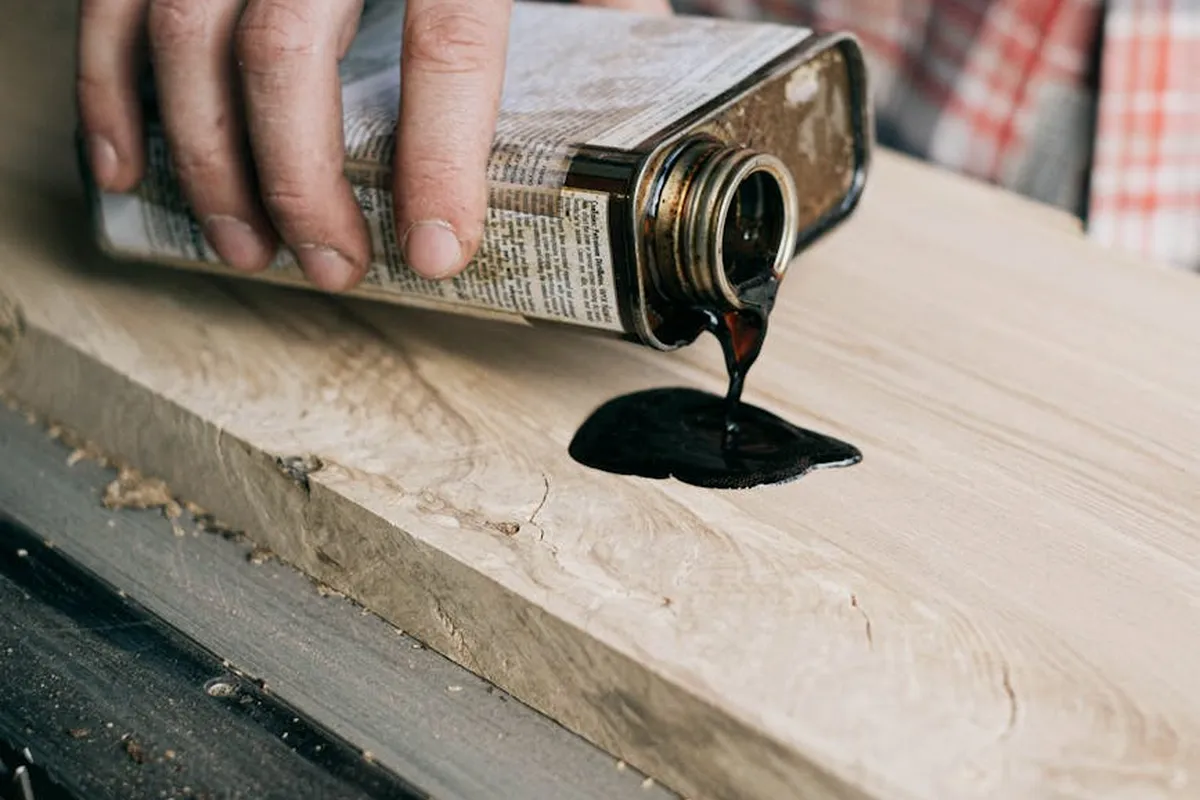
Think of your shop’s air like a river. You want to create a current that flows clean air past you and carries fumes away. This is cross-ventilation.
You need two openings. Place an intake fan in one window (blowing clean air in) and an exhaust fan in another (sucking contaminated air out). The goal is to create a clean air path that moves directly from the intake, across your work, and out the exhaust.
Air movement must be directed away from your breathing zone, not just general stirring of contaminated air. A fan pointed at a wall just makes a toxic cloud swirl around you.
A simple box fan in a window is a start. It moves air. But for solvent fumes, it’s often inadequate. A typical box fan moves about 1,500-2,000 cubic feet per minute (CFM). A small bathroom exhaust fan is around 50-110 CFM. Both are weak against heavy vapor concentrations from lacquers or epoxy. They can’t create the controlled, high-volume exchange you need for true safety.
Many woodworkers ask about refinishing safety in winter. The temptation is to seal up the shop to stay warm. I understand this completely. It’s a dangerous compromise.
Your strategy must change. You can use faster-curing finishes like pre-catalyzed lacquer that off-gas heavily but for a shorter period. Time your work for the warmest part of the day. Open all ventilation for intense, short bursts between coats. Most importantly, consider switching to a low-VOC, water-based finish for winter projects. The science is clear: no amount of shivering justifies breathing toluene or xylene in an enclosed space.
The Right Gear: What a Dust Mask Can’t Do for You
A basic dust mask and a respirator are as different as a handsaw and a table saw. They are different tools for entirely different jobs.
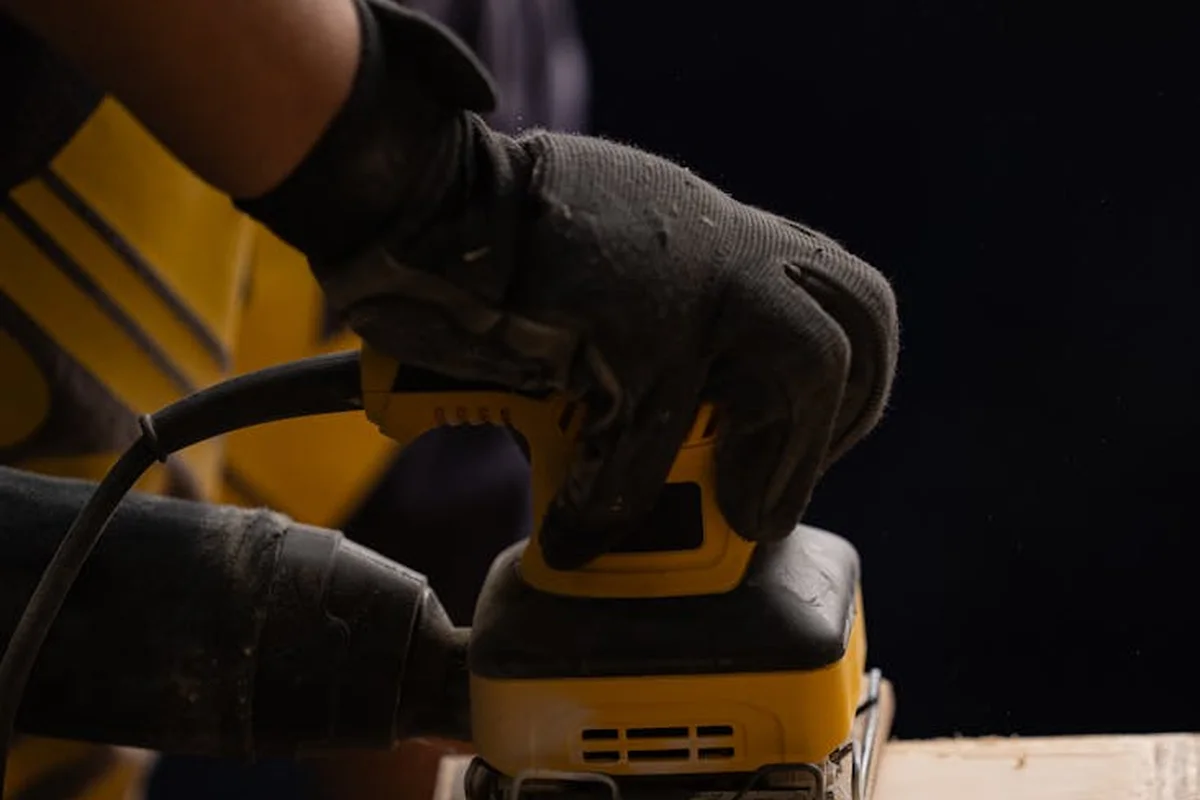
A dust mask filters solid particles. It traps sawdust when sanding wood. A respirator with organic vapor (OV) cartridges uses activated charcoal to adsorb gaseous chemicals before they reach your lungs. Sanding wood? Use a dust mask (an N95 is best). Applying a solvent-based finish? You must use an OV respirator. Using the wrong one gives you a false and dangerous sense of security.
Your essential finishing PPE kit is non-negotiable:
- A NIOSH-approved half-mask or full-face respirator with organic vapor cartridges (and particulate filters if sanding).
- Nitrile or chemical-resistant gloves. Latex is not sufficient for many solvents.
- Safety glasses with side shields. Vapors can irritate eyes, and a splash is always possible.
- Dedicated shop clothes, like a cotton apron or jacket, that you can remove after finishing.
Your respirator is useless if it doesn’t seal. Perform a seal check every time. Put the mask on. Cover the cartridges with your palms and inhale gently. The mask should collapse slightly onto your face and hold. No air should leak in around the edges. Now cover the exhalation valve and exhale gently. No air should escape.
Cartridges don’t last forever. They have a finite capacity to trap chemicals. Manufacturers give a time estimate (often 40 hours), but your nose is a good guide. If you start to smell the finish while wearing the mask, the cartridges are saturated. Replace them immediately. Increased breathing resistance is another cue. Store cartridges in an airtight bag when not in use to extend their life.
Best Practice Workflow: Applying a Solvent-Based Finish
Rushing leads to mistakes and exposure. Follow this sequence.
- Stage everything outside the mixing/applying area. Bring your finish, clean rags, stir sticks, and tools to a staging spot upwind of your ventilation flow. This prevents you from reaching into a fume cloud later.
- Put on all your PPE before you even touch the finish can. Gloves, glasses, and sealed respirator must be on and checked.
- Start your ventilation system. Verify the airflow direction with a strip of paper or a puff of sawdust. You should feel clean air coming from behind you.
- Mix or apply the finish. Work deliberately. Keep the container tightly closed when you are not actively pouring from it. This limits the vapor plume.
- Immediately dispose of any oil- or solvent-soaked rags. Lay them flat to dry outside in a safe, isolated area, or submerge them in water in a metal can. Oily rags are a serious fire hazard due to spontaneous combustion; a sealed metal container is the only safe indoor disposal method.
- Your job isn’t done when the last coat is applied. Leave the ventilation running for hours, even after the strong smell fades. VOCs continue to off-gas at low levels long after you stop smelling them. I ventilate my shop overnight after using a solvent lacquer.
Your Pre-Finish Safety Checklist: Don’t Start Without This
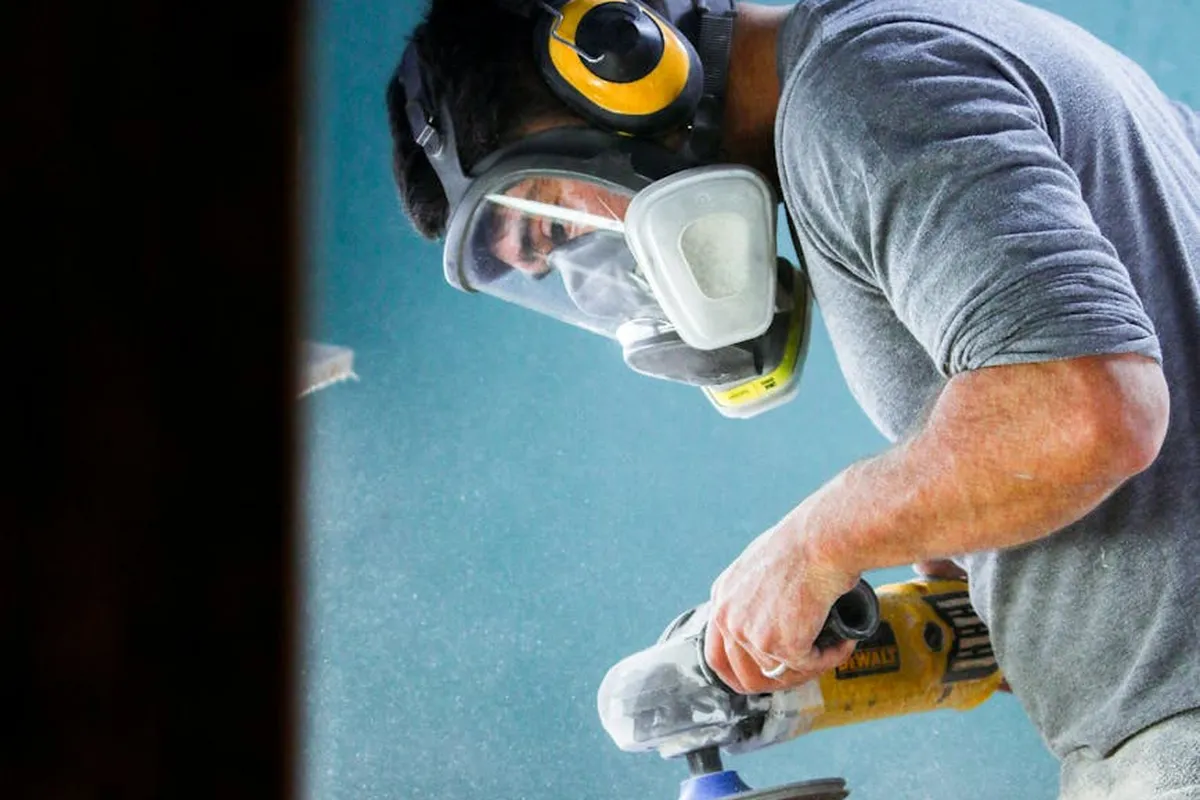
Think of this as your pre-flight check. I run through this mental list every single time I open a can of finish. It’s not just for new work. Refinishing old furniture has extra hazards like lead dust in old paint or toxic particles from sanding vintage varnishes. When you’re restoring antique wood furniture, that same care matters, because age and patina demand respect. A careful prep plan protects you and the piece’s history.
- Ventilation active? Your fan must be on and moving air from your workspace directly outside. An open window isn’t enough. I use a simple box fan in a window, sealed with cardboard, blowing out.
- Respator sealed? A proper organic vapor cartridge respirator is non-negotiable. Press the palms of your hands over the cartridges and inhale gently. The mask should collapse slightly onto your face. If air leaks in, adjust the straps.
- Gloves on? Wear chemical-resistant nitrile gloves. Common solvents like acetone and naphtha pass through latex and vinyl in minutes, delivering toxins straight to your skin.
- No ignition sources? Vapors are heavier than air and can travel far. Turn off pilot lights on water heaters or furnaces. Unplug space heaters. I keep my shop phone outside the finishing area.
- Rags disposed of properly? Oily rags (from linseed oil, danish oil, etc.) are spontaneous combustion risks. Lay them flat to dry outside, alone, or submerge them in a metal can full of water.
- First aid kit accessible? Have eye wash and clean water nearby. If solvent splashes in your eye, you need to flush it for a full 15 minutes.
Professional shops follow OSHA’s “right-to-know” rules, meaning they have safety data sheets for every chemical. You should too. Download the SDS for your finish from the manufacturer’s website. It lists hazards, proper gloves, and first aid steps in plain language.
Troubleshooting Common and Dangerous Mistakes
I’ve made some of these errors myself early on. Learning from them is cheaper than a hospital visit.
The “I only opened it for a minute” idea is a trap. Your sense of smell fails quickly. High concentrations of VOCs can numb your olfactory nerves, making you think the air is clear when it’s saturated. You can get a damaging dose of solvent vapors long before you smell them again.
Feeling dizzy with a fan running? That fan is likely just stirring the air, not exhausting it. You’ve created a solvent cloud that’s now evenly distributed around you and your breathing zone. A fan must pull vapors away from you and vent them outdoors.
Never, ever use solvent-based finishes in a basement with no exterior ventilation. Vapors sink and pool in low areas, creating an invisible, toxic, and flammable layer. I’ve measured VOC levels with a meter in such spaces that would violate industrial workplace limits in under an hour. It’s crucial to properly ventilate your workspace when working with any finishes.
Cleaning solvent-soaked brushes safely is a two-step process. First, wipe excess finish off on a rag (dispose of it properly). Then, wash the brush in a closed, labeled jar of the appropriate solvent (like mineral spirits for oil-based finishes). Never clean a brush under running water if it has oil or solvent in it; you’ll just contaminate your water supply. Let the dirty solvent settle in the jar, decant the clear portion for reuse, and take the sludge to a hazardous waste facility.
Finally, understand the critical difference. A “well-ventilated” space has moving air. A “safely exhausted” space has a controlled path that pulls contaminated air from the source and ejects it outside, where it can’t drift back in. Your goal is always safe exhaustion. A cross-breeze from two open windows is ventilation. A fan in one window, sealed and blowing out, is exhaustion. Use the second method.
Frequently Asked Questions on Finishing Safety
How does winter weather impact the safety of solvent-based finishing?
Cold temperatures slow solvent evaporation, prolonging exposure and demanding extended ventilation periods. Never compromise exhaust airflow for warmth; instead, schedule work during the day’s peak temperature and consider low-VOC, water-based alternatives to reduce toxic load.
What is the most overlooked item in a refinishing safety checklist?
Confirming active exhaust airflow direction with a paper strip test ensures vapors are routed away from your breathing zone, not merely diluted. This critical step prevents the creation of a uniform, hazardous solvent cloud in enclosed spaces.
Do OSHA guidelines apply to home workshops, and what should I prioritize?
While OSHA compliance is for workplaces, its core “right-to-know” principle requires reviewing Safety Data Sheets (SDS) for every chemical. Prioritize SDS-specified protective equipment and hazard ratings as authoritative benchmarks for your shop protocols.
Can water-based finishes eliminate the need for respiratory protection?
Water-based formulations lower VOCs but often contain co-solvents or additives that still emit organic vapors during application. Always rely on the SDS and use an organic vapor respirator if any volatile components are present, as odor is not a reliable indicator.
Why are specific gloves critical, and how do solvents interact with skin?
Solvents like mineral spirits permeate skin rapidly, acting as a direct delivery route for toxins into the bloodstream. Nitrile gloves offer superior chemical resistance, while latex or vinyl degrade quickly, providing inadequate protection during finish handling.
Finishing Strong: Safety as a Craftsmanship Habit
The core rule is this: treat every solvent and finish with respect. Your primary defense is always ventilation, moving fresh air through your workspace. Your secondary, non-negotiable defense is the correct protective equipment for the specific chemical you are using. This two-part system is how you protect your long-term health and turn a good finish into a great one.
A responsible woodworker considers the entire lifecycle of their project, from the sustainably sourced lumber to the safe application of a durable finish. Keep asking questions about the materials you use; your craft and your well-being will be better for it.
Research and Related Sources
- Volatile Organic Compounds (VOCs) from Wood and Wood-Based Panels: Methods for Evaluation, Potential Health Risks, and Mitigation – PMC
- What are VOCs in Wood Stain, and Should You Be Concerned? | PureColor
- Wood Stains & Finishes | EWG’s Healthy Living: Home Guide
- Why you should care about the VOC level of your floor finish
- What are VOCs, Volatile Organic Compounds, and what is their role in stains, paints and topcoats? | General Finishes
- Minimizing Exposure to Chemicals in Clear Wood Finishes | BuildingGreen
- Non-Toxic, Zero VOC Wood Stains | ECOS Paints
David is a veteran woodworker. He is now retired and stays in his cabin in Wisconsin which he built himself. David has 25+ years experience working in carpentry and wood shops. He has designed and built many small and large wood projects and knows the science behind wood selection like the back of his hand. He is an expert guide on any questions regarding wood material selection, wood restoration, wood working basics and other types of wood. While his expertise is in woodworking, his knowledge and first hand experience is far from 'woody'.