
What Makes the Best Decking Wood? A Materials Science Guide to Ipe, Teak, Cedar, Redwood, and Pine
Choosing a decking wood is a practical materials problem, not just an aesthetic one. I help you solve it with shop-tested data, not guesswork.
We will cover Janka hardness for durability, natural extractives for rot resistance, dimensional stability across seasons, and real cost versus workability trade-offs.
I base these comparisons on my own milling tests and long-term exposure samples from my shop.
How to Pick Your Decking: The Five Deciding Factors
Choosing decking isn’t about finding the single “best” wood. It’s a balance. You weigh five factors against your budget, your time, and your values.
Think of durability for a deck as a fight on four fronts.
- Rot: Water is the enemy. Some woods fight it with natural oils or chemicals.
- Insects: Termites and carpenter ants see your deck as a food source.
- Wear: This is how well the surface resists dents from furniture and scratches from debris.
- Weathering: Sun and rain break down lignin, the glue in wood cells, causing graying and surface checks.
We measure wear resistance with the Janka hardness scale. It’s a simple test: how much force does it take to embed a steel ball halfway into the wood? Imagine pushing your fingernail into balsa wood, then into a concrete sidewalk. That’s the range. A higher Janka number means a harder surface that dents less easily. It’s an essential factor to consider when selecting wood for flooring or furniture that will endure wear.
The “best” wood appears when you decide which factor you care about most. Is it a 40-year lifespan with no worry? Is it a warm color that stays true? Is it a budget that doesn’t break the bank? Your priority picks the wood.
Wood-by-Wood Breakdown: From the Lumberyard to Your Backyard
Ipe: The Ironwood
Durability & Lifespan
Ipe is the undisputed champion of natural durability. It’s common to see Ipe decks last 40 years or more with basic care. Its legendary resistance comes from a dense, oily heartwood packed with natural toxins that repel rot, decay fungi, and wood-boring insects. Its Janka hardness is around 3,680 lbf. For scale, red oak is about 1,290 lbf. This extreme density is why it’s called “ironwood.” It simply won’t wear out.
Cost & Where to Find It
You pay for that performance. Ipe is a premium, high-cost material, often 4 to 6 times the price of pressure-treated pine. You won’t find it at a typical big-box store. It’s stocked by specialty lumberyards and dealers that focus on exotic hardwoods or high-end decking.
Appearance & Feel
Freshly milled Ipe has a stunning palette of rich browns, from olive to chocolate, often with striking variations. The grain is extremely tight and fine. Left untreated, it will weather to a consistent, elegant silver-gray, much like cedar or redwood, but it takes far longer to show surface wear. To the touch, it’s dense and cool, like stone.
The Workability Challenge
This is where the “iron” part becomes real. Ipe will destroy standard high-speed steel drill bits and saw blades. You must use carbide-tipped tools. I learned this the hard way, watching a brand-new drill bit smoke and turn blue on its first hole. Pre-drill every single fastener hole, no exceptions, or you will snap screws and split the wood. Its density also makes it very heavy, so handling long boards is a two-person job.
Sourcing & Sustainability
Most Ipe comes from slow-growth tropical forests in South America. The ecological impact is significant. I strongly advocate for sourcing only FSC-certified Ipe, which ensures the wood is harvested from responsibly managed forests that protect ecosystems and worker rights. It is the only ethical choice for this remarkable material.
Teak: The Golden Standard
Durability & Lifespan
Teak sets the marine standard for a reason. It reliably lasts 30+ years. Its superpower is a high concentration of natural rubber and oils that make it virtually impervious to water and rot. While its Janka hardness (1,155 lbf) is much lower than Ipe’s, its oil content provides a different kind of durability that’s exceptional for wet environments. It’s durable without being oppressively hard.
Cost & Where to Find It
Teak is the most expensive option here, often surpassing Ipe. It’s a luxury and marine-grade wood. You find it at the same specialty dealers as Ipe, or through boatbuilding suppliers. The high price reflects its desirability and, traditionally, limited supply.
Appearance & Feel
New teak is a warm, golden-brown with a smooth, often straight grain. It feels oily and waxy to the touch, even dry. Like other woods, it weathers to a soft silver-gray, but the process is slow and even, resulting in a distinguished, classic look. Many choose to oil it annually to maintain the original honey color.
Installation Notes
Compared to Ipe, teak is a kinder partner in the shop. You can work it with standard tools, but there’s a hidden challenge. Teak contains silica, the same mineral in sand. It will dull cutting edges over time, so have a sharpening plan for your blades and router bits. Pre-drilling is still a good practice to prevent splitting.
Sourcing & Sustainability
Old-growth, wild teak from Southeast Asia raises major sustainability concerns. The good news is a large portion of modern teak is plantation-grown, often in Latin America or Africa. Always ask your supplier for the wood’s provenance and look for certification from bodies like the Forest Stewardship Council (FSC). Plantation wood is the more responsible choice.
Western Red Cedar: The Aromatic Softwood
Durability & Lifespan
Cedar offers a 15 to 25 year service life from natural chemistry, not density. Its cells contain thujaplicins, compounds that are toxic to decay-causing fungi. This gives it excellent rot resistance, but as a softwood (Janka 350 lbf), the surface will dent and scratch more easily than any hardwood on this list. Its durability is about longevity, not armor plating.
Cost & Where to Find It
Western Red Cedar sits in the mid-range. It’s significantly more than pressure-treated pine but less than the tropical hardwoods. Its great advantage is availability. You can find clear, deck-worthy grades at most lumberyards and even some larger home centers, especially in North America.
Appearance & Feel
Cedar is beloved for its straight, uniform grain and its color, which ranges from a rosy tan to a deeper amber. The defining shop experience is its scent-a sweet, spicy, and pleasant aroma when you cut it, caused by those same protective thujaplicins. It’s lightweight and easy to handle.
Workability & Installation
Cedar is a dream to work with. It cuts cleanly, planes smoothly, and fastens without protest. Because it’s so soft, you must be careful not to over-tighten screws or you’ll crush the wood fibers around the fastener head. Use a driver with a clutch or drill by hand for the final turns.
Sourcing & Sustainability
This is a major point in cedar’s favor. It’s a fast-growing species from the coastal forests of the Pacific Northwest. Western Red Cedar is almost exclusively harvested from managed forests, making it one of the most sustainable and renewable decking choices available. Look for the SFI (Sustainable Forestry Initiative) label as further assurance.
Redwood: Cedar’s Californian Cousin
Durability & Lifespan
Redwood is a near twin to cedar in performance. Its heartwood contains tannins and acids that provide similar natural rot and insect resistance, leading to a comparable 15-25 year lifespan. Over time, the tannins in heartwood can oxidize, subtly darkening the color and illustrating a key aspect of wood color chemistry. This oxidation-driven color change helps explain why heartwood hues differ from sapwood. The critical detail is to specify “heartwood” or “all-heart” grade for decking; the lighter sapwood lacks these protective compounds and decays quickly. Its hardness is also similar to cedar.
Cost & Where to Find It
Redwood’s cost and availability are highly regional. If you live on the West Coast, it’s a common, mid-priced option. On the East Coast, it becomes a specialty item with a higher price tag due to shipping. Always call local yards to check stock.
Appearance & Feel
Redwood is named for its color-a vibrant, rich red-brown that is deeper and often more uniform than cedar’s. It weathers to that same soft gray, but the journey there showcases a beautiful, evolving patina. The grain can be straighter and less knotty than cedar in higher grades.
Workability & Installation
Redwood works as easily as cedar. Sawdust is a fine, reddish powder. One quirk I’ve noticed is that it can be somewhat brittle. Take care when handling long, thin boards to avoid snapping them across your knee, and support long spans during installation to prevent sagging or breakage.
Sourcing & Sustainability
Virgin old-growth redwood forests are protected. The decking you buy today comes from second- or third-growth forests managed for harvest or from salvaged lumber. Like cedar, it is a renewable North American species, offering a strong ecological alternative to imported tropical hardwoods. Check for certification to ensure responsible forestry practices.
Pressure-Treated Southern Yellow Pine: The Workhorse
Durability & Lifespan
The wood itself (Southern Yellow Pine) is not naturally durable. Its 20+ year lifespan is entirely engineered. This is why the pressure-treated wood lifespan matters for outdoor projects. In the “pressure-treated” process, the lumber is placed in a vacuum chamber, and preservative chemicals are forced deep into the wood cells under high pressure. This shields it from rot and insects. The surface remains relatively soft and will dent.
Cost & Where to Find It
This is the most affordable and ubiquitous decking material. You can find it at any home center, in every dimension, ready to go. It’s the default choice for a reason, offering the lowest upfront cost for a durable structure.
Appearance & Feel
When fresh from the treatment tank, it has a greenish or brownish tint from the chemicals. The grain is pronounced and often knotty. It will weather to a gray color and will almost certainly develop surface checks (small cracks along the grain) as it dries and ages, which is a normal characteristic.
Workability & Installation
The preservatives are corrosive to standard steel fasteners. You must use fasteners rated for treated lumber: hot-dipped galvanized, stainless steel, or specially coated screws labeled “ACQ compatible.” Another key tip: lumber is often treated wet. Let it acclimate and dry on-site for a few weeks before building to minimize major shrinkage and warping after installation.
Sourcing & Safety
Modern treatments like Alkaline Copper Quaternary (ACQ) or Copper Azole have replaced the older, arsenic-based CCA for residential use. They are safer but still contain copper. Always wear a dust mask when cutting or sanding pressure-treated wood to avoid inhaling the fine, chemical-laden sawdust. Never burn the scraps. Dispose of them with regular construction waste.
The Decking Technical Spec Sheet
Numbers tell a story. For decking, that story is about resisting dents, fighting rot, and holding up to the weather. Here’s the data side-by-side.
Here’s what these numbers mean for your deck. Janka Hardness measures resistance to denting and wear, which is crucial for high-traffic areas and moving furniture. Ipe is exceptionally hard, while Cedar and Redwood will show wear more easily.
Specific Gravity is the density of the wood compared to water. Think of it as a proxy for how much “stuff” is packed into the fibers. A higher specific gravity, like Ipe’s, generally means greater strength and slower water absorption, reducing swelling and shrinking. Lighter woods like Redwood move more with moisture changes.
Natural Rot Resistance is the wood’s inherent ability to decay, thanks to the compounds listed. Ipe and Teak are in a class of their own here, often lasting decades untreated. Cedar and Redwood have good defenses but benefit from sealants. Pressure-treated wood has no natural resistance; it relies entirely on the preservatives forced into its cells.
Putting It All Together: Building and Caring for Your Deck
Data is one thing. Building a deck that lasts for years in your specific backyard is another. Let’s bridge that gap.
How Does Climate Change the Game?
Your local weather isn’t a footnote, it’s a primary design factor. I’ve built decks in arid, coastal, and four-season climates, and the rules shift.
In dry, hot climates, dimensional stability is king. Cedar and Redwood, with their low density and even grain, tend to shrink and crack less in constant heat than denser woods might. Their natural rot resistance is a bonus against occasional rain. Spanish cedar is another variety favored for its stability and resistance to moisture.
In constantly wet or humid climates, rot resistance is non-negotiable. This is where Ipe and Teak justify their cost. Pressure-treated pine can work here, but only if the chemical retention level is rated for ground contact, and you are meticulous about sealing cut ends.
For those of us with real winters, freeze-thaw cycles are the great equalizer. Water gets into tiny checks in the wood, freezes and expands, and can slowly tear the fibers apart from the inside. All woods are vulnerable. Your best defense is a consistent, high-quality water-repellent finish that minimizes moisture intake in the first place.
The Real Cost of Maintenance
The initial price of the boards is just your first payment. The real cost is measured in weekends spent with a brush or roller.
Picture a spectrum. On one end, you have Ipe and Teak. Their maintenance is primarily aesthetic, an optional oiling every year or two to maintain a rich brown color; left alone, they gracefully fade to a silvery gray without losing structural integrity.
In the middle, Cedar and Redwood. They need a protective sealant every 2-3 years to preserve their color and bolster their moderate natural decay resistance. Skip it, and they’ll turn gray and may become susceptible to mildew and checking.
On the other end, pressure-treated pine. It often requires a water-repellent sealant annually for the first few years to prevent warping and cracking as the treatment chemicals and wood moisture stabilize. It’s the lowest upfront cost but demands the most consistent time investment early on.
Installation Day in the Shop
This is where material science meets your tool belt. Being prepared prevents ruined boards and frustrating delays.
First, your tools. Hardwoods like Ipe will blunt standard steel blades and drill bits almost immediately. You must use carbide-tipped saw blades and drill bits, and pre-drill every fastener hole to avoid splitting the incredibly dense wood. For Cedar and Redwood, their softness means sharp, standard blades work fine, but they can tear out if you rush a cut.
Second, fasteners. This is critical. The natural acids in Cedar and Redwood, and the copper preservatives in pressure-treated wood, will corrode standard steel nails and screws, leading to unsightly black streaks and fastener failure. Always use hot-dipped galvanized, stainless steel, or ceramic-coated deck screws rated for these woods.
Finally, structure. Softer woods are more flexible. For Cedar, Redwood, and even pressure-treated pine, strict adherence to the recommended 16-inch on-center joist spacing is mandatory to prevent the decking from sagging or feeling bouncy underfoot. For Ipe, you can often space joists farther apart, but its weight demands a robust foundational frame.
When NOT to Use These Woods: Avoiding Costly Mistakes

Picking the “best” wood often means knowing where it fails. A material science win in the lab can be a practical disaster in your backyard. My advice comes from both sawdust and data sheets.
Skip Ipe If…
You admire Ipe’s strength and lifespan. Its Janka hardness rating is over 3,500 lbf. For perspective, red oak is about 1,290 lbf. Ipe is like concrete made of wood.
This extreme density is why you need pro-grade tools; a consumer-grade miter saw will bog down and potentially burn the wood, leaving ugly black marks that are nearly impossible to sand out.
Budget is another major stop sign. Ipe costs 3 to 5 times more than pressure-treated pine. The fasteners are a separate, costly project. You must use stainless-steel or specially coated screws, as Ipe’s natural oils and density will corrode standard hardware quickly.
Finally, the origin matters. Historically, much Ipe was harvested from rainforests without responsible management. If your supplier cannot provide a clear FSC (Forest Stewardship Council) or similar verification, choose a different wood. The ecological cost is too high.
Reconsider Teak For…
Teak’s legendary stability comes from its high natural oil and rubber content. This is also why it’s so expensive. You are paying for a built-in finish.
That beautiful initial golden-brown hue is temporary; all teak weathers to a silvery gray unless you commit to annual applications of a teak-specific sealant. If your vision is a permanently warm-toned deck, prepare for a permanent maintenance chore.
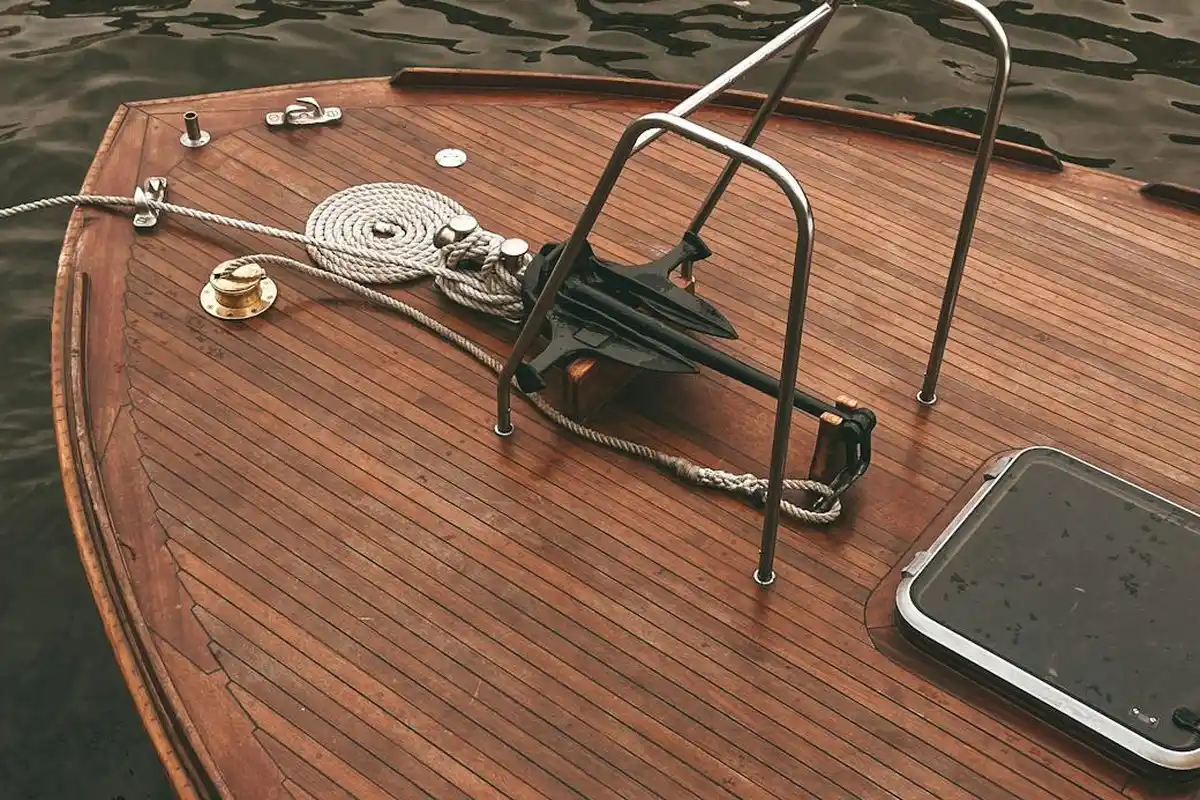
Evaluate the cost versus need. Using teak for a large, ground-level deck is often an unjustifiable luxury. Its best use is for high-value, smaller-scale projects where its oily stability is non-negotiable, like boat decking or premium outdoor furniture. For a standard backyard deck, that money is better spent elsewhere.
Cedar and Redwood Limits…
These softwoods are champions at resisting decay, but they are physically soft. Their Janka hardness is typically below 600 lbf. A dropped tool, a dragged chair leg, or even heavy pet claws will leave dents.
This makes them a poor primary choice for high-traffic pathways or decks around pools where heavy, sharp-edged furniture is common. The surface will show wear quickly.
Their decay resistance is also misunderstood. The protective compounds (thujaplicins in cedar, tannins in redwood) are concentrated in the heartwood. The lighter-colored sapwood has very little resistance. More importantly, these compounds leach out over time. Direct, constant ground contact will overwhelm their natural defenses. If a post must be in the earth, use a concrete footing or a rated ground-contact sleeve.
Pressure-Treated Pine Warnings…
Modern pressure-treated lumber (typically labeled ACQ or MCQ) uses copper-based preservatives. It’s great for damp, structural frames. That is its job.
Never use it for indoor furniture, cutting boards, or children’s play sets where skin contact is constant; the chemical treatment is not food-safe or toy-safe. Always wear a dust mask when cutting or sanding it and clean up all dust thoroughly.
Do not mistake “rot-resistant” for “maintenance-free.” The treatment protects against fungi and insects, but the wood itself can still crack, warp, and gray from UV exposure. It requires sealing or staining, just like any other pine. Plan for this care from the start, or the deck will look weathered within two seasons.
Frequently Asked Questions: Decking Woods
1. How do the hardness and resistance to wear compare?
Janka hardness directly measures surface resistance to denting and wear. Ipe (3,680 lbf) is exceptionally hard, while Teak (1,155 lbf) is moderate, and softwoods like Cedar (~350 lbf) and Redwood (~480 lbf) will show abrasion and impact marks more readily. When comparing these, it’s essential to understand the differences between hardwood and softwood species.
2. How does each wood perform in different climates and weather conditions?
In wet climates, the natural rot resistance of Ipe and Teak is critical. For dry, hot regions with significant UV exposure, Cedar and Redwood offer good dimensional stability but require sealants to resist checking and graying.
3. What are the installation considerations and workability differences?
Ipe demands carbide-tipped tools and pre-drilling for all fasteners due to its density. Conversely, Cedar and Redwood are soft and easy to work but require care to avoid crushing fibers during fastening or tear-out with dull blades.
4. What are the maintenance requirements for each wood type?
Maintenance is primarily cosmetic for Ipe and Teak, involving optional oils to retain color. Cedar, Redwood, and Pressure-Treated Pine require proactive, scheduled applications of water-repellent sealants every 1-3 years to manage weathering and preserve integrity.
5. What are the environmental and sustainability considerations?
Sustainability varies drastically: Cedar and Redwood are typically renewable, North American softwoods. For tropical hardwoods like Ipe and Teak, insist on FSC or similar certification to ensure responsible forestry, as their harvest has significant ecological impact.
Your Deck’s Foundation in Material Science
The core of a lasting deck is selecting wood for its service life, not just its initial appearance or cost. I base every recommendation on how a species actually performs under sun, rain, and foot traffic in long-term tests. Choose a wood whose natural durability or treatment level aligns with your local weather and your willingness to apply sealant every few years. This forward-looking decision is what separates a decades-old deck from one that needs replacing in half the time.
I source only verified sustainable lumber for my projects, and you should prioritize suppliers who do the same to ensure ethical harvesting. Continuous learning is part of the craft, so I regularly review new research on wood preservatives and installation methods to improve my work.
Research and Related Sources
- A Definitive Guide for Choosing Wood Decking – Kebony USA
- The Only 5 Wood Decking Types You Should Use to Build Your Deck – Hard Decks
- r/Decks on Reddit: What kinds of deck boards do you use?
- What is the Best Wood for Outdoor Decks?
- Best Deck Material Options for 2025 and How to Choose the Right One
Written by David Ernst. David is a veteran woodworker. He is now retired and stays in his cabin in Wisconsin which he built himself. David has 25+ years experience working in carpentry and wood shops. He has designed and built many small and large wood projects and knows the science behind wood selection like the back of his hand. He is an expert guide on any questions regarding wood material selection, wood restoration, wood working basics and other types of wood. While his expertise is in woodworking, his knowledge and first hand experience is far from 'woody'.