
Why Does Some Wood Murder Your Tool Edge? The Silica Science Explained.
You put a razor edge on your plane blade, but five minutes into that gorgeous exotic board, it feels like you’re pushing through sand. That frustrating drag isn’t just in your head; it’s often caused by silica, a hidden mineral in the wood itself.
Let’s get practical and scientific. We will cover which common and exotic woods are high in silica, exactly how those tiny crystals grind down a cutting edge, and the critical difference between ordinary dust and hazardous silica particles for your lungs.
I’ve worn out tools testing this, examining blade edges under magnification and filtering shop dust to see the problem up close.
What is Silica and Where Do You Find It in Wood?
Silica is silicon dioxide (SiO2). You know it as quartz, the main component of sand. In wood, it exists as microscopic, hard mineral crystals. It is not a chemical dissolved in the sap. Think of it as tiny, sharp bits of sand embedded in the wood’s structure.
A tree uses silica as a defense. For a tree, it’s like building a wall with broken glass in the mortar. Insects find it hard to chew through. Grazing animals are discouraged from taking another bite. This structural grit makes the wood more resistant to pests.
You will find high silica content in many tropical hardwoods and some bamboos. Common culprits in the shop include:
- Teak
- Iroko (sometimes called “African Teak”)
- Mango
- Many other species from tropical regions
A frequent question I get is about silica in kitchen cabinets or furniture. The silica is in the wood itself. It is not a treatment or additive applied during manufacturing. If the tree grew with it, the lumber has it, unlike some chemically treated wood.
Mechanism of Action: How a Tree Builds with Grit
The tree absorbs silicic acid from the soil through its roots. As water evaporates from the leaves, the silica is left behind. It solidifies into hard, crystalline particles inside the wood cells.
These particles deposit in the cell walls and the empty spaces between cells, creating a natural composite material. The wood fibers are the flexible matrix; the silica is the hard, reinforcing filler.
Imagine a soft kitchen sponge. Now, imagine pressing very fine, sharp sand deep into all the pores and surfaces of that sponge. That sponge is now far more abrasive and resistant to compression. This is essentially what happens inside a high-silica wood on a microscopic level.
Why Does Silica Dull Tools So Fast?
Cutting a high-silica wood is not like cutting ordinary hardwood. It is mechanically similar to planing a board that has a layer of 120-grit sandpaper glued to its surface. Every pass grinds down your edge.
The core physics issue is a hardness mismatch. Quartz (silica) has a Mohs hardness of 7. High-speed tool steel typically has a hardness around 6-6.5. The abrasive is harder than the tool trying to cut it. This causes immediate and severe abrasive wear.
In practice, you see three things happen fast. The razor-sharp edge you just honed becomes visibly rounded. The polished, mirror-like bevel develops a frosted, scratched appearance. Most frustratingly, the edge feels dull even after stropping, because the silica has created deep micro-fractures, not just a rolled burr.
The Physics of Abrasive Wear in Your Shop
The specific process is called “three-body abrasion.” The three bodies are your tool edge, the wood fiber, and the free silica particle caught between them. As you cut, the hard silica particle is pressed and dragged against your tool’s edge, plowing out microscopic ribbons of steel.
Contrast this with normal wear. When you plane maple or cherry, the lignin and other organic compounds cause gradual, polishable wear. Silica causes immediate, catastrophic scratching.
This abrasion also generates significant heat very quickly at the cutting edge. Excessive heat can draw the temper from your tool steel, temporarily softening it and making it wear even faster in a vicious cycle. This is why you might see blueing on a planer blade after milling just a few feet of iroko.
How Can You Spot High-Silica Wood Before You Cut?
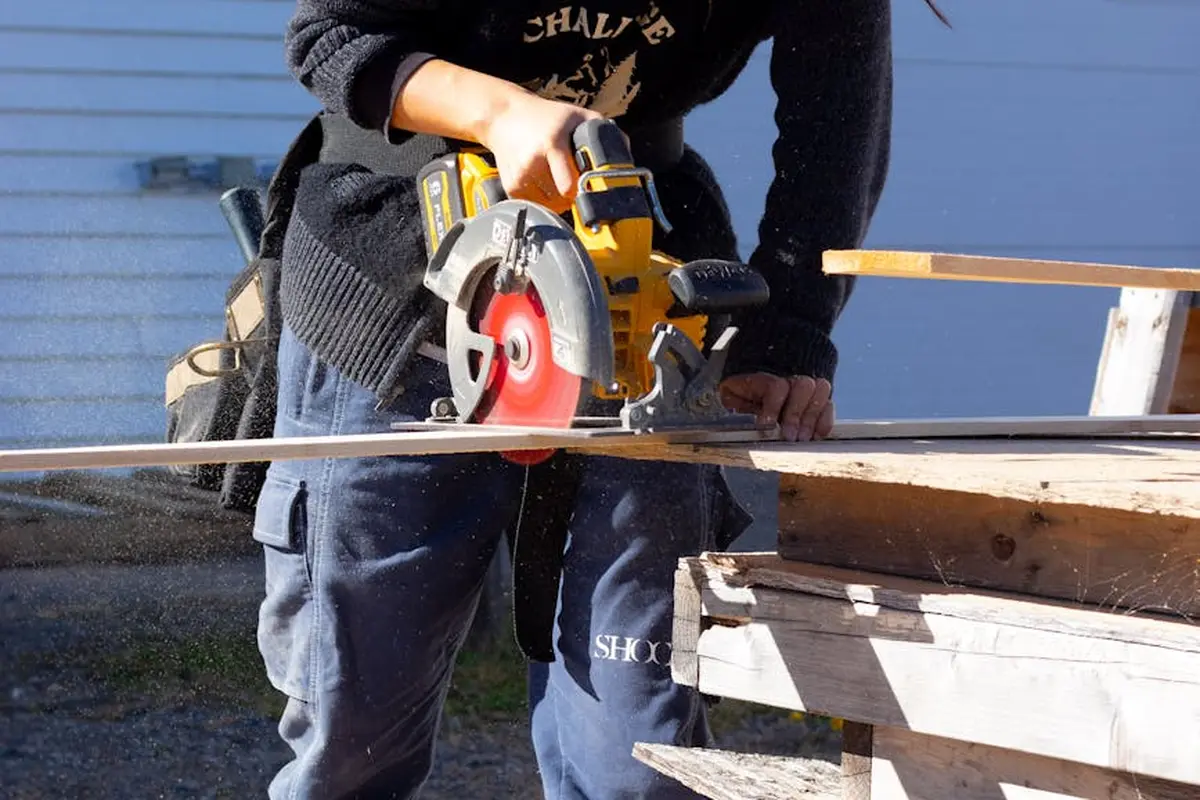
Silica embeds itself in wood cell walls as microscopic, glass-like crystals. This isn’t a flaw, but a natural defense mechanism for trees in certain environments. For you, it means hidden abrasiveness that can ruin a sharp edge in minutes. The first step is awareness before the wood even hits your bench.
Start by consulting a known species list and talking to your supplier. Woods like Ipe, Teak, and many tropical hardwoods are famous for high silica content. Ask your lumber dealer if a species is known for being “abrasive” or “hard on tools.” This simple question can save you hours of frustration. A quick comparison of hardwoods and softwoods by Janka hardness ratings can help you gauge durability and cutting resistance as you plan your project.
Your own senses are powerful tools. Try the thumbnail test. Press your thumbnail firmly into the end grain of a scrap piece. With most woods, you’ll make a small dent. With a high-silica wood, it often feels unyieldingly hard and you might detect a faint, gritty sensation under your nail.
The most reliable shop sign is how quickly a fresh edge goes dull. If you just sharpened a plane iron and it struggles to take a shaving after a few passes, silica is likely the culprit. I’ve seen a honed chisel edge round over on a single mortise cut in Ipe, while the same tool would last for days on oak.
A Simple Shop Test for Grit
If you’re still unsure, a two-minute test can confirm your suspicions. Take a small, inconspicuous area of the wood and sand it by hand with a medium-grit paper, like 120-grit.
Now, rub the dust between your fingertips. Ordinary wood dust feels like flour. Silica-bearing dust feels distinctly gritty, like fine sand or powdered glass. Trust this tactile evidence. Some people may develop sensitization to wood dust over time, while others only experience irritation. Understanding the difference between sensitization and irritation can guide safer handling and exposure awareness.
Do not rely on the wood’s color or weight as an indicator. A dark, heavy wood might be dense for other reasons, like natural oils. A light-colored wood can still be loaded with silica. The dust doesn’t lie, unlike when you try to identify wood by its grain.
How Do You Work Safely with Silica-Bearing Wood?
This is where shop science meets personal safety. The silica in food or supplements is a different, non-crystalline form that is safe. The hazard in your shop is crystalline silica dust, created when you cut or sand the wood.
Inhaled crystalline silica dust is a proven human carcinogen and can cause irreversible lung scarring (silicosis). Long-term exposure, even at seemingly low levels during hobbyist work, carries a real risk. This isn’t scare tactics, it’s material safety data.
Toxicity & PPE: Your Dust Control Protocol
Your goal is to capture dust at the source and clean the air. A two-stage system is non-negotiable for these woods.
First, use a well-sealed dust collector hooked directly to your tool. Check all hose connections for leaks. This captures the bulk of the heavy particles right where they are made.
Second, run a HEPA-filtered air cleaner in your shop space. It traps the fine, airborne particles that escape collection. Let it run for an hour after you finish working to clean the ambient air.
Even with these machines, personal protection is essential. For any operation that creates dust-sanding, routing, sawing-you must wear a NIOSH-approved N95 or, better yet, a P100 respirator. A dust mask from the hardware store is not sufficient. I keep a P100 half-mask dedicated to abrasive wood projects.
Switch to sharp, carbide-tipped tools whenever possible. Carbide is significantly harder than steel and resists silica abrasion. A sharp carbide blade produces cleaner cuts with less dust, reducing both your sanding time and airborne particles.
Smart Tool Strategies for Abrasive Woods
Adjust your tool strategy to work with the material, not against it. This preserves your tools and your sanity.
Always choose carbide router bits and saw blades over high-speed steel (HSS) for silica-bearing woods. A carbide-tipped table saw blade might cost three times more than an HSS blade, but it will last thirty times longer on Teak. It’s a clear win for your wallet and workflow.
Plan for frequent honing stops. When hand-planing or chiseling, keep a strop or fine honing stone at your bench. Stop to refresh the edge at the first sign of tear-out or increased resistance; do not try to power through. A few quick strokes every ten minutes keeps the tool cutting efficiently.
For final smoothing, skip the sandpaper at first. Sandpaper loads up instantly with silica dust and becomes useless. Instead, use a cabinet scraper or card scraper to bring the surface to a smooth finish. The hardened steel of a scraper can handle the grit and leaves a surface ready for a light final sand with fresh paper. This technique is especially useful before rubbing out wood finishes with abrasives.
Frequently Asked Questions: Silica in the Workshop
Is the silica in food the same as the silica in wood dust?
No. The silica in food and supplements is amorphous (non-crystalline) and is generally recognized as safe. The silica in wood is crystalline, and its respirable dust is a serious respiratory hazard when created by cutting or sanding.
Do all dense, hard woods contain high levels of silica?
No. Density and hardness are poor predictors. Woods like sugar maple or hickory are very hard due to dense fiber structure, not silica. High silica is common in specific tropical species, regardless of their overall density.
Is finished furniture or cabinetry made from high-silica wood a health risk?
No. The finished, solid surface poses no risk. The hazard exists only during machining, sanding, or demolition that creates airborne crystalline silica dust from the raw wood material.
What is the single most effective tool change for working with high-silica woods?
Switch to carbide-tipped cutting tools. The superior hardness of carbide resists abrasive wear far better than high-speed steel, providing cleaner cuts, longer tool life, and reduced fine dust generation.
Why is a simple dust mask insufficient for silica-bearing dust?
Standard dust masks lack the proper seal and filtration efficiency for sub-micron crystalline silica particles. A NIOSH-approved respirator with a P100 filter is the minimum bench standard for capturing this hazardous particulate.
Smart Shop Practices for Silica-Rich Lumber
The core lesson is simple: treat silica in wood as a serious workshop variable. It acts like embedded sandpaper, accelerating tool wear and creating dust that can permanently harm your lungs. Your first defense is a robust dust collection system paired with a well-sealed respirator. Sharp tools are safer tools, as they shear wood cleanly and reduce the amount of hazardous silica dust thrown into the air.
Selecting wood from sustainably managed forests is a direct investment in both environmental health and material quality. I make a point to study the science behind the species I use, because that knowledge is fundamental to safe and enduring craftsmanship.
Sources and Additional Information
- Edge material guiding: Wear – WOOD TEC PEDIA
- Edge wear on wood texture – Materials and Textures – Blender Artists Community
- r/edgeofeternity on Reddit: Where to find Silicawood?
- high silica content wood – FineWoodworking
Written by David Ernst. David is a veteran woodworker. He is now retired and stays in his cabin in Wisconsin which he built himself. David has 25+ years experience working in carpentry and wood shops. He has designed and built many small and large wood projects and knows the science behind wood selection like the back of his hand. He is an expert guide on any questions regarding wood material selection, wood restoration, wood working basics and other types of wood. While his expertise is in woodworking, his knowledge and first hand experience is far from 'woody'.