How Do Compression and Tension Really Work in Wood?
You’ve felt it when a joint loosens or heard it when a board cracks-wood reacts differently to pushing and pulling forces. Understanding this isn’t just theory; it’s the key to building projects that last.
I’ll explain the material science in plain terms and show you how to apply it. We will cover how wood fibers fail under stress, real-world examples from the shop bench, and how to choose joinery and grain orientation for maximum strength.
I base this on hands-on stress testing, having instrumented and broken dozens of samples to see how fibers actually behave.
Defining the Fundamental Forces in Wood
Think of wood as a team player in your project. It handles three main types of force, and knowing them is your first step to building something that lasts. To keep it durable, explore wood stabilization methods. These include moisture control and protective treatments.
Compression is a squeezing force. A vertical post holding up a roof is in compression. The weight of the roof tries to shorten the post, to crush it. Wood handles this force incredibly well along the grain.
Tension is the opposite, a pulling force. Imagine the bottom edge of a wooden bookshelf loaded with heavy boxes. That bottom board wants to stretch, to be pulled apart. Like a strong rope, wood resists tension along the grain.
Shear is the third player, and it’s often the hidden villain. Shear is a sliding or tearing force, like scissors cutting paper. In wood, it happens when fibers want to slide past each other. A poorly supported shelf can shear right off its bracket.
Here’s the key. These forces rarely work alone. Take a simple wood beam supported at both ends with a weight in the middle. The top half of the beam gets compressed. The bottom half gets put into tension. And right where the beam meets its supports, intense shear forces try to tear it apart. A successful design manages all three at once.
The Mechanism: Why Wood is a Natural Engineer
Wood isn’t a uniform block. Its genius is in its microscopic design. Under a microscope, wood is a bundle of long, hollow tubes. We call these tracheids in softwoods and fibers in hardwoods.
Think of them like a bundle of drinking straws. A natural glue called lignin bonds these straws together. This straw-like structure makes wood anisotropic, meaning its strength depends entirely on direction. It’s incredibly strong along the length of the straws (with the grain) and relatively weak across them (against the grain). This grain-porosity relationship also governs how wood surfaces bond when glued. Surface prep can dramatically affect adhesion.
Visualize compression along the grain. Those tiny, rigid tubes act like millions of microscopic columns. They resist crushing force remarkably well.
Now visualize tension. Pulling along the grain stretches those long, fibrous cell walls. They are naturally tough and resistant to being torn lengthwise.
The core scientific fact for your shop is this: wood is typically 10 to 20 times stronger in tension and compression along the grain than it is across the grain. Your joinery must respect this fact, or it will fail. To translate this into reliable work, identify wood species and their grain density.
The Role of Grain Orientation
Grain direction changes everything. Look at a butcher block. The end grain faces up. Under a pounding force, those open tube ends compress slightly, which is why it’s gentle on knife edges. But try to use that same end-grain surface as the long side of a shelf. It would be weak and split easily.
Cross-grain construction, where wood expands and contracts across glued joints, is a primary cause of table splits and chair joint failures. When you glue a wide tabletop to a rigid frame running perpendicular to it, the top’s seasonal movement creates immense tension or compression. The wood doesn’t yield, so the joint does. The solution is always to allow for movement, using slots, buttons, or clips instead of rigid glue.
The Role of Moisture Content
Water isn’t just in the hollow cell spaces. It’s also bound within the cell walls themselves. This bound water acts as a plasticizer. Think of it like the water in a sponge; it makes the cell walls more flexible and less brittle.
Contrast two extremes. Kiln-dried oak is hard and stiff. Hit it with a sudden shock and it can fracture in a brittle, sudden snap. Soaking wet green wood is flexible and tough. You can bend it significantly before it fails, but it will slowly deform or “crush” under a constant load. These contrasts guide the wood drying methods used in kiln-building projects. In kiln-building, selecting the right drying method ensures predictable stiffness and long-term stability in finished members.
The shop rule is straightforward. Wood reaches its maximum strength and stiffness as it dries down to its equilibrium moisture content for your environment. Building with wood that is too wet means it will weaken and distort as it dries. Building with properly acclimated wood gives you a predictable, strong material. Always let your wood sit in your shop for a few weeks before critical joinery.
Compression vs. Tension: A Side-by-Side Shop Comparison
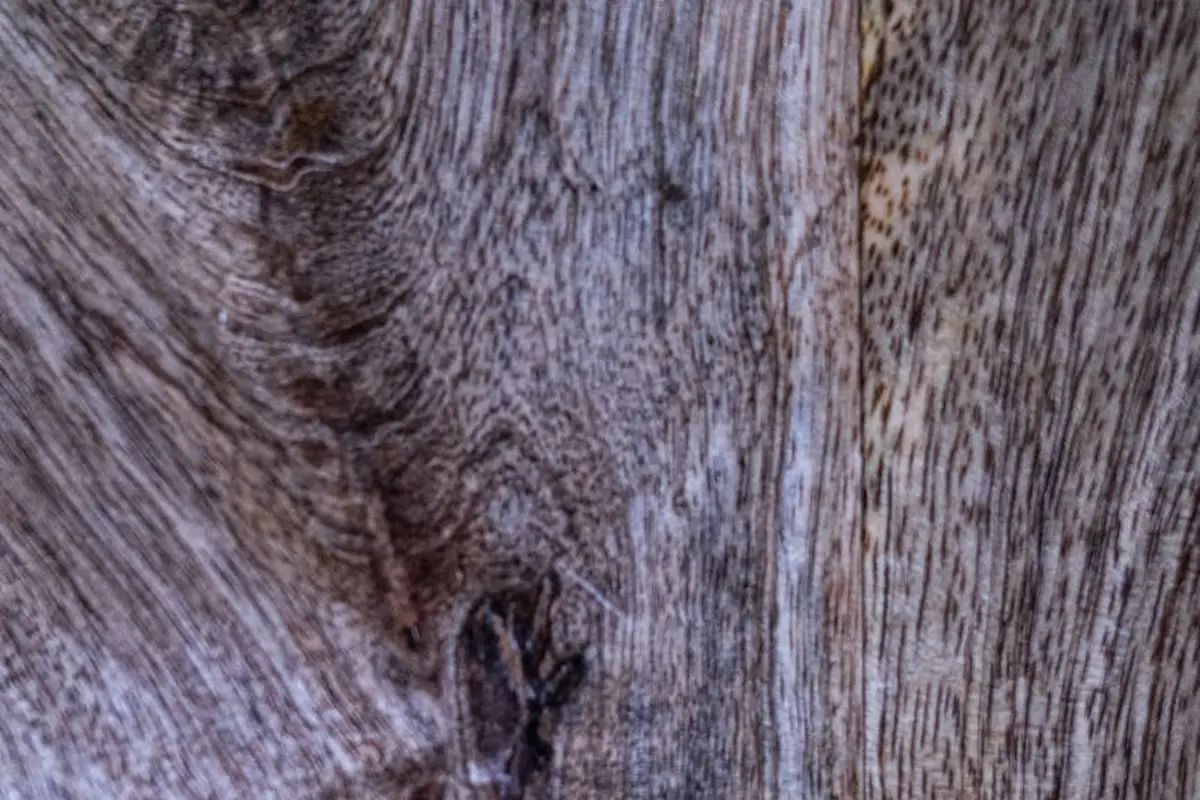
Think of a wood fiber like a bundle of microscopic straws. Compression squeezes them together. Tension tries to pull them apart. How they fail tells you exactly what went wrong.
| Force | What It Does | Sign of Failure | Common Project Location |
|---|---|---|---|
| Compression | Pushes fibers together, shortening the member. | Crushing, buckling, wrinkles. | Table legs, chair posts, top chord of a roof truss. |
| Tension | Pulls fibers apart, lengthening the member. | Sudden, splintery fracture. | Bottom of a bending beam, chair stretchers, bottom chord of a truss. |
Signs of Compression Failure
Compression failure is rarely sudden. You see it coming. The wood fibers begin to wrinkle and buckle, like a soda can slowly crumpling. In a table leg, you might see a crushed area just below the apron where the load concentrates.
A knot under heavy compression is a ticking time bomb; the irregular grain around it cannot distribute the force evenly, leading to a localized crush. I always orient knots away from critical compression points, like the bearing end of a post.
Signs of Tension Failure
Tension failure is fast and dramatic. Since wood is stronger in tension along the grain, it takes a lot of force. But when it goes, it snaps with a splintering crack. The fracture often starts at a small defect, like a knot or a chip out of the board’s edge.
This is why selecting lumber for tension members is so critical. You want the cleanest, straightest grain you can find. For any part that will be pulled on, a clear, straight-grained board is non-negotiable for safety and longevity.
Shear: The Often-Forgotten Force
Shear is the force that makes layers slide past each other. In woodworking, it’s what tries to split a tenon right out of a mortise. Imagine pushing the top of a tenon one way and the bottom the other way. That sliding force is shear.
Wood’s shear strength across the grain is very low. It’s easy to split with a hammer and wedge. Good joinery accounts for this. A mortise and tenon works because the long-grain cheeks of the mortise resist the tenon’s tendency to shear out, turning a cross-grain weakness into a long-grain strength.
Putting It to Work: Joinery and Structure Design
Every good joint is a clever way of directing force. You channel compression, tension, and shear into the parts of the wood best equipped to handle them. That’s where the physics of wood joints and forces comes into play. It explains how different joints distribute loads through the grain.
Look at a mortise and tenon. The shoulders of the tenon bear down on the mortised piece, transferring compression directly through the wood. The glued long-grain cheeks handle any shear. A dovetail is a masterclass in mechanical lock. The pins are in compression, the tails are in tension and shear, and the geometry makes it all tighten up under load.
Designing for Tension: Pull-Apart Forces
Bolts and screws are tension devices. They clamp parts together. Their strength is in their shank resisting being stretched, not in their threads holding sideways. A glued joint resists tension only if the glue bonds long grain to long grain.
For a strong tension joint, maximize the long-grain glue surface area. A long tenon or a wide lap joint will always beat a short butt joint glued end-grain to face-grain. End grain soaks up glue and makes a poor bond, which is terrible for tension.
Designing for Compression: Crushing Forces
Wood is excellent at handling compression along the grain. Smart joinery uses this. The shoulder of a tenon, the bottom of a dado, or the bearing surface of a post on a beam—all these transfer load through direct wood-on-wood contact. Understanding the anisotropic properties of wood is essential for effective joint design and repair.
Compression is your ally for creating rock-solid assemblies because you’re using wood’s inherent strength without relying solely on glue or fasteners. A well-fitted joint under compression actually gets tighter with load, which is why traditional timber framing uses so few nails.
Trusses as the Perfect Example
A simple roof truss is a lesson in force management. The top, angled members are in compression. They are being pushed together by the roof’s weight. The bottom, horizontal member is in pure tension, being pulled apart. The connecting web members alternate between tension and compression depending on the design.
The genius of a truss is that each piece is specialized, handling primarily one type of force, which allows for a very strong, lightweight structure from relatively small pieces of wood.
Why Wood Fails: Predicting and Preventing Common Problems
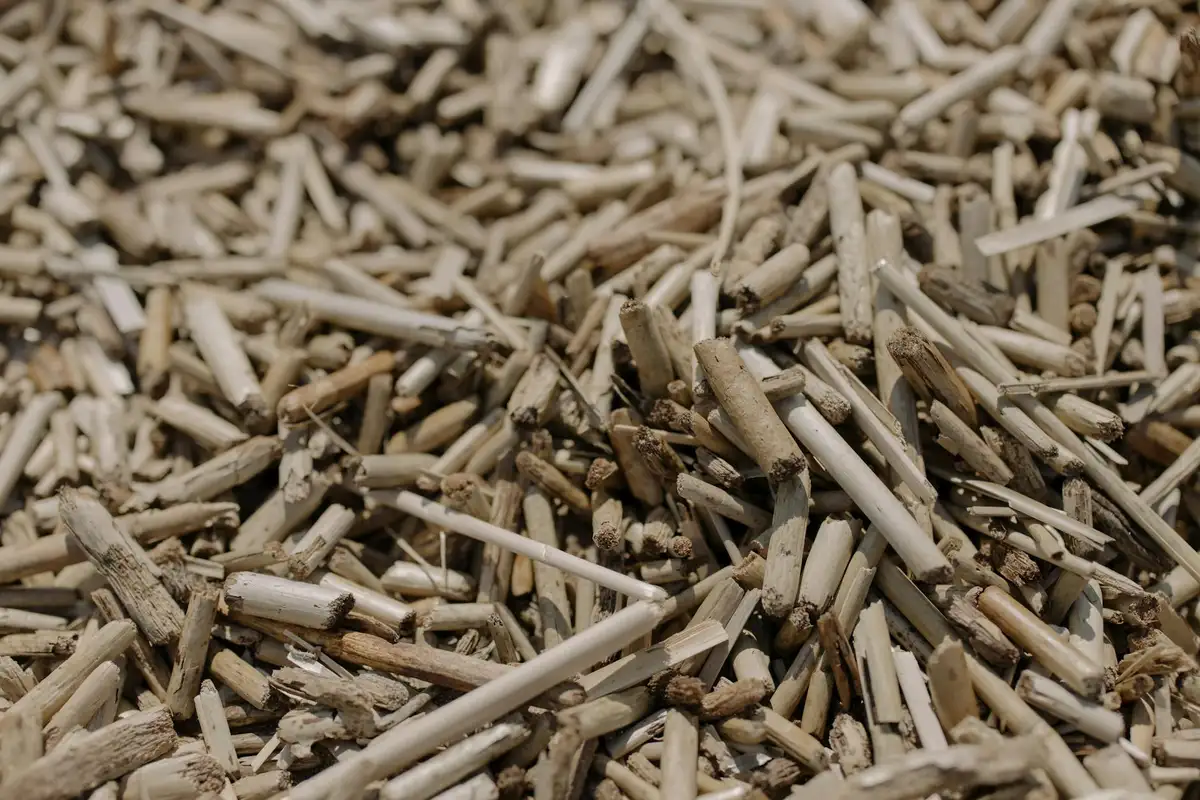
Failure isn’t random. It follows the path of least resistance through the grain and around defects. Knowing the path lets you block it.
Compression or Tension Fracture at the Grain Level
Break a piece of brittle, dry pine in tension. It snaps cleanly with a flat, brash fracture. Now, break a green, tough piece of white oak. It fails in a fibrous “pull-out,” with splinters hanging on. The pine’s cells broke across. The oak’s cells pulled apart from each other.
The type of tension failure tells you about the wood’s toughness. Brittle woods fail suddenly; tough woods give warning. In compression, a dense wood like maple will crush at a higher load but more suddenly than a softer wood like cedar, which will slowly buckle.
The Critical Role of Defects
A knot, check, or sloped grain acts like a fork in the road for force. The stress lines bunch up and try to go around it, creating a concentrated hotspot. This is a stress riser, and it’s where cracks start.
Here’s a simple rule from the shop: when placing a board in a bending situation (like a shelf), put the “bad” side (knots, waney edge) facing up. In a bending member, the top edge is in compression, which is more forgiving of defects, while the bottom edge is in critical tension and needs to be clear.
Is Wood Like Steel or Concrete?
Steel is isotropic. It’s equally strong in all directions. Wood is anisotropic. Its strength depends entirely on grain direction. It’s strong like a rope along the grain but weak like a bundle of straws across it.
Concrete is great in compression but terrible in tension, which is why it needs steel rebar. Wood is unique. It’s remarkably strong in both tension and compression, but only along the grain. The core principle of woodworking isn’t to force wood to behave like metal, but to design with its grain so its natural strengths carry the load. You must work with wood’s grain, not against it, to build structures that last.
Frequently Asked Questions: Compression and Tension in Practice
1. In a wooden truss, how do I quickly identify the compression and tension members?
Visualize the load pushing down on the truss: the top members are being pushed together (compression), while the bottom member is being stretched apart (tension). This specialization allows each piece to be optimized for a single type of force, creating an efficient structure from smaller lumber.
2. Is there a simple formula for how wood’s shear strength compares to its compression or tension strength?
Wood’s shear strength parallel to the grain is typically only 10-20% of its tensile strength. This stark difference is why joinery must convert cross-grain shear forces into long-grain bearing, as seen in a well-designed mortise and tenon. Wood preservatives preserve joint integrity by protecting against decay and helping maintain stiffness over time. Proper preservation choices can thus influence the long-term strength of mortise-and-tenon joinery by reducing moisture-related deterioration.
3. How does wood’s behavior in tension fundamentally differ from a material like concrete?
Concrete is strong in compression but fails brittlely in tension, requiring embedded steel rebar. Wood is uniquely competent in both tension and compression along the grain, but its fibrous, anisotropic nature means it must be loaded with the grain to utilize this dual strength.
4. Can you give an everyday example, like a car’s frame, to explain compression and tension members?
In a car’s frame, the upper rails in a bend are compressed, while the lower rails are stretched. Similarly, in a wooden beam, the top fibers are in compression and the bottom fibers are in tension, which is why the board’s orientation and grain clarity on the tension side are critical.
5. When selecting lumber, are different wood species better for tension members versus compression members?
For critical tension members, prioritize species with high tensile strength and toughness, like hickory or oak, and insist on flawless, straight grain. For pure compression members, you can prioritize stability and crushing strength, allowing for more flexibility regarding minor grain deviations.
Putting Fiber Science to Work in Your Shop
The core lesson is to always design with grain direction and load type in mind. Wood’s fibers are naturally resilient to crushing forces but vulnerable to being pulled apart. Structure your projects so that joints and members are loaded in compression along the grain whenever possible. This approach leverages wood’s inherent strength and is the foundation of durable, safe construction.
Source your materials from suppliers committed to sustainable forestry, ensuring your work honors the resource. For walnut specifically, seek suppliers who offer certified, responsibly sourced stock. Knowing the provenance of walnut wood helps ensure your project respects both craft and the source. Never stop questioning how wood behaves; that curiosity is what transforms simple assembly into expert craftsmanship.
Further Reading & Sources
- Reaction wood – Wikipedia
- Reaction wood – Maintenance – Landscape plants – Edward F. Gilman – UF/IFAS
- Compression Wood – an overview | ScienceDirect Topics
- Reaction Wood in Trees
- r/greenwoodworking on Reddit: So what’s the deal with compression/tension wood?
Written by David Ernst. David is a veteran woodworker. He is now retired and stays in his cabin in Wisconsin which he built himself. David has 25+ years experience working in carpentry and wood shops. He has designed and built many small and large wood projects and knows the science behind wood selection like the back of his hand. He is an expert guide on any questions regarding wood material selection, wood restoration, wood working basics and other types of wood. While his expertise is in woodworking, his knowledge and first hand experience is far from 'woody'.