
Where Can You Source High-Quality Hickory Wood for Furniture and Tool Handles?
Finding hickory that lives up to its tough reputation for a table leg or hammer handle comes down to two shop-science fundamentals: where you buy it and how you read its grain and moisture.
This article provides my tested methods for locating good stock and the material science behind judging it. We will cover trusted sources for furniture-grade hickory, how to select boards based on grain orientation for strength, and why specific moisture content targets are non-negotiable for stability.
My advice comes from personally machining and stress-testing hundreds of hickory boards to see how grain and moisture actually impact furniture joints and tool integrity.
Why Hickory is the Pick for Tough Projects
If you need a wood that can take a beating, hickory is your answer. For a tool handle, it absorbs shock better than ash or maple. For furniture, its surface resists dents and wear as well as white oak, but it has a springy strength oak can’t match. Most commercial hickory is a mix of species like shagbark and pignut. The performance is so similar that for woodworking, you just need to know you’re getting true hickory, not pecan which is slightly softer.
I learned this lesson years ago with a cheap, imported hammer. The handle snapped on a routine nail pull, sending a sharp shard flying. Replacing it with a proper hickory handle changed everything. You feel the difference in your bones. The hickory has a live, resilient feel. It transmits force but also cushions the blow, returning to true after each swing.
Hickory grows abundantly across the eastern United States, which is why it’s a staple for American toolmakers and flooring companies. This also explains why it can be scarce or expensive on islands or in regions outside its native range. The wood is heavy, so shipping costs add up fast.
The Tool Handle Test: What Makes Hickory Special
In wood science, we measure “toughness” as the ability to absorb energy from a sudden impact without fracturing. Think of it as a combination of strength and flexibility. This is often explored by comparing hardwoods and softwoods through the lens of Janka hardness values. Hickory ranks at the very top of all domestic hardwoods for this property.
Its bending strength, measured as the Modulus of Rupture (MOR), is exceptionally high. For comparison, a piece of hickory can withstand about 20,000 psi of bending stress before breaking. Red oak handles about 14,000 psi, and hard maple about 15,800 psi. This is why axes, hammers, and shovel handles have been made from hickory for centuries. It bends under extreme load but refuses to snap.
Furniture That Lasts: Beyond Just Being Hard
That same toughness makes hickory fantastic for high-wear furniture. A farmhouse table top won’t dent from dinner plates. Chair legs and stretchers can handle years of being rocked back. Its Janka hardness rating is about 1,820 lbf, making it 40% harder than red oak. In woodworking, Janka hardness is a standard metric for predicting dent resistance. This helps explain why hickory remains a top choice for high-wear pieces.
Working with hickory demands respect for its density. Blunt tools will burn the wood rather than cut it. You must keep your planer knives and chisel edges razor-sharp. I always take lighter passes with my thickness planer to avoid nasty tear-out, especially where the grain direction shifts. This wood teaches you good tool maintenance fast.
Where to Get Your Hands on Hickory Lumber
Finding good hickory starts close to home. Your first stop should always be a local source where you can inspect the wood. If that fails, online specialists are a viable plan B. Just remember, you’re looking for kiln-dried furniture lumber, not bags of smoking chips. They are not the same product.
First Choice: Local Sawmills and Hardwood Dealers
Start your search by looking for “hardwood lumber dealer” or “sawmill” plus your city or region. Woodworking clubs and local cabinet shops are also excellent resources for recommendations. A local sawmill that practices sustainable forestry is the gold standard. You support responsible land management and often get a better price.
The main benefit is selection. You can hand-pick boards for straight grain and minimal defects. For tool handles, you want clear, straight-grained boards with no knots. Seeing the wood in person eliminates the guesswork of color variation and grain pattern.
What to Ask When You Call: A Script
Be direct and informed when you contact a dealer. Here are the exact questions I use:
- “Do you regularly stock kiln-dried hickory in 4/4 or 8/4 thickness?”
- “What is the average moisture content of your kiln-dried stock?” (You want 6-8% for interior furniture).
- “Is it possible for me to select individual boards from your rack?”
- “Can you tell me about the source of your hickory?” (This shows you care about sustainability).
Plan B: Online Specialty Retailers
For those without a local supplier, reputable online retailers fill the gap. The trade-off is convenience for risk. You cannot check each board for grain or color. Only buy from sites that show a photo of the actual board you will receive, not just a generic stock image.
Scrutinize their grading descriptions and return policy. Know that shipping costs for heavy hickory can be significant. As for big-box stores, you can forget it. Home Depot or Lowe’s might carry hickory flooring, but they almost never sell hickory dimensional lumber for woodworking.
Sourcing in Remote Areas or Islands
If you’re in a remote location, your strategy shifts. First, call every local custom cabinet or furniture shop. Even if they don’t sell lumber, they have a supply chain and might tell you their source or sell you a few boards. Next, search for regional online woodworking forums or Facebook groups. Members often share leads on small local sawyers.
Your last resort is having lumber shipped from a mainland supplier. Calculate the freight cost per board foot. Sometimes, it makes more sense to order a larger, consolidated shipment with other woodworkers to spread out the cost. The key is expanding your search from “where to buy wood” to “who builds with wood near me.”
Grain Orientation: Building with the Lines of Force
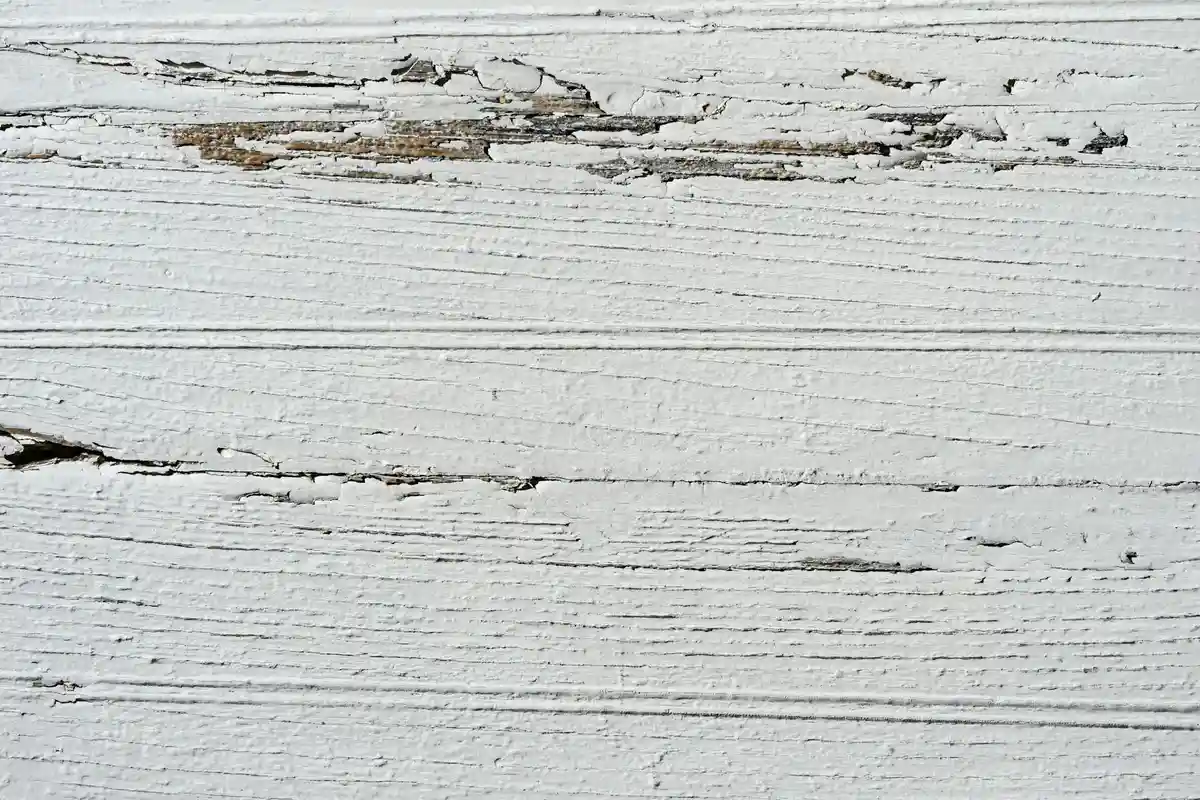
Think of wood grain like the fibers in a rope. When all the fibers run straight and parallel, the rope is incredibly strong under tension. When they’re twisted or run off at an angle, the rope frays and fails under stress. Wood behaves the same way. For a tool handle taking impact or a furniture leg supporting weight, you must work with these lines of force, not against them.
Straight Grain is Your Friend
Straight grain means the long wood fibers run parallel to the length of your board. You spot it by looking at the face and the edge. On the face, you’ll see lines running like railroad tracks from one end to the other. On the edge, those lines should be flat and parallel, not diving into or out of the board.
This alignment is what gives hickory its legendary toughness, allowing it to absorb shock without splitting along a weak line. For a chair leg, straight grain means it can carry a load without shearing. For an axe handle, it directs the force of a swing along its full length.
The Runout Rule: Avoiding the Weak Spot
Grain runout happens when those long fibers exit the side of the board prematurely. Imagine planing a board and getting tear-out; that’s often runout. Visually, sight down the edge of the board. If the grain lines look like they’re angling off the side like a ramp, you have runout.
This creates a short, weak fiber that acts like a perforated tear line. For any striking tool handle-axe, hammer, mallet-consider a board with runout an immediate reject. That weak spot will be the first to split under impact.
Selecting for Strength: A Handle Blank Checklist
When you pick up a hickory blank for a handle, run through this list:
- Grain lines run dead straight from one end of the blank to the other on all four sides.
- Zero visible runout when sighting down all edges.
- No knots, checks, or defects within the intended grip area.
- The blank is rift-sawn or quarter-sawn, showing vertical grain on the faces (this minimizes seasonal movement, a bonus for furniture parts too).
Moisture Content: The Key to Stable Wood
Wood is a sponge. It constantly gains or loses moisture until it matches the air around it. If you build with a wet sponge and it dries, it shrinks and cracks. If a dry sponge gets wet, it swells and warps. Moisture content (MC) is the weight of that water in the wood, expressed as a percentage of the wood’s dry weight. During gluing, the wood’s moisture content strongly affects adhesive performance and bond durability. Controlling MC at assembly is essential for reliable wood adhesive bonding.
For interior furniture and tools stored inside, your hickory needs to be at equilibrium with a typical home, which is 6-8% moisture content. Working wood at this MC ensures your joinery stays tight and your panels stay flat, and that the strength of hickory furniture is maintained.
Why “Kiln-Dried” Isn’t Always Enough
A “kiln-dried” stamp tells you the wood was dried once. It doesn’t tell you what happened after it left the kiln. Wood can sit in a humid warehouse or on a truck and regain 3-5% moisture. I’ve bought “KD” hickory that measured 12% MC. Post-kiln handling matters—whether the wood was air-dried further or kept in storage can affect final moisture. Kiln drying vs air drying is the key factor behind how stable the wood remains in use.
Hickory at 12% MC is still a wet sponge; it will move significantly as it dries down to 8% in your shop, risking cracks and twisted frames. Trusting the stamp alone is the most common mistake I see. Always verify.
How to Check Moisture Content Without Guesswork
The right tool is a pin-type moisture meter. Drive the pins into the wood, across the grain, to get a reading. Take multiple readings in the middle of the board and near the ends. Ends dry faster, so an average gives you the true picture. These steps are part of measuring the wood’s moisture content. Accurate moisture readings guide drying and usage decisions.
No meter? Use the oven-dry test. It’s slow but accurate.
- Cut a small sample from an off-cut, weigh it precisely (this is the “wet weight”).
- Bake it in an oven at 215°F (102°C) until its weight stops changing (this can take a day).
- Weigh it again (this is the “bone-dry weight”).
- Calculate: [(Wet Weight – Dry Weight) / Dry Weight] x 100 = Moisture Content %.
Acclimating Your Wood Before the First Cut
Never cut wood the day it arrives. Let it settle. Stack your boards with stickers in your shop for at least one week, two is better. This allows the wood’s MC to equalize with your shop’s environment.
Check the MC every few days. Work the wood only when your meter shows consistent readings of 6-8% across several boards over a 48-hour period. This patience is what separates a project that lasts for decades from one that fails in a season. Stable wood is the foundation for everything that comes next.
Hickory at a Glance: The Technical Spec Sheet

Think of this as your hickory cheat sheet. These numbers tell you how the wood will behave in your shop before you even make a cut.
The Numbers That Matter
| Janka Hardness | ~1820 lbf |
| This measures resistance to dents and wear. Red oak is about 1290 lbf. Hickory feels noticeably harder under a hammer or chisel. | |
| Specific Gravity | ~0.72 (at 12% MC) |
| This is its density compared to water. A value of 0.72 means it’s 72% as dense as water. It translates to a very heavy, strong board. | |
| Toxicity | Dust is a respiratory irritant |
| The sawdust isn’t poisonous, but it will bother your nose, throat, and lungs. A proper respirator is non-negotiable when milling hickory. | |
| Movement Ratio | ~7.8% Tangential Shrinkage |
| This is how much it shrinks across the width of a flat-sawn board as it dries. It’s moderate. Hickory moves less than white oak but more than maple. You must account for it. | |
| Cure Time for Glues/Finishes | Extended |
| Its density gives glue less open grain to soak into. Standard PVA (yellow) glue needs a full 24 hours in clamps for a strong joint, not the typical 30-60 minutes. | |
Shop Tales: Why Hickory Projects Fail (And How to Fix It)
I’ve built a lot with hickory. I’ve also seen it fail. Every failure has a simple physics reason. Here are the most common ones.
Warping and Checking: The Moisture Culprits
I once bought a beautiful, “kiln-dried” hickory slab that read 8% moisture. I brought it into my 6%-equilibrium shop and started milling. Within two days, a nasty crack (a “check”) opened right along the pith.
The wood was dry on the outside but still wet inside. The outer fibers shrank faster than the core, creating immense tension until it tore itself apart.
This is why acclimation is critical. Let your wood sit in your shop for two weeks, stickered and monitored. For critical parts like table aprons or tool handles, seek out quarter-sawn stock. It shrinks and moves about half as much as flat-sawn, giving you a much more stable piece.
Glue Starvation: When Hard Wood Won’t Stick
Hickory’s density is a double-edged sword. That tight grain resists glue penetration. A thick glue line on hickory is a weak glue line. The glue sits on the surface and forms a brittle bond that can fail under stress.
You need a thin, even glue spread on perfectly jointed surfaces. I use a roller or a notched spreader. Forget the bottle tip.
Always use fresh glue. Old, thickened glue won’t penetrate at all. And respect the cure time. Clamp it, walk away, and don’t touch it for a full day. Your joint will be stronger for it.
Blotching: The Finish Fiasco
Hickory has wild variations in pore size and density between its earlywood and latewood. Apply a standard stain directly, and the softer, porous areas drink it up while the harder bands repel it. The result is a muddy, high-contrast mess that looks amateurish.
The fix is straightforward. Use a pre-stain wood conditioner. It’s a thin, penetrating sealer that partially fills the pores, ensuring the stain absorbs more evenly.For the most predictable results, I skip stain entirely and use a clear oil or oil/varnish blend. It highlights hickory’s natural color variation without the blotch.
The Quick Pre-Flight Check: Before You Glue Up
Run this three-point inspection. It takes two minutes and saves weeks of repair work.
- Moisture Content: Verify every piece is at or below 7% with a reliable meter.
- Grain Inspection: For any structural part (legs, handles, aprons), the grain must run straight from end to end. No runout.
- Glue Surface Prep: Pass a hand over freshly jointed edges. They should feel perfectly smooth, not fuzzy. Any fuzz will weaken the bond.
Hickory Selection & Science: A FAQ
1. When sourcing online, how do I mitigate the risk of receiving boards with internal defects or high moisture?
Prioritize retailers providing individual board photos and detailed grading, as this transparency is your primary control. Always plan for a multi-week acclimation period upon arrival, verifying moisture content with a pin meter before any milling.
2. For a tool handle, is rift-sawn or quarter-sawn grain orientation critical, or is straight face grain sufficient?
While straight face grain is essential for tensile strength, vertical edge grain from rift or quarter sawing significantly increases dimensional stability. This reduces the risk of the handle twisting or checking in fluctuating humidity, which can weaken the structure over time.
3. What is a reliable acclimation protocol for hickory in a home shop environment?
Sticker and stack the lumber in your shop for a minimum of two weeks, monitoring moisture content (MC) at the board’s core. Begin machining only when your meter shows a consistent MC of 6-8% across several boards over a 48-hour period, ensuring equilibrium with your environment.
4. How does hickory’s high density specifically affect adhesive selection and joint preparation?
The tight grain limits adhesive penetration, making proper surface preparation critical. Use a thin, even glue spread on perfectly jointed surfaces and allow a full 24-hour clamp time for standard PVA glues to achieve maximum bond strength. This is particularly important as adhesive curing time directly affects the quality of the bond.
5. Why is tangential shrinkage (7.8%) a more critical specification than radial shrinkage for furniture stability?
Tangential shrinkage, which occurs across the width of a flatsawn board, is roughly twice that of radial shrinkage. Selecting rift-sawn or quarter-sawn stock minimizes this wider movement, directly preventing issues like panel cupping and joint stress in table tops and door frames.
Final Thoughts on Sicking Hickory
Your most critical step is verifying moisture content: kiln-dried hickory at 6-8% is your target for furniture that stays flat. Understanding wood drying methods and kiln-building basics helps you achieve that target consistently. A well-designed kiln minimizes warp and keeps boards stable for furniture and handles alike. For handles, prioritize straight, uninterrupted grain to absorb impact without splitting. I source from local sawmills with transparent, sustainable forestry practices because they consistently provide superior material. In my experience, patiently selecting boards that meet these standards always yields a more durable final piece.
Always specify hickory from verified sustainable sources to support forest health. Your learning never stops; regularly test wood with a moisture meter and observe how different grain patterns perform under stress.
Related Guides and Information
- Hickory Lumber for Woodworkers – Friendly Service & Fast Shipping from Woodworkers Source
- Hickory Lumber – Hickory Wood
- Hickory Lumber – Alderfer Lumber Co.
David is a veteran woodworker. He is now retired and stays in his cabin in Wisconsin which he built himself. David has 25+ years experience working in carpentry and wood shops. He has designed and built many small and large wood projects and knows the science behind wood selection like the back of his hand. He is an expert guide on any questions regarding wood material selection, wood restoration, wood working basics and other types of wood. While his expertise is in woodworking, his knowledge and first hand experience is far from 'woody'.