
How Does Where Pine and Hickory Grow Change Your Woodworking?
You pick up a board of pine or hickory, but its behavior in your shop is already written in its growth rings. The tree’s origin isn’t just trivia; it dictates how that wood will cut, sand, and hold up over time.
This article connects forest ecology to your workbench, offering specific guidance. We will cover how growth rings tell a story of strength, why soil and climate control density and stability, and the practical shop differences between a slow-grown hickory and a fast-grown pine.
My advice comes from milling and testing wood from various regions in my own shop, blending materials science with hands-on results.
First, the Facts: Where Do These Woods Actually Come From?
Pine wood comes from trees in the genus Pinus, which are softwoods. Hickory wood comes from trees in the genus Carya, which are hardwoods. This is the first and most important split. Softwoods like pine have a simpler cellular structure built for moving water quickly, while hardwoods like hickory have a more complex structure for mechanical support. Despite their names, the hardness of these woods can be misleading.
Where you find these trees tells you a lot about the wood you’ll get. North America is home to many key species for woodworking.
- Eastern White Pine (Pinus strobus): Grows across the northeastern U.S. and Canada. It loves cooler climates and well-drained soils.
- Longleaf Pine (Pinus palustris): Native to the southeastern U.S. coastal plain. It thrives in sandy, often nutrient-poor soils.
- Shagbark Hickory (Carya ovata): Found throughout the eastern U.S., from the Midwest to the Appalachians. It prefers deep, fertile soils.
- Pecan Hickory (Carya illinoinensis): The tree that gives us pecans. Its native range is the south-central U.S., often in rich river bottoms.
Where you source your wood matters as much as the species. I once bought two 8-foot boards of nominal Southern Yellow Pine from different suppliers. One from a fast-growth plantation was light, with wide rings. The other, marked as “heart pine” salvaged from an old-growth stand, was so dense and resinous it planed like a different wood entirely. They looked similar but behaved completely differently in the shop, much like other pine species that can be tricky for joinery.
Sustainable forestry is critical for both. For pine, it means managing plantations to avoid soil depletion. A pine wood sustainability lifecycle analysis helps quantify environmental impacts across the pine supply chain and guide better management decisions. This knowledge supports practices that enhance long-term soil health and carbon storage. For hickory, it often means selective harvesting in mixed hardwood forests to preserve ecosystem diversity. Always ask your supplier about the origin of your lumber.
The Tree’s Struggle: How Soil, Wind, and Climate Write the Grain
A board is a biography. Every growth ring, knot, and color variation is a page from the tree’s life story, written by its environment.
Soil is the first chapter. A tree in rich, deep soil can grow fast and tall, putting energy into height over density. A tree in poor, rocky, or sandy soil grows slower. Each annual ring is narrower, with a higher proportion of dense, supportive latewood cells. This is why a Longleaf Pine from a nutrient-poor sandhill is famously harder and more durable than a fast-grown Loblolly Pine from fertile bottomland. The tree deposits more lignin, the natural glue that binds wood fibers, when times are tough.
Climate writes the plot. Consistent rain and moderate temperatures lead to uniform, evenly spaced rings. Dramatic seasonal swings, especially drought, create a stark contrast between the pale, fast-grown springwood and the dark, dense summerwood. These pronounced rings are visually striking but can make the wood more prone to uneven movement. For a stable tabletop, you want wood with consistent, moderate growth rings.
Wind and crowding are the antagonists. A tree constantly battered by wind or leaning to find light produces “reaction wood.” In pines, this is called compression wood; it forms on the underside of a leaning trunk. In hickory, it’s tension wood on the upper side. Reaction wood has abnormal fiber alignment and shrinkage, often causing severe warping or twisting when the board is cut and dried. I avoid using any board with obvious, sweeping grain curvature on its face-it’s often a sign of internal stress.
The mechanism happens at the cellular level. Pine tracheids (its water-conducting cells) become thicker-walled and gelatinous under compression stress. Hickory fibers (its strength-giving cells) develop a special gelatinous layer under tension. Both adaptations help the living tree hold its position, but they are a nightmare for dimensional stability in your project.
How Altitude and Geography Leave a Fingerprint
Take a tree higher up a mountain, and everything slows down. The growing season is shorter, temperatures are cooler, and the air is often thinner. The tree responds by packing more cells into a tighter space. The general rule is sound: slower growth at higher altitudes or latitudes usually means denser, harder wood with tighter growth rings.
Compare a high-altitude Ponderosa Pine from the Rockies to a lowland Ponderosa from a valley floor. The high-altitude board will feel noticeably heavier for its size and will have more growth rings per inch. It will also be more stable because the cells are smaller and more uniform, holding less free water.
Altitude impacts stability through moisture content. A tree growing in cool, moist high-altitude air has a different transpiration rate than one in a hot, dry lowland. This affects how the wood’s cells are structured to hold water. The high-altitude wood often starts with a finer capillary structure, which can lead to more even drying and less severe checking or honeycombing during kiln seasoning.
Geography beyond altitude matters too. A “where is pine wood from” question about coastal versus inland sourcing gets you different material. Coastal pines, like some Monterey or Southern Yellow Pine, can be salt-stressed, influencing resin production and color. Inland pines might show clearer, paler wood. For hickory, a tree from a dry, upland ridge will be different from one in a moist river basin-the upland hickory is often slower-grown and may have a richer, deeper color.
From Forest to Bench: The Shop-Ready Properties You Can Feel
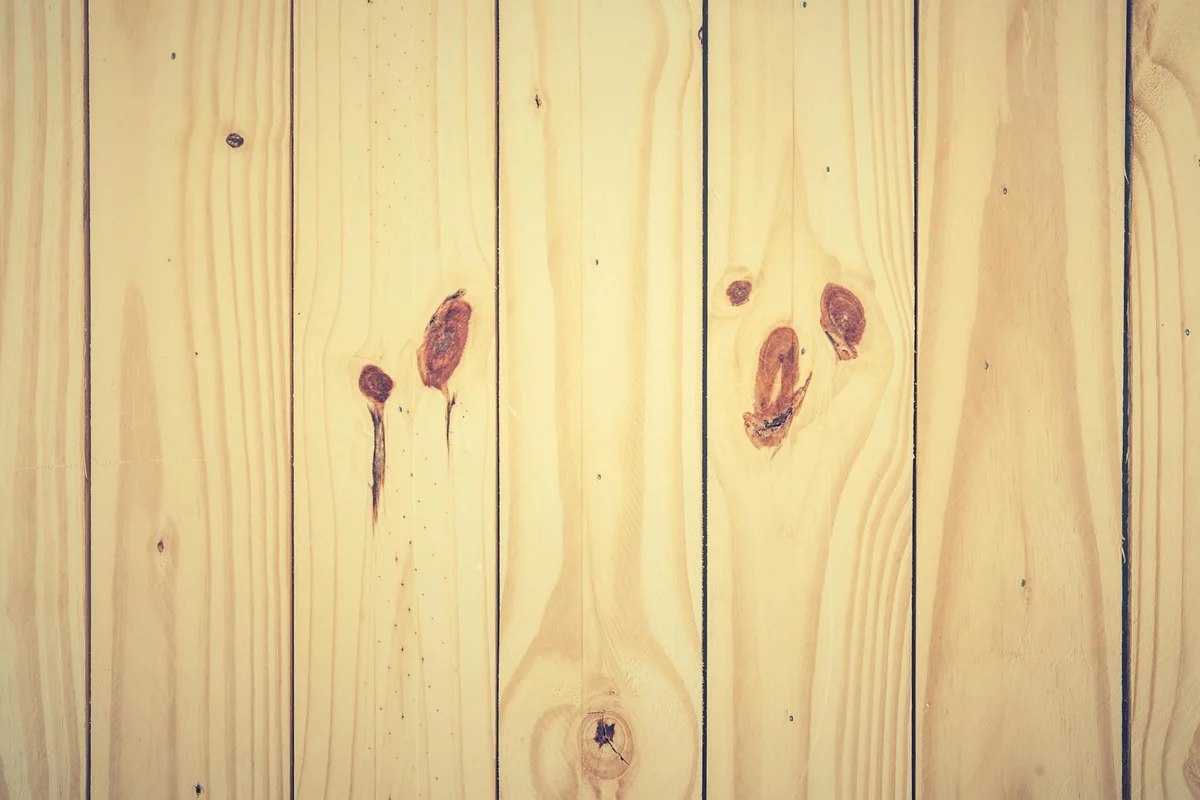
So the tree grew in different conditions. What does that mean for you at the workbench? You feel it in your hands, your tools, and the final piece.
Density and Hardness: The Weight of Place
Where a tree grows directly shapes its density, which is its weight per volume. This isn’t abstract. Dense wood is hard wood.
Take Southern Yellow Pine. Grown fast in the warm, wet South, it has wide growth rings with more soft earlywood. Northern Yellow Pine, from colder, slower-growing regions, packs more dense latewood into tighter rings. The difference is dramatic. Southern Pine has a Janka hardness around 690 lbf. Northern Pine can hit 1,250 lbf. That’s a difference you can’t ignore when considering pine wood’s hardness and density.
That jump in hardness changes your tool strategy. Hard, dense wood dulls planer knives and saw blades faster and demands slower feed rates.
I once planed two hickory tool handle blanks, one noticeably heavier. The denser blank made my forearm burn after a few passes. The lighter one finished smoothly. The dense one was likely from a stressed, slow-growing tree. The difference was in my arms before it was on the ruler.
Stability, Figure, and Color: The Visual and Behavioral Clues
Stability means how much wood shrinks and swells. Uniform growth rings, from consistent yearly weather, mean more stable wood. Erratic, wide rings from boom-and-bust growth lead to wild movement. This is why high-altitude or slow-growth lumber is often more stable. The tree added wood at a steady, predictable pace.
Color and figure are the tree’s diary. Fast-grown pine from a plantation is often pale, with little contrast between rings. Old-growth heart pine, from trees that lived centuries, has a deep, rich amber color from accumulated resins.
Look for mineral streaks in hickory, which are dark discolorations from soil minerals. They’re more common in certain regions and tell you the wood will be extra hard, sometimes brutal on tools. Resin pockets in pine are also location clues, often found in wood from particular stressed environments.
Workability and Grain Structure: Reading the Sawdust
Workability starts with the grain. Fast-grown pine has wide, soft earlywood bands that tear out easily if your tools are dull. Slow-grown pine, with its tight, uniform rings, cuts cleanly like a harder wood. To help predict performance across species, identify wood species by grain density.
Hickory often develops interlocked grain, where fibers spiral up the trunk changing direction. This is a stress response to windy sites. It creates beautiful figure but guarantees tearout if you plane against the grain. Your only defense is surgical sharpness and light, careful cuts.
Here are quick tool tips for different woods:
- For dense hickory or pine: Use carbide-tipped blades, keep tools razor-sharp, reduce planer depth of cut, and feed stock slower.
- For soft, light pine: Sharp tools still matter to avoid crushing the grain. Use a lower tooth count on saw blades (like 24-tooth) for cleaner cuts in softwood.
Choosing Your Stock: A Woodworker’s Practical Guide
This isn’t academic. You choose wood based on the job. Let’s match the tree’s story to your project’s needs.
Matching Wood Origin to Project Need
Forget general rules. Think specific.
You need a stout workbench leg that won’t sag under weight? Seek out dense, slow-grown hickory from a northern stand. Its hardness resists dings and its strength handles massive loads.
Building a painted cabinet frame or a simple bookshelf? Consistent, fast-grown pine from a managed forest is perfect. It’s stable, easy to work, and paints beautifully. The uniform grain won’t telegraph through the paint.
Prioritize stability for large panels or tabletops. Prioritize hardness for tool handles, work surfaces, or flooring. Sometimes, you trade extreme strength for consistent color, especially in visible projects where board matching matters.
What to Ask at the Lumberyard or Mill
Don’t be shy. Good suppliers know their wood. Ask direct questions.
- “Is this hickory from a northern or southern source?”
- “Do you know the growth conditions for this pine? Are the rings typically tight?”
- “Can you tell me if this is from a sustainably managed forest?”
Look at the wood yourself. Check the end grain for growth ring width and uniformity. Look at the board color. Is it a uniform pale cream, or are there rich amber streaks and tight rings suggesting old-growth character?
Choosing wood from a sustainably managed forest isn’t just an ethical choice. It often means more predictable wood. Foresters manage for straighter, more consistent growth, which translates to more stable lumber in your shop.
I once built a large cabinet door from big-box “whitewood” pine. It cupped terribly within weeks. For the next one, I asked a local mill for their driest, most stable kiln-dried pine, asking specifically about its growth. They gave me stock from a local, managed stand. That door is still flat years later. The question cost nothing and saved the project.
FAQ: Geography, Growth, and Your Woodworking Results
How does the geographic region affect the natural color and figuring of pine and hickory wood?
Soil minerals and climate stress directly stain wood and alter grain patterns. For example, hickory from iron-rich soils often has dark mineral streaks, while pine from arid, high-stress environments develops denser latewood and richer amber hues from concentrated resins. These natural variations also influence how wood species respond to staining and painting effects. Knowing this helps in choosing finishes to enhance color and grain.
How does the specific species within the pine and hickory families, tied to origin, affect their suitability for different projects?
Species adapted to specific regions evolve distinct properties. Longleaf Pine from the dry coastal plain is far harder and more decay-resistant than Eastern White Pine from northern forests, making it suitable for outdoor or high-wear applications instead of interior millwork.
How do environmental stressors like wind affect the bending strength and toughness of pine and hickory?
Constant wind stress promotes reaction wood formation, which compromises uniformity but can locally increase density. This creates unpredictable mechanical properties, where a board may have zones of high bending strength adjacent to unstable areas prone to warping.
Why does the same species from different regions behave so differently during drying and machining?
Variations in cellular structure, driven by growth rate and climate, dictate how wood releases moisture and interacts with tools. Slow-grown, high-altitude stock with smaller cells dries more evenly and machines more cleanly than fast-grown wood with large, weak earlywood vessels prone to collapse and tearout.
How can I use geographic origin to predict how pine or hickory will accept stains and finishes?
Density and resin content, shaped by the growth environment, control finish penetration and adhesion. Dense, resinous pine from slow-growth regions may resist uniform staining and require a sealant, while consistently fast-grown wood with uniform density provides a more predictable finishing surface. Knowing this helps when preparing the pine for a smooth finish. Proper surface prep—sanding, cleaning, and sealing—sets the stage for even stain and adhesion.
Choosing Wood with Origin in Mind
In my shop, I always start by asking where the wood grew. Pine from northern, slow-growth forests is denser and more stable, making it ideal for furniture frames. Hickory’s impact resistance hinges on soil nutrients, a detail I check before any heavy-use project. Matching your wood’s geographic history to your project’s needs is the surest way to predict its behavior and ensure success, especially when choosing pine for furniture.
Source your materials from suppliers who practice sustainable forestry, preserving these resources for future builders. Let your curiosity about wood science guide every purchase and cut, fostering both skill and environmental care—especially when you source walnut wood for your projects.
Relevant Resources for Further Exploration
- Osborne Wood | Wood Species in Detail: Hickory
- Hickory
- Shagbark Hickory | The Wood Database (Hardwood)
- Advice for Working with Hickory
David is a veteran woodworker. He is now retired and stays in his cabin in Wisconsin which he built himself. David has 25+ years experience working in carpentry and wood shops. He has designed and built many small and large wood projects and knows the science behind wood selection like the back of his hand. He is an expert guide on any questions regarding wood material selection, wood restoration, wood working basics and other types of wood. While his expertise is in woodworking, his knowledge and first hand experience is far from 'woody'.